
Pick the Perfect Dining Table Size

You can fall in love with a dining table online in about eight seconds. The regret shows up later – when chairs clip the wall, guests have to shimmy sideways, or the table looks adrift in a big open-plan space. Size is the difference between “design-forward centerpiece” and “why does this feel cramped?”
This practical guide walks you through how to choose a dining table size that looks intentional, seats people comfortably, and still lets your room breathe.
Start with the room, not the table
A dining table is a working piece of furniture. It needs a footprint, yes, but it also needs operating room: space to pull out chairs, pass behind someone who is seated, and serve without bumping elbows.
A clean rule that holds up in most homes is to plan for at least 36 inches of clearance from the edge of the table to the nearest wall or furniture. If your dining area is a high-traffic pathway (think: between kitchen and living room), 42 to 48 inches feels noticeably more graceful.
If you are furnishing an apartment or a smaller eat-in kitchen, you can go tighter, but do it knowingly. Around 30 to 32 inches can work when the table is used mostly by the people who live there and the traffic pattern is minimal. The trade-off is that hosting becomes more of a choreography.
Before you shop, measure your space and mark a “table zone” on the floor with painter’s tape. It sounds simple, but seeing the outline instantly reveals whether you have a dining room or a dining obstacle.
Seating math that feels generous (not packed)
The next question is how many people you want to seat day-to-day, and how many you want to seat when life happens – holidays, birthdays, or that last-minute “we’re in the neighborhood.”
As a comfort baseline, plan on 24 inches of table edge per person. If you like lingering meals, larger place settings, or you simply prefer a more elevated, unhurried feel, 26 to 30 inches per person is the upgrade.
Depth matters, too. Most rectangular tables land between 36 and 42 inches wide. That range typically supports place settings on both sides and leaves enough center space for serving pieces. Narrower can look sleek, but it compresses the tabletop experience quickly once you add platters, candles, or a centerpiece.
Common rectangular table sizes (and what they really seat)
A 60-inch long rectangular table usually seats six comfortably if you place two chairs on each long side and one at each end. At 72 inches long, seating six feels generous and eight is achievable for dinners, especially with slimmer chairs. Around 84 inches is where eight people can sit without it feeling like a squeeze.
If you want 10 seats as a true, comfortable arrangement, you are generally looking at 96 inches or a table that extends to that length. Anything smaller can still “seat 10,” but it becomes a special-occasion layout with tighter spacing and less room for shared dishes.
How to choose a dining table size by shape
Shape is not just style. It changes how people move around the room, how flexible the seating is, and how balanced the table feels in your floor plan.
Rectangular: the modern classic
Rectangular tables are the easiest to fit into most rooms, especially long or open-plan spaces. They read tailored and architectural, and they pair naturally with rugs and lighting that are also rectangular.
Sizing tip: if you have a narrow dining area, prioritize a slightly narrower table (closer to 36 inches wide) and invest in comfortable chairs with a slimmer profile. You keep the look refined without sacrificing circulation.
Round: intimate, social, and deceptively space-smart
Round tables make conversation effortless. They also eliminate sharp corners, which is a practical win in tighter spaces or homes with kids.
A round table’s diameter determines seating, but chair style matters more here than anywhere else. Four people are typically comfortable at 42 to 48 inches. Six people often works at 54 inches. If you want six to feel truly relaxed, 60 inches is a sweet spot – provided your room can handle it.
Trade-off: round tables can demand more total floor space than you expect because chairs fan outward. They are excellent when you have a defined dining zone, less ideal when your table sits in a busy walkway.
Oval: the best of both worlds
Oval tables soften the look of a rectangular table while keeping similar seating efficiency. They are a strong choice when you want a more fluid, organic silhouette but still need to host.
Because an oval has rounded ends, it can feel easier to move past than a hard-corner rectangle, even at similar lengths. It is a subtle comfort upgrade that reads high-end.
Square: balanced, but picky about room size
Square tables shine in square rooms and smaller dining nooks. A 36-inch square can seat four, though it feels compact for full place settings. A 42-inch square is usually more comfortable.
Trade-off: if you try to seat more than four at a square table, it quickly feels crowded unless the table is quite large – and then you need a large room anyway.
Chair clearance: the detail that makes a table feel “custom”
A table can be the right size on paper and still feel off if the chairs do not play nicely with it.
Plan for about 18 inches from the seat of a dining chair to the underside of the tabletop (or apron). Many quality tables are designed for this, but some statement designs have thicker tops or structural details that reduce knee space. If you are tall, or you prefer upholstered chairs with thicker cushions, that clearance becomes non-negotiable.
Also consider how far a chair needs to pull out. As a practical baseline, assume a chair needs roughly 24 inches of pull-back space for someone to sit down comfortably. This is why that 36-inch perimeter clearance around the table matters so much.
Everyday living vs. hosting: choose which you want to optimize
Some homes are built around hosting. Others are built around calm daily rhythm. Neither is “right,” but your table size should match your actual life.
If you eat at the table every day, a slightly smaller table that preserves walking space can feel more luxurious than a massive table that dominates the room. A cramped room never reads premium, no matter how beautiful the furniture is.
If you host often, prioritize either length or flexibility. An extendable dining table is the quiet hero here: tailored for daily life, expansive when needed. Just remember that extension leaves must have somewhere to live, and storing them in a closet you never want to open is a recipe for never using them.
Don’t forget the rug and lighting proportions
A dining table rarely lives alone. Rug size and lighting scale can make a correctly sized table feel wrong, or a slightly small table feel intentional.
For rugs, you generally want at least 24 inches of rug beyond the table edge on all sides so chairs stay on the rug when pulled out. In tighter spaces, 18 inches can work, but the experience is less smooth.
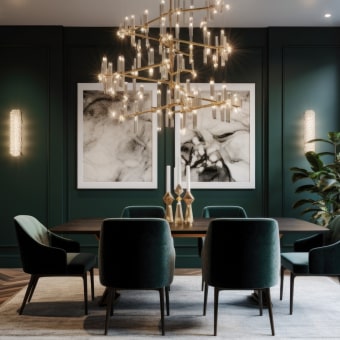
For lighting, center a pendant or chandelier over the table and aim for it to be about one-half to two-thirds the table’s width. Hang it so the bottom sits roughly 30 to 36 inches above the tabletop, adjusting slightly higher for very tall ceilings or sightlines across an open-plan layout.
A quick sizing workflow you can trust
If you want a simple process that still feels design-smart, do this: measure the room, subtract 72 inches from each dimension (that accounts for 36 inches of clearance on both sides), and what remains is your maximum comfortable table footprint. Then decide your ideal seating count and match it to that footprint.
When the room and seating goals conflict, choose the room. You can always add smart seating solutions – benches, slimmer chairs, or an extension table – but you cannot add square footage.
If you are browsing design-forward options and want a curated selection that prioritizes craftsmanship, it helps to shop in a storefront built around premium living rather than endless commodity listings. You can explore elevated dining and home upgrades at mytotaltake.com when you are ready to narrow in on a table that fits both your space and your style.
The small-space “yes, but” scenarios
Real homes are messy. Here are a few common layouts where the best table size is not the biggest one you can squeeze in.
If your dining area shares space with the kitchen island, keep the table modest enough that you can still open appliances and pass behind stools. If you have a banquette or bench against a wall, you can reduce clearance on that side because you are not pulling chairs out – but you still need comfortable entry from the open side. If your dining space is also a hallway, choose a narrower table or a round table that lets traffic flow around it without hip-checking corners.
In each case, the goal is the same: preserve movement first, then maximize seating.
A closing thought
The best dining table size is the one that makes your home feel composed on an ordinary Tuesday night – and still rises to the occasion when you set the table for people you love.
Smart Home Upgrades That Feel Truly Premium
Comments
[…] placement: A dining table sized correctly for your room changes how meals feel. Learning how to choose dining table size before purchasing prevents costly […]
[…] two-person table is often enough for everyday life, even if you host occasionally. This is where extendable designs earn their place. If the apartment is shared or the table must double as a workspace, a slightly […]







Leave a comment