
Why Buy High-End Tech Gadgets: Real Value Explained

High-end tech gadgets are defined by superior build materials, extended software support, and advanced features that budget devices consistently fail to match. If you are weighing whether premium technology is worth the price, the answer depends on how you use your devices and how long you plan to keep them. Premium devices justify their cost through durability, ecosystem integration, and priority support that entry-level products simply do not offer. Understanding those differences is the first step toward a purchase you will not regret.
Why buy high-end tech gadgets in 2026?
The core case for premium tech rests on three pillars: materials, longevity, and experience. Budget devices under $300 often lack the ecosystem integration and priority customer service found in the $500-plus tier. That gap is not just about prestige. It translates directly into how long your device stays useful and how much you spend replacing it.
The premium label in 2026 is best earned by mastering camera systems, display quality, build materials, and long-term software support. Each of those pillars contributes to usability and security well into the device’s life cycle. A phone with a top-tier processor and a durable frame does not just feel better. It performs better for longer.
Buying the right tech aligns more with understanding personal daily needs than with buying the most expensive option available. That distinction matters. A device that fits your workflow, health goals, or creative practice delivers real value. One that simply signals status does not.
How do build quality and materials influence premium gadget value?
Physical durability is the most visible difference between budget and premium devices. High-end gadgets use materials like aerospace-grade aluminum frames, Corning Gorilla Glass Victus, and titanium alloys that resist drops, scratches, and daily wear far better than polycarbonate bodies.
The practical benefits of premium construction include:
- Water and dust resistance: IP68 ratings on flagship devices protect against submersion up to 6 meters, a standard absent from most budget options.
- Display quality: OLED panels with high refresh rates reduce eye strain during extended use and deliver accurate color reproduction for photographers and designers.
- Structural integrity: Metal and glass construction reduces flex and creak, which correlates directly with longer device lifespan.
- Thermal management: Premium internals include better heat dissipation, which prevents throttling during demanding tasks like gaming or video editing.
- Tactile precision: Physical buttons, haptic engines, and port tolerances on flagship devices feel deliberate. Budget devices often feel loose or imprecise by comparison.
These choices add up. A device that survives three years of daily use without cracking or slowing down costs less per year than a budget phone replaced every 18 months.
Pro Tip: When evaluating build quality in a store, press firmly on the back panel and check for flex. Run your finger along the seams between the frame and screen. Tight tolerances and zero flex are reliable indicators of premium construction.
Why are long-term software support and updates critical for premium devices?
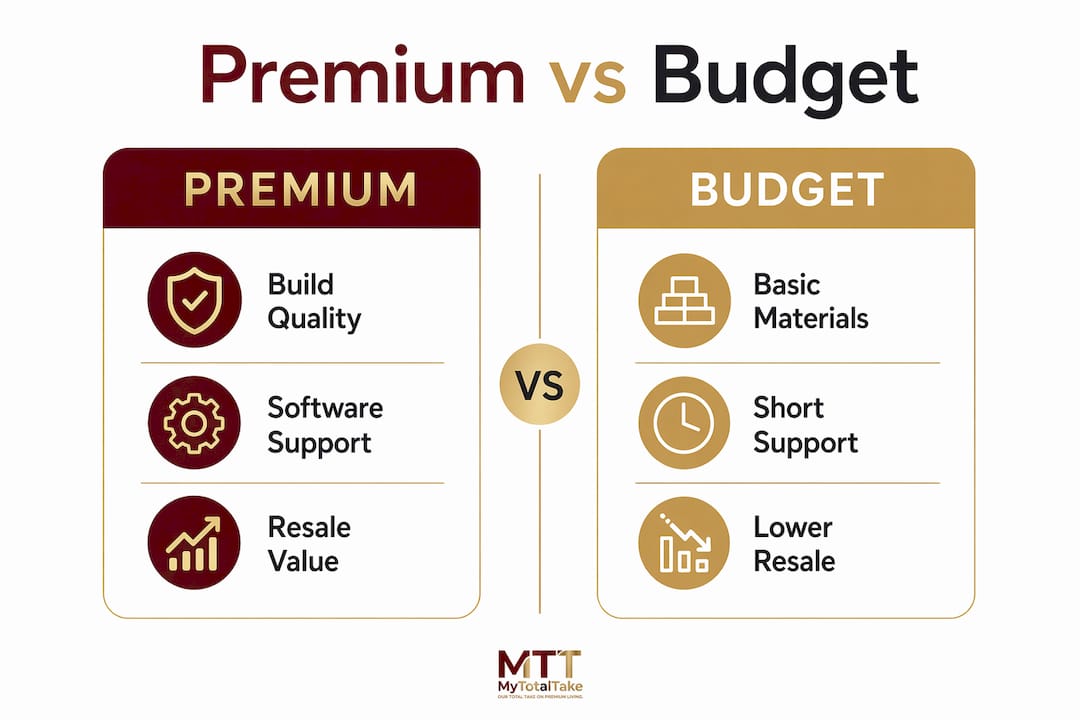
Software support is the single most underrated factor in the total cost of owning a tech gadget. Premium smartphones provide OS and security updates for up to 7 years, which means your device stays secure and capable long after a budget phone has been abandoned by its manufacturer.
The financial logic is straightforward. A flagship device purchased today and supported through 2031 spreads its cost across seven years. A budget phone that loses support after two years forces an earlier replacement cycle, erasing any upfront savings.
Resale value follows the same pattern. Flagship devices depreciate slower than budget phones, reducing the real cost of ownership over five years. That slower depreciation reflects market confidence in the device’s continued usefulness.
| Feature | Premium devices | Budget devices |
|---|---|---|
| OS update support | Up to 7 years | Typically 2–3 years |
| Security patches | Extended lifecycle | Often discontinued early |
| Resale value after 3 years | Retains meaningful value | Drops sharply |
| Ecosystem integration | Full, priority access | Limited or absent |
| Customer support tier | Priority service | Standard or none |
The true value in premium gadgets is increasingly defined by extended software lifecycle support rather than sheer feature count. A device that receives seven years of updates is a fundamentally different investment than one that goes dark in two.
What lifestyle benefits do high-end tech gadgets offer?
Premium gadgets improve daily life in ways that go well beyond performance benchmarks. High-end technology enhances daily life through clinical-grade wearable sensors and AI-driven systems that produce measurable health and productivity outcomes.
Consider what that looks like in practice:
- Health monitoring: Premium wearables include ECG sensors, blood oxygen tracking, and skin temperature monitoring that provide data comparable to clinical devices. Budget wearables often estimate rather than measure.
- Sleep optimization: AI-driven sleep systems in flagship wearables analyze sleep stages and adjust recommendations based on weeks of personal data, not generic averages.
- Productivity gains: Users pay a 20% premium for devices that save time and effort through intuitive experiences. That time savings compounds across a full workday.
- Ecosystem coherence: Premium devices connect with smart home systems, home automation trends, and accessories without the compatibility friction that plagues budget hardware.
- Reduced cognitive load: Premium gadgets win on friction reduction, not feature count. A device that does what you need without extra steps is genuinely more valuable than one packed with features you have to work around.
Pro Tip: Before purchasing, list the three tasks you perform most on your current device. Then ask whether the premium version meaningfully reduces the time or effort those tasks require. If the answer is yes for at least two of the three, the upgrade pays for itself.
The lifestyle case for premium tech is strongest when the device touches your health, your work, or your home environment daily. Auditing purchases by measuring health monitoring improvements and ergonomic benefits separates genuine value from novelty.
When does investing in premium tech actually make sense?
Not every buyer benefits equally from premium devices. The decision depends on usage patterns, how long you keep devices, and whether the features you are paying for align with your actual life.
- Long-term owners: If you keep a device for four or more years, the extended software support and slower depreciation of a flagship device make it the more economical choice over time.
- Photographers and videographers: Top-tier camera systems on premium smartphones produce results that replace dedicated equipment for many professionals. The computational photography gap between flagship and budget devices is significant and measurable.
- Health-focused buyers: Consumers who rely on wearables for chronic condition monitoring or fitness tracking need clinical-grade sensors. Budget wearables do not deliver that accuracy.
- Productivity-dependent professionals: Anyone whose income depends on their device performing reliably under load, including designers, developers, and content creators, absorbs the cost of downtime far more than the cost of a premium device.
- Smart home integrators: Integrating tech with home decor and automation systems works best with devices that support full ecosystem connectivity. Budget hardware often creates compatibility gaps that undermine the entire setup.
The one scenario where premium tech does not pay off is status-driven purchasing. Consumers should distinguish between functional upgrades and positional goods when investing in premium tech. Expensive gadgets sometimes offer only status benefits rather than long-term utility. Buying a flagship device because it signals success, rather than because it solves a real problem, is the one purchase you will regret. For guidance on investing in premium home gadgets, the same principle applies: function first, prestige second.
Key Takeaways
Premium tech gadgets deliver lasting value through superior materials, extended software support, and features that directly improve health, productivity, and daily convenience.
| Point | Details |
|---|---|
| Build quality matters most | Metal frames, Gorilla Glass, and IP68 ratings extend device lifespan beyond budget alternatives. |
| Software support drives real cost | Up to 7 years of OS updates spreads cost and protects your investment from early obsolescence. |
| Lifestyle fit determines value | Clinical sensors, AI features, and ecosystem integration justify premium pricing for health and productivity users. |
| Friction reduction beats feature count | Devices that save time through intuitive design deliver more value than those with unused feature lists. |
| Status purchases rarely pay off | Buying premium for prestige rather than function produces regret; align purchase with actual daily needs. |
The price tag is not the point
I have spent years watching people buy the wrong device for the right reasons. They want quality. They want longevity. They just anchor on price as the proxy for both, and that is where the mistake happens.
The most expensive device is not automatically the best one for you. I have seen photographers buy flagship phones and never use the pro camera modes. I have seen remote workers buy budget laptops and spend twice as much on repairs and lost productivity within 18 months. The device has to match the life.
What I have found actually works is a simple audit before any purchase. Write down the three things you do most on your current device. Then ask whether the premium version meaningfully reduces friction on those specific tasks. Not in theory. In your actual workflow. If it does, buy it without hesitation. If it does not, the midrange option is probably the smarter call.
The other trap I see constantly is buying for novelty. A new feature feels compelling in a store demo and irrelevant six weeks later. Premium tech earns its price through daily usefulness over years, not through the excitement of unboxing. That is the standard worth holding every purchase to.
— Lysander
Premium tech belongs in a premium lifestyle
High-end gadgets perform best when they are part of a thoughtfully designed living environment. A flagship smart display in a poorly arranged room delivers a fraction of its potential. The same device integrated into a well-considered space, with the right lighting, furniture, and connectivity, becomes genuinely transformative.

Mytotaltake curates premium lifestyle products across technology, home decor, and design with exactly that integration in mind. Whether you are pairing advanced home automation with high-end home decor or selecting furniture that complements your tech setup, the guides at Mytotaltake give you the context to make purchases that hold their value. Explore the full range of premium lifestyle resources at Mytotaltake to build a home environment where every investment earns its place.
FAQ
What makes a gadget qualify as high-end?
A high-end gadget is defined by premium build materials, advanced processing capability, extended software support, and priority customer service. These features distinguish flagship devices from budget alternatives in both performance and longevity.
Are expensive gadgets worth it for everyday users?
Premium gadgets are worth the cost for users who keep devices long-term, rely on health monitoring, or need reliable performance for work. For casual users with basic needs, a midrange device often delivers sufficient value.
How long do premium devices typically receive software updates?
Premium smartphones commonly receive OS and security updates for up to 7 years. That extended support cycle protects your device from security vulnerabilities and keeps it compatible with new apps far longer than budget alternatives.
Do high-end gadgets hold their resale value better?
Flagship devices depreciate slower than budget phones, which reduces the real cost of ownership over five years. Strong resale value reflects continued market demand for devices that remain secure and functional.
What is the biggest mistake buyers make with premium tech?
The most common mistake is buying for status rather than function. Consumers who cannot identify specific daily tasks that a premium device improves are likely purchasing a positional good rather than a functional upgrade.











Leave a comment