
What Is High-Quality Craftsmanship? A Homeowner’s Guide
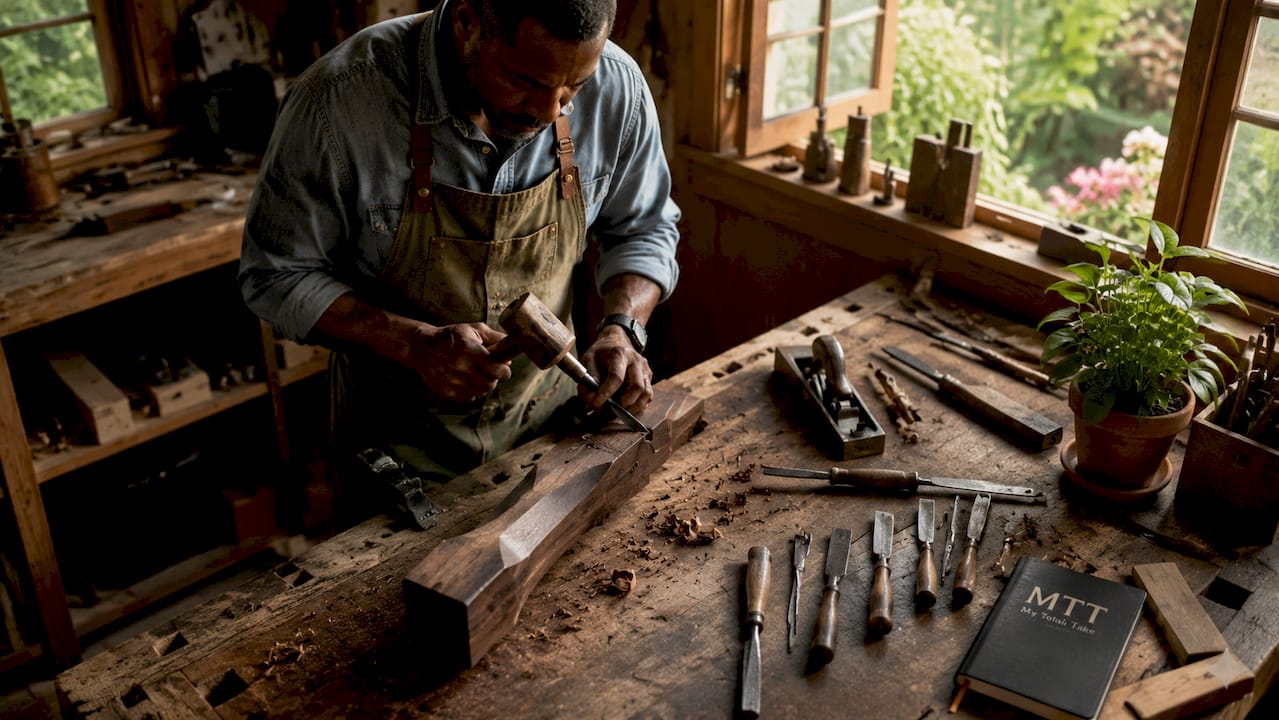
High-quality craftsmanship is defined as the skilled production of goods through expert manual technique, deliberate material selection, and an uncompromising commitment to detail that results in durable, aesthetically superior products. The industry term for its highest expression is “fine craft,” a standard so demanding that only about 2% of artisans achieve it. For homeowners and discerning buyers, understanding what separates a truly crafted piece from a factory-made substitute changes how you shop, what you keep, and what you pass down. This guide breaks down the core elements, real-world examples, and practical signals that reveal genuine quality.
What is high-quality craftsmanship, and what defines it?
Craftsmanship is a process of experimentation, problem-solving, and applied skill that produces unique, durable products with lasting aesthetic appeal. It goes far beyond surface attractiveness. A beautifully finished chair and a mass-produced chair may look similar in a photograph, but their internal structure, material quality, and finishing depth tell entirely different stories.
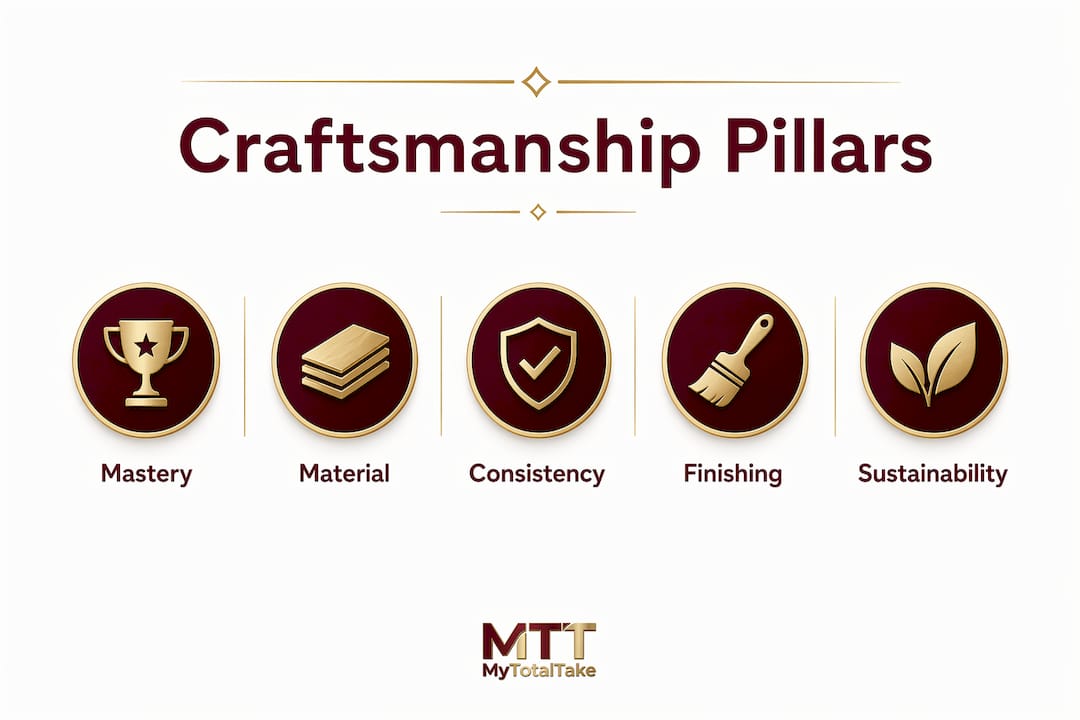
The definition of craftsmanship rests on three pillars: mastery of technique, intentional material selection, and consistency of execution. Remove any one of these, and the result drops from fine craft to competent manufacture. Mastery means the maker controls every critical decision by hand and eye, not by algorithm. Intentional material selection means choosing wood, metal, leather, or fiber based on how it will perform over decades, not just how it looks on a shelf.
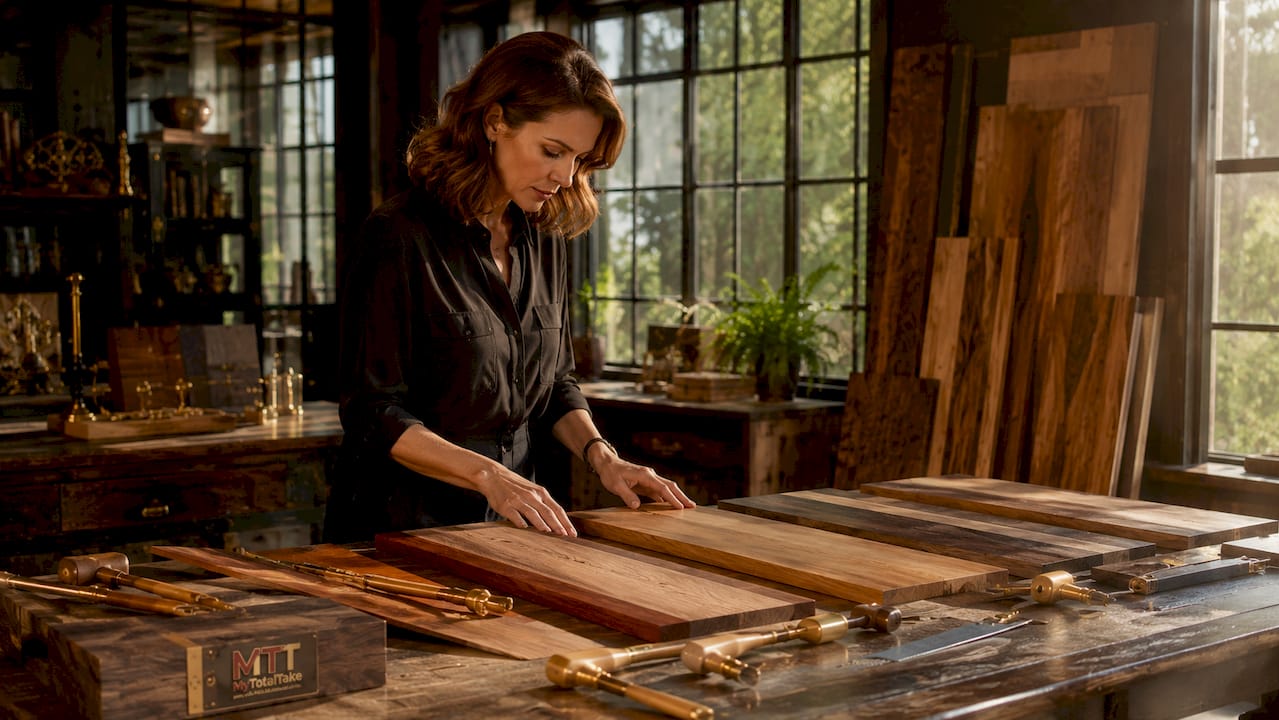
Consistency of execution is the hardest pillar to sustain. A skilled artisan applies the same standard to the tenth piece as to the first, even when no one is watching the hidden joints or the underside of a drawer. That refusal to cut corners on invisible details is what makes craftsmanship exceptional and what gives crafted goods their reputation for longevity.
What are the core elements of skilled craftsmanship?
Artistic craftsmanship is defined by the dominance of manual skill throughout production. Mechanized stages are permitted only when expert human judgment remains the controlling force. This distinction matters because it separates a craftsperson using a lathe from a factory running a CNC machine on autopilot.
Manual skill and technique
The most recognizable element of fine craft is hand-guided execution. In elite watchmaking, for example, multiple firing cycles at high temperatures risk total destruction of a piece, yet artisans accept that risk to achieve technical rigor that no automated process can replicate. The Ferdinand Berthoud atelier exemplifies this: vintage machinery requiring manual dexterity and eye-guided control is preferred over modern CNC tools precisely because the human hand introduces the controlled variation that defines authenticity.
Material selection
Quality materials are chosen for purpose and longevity, not cost efficiency. A furniture maker working in the fine craft tradition selects solid hardwood with specific grain orientation to resist warping over decades. A leather goods artisan chooses full-grain hides because the surface retains its character as it ages rather than peeling like corrected-grain alternatives. The material choice is a long-term decision, not a short-term budget call.
Finishing processes
High-quality finishing is a multi-step process involving raising the grain, sanding to fine grits, applying multiple oil coats, and buffing to achieve durability and silken smoothness. Shortcuts in sanding or drying cause premature finish failure. This is why a well-maintained artisan piece feels different to the touch from a mass-produced alternative, even after years of use.
- Hand-woven cane seating: Creating one high-end chair with hand-woven cane requires 14 working days of specialized labor, a timeline no factory model can justify.
- Sequential sanding: Multiple grit progressions remove tool marks and open wood pores for deeper oil penetration.
- Multi-coat oil application: Each coat cures fully before the next is applied, building a finish that protects from within rather than sitting on the surface.
- Hand buffing: The final stage removes excess oil and raises a natural sheen that machine buffing cannot replicate.
Pro Tip: Run your hand along the underside of a furniture piece. A crafted item receives the same finishing attention on hidden surfaces as on visible ones. Rough, unfinished undersides signal factory production.
How does craftsmanship differ from mass production?
The clearest difference between artisan work and industrial manufacturing is where quality decisions are made. In mass production, quality is defined at the design stage and enforced by machine tolerances. In fine craft, quality is decided moment by moment by the maker’s judgment, eye, and hand.
Artisanal products are unique and the result of human-guided intuition. No two handcrafted pieces are identical, even from the same maker. That variation is not a defect. It is the maker’s “handwriting,” the signature of a human process that machines cannot forge. Mass production treats variation as error. Fine craft treats it as authenticity.
The hidden structural details of a crafted piece reflect a refusal to compromise that sets it apart from factory goods. A dovetail joint cut by hand, a weld finished by grinding and polishing, a seam sewn with extra reinforcement at stress points: none of these are visible to the buyer, but all of them determine whether a product lasts five years or fifty.
| Feature | Mass-produced | Handcrafted |
|---|---|---|
| Production control | Machine tolerances | Maker’s judgment |
| Variation between pieces | Minimized as error | Expected as authenticity |
| Hidden structural quality | Standardized minimum | Exceeds visible standard |
| Material selection | Cost-optimized | Performance-optimized |
| Finishing depth | Single-stage coating | Multi-step, hand-applied |
| Lifespan expectation | Replacement cycle | Generational use |
Quality home renovation work follows the same logic: skilled labor applied with judgment and care produces results that outlast anything a fast-build process delivers.
How do you identify quality craftsmanship in products?
Recognizing fine craft requires knowing where to look, and most of the evidence is in places buyers rarely check. The visible surface of a product is the easiest part to fake. The joints, the underside, the interior lining, and the weight distribution tell the real story.
When evaluating handmade furniture or luxury goods, apply these criteria:
- Joinery quality: Dovetail, mortise-and-tenon, and box joints signal hand or semi-hand construction. Staples and dowels signal factory assembly.
- Weight and balance: Crafted pieces use solid materials throughout. Unexpected lightness often means hollow cores or composite fill.
- Finish consistency: Run a finger along edges, corners, and hidden surfaces. Consistent smoothness indicates thorough finishing. Rough patches or drips indicate shortcuts.
- Material authenticity: Full-grain leather, solid hardwood, and hand-blown glass each have surface irregularities that confirm their origin. Perfect uniformity often signals synthetic substitutes.
- Hardware quality: Hinges, pulls, and clasps on crafted goods are heavy, smooth-operating, and often hand-fitted. Lightweight, loose hardware is a factory signal.
- Maker documentation: Authentic artisan goods come with provenance. A named maker, a workshop location, or a documented process adds verifiable credibility.
Luxury watches offer one of the clearest examples of craftsmanship standards in action. The finest movements are assembled by a single watchmaker who handles every component by hand, checks tolerances under magnification, and signs the movement before it is cased. That level of artisanal technique is what separates a timepiece worth passing to the next generation from one that needs replacing in a decade.
Pro Tip: Ask the seller or brand for the production story. A genuine artisan maker can describe the process in specific detail. Vague answers like “handcrafted in Europe” without further explanation are a red flag.
How do sustainability and tradition shape craftsmanship?
Craftsmanship and sustainability share the same core logic: build it right once, and it does not need replacing. Craftsmanship represents a renewed consumer desire for authenticity, meaning, and sustainability in a world of mass production and disposability. That desire is not nostalgia. It is a rational response to the true cost of cheap goods.
Heritage techniques preserve cultural knowledge that took generations to develop. Hand-forging, natural dyeing, traditional joinery, and hand-thrown ceramics each encode centuries of refinement. When a craft tradition disappears, that knowledge is gone permanently. Buying crafted goods is one direct way to keep those skills economically viable.
Modern artisans increasingly blend heritage methods with contemporary materials and design thinking. A furniture maker might use traditional mortise-and-tenon joinery with sustainably sourced hardwood and a water-based finish that meets current environmental standards. The technique is centuries old. The material sourcing and finish chemistry are current. The result is a piece that honors tradition while meeting modern expectations for craftsmanship in decor and responsible production.
Sustainable craftsmanship also shows up in material sourcing choices:
- FSC-certified hardwoods confirm responsible forest management without sacrificing wood quality.
- Vegetable-tanned leather uses plant-based tannins instead of chromium, producing hides that age beautifully and decompose naturally.
- Reclaimed materials carry embodied history and reduce demand for new extraction.
Key Takeaways
High-quality craftsmanship is defined by manual skill dominance, deliberate material selection, and uncompromising attention to hidden structural details that determine a product’s longevity and authenticity.
| Point | Details |
|---|---|
| Manual skill is the foundation | Expert hand-guided judgment, not machine automation, defines fine craft production. |
| Hidden details reveal true quality | Joints, undersides, and interior finishes show whether a maker refused to cut corners. |
| Finishing is multi-step and critical | Sequential sanding, multiple oil coats, and hand buffing determine durability and tactile quality. |
| Craftsmanship outlasts mass production | Artisan goods are built for generational use, not replacement cycles. |
| Sustainability and tradition align | Heritage techniques and responsible material sourcing are natural partners in fine craft. |
Why craftsmanship still earns its price
By Lysander
I have handled a lot of furniture over the years, from flat-pack assembly to pieces made by named craftspeople with documented workshop processes. The difference is not subtle once you know what to feel for. The weight of a solid hardwood drawer, the way a hand-fitted hinge closes with resistance rather than a clunk, the smoothness of a surface that was sanded through eight grit progressions rather than two: these are not luxury details. They are engineering decisions that determine whether you replace the piece in five years or never.
What I find most under-discussed is the emotional dimension of crafted goods. A mass-produced chair is furniture. A crafted chair is an object with a story. You know someone spent 14 days weaving the cane seat. You know the finish was built up over a week of drying and buffing. That knowledge changes your relationship with the object. You treat it differently. You maintain it. You keep it.
The conventional wisdom says craftsmanship is a luxury for the wealthy. I disagree. The math runs the other way. A crafted piece bought once at a higher price beats three mass-produced replacements at lower prices, both financially and environmentally. The real luxury is not the price tag. It is the confidence that what you bought will still be worth owning in twenty years.
— Lysander
Crafted goods worth owning, curated by Mytotaltake
Mytotaltake curates luxury furniture and home décor selected specifically for documented craftsmanship, material quality, and lasting design. Every piece in the collection is chosen because it meets the standards this article describes: honest materials, skilled construction, and finishing that holds up over time.

For homeowners who want to invest in pieces that earn their place, the luxury furniture collection at Mytotaltake is a strong starting point. Each listing includes production details so you can evaluate the craftsmanship before you buy. For broader guidance on building a home with lasting quality, the upscale products guide covers material selection, construction signals, and what to ask before committing to a purchase.
FAQ
What is the definition of craftsmanship?
Craftsmanship is the skilled application of manual technique, material knowledge, and consistent execution to produce durable, aesthetically refined goods. It prioritizes long-term quality over production speed or cost efficiency.
How do you identify quality craftsmanship in furniture?
Check joinery type, finish consistency on hidden surfaces, material weight, and hardware quality. Hand-cut dovetail joints, smooth undersides, and solid-material construction are reliable indicators of fine craft.
Why does high-quality craftsmanship cost more?
Labor-intensive processes like hand-woven cane seating require up to 14 working days per piece, and multi-step finishing adds days of curing time. That time investment is the primary driver of price in genuine artisan goods.
What makes craftsmanship exceptional versus merely good?
The divide between good and great craftsmanship lies in uncompromising quality on hidden details that consumers never see. Exceptional makers apply the same standard to invisible structural elements as to the visible surface.
Is handcrafted always better than machine-made?
Handcrafted is better when the goal is longevity, uniqueness, and material authenticity. Machine production excels at consistency and speed for standardized goods. For heirloom-worthy home pieces, artisan construction consistently outperforms factory alternatives over time.










Leave a comment