
How to Select a Projector Screen for Your Home
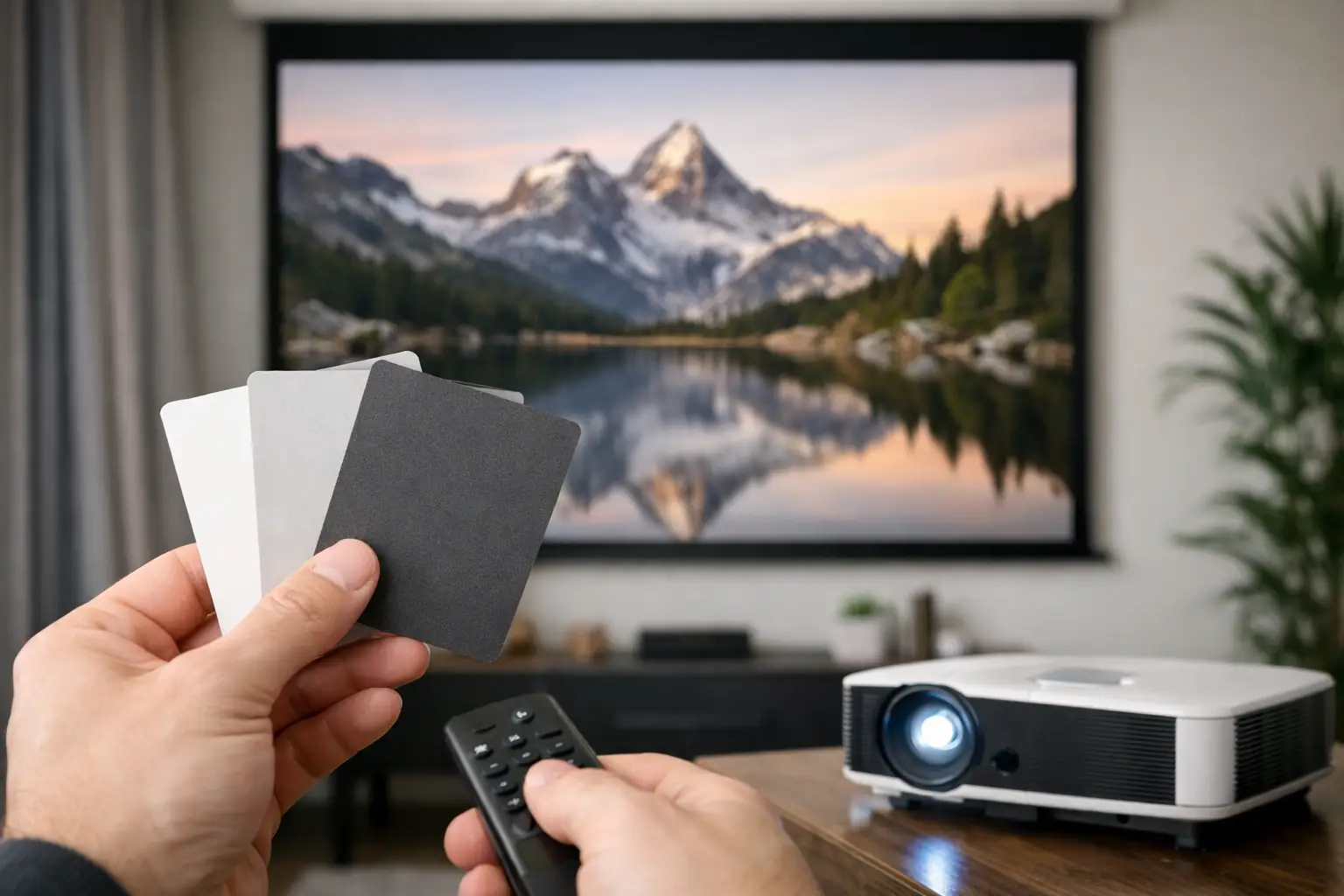
A premium projector deserves more than a blank wall. The screen is what gives movie nights their polished, cinematic finish: deeper perceived contrast, truer color, a cleaner image edge, and a viewing area that feels intentionally designed. Knowing how to select a projector screen starts with the room itself, not the biggest size listed online.
A screen should complement the way you live. A dedicated media room can accommodate a dramatic fixed-frame centerpiece, while a multipurpose living room may call for a discreet retractable design. The right choice balances visual impact with viewing comfort, ambient light, projector capability, and the architectural character of your space.
How to Select a Projector Screen That Fits the Room
Before comparing fabrics or mechanisms, measure the wall and decide where people will sit. Screen size is measured diagonally, but width is often the more useful number when planning around cabinetry, speakers, windows, and artwork.
For a 16:9 screen, which is the standard format for streaming, sports, and most television content, a 100-inch diagonal screen is roughly 87 inches wide. A 120-inch model is about 105 inches wide. Leave visual breathing room around the frame rather than filling every available inch of wall. In a refined living space, proportion matters as much as spectacle.
Viewing distance determines whether a larger screen will feel immersive or simply tiring. For 4K content, many viewers are comfortable sitting about one to one-and-a-half times the screen’s diagonal measurement away. That means a 100-inch screen generally suits seating roughly 8 to 12 feet away. Personal preference matters, though. Someone who wants a theater-forward experience may prefer the closer end of that range, while a household that watches for hours at a time may appreciate a slightly more relaxed distance.
Mounting height is equally influential. Aim to place the lower edge of the image around 24 to 36 inches from the floor in a dedicated theater, adjusting for sofa height and any console beneath it. The center of the image should sit close to seated eye level. A screen hung too high can turn a luxurious viewing room into an uncomfortable one surprisingly quickly.
Choose the Right Aspect Ratio for What You Watch
Aspect ratio describes the shape of the projected image. Selecting it well keeps your setup elegant and avoids large, distracting unused areas around the picture.
A 16:9 screen is the versatile choice for most homes. It matches televisions, game consoles, live sports, YouTube, and the majority of streaming shows. If the projector is primarily for everyday entertainment, 16:9 is usually the sensible and visually balanced investment.
A 2.35:1 or 2.40:1 cinemascope screen is wider and more dramatic. It is designed for movie enthusiasts who want many widescreen films to fill the entire screen without black bars at the top and bottom. The trade-off is that standard TV content will appear smaller, often with black bars on the sides. This format is best reserved for a dedicated theater where film is the main event.
A 16:10 screen can make sense for a home office, creative studio, or hybrid entertainment space using a computer projector. However, it is less natural for a room built around movies and streaming. Match the screen to your most frequent use, not the occasional exception.
Screen Material Is Where Image Quality Takes Shape
Screen fabric influences brightness, black levels, color accuracy, and viewing angles. It is not a decorative detail. A well-chosen material can help an excellent projector look exceptional, while the wrong one can flatten its performance.
Matte white is the classic all-purpose choice. Its neutral surface supports accurate color and broad viewing angles, making it ideal for a dedicated room with controlled lighting. If friends and family spread across a sectional rather than sit in a single row, matte white keeps the image consistent from more seats.
Screen gain measures how much light the material reflects toward viewers. A gain of 1.0 is considered neutral. Higher-gain screens can make an image appear brighter, which may help when paired with a lower-lumen projector or used in a room with mild ambient light. The compromise is a narrower viewing cone and a greater risk of hotspotting, where the center appears noticeably brighter than the edges. For most high-end home applications, a moderate gain near 1.0 to 1.3 offers a more natural result than chasing maximum brightness.
Ambient light rejecting, often called ALR, material is designed for rooms where light control is limited. Think open-concept great rooms, lofts with expansive windows, or living rooms that serve as both daytime gathering spaces and evening theaters. These screens direct more projector light toward the seating area while reducing light arriving from other angles.
ALR screens can create a major improvement in the right setting, but they are not automatic upgrades. They typically cost more, can have narrower viewing angles, and must be paired carefully with the projector’s placement. Standard long-throw projectors and ultra-short-throw projectors require different ALR surface designs. Choosing the wrong material may introduce visible texture, uneven brightness, or distracting artifacts.
For a room that can be darkened with shades, curtains, or thoughtful lighting placement, a premium matte-white screen is often the most graceful choice. For a bright, social living space, ALR may be the feature that makes projection practical rather than merely possible.
Fixed Frame, Motorized, or Portable?
A fixed-frame screen offers the most polished presentation. Its tensioned surface stays perfectly flat, and the visible frame creates a crisp border that improves perceived contrast. It also reads as a purposeful design feature, especially when integrated with built-ins, acoustic panels, or a media wall. For a dedicated theater, it is difficult to surpass.
Motorized retractable screens bring flexibility to rooms with more than one identity. A screen can disappear into a ceiling recess, valance, or elegant surface-mounted case when not in use, preserving a window view or making room for art. Look for tab-tensioned construction if image quality is a priority. Basic pull-down screens can develop waves or edge curl over time, which becomes especially noticeable with 4K projection.
Portable and tripod screens have their place for outdoor films, temporary apartments, and occasional entertaining, but they rarely deliver the tailored appearance or surface flatness of a fixed or tensioned motorized option. They are practical accessories, not usually the foundation of a premium home theater.
Account for Light, Color, and Sound Before Installing
The best screen cannot overcome uncontrolled daylight. Consider window coverings, wall color, ceiling finish, and lamp placement before finalizing a purchase. Darker, matte finishes around the screen minimize reflected light and help preserve contrast. In a bright white room, even a powerful projector can look less dimensional because light bounces back onto the screen.
If speakers will sit behind the screen, consider an acoustically transparent material. This allows the center channel and front speakers to be placed in their ideal locations behind the image, much like a commercial cinema. It creates a remarkably cohesive soundstage, but requires carefully matched equipment and enough space behind the screen. Some acoustically transparent materials also reduce brightness slightly, so projector output should be considered early.
Do not forget projector throw distance. Every projector has a range of distances from the lens to the screen that will produce a given image size. Confirm this measurement before mounting either component. A beautiful 120-inch screen is not useful if the projector cannot fill it from your available mounting location.
Build for the Experience You Want to Repeat
A projector screen is a long-term design decision, so it pays to choose for the room you want to enjoy three years from now. If a renovation is planned, wiring a motorized screen and adding recessed housing before drywall is finished creates a particularly clean result. If your space is evolving, a quality surface-mounted motorized model may offer the right balance of sophistication and flexibility.
At My Total Take, a considered home entertainment setup is about more than specifications. It is about creating a place where a championship game feels electric, a favorite film feels transportive, and an ordinary weeknight feels a little more elevated.
Choose the screen that respects your room’s proportions, supports your projector, and suits the way you gather. When those details align, pressing play becomes an occasion rather than simply another screen on the wall.








Leave a comment