
Induction Cooktop vs Gas: Which Fits Your Kitchen?
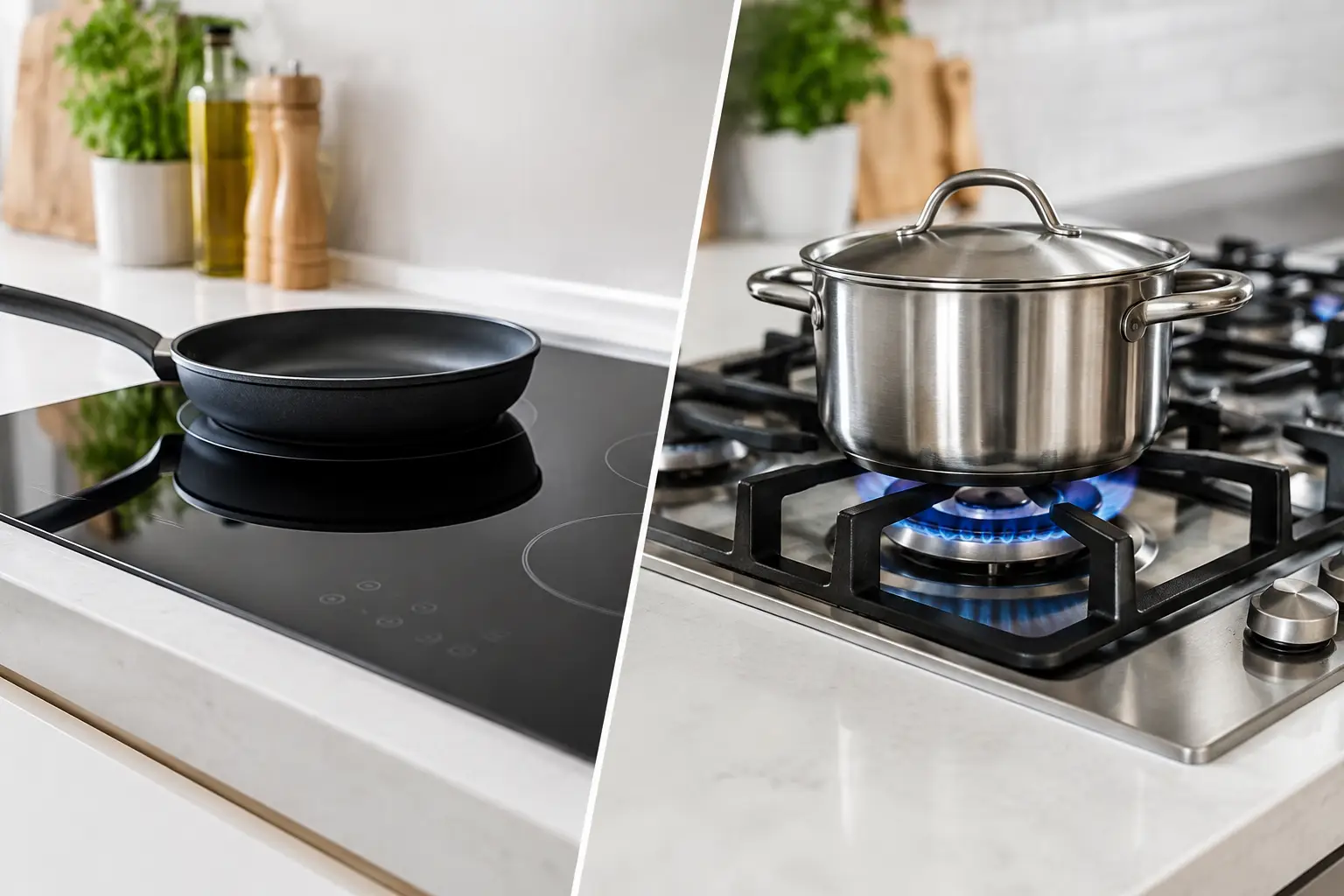
The moment a kitchen renovation becomes real, the cooktop stops being a background appliance. It becomes the surface where weeknight pasta, slow Sunday sauces, and dinner-party finishing touches all come together. The induction cooktop vs gas decision is not simply about how heat reaches a pan. It shapes your kitchen’s visual calm, daily cleanup, energy use, ventilation needs, and the way cooking feels.
For a design-forward home, both options can earn their place. Gas offers visible flame and familiar, hands-on control. Induction brings strikingly clean lines, exceptional speed, and a cooler, more polished cooking zone. The better choice depends on the way you cook, the utilities already in your home, and how much you value a tailored, high-end finish.
Induction Cooktop vs Gas: The Quick Answer
Choose induction if you want fast boiling, precise low-temperature performance, easier cleanup, and a streamlined modern kitchen. It is especially compelling for open-concept homes, apartments, and households that prefer less residual heat around the range.
Choose gas if cooking over a live flame is central to your technique, you regularly use rounded cookware such as woks, or you want a cooktop that can operate during many power outages with a manual ignition. Gas also makes sense when your kitchen already has a properly installed gas line and adding a dedicated electrical circuit would complicate the project.
Neither choice is automatically more luxurious. A beautifully engineered gas range can become a commanding focal point, while a premium induction cooktop can make an island feel almost architectural. The distinction is in the experience you want from the room.
Cooking Performance: Speed, Control, and Feel
Induction is remarkably quick and exact
Induction uses a magnetic field to heat compatible cookware directly rather than heating the surface first. That direct transfer makes it notably fast. A pot of water can reach a boil sooner than it does on many gas or traditional electric cooktops, while the pan responds quickly when you lower the setting.
That responsiveness is valuable beyond boiling water. Chocolate is less likely to scorch when handled thoughtfully at low power. Delicate sauces can hold a gentle simmer with less guesswork. High heat for searing is readily available, and many induction models include boost settings for demanding tasks.
The cooktop itself does become warm from the hot pan resting above it, but it does not produce the same lingering ambient heat as an open flame. For cooks who spend long evenings in the kitchen, particularly in warmer climates, that can make the space noticeably more comfortable.
Gas delivers visual feedback and open-flame versatility
Gas remains beloved for a reason. The flame is visible, immediate, and intuitive. Turn the dial and you can see whether the burner is at a whisper or a roar. For many experienced cooks, that sensory feedback feels natural and satisfying.
A gas burner also accommodates nearly any cookware material, from aluminum and copper to cast iron and carbon steel. It can work well with specialty pieces that do not sit perfectly flat, and it is the natural choice for techniques that benefit from direct flame, such as charring peppers or working with a traditional round-bottom wok.
The trade-off is that gas heat is less contained. Flames can extend beyond the base of a small pan, and a burner may take slightly more attention to maintain very low, steady heat. Powerful gas burners are superb for searing and stir-frying, but their performance depends greatly on burner design, grate stability, and the quality of the ventilation above them.
Safety and Air Quality at Home
Induction has a meaningful advantage for households focused on a calmer, safer kitchen environment. There is no open flame, no risk of a burner igniting a nearby towel, and less exposed heat once cookware is removed. Many induction units also include pan detection, control locks, and automatic shutoff features.
Gas requires thoughtful use and proper installation. The flame itself presents an obvious burn risk, and gas cooking releases combustion byproducts into the room. A high-quality vent hood that exhausts outdoors is a wise investment, especially in a tightly sealed or open-plan home. It helps clear heat, moisture, grease, and cooking odors while supporting better indoor air quality.
Induction still benefits from ventilation. Searing steak, frying shallots, and simmering aromatic sauces create steam and particles regardless of the heat source. The difference is that induction does not add combustion emissions to that equation.
The Design Difference: Minimalist Glass or Statement Range
A flush-mounted induction cooktop can give a kitchen an exceptionally refined look. When it is off, the uninterrupted glass surface recedes into the countertop, allowing stone, cabinetry, and lighting to take the visual lead. It suits contemporary interiors, compact kitchens, and islands where every inch of visual space matters.
Cleanup reinforces that appeal. With no grates, burner caps, or recessed wells, spills can usually be wiped from a smooth surface once it has cooled. Sugary spills should be handled promptly according to the manufacturer’s care guidance, but everyday maintenance is refreshingly simple.
Gas brings a different kind of presence. Heavy grates, polished knobs, and substantial burners can make a range feel like a piece of professional equipment. In a transitional, farmhouse, or richly layered kitchen, that tactile quality may be exactly what the room needs. It does demand more cleaning, however. Grates and burner components collect splatter and require occasional removal for a thorough refresh.
Installation Can Decide the Question
Before falling for a particular finish or feature set, assess the infrastructure behind the wall. Induction cooktops typically require a dedicated 240-volt electrical circuit, and the correct amperage varies by model. An electrician should confirm whether your panel has capacity and whether a new circuit must be run.
Gas cooktops need a properly sized gas line, a shutoff valve, and professional connection. If natural gas is not available, propane may be an option, but conversion requirements and local codes matter. Gas also places greater emphasis on effective ventilation, particularly if you select a high-BTU range.
Installation costs vary widely with the home. Replacing an existing gas cooktop with a new gas model may be straightforward. Converting from gas to induction can require electrical work, while adding gas to an all-electric kitchen can involve more extensive plumbing and permitting. Get clear estimates before treating the appliance price as the entire budget.
One practical caveat: standard induction cooktops need electricity. During an outage, they will not operate unless your home has backup power. Most gas cooktops also use electric igniters, though many can be lit manually with caution when gas service remains available. If outage resilience is a priority, consider the complete kitchen power plan rather than the cooktop alone.
Cookware and Long-Term Value
Induction requires magnetic cookware. Cast iron and most magnetic stainless steel pans work beautifully; pure aluminum, glass, and copper generally do not unless they have an induction-ready magnetic base. A simple magnet test offers a useful first check: if it sticks firmly to the bottom of a pan, the pan should work.
For some households, replacing a few favorite pieces is a modest adjustment. For a serious collector of premium copper cookware, it can be a larger consideration. Gas avoids that limitation and provides total material flexibility.
Operating costs depend on local utility prices and cooking habits, but induction is generally highly efficient because more energy goes into the pan itself. Gas loses more heat to the surrounding air. Over time, induction can offer savings, although the financial difference may not outweigh major electrical upgrades in every home.
Which Cooktop Belongs in Your Kitchen?
Induction is the elegant choice for cooks who prize speed, precision, low-maintenance cleanup, and a composed visual finish. It is particularly well suited to a sleek kitchen renovation where the cooktop should perform brilliantly without dominating the room.
Gas is the confident choice for cooks who value flame-based technique, universal cookware compatibility, and the substantial look of a professional-style range. It can be a wonderful fit for enthusiastic entertainers, devoted wok cooks, and anyone drawn to the ritual of cooking with fire.
A premium kitchen is not defined by copying someone else’s setup. It is defined by choosing details that make your routines easier and your home more inviting. Select the cooktop that supports the meals you actually love to make, then give it the installation, cookware, and ventilation it deserves.











Leave a comment