
Best Countertop Water Filters for Refined Homes
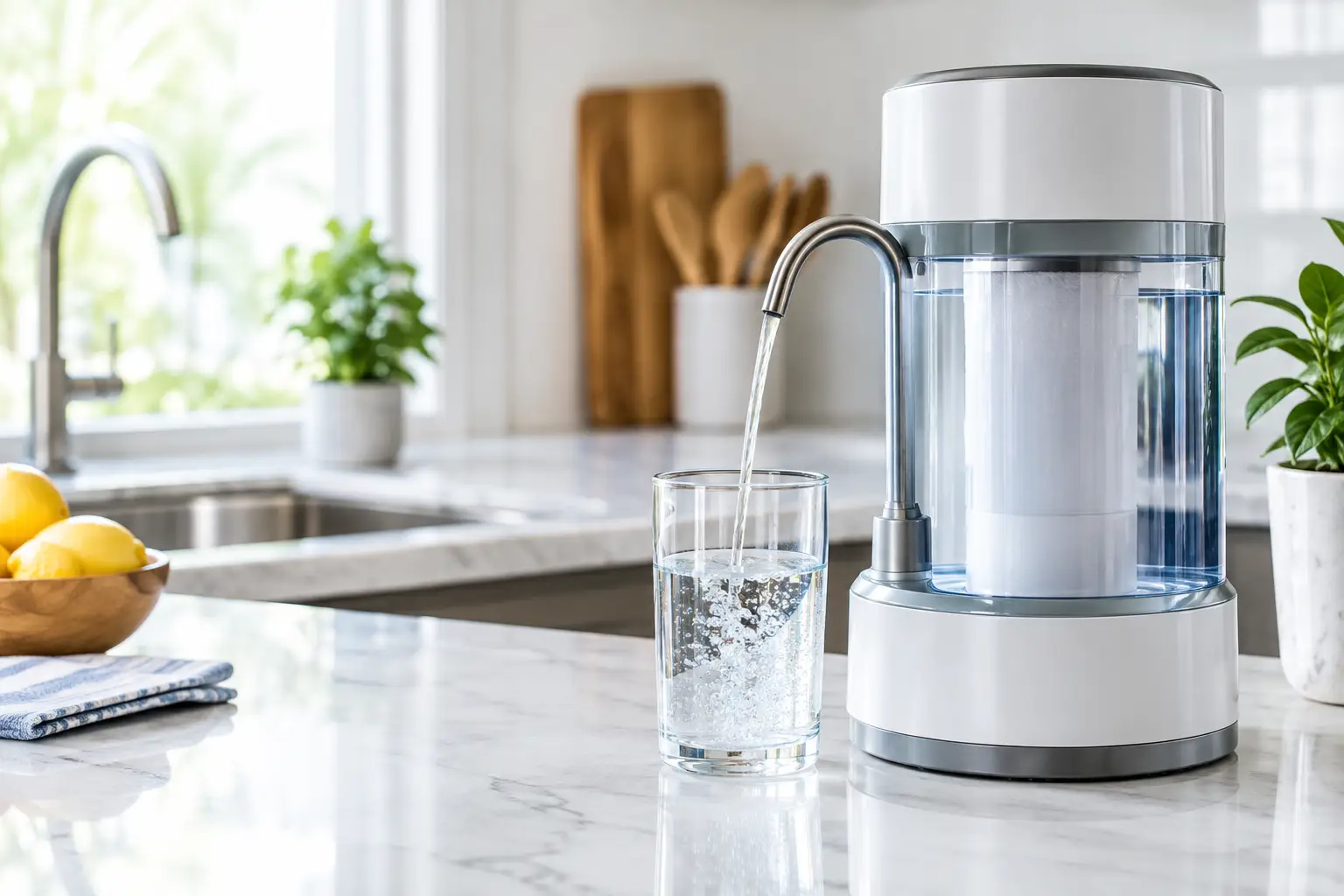
A glass of water should feel like the simplest luxury in your home: clear, fresh, and ready when you are. The best countertop water filters bring that experience within reach without remodeling a kitchen, drilling into stone, or surrendering precious cabinet space. For renters, design-minded homeowners, and anyone refining a daily wellness routine, they offer a polished alternative to bulky pitchers and permanent under-sink systems.
A countertop filter is not automatically the right choice for every household. Its value depends on your local water, how much you drink and cook, the space around your faucet, and the level of filtration you expect. The most satisfying purchase begins with those details, not with the boldest claim on the box.
What Makes the Best Countertop Water Filters Worth Considering
Countertop filtration sits in a useful middle ground. It is more substantial than a pitcher, yet far easier to install than a built-in system. Most models either connect directly to a standard faucet with a diverter valve or operate as a gravity-fed unit that needs no plumbing connection. In both cases, the goal is convenience: filtered water for drinking, coffee, cooking, pet bowls, and the ice tray without a complicated project.
The difference is noticeable when a filter matches the concern you actually have. Activated carbon filters are commonly chosen to improve chlorine taste and odor, which can make tap water more pleasant for everyday drinking. Some systems add stages designed to reduce particular substances, while reverse osmosis countertop units use a more intensive process to lower a broader range of dissolved contaminants.
That broader filtration comes with trade-offs. Reverse osmosis models tend to cost more, occupy more counter space, require electricity or a dedicated reservoir, and may produce wastewater during operation. A compact carbon filter is usually quieter, simpler, and more graceful in a smaller kitchen, but it will not deliver the same reduction profile. Better is not always more complex. Better is what suits your water and your routine.
A countertop system also earns its place through its visual presence. It will sit beside your espresso machine, fruit bowl, or cookware, not disappear behind a cabinet door. Brushed metal finishes, clear glass reservoirs, and restrained silhouettes can make a practical appliance feel at home in a considered kitchen rather than like a temporary utility item.
Start With Your Water, Not the Marketing
Municipal water quality reports provide a useful starting point, but they do not tell the whole story for every individual home. Water can change as it travels through local infrastructure and building pipes. If you notice a chlorine scent, metallic taste, cloudiness, scale around your kettle, or simply want more confidence in what you drink, an independent water test can clarify what deserves attention.
This matters because filter language can be broad. “Purifies,” “clean,” and “advanced” are appealing descriptions, but they are not a substitute for specific performance information. Look for the contaminants a model is designed to reduce, the testing standard behind the claim, and the conditions under which it was tested.
Third-party certification can offer meaningful reassurance. Depending on the system, you may see references to NSF/ANSI standards related to taste and odor, health-related contaminant reduction, or reverse osmosis performance. Certification does not mean one filter solves every water issue. It does mean the stated claims have been assessed against a defined standard. If your home has well water, known lead concerns, or an elevated contaminant result, choose around that result and consider professional guidance where appropriate.
The Main Types of Countertop Systems
Faucet-mounted countertop filters
These systems connect to a compatible faucet and send water through a separate filter housing when you turn a small switch or diverter. They are an excellent fit for households that want on-demand filtered water without filling and refilling a tank.
Their strongest appeal is speed and simplicity. The key consideration is faucet compatibility. Pull-down, spray-style, sensor, and unusually shaped faucets may not accommodate a standard adapter. Measure first, and check whether the unit requires a threaded aerator connection. A beautiful filter is of little use if it cannot connect securely to your sink.
Gravity-fed countertop dispensers
Gravity systems use an upper chamber, a filter element, and a lower reservoir. They need no faucet connection, making them especially appealing for renters, older homes with unusual fixtures, or households that want flexibility during a move. Their calm, appliance-free operation also suits kitchens where outlet space is limited.
The compromise is patience. Filtration takes time, and the reservoir must be refilled. Still, for a household that enjoys filling carafes at breakfast or keeping chilled water ready in the refrigerator, that slower rhythm can feel less like a chore and more like an intentional ritual.
Countertop reverse osmosis machines
These self-contained units typically use multiple filtration stages and a water tank. Many include a dedicated dispensing spout, digital filter-life indicators, and settings for room-temperature or heated water. They can be compelling for people who prioritize extensive contaminant reduction but cannot install an under-sink reverse osmosis system.
Expect a larger footprint and a more involved maintenance routine. Consider where the source-water tank, filtered-water carafe, and wastewater container will go. If you enjoy tea, pour-over coffee, or a carefully built hydration station, the added function may justify the space. In a compact apartment kitchen, it may feel excessive.
How to Choose a Countertop Filter That Fits Your Home
Before selecting a finish or feature set, decide how the filter will be used. A single person who primarily drinks water may value a slim footprint and easy cartridges. A busy household may need higher capacity, quick flow, and enough filtered water for cooking. If you entertain often, a countertop system that repeatedly asks to be refilled can become an interruption rather than a convenience.
Pay close attention to these practical details:
- Capacity and flow rate: A larger reservoir reduces refill frequency, while a faucet-connected model may deliver water faster. Higher capacity is helpful, but only if you have room for it.
- Replacement filter cost: The initial unit is only part of the investment. Review the cartridge price, expected lifespan, and whether replacements are readily available.
- Daily maintenance: Some models need only scheduled cartridge changes. Others require tank washing, periodic descaling, or careful cleaning of valves and reservoirs.
- Counter footprint: Measure width, depth, and vertical clearance beneath cabinets. Leave enough room to remove a lid, refill a tank, or access a control panel.
- Materials and finish: Stainless steel, glass, and quality BPA-free components can contribute to a more elevated look and a more reassuring everyday experience.
A filter-life indicator is useful, but it should not replace common sense. Cartridge life is often based on gallons processed, and a household that cooks heavily or fills multiple bottles each day may reach that limit sooner than the calendar suggests. Likewise, a filter should be replaced as directed even if the water still tastes fine. Some issues are not detectable by taste alone.
Small Details That Protect the Experience
Placement can make the difference between a filter you use every day and one that slowly becomes counter clutter. Put it where filling a glass feels effortless: near the sink, coffee station, or refrigerator, but away from direct sunlight and heat. For gravity units, choose a stable surface that can support the full weight of water and leaves comfortable clearance above the lid.
Keep the surrounding area dry, particularly around faucet adapters and electrical countertop units. Clean reservoirs on the schedule in the manual, using mild methods appropriate to the materials. Neglecting the vessel itself can undermine the clean, composed experience you bought the filter to create.
There is also no reason to treat filtered water as a cure-all. A countertop filter cannot repair damaged plumbing, remove every possible concern unless it is specifically designed and certified to do so, or replace attention to local water advisories. It is a refined household tool, not a universal answer.
A Better Everyday Water Ritual
The right countertop filter does more than change what is in your glass. It makes a better choice easier to repeat, whether that means a crisp tumbler beside your laptop, cleaner-tasting pasta water, or a morning coffee that lets the beans speak for themselves. Choose the system that fits your kitchen with the same care you give any lasting home upgrade, and it can become one of the quietest, most appreciated pieces of your daily routine.











Leave a comment