
Robotic Pool Cleaner Review for Smarter Pools
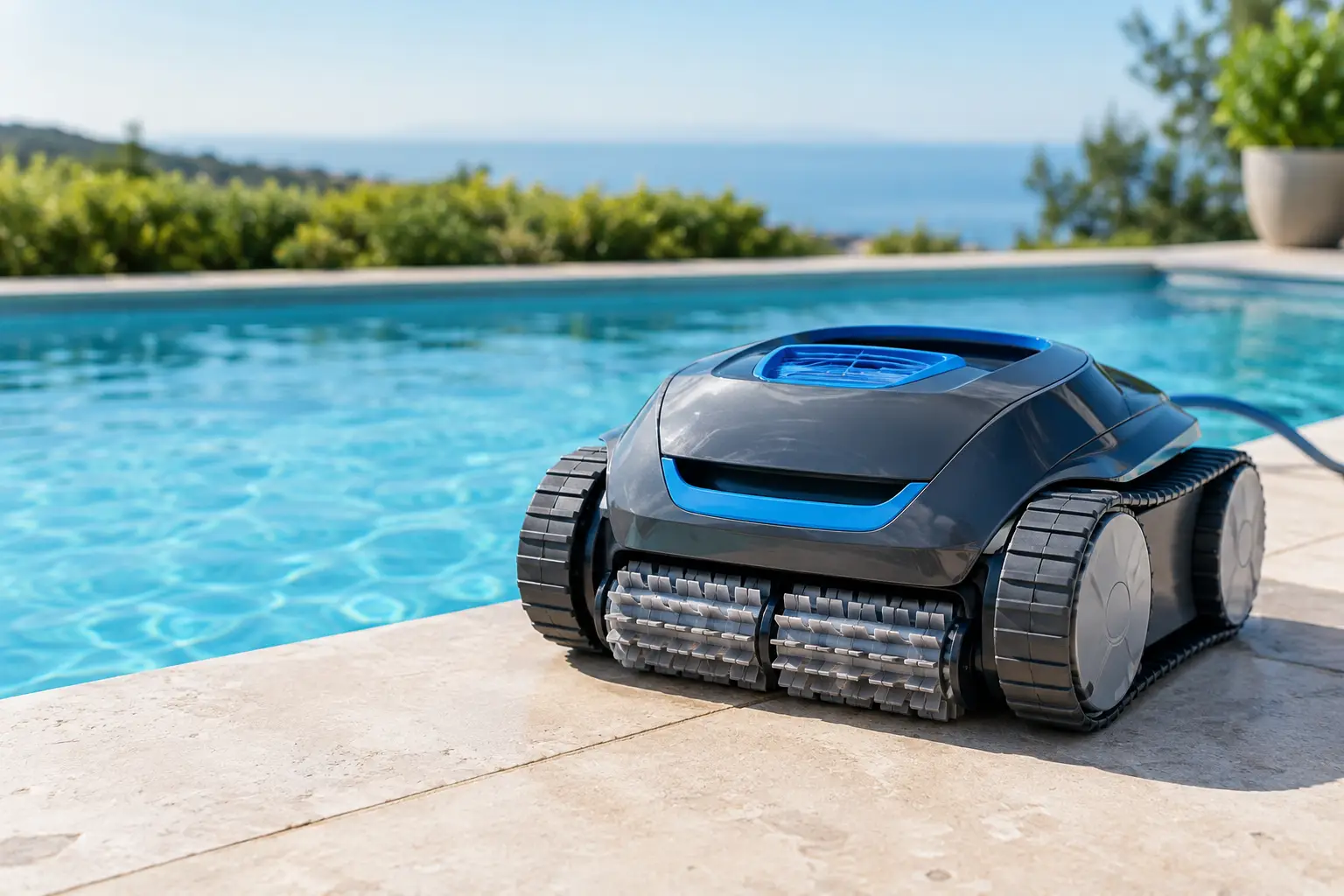
A clear pool is one of the quiet luxuries of a well-designed backyard. But few homeowners want to spend a perfect Saturday pushing a vacuum pole across the deep end. This robotic pool cleaner review focuses on what separates a genuinely worthwhile machine from an expensive gadget that spends more time stuck on a drain cover than cleaning the waterline.
For the right pool, a robotic cleaner is a high-end convenience upgrade with a practical payoff: less manual labor, more consistent cleaning, and a pool that is ready when the evening swim or weekend gathering begins. The best choice is not necessarily the model with the longest feature list. It is the one designed for your pool’s surface, shape, debris load, and cleaning expectations.
What a Robotic Pool Cleaner Actually Changes
Unlike suction-side and pressure-side cleaners, a robotic pool cleaner operates independently from the pool’s circulation system. It plugs into a power source or runs on a battery, draws water through its own pump, captures debris in an onboard filter, and returns cleaned water to the pool.
That independence is the central appeal. Your skimmer and pump are not doing all the work, and you do not need to install a booster pump or keep hoses stretched across the deck. For homeowners who value a clean, uncluttered outdoor setting, the difference feels immediate.
A quality robotic cleaner can collect fine sediment, leaves, pollen, insects, and the small debris that tends to settle along steps and corners. Many can also climb walls and scrub the waterline, where sunscreen, oils, and airborne residue often leave a dull ring. The result is not a replacement for balanced water chemistry or occasional hands-on maintenance. It is a far more refined way to handle the repetitive work.
Robotic Pool Cleaner Review: The Features That Matter
Marketing language can make every cleaner sound equally capable. In practice, performance comes down to a handful of details that are worth examining before you buy.
Cleaning coverage and navigation
Basic robots move in a programmed pattern, which can work well in a simple rectangular pool. More advanced models use sensors, gyroscopes, or mapping technology to assess the pool’s dimensions and adjust their route. These systems are particularly valuable in freeform pools, pools with ledges, tight corners, tanning shelves, or irregular depths.
Smart navigation does not mean a cleaner will trace every inch with architectural precision. It means it is less likely to spend the entire cycle revisiting one area while neglecting another. For a pool with a complex layout, that efficiency is worth paying for.
Also verify the manufacturer’s stated coverage. Some models clean floors only, while others are designed for floors and walls. Waterline cleaning is a premium feature, but it can make a meaningful visual difference, especially in light-colored plaster, tile, or fiberglass pools.
Filtration quality
The filter is where a robotic cleaner earns its place. A large debris basket is ideal for pools surrounded by mature trees, while ultra-fine filter panels or cartridges are better suited to dust, sand, pollen, and algae-prone conditions.
The most versatile setups offer interchangeable filtration options. You might use a coarse basket after a windy fall day, then switch to a finer filter for the polished clarity you want before guests arrive. A top-loading basket is another small but valuable convenience. It is easier to access, easier to rinse, and far less unpleasant than reaching into a debris chamber underneath the unit.
Fine filtration can slow water flow as the basket fills, so it needs regular cleaning. That is not a flaw. It is the trade-off for catching the particles that make a pool look less pristine even when the water tests properly.
Brushes and pool compatibility
A cleaner that performs beautifully on one surface may be less effective on another. Vinyl liners, fiberglass, painted surfaces, tile, and plaster all have different traction needs. Look for active scrubbing brushes if your pool develops stubborn film or if you want more than simple debris pickup.
For textured plaster or pebble finishes, traction is especially important. The cleaner must grip the surface well enough to climb without slipping. For vinyl pools, use a model explicitly rated for liners, with brushes that clean effectively without being overly abrasive.
This is one area where buying based on price alone can be disappointing. A slightly more expensive cleaner matched to your pool finish will generally provide better coverage and a longer service life than a bargain model forced to work outside its intended setting.
Corded versus cordless convenience
Corded robotic cleaners remain a strong choice for larger pools and frequent use. They typically offer longer cleaning cycles, steady power, and fewer concerns about battery charge. Modern swivel cables also reduce tangling, though no cable system is completely maintenance-free.
Cordless cleaners create a more streamlined experience. There is no cable crossing the deck, no outlet to manage during a cleaning cycle, and no cord to coil afterward. They are particularly appealing for compact pools, above-ground pools, and homeowners who prioritize simplicity.
The compromise is runtime. A cordless model must finish its work before the battery runs down, so confirm that its rated runtime is appropriate for your pool size. Battery-powered cleaners also require a charging routine, which may be effortless for some owners and one extra task for others.
The Pool Details That Should Guide Your Purchase
Before comparing designs, measure the pool and take an honest look at its surroundings. Pool length, depth, shape, surface, and debris conditions all matter more than a glossy product photo.
A compact floor-only cleaner can be an excellent fit for a small, straightforward pool with minimal leaf fall. A large in-ground pool beneath oak, palm, or pine trees needs a bigger basket, powerful suction, and enough runtime to cover the entire floor without repeated cycles. If you regularly find grit on the steps or residue at the waterline, wall-climbing and fine filtration should move higher on your list.
Consider how often you want to run it, too. A homeowner who uses the pool every day during summer may appreciate scheduled cleaning, app controls, and quick-cycle settings. Someone who mainly wants the pool ready for weekend use may be perfectly satisfied with a simpler, reliable unit that runs on demand.
Do not overlook the practical details: unit weight, handle placement, caddy availability, cable length, and filter access. A cleaner can have impressive technology, but it still has to be lifted out of the water, emptied, rinsed, and stored. Ease of ownership is part of the luxury.
Are Smart Controls Worth It?
App-connected robotic cleaners offer scheduling, cycle selection, cleaning status, and, in some cases, spot-cleaning direction from a phone. These features can be genuinely useful, especially for busy households that want pool care to happen quietly in the background.
Still, smart controls are not automatically essential. Wi-Fi range can be inconsistent around a yard, and a cleaner with excellent brushes, strong filtration, and dependable navigation will usually deliver more value than a less capable model with an elaborate app.
Think of connectivity as a finishing feature. If you already maintain a smart outdoor space with automated lighting, speakers, or irrigation, app control may complement the experience. If your priority is simply a cleaner pool with less effort, prioritize core cleaning performance first.
The Costs Beyond the Purchase Price
A robotic cleaner is an investment, and premium models can cost substantially more than traditional automatic cleaners. In return, they can reduce strain on the pool’s main filtration system and often use less energy than running a booster pump for a pressure-side unit.
Ownership costs also include replacement filters, brushes, tracks, batteries on cordless models, and potential repairs after the warranty period. These parts wear because the machine does real work in a chemically treated environment. Choosing a model with readily available replacement components and a meaningful warranty is a sensible safeguard.
There is also a labor value that does not appear on a receipt. If a robot helps you spend less time skimming, vacuuming, and brushing, it protects the purpose of a beautiful pool in the first place: unhurried time outdoors.
A Better Standard for Poolside Care
The best robotic cleaner is not the one with the most dramatic claims. It is the one that fits into your routine so naturally that a clear pool becomes the default rather than a project. Look for capable filtration, dependable coverage, surface compatibility, and a design you will not resent carrying, cleaning, or storing.
A thoughtfully chosen model turns routine maintenance into a nearly invisible part of outdoor living. That leaves the patio, the water, and the time you share around both exactly as they should be: the focus.











Leave a comment