
Portable Power Stations That Camp Like You Do
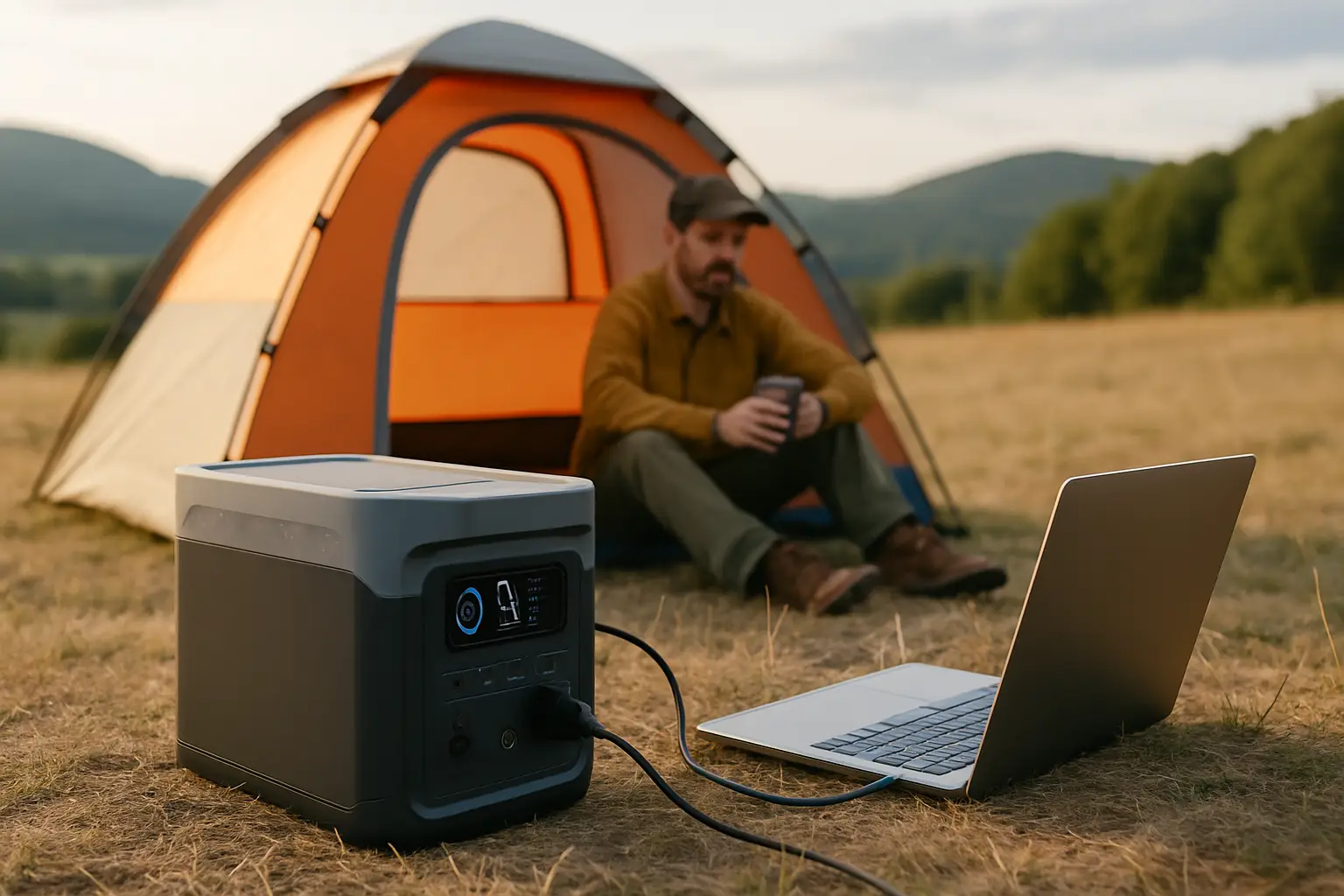
That moment when the sun drops behind the trees and your campsite gets quiet is exactly when you notice what you brought – and what you didn’t. A headlamp is fine. A crackling fire is better. But if your “off-grid” weekend still includes a fridge that keeps food crisp, phones that stay charged, a camera ready for sunrise, or a CPAP that makes sleep possible, a portable power station stops being a gadget and becomes part of the comfort.
The trick is choosing one that matches your camping style instead of overpowering it. Too small and you spend the weekend rationing battery like it’s wartime. Too large and you’ve paid for capacity you never use, hauling weight that steals spontaneity. The good news: once you understand a few numbers and trade-offs, shopping gets straightforward – and the result feels quietly luxurious.
What “portable power station” really means at camp
A portable power station is essentially a large rechargeable battery with built-in outputs – AC outlets for plug-in appliances, USB ports for devices, and often a DC car-style port. It’s designed to be safe, tidy, and easy to use compared to DIY battery setups.
For camping, the difference is elegance. Instead of juggling separate inverters, clamps, and cables, you get a clean box that sits under a camp table and powers your setup with a single button press. Many models also support solar charging, which is where “weekend comfort” turns into “stay as long as you want” energy independence.
Start with the number that matters: watt-hours
Capacity is measured in watt-hours (Wh). Think of it as the size of the fuel tank. A 500Wh unit can theoretically run a 50W load for about 10 hours (50W x 10h = 500Wh). Real life is messier because power stations lose some energy to conversion and heat, especially when using AC outlets. Expect roughly 10 to 20 percent overhead depending on the device and the station.
Here’s the practical way to use Wh when you’re choosing: estimate what you want to power per day, then decide how many days you want between charges. If you’re car camping and can top up from your vehicle or a campground outlet, you can size smaller. If you’re dispersed camping and want solar to handle the trip, you’ll want more capacity and better charging options.
A portable power station for camping: match it to your trip
Most campers fall into a few profiles, and the right portable power station for camping changes based on how you travel.
If you’re a minimalist weekend camper, you’re usually powering phones, a headlamp recharge, maybe a small speaker, and a camera battery. This is where compact units feel perfect – easy to pack, quick to grab, and sufficient without becoming a centerpiece.
If you’re “comfort-forward” car camping, add a 12V fridge, an electric blanket on cold nights, or a small fan during humid months. Your power needs jump fast, and this is where mid-capacity stations start to feel like a quality-of-life upgrade rather than an indulgence.
If you’re running medical devices or work gear, you should size with margin. A CPAP, laptop, and reliable phone charging is less about vibes and more about certainty. In these cases, extra capacity and predictable output matter as much as portability.
If you’re glamping with electric cooking, that’s its own category. Kettles, induction cooktops, and portable microwaves can draw huge wattage, even if only for a few minutes. You need a station that can deliver high peak output, not just store energy.
Output: watts, surge, and the “why won’t it turn on?” problem
Two stations can have the same capacity and feel completely different because of output. Output is measured in watts (W) and tells you what the station can power at once.
For camping, there are two key specs: continuous wattage and surge wattage. Continuous is what it can sustain. Surge is the short burst needed to start motors or heating elements. A fridge compressor, for example, may need a surge to kick on. If your station can’t handle that momentary spike, the fridge won’t start even if the battery is full.
A good shopping habit is to identify your highest-demand device and check its wattage. Heating devices are usually the most demanding. Motor-driven devices can be deceptively tricky because surge requirements aren’t always obvious. When in doubt, choose a station with more headroom than your calculations suggest. It feels like overkill until it’s 11 p.m., the wind picks up, and your power plan turns out to be optimistic.
Ports and layout: small details, big daily comfort
Port selection is where premium stations quietly justify themselves. Look for enough USB-C power delivery for modern devices, especially if you charge a laptop, a tablet, or newer phones that benefit from higher-watt charging. AC outlets matter if you bring plug-in chargers, but you don’t want to waste energy converting DC battery power to AC and then back to DC inside a charger if a direct USB-C option would do.
Also consider physical layout. Ports that are spaced well, clearly labeled, and easy to access in low light make camp life smoother. A built-in light can be genuinely useful. A readable screen that shows input, output, and remaining time helps you manage power without guesswork.
Battery chemistry: why LiFePO4 has become the premium pick
Many newer stations use LiFePO4 (lithium iron phosphate) batteries. They’re typically heavier than some lithium-ion alternatives for the same capacity, but they shine in longevity and safety, which matters when the station lives in a garage, rides in a trunk, and gets used in temperature swings.
If you want a power station you’ll use for years – camping, storms at home, tailgates, backyard movie nights – battery cycle life is part of the value. A station that holds up over hundreds or thousands of cycles is less “camp accessory” and more “household asset.”
Charging options: the difference between a weekend tool and a travel system
Charging speed and flexibility are where the camping experience either feels effortless or fussy.
Wall charging is the fastest and easiest before you leave. Car charging is convenient on the road but often slower than people expect. Solar is the game changer, but it depends heavily on panel size, weather, and how efficiently the station accepts input.
If you plan to use solar, pay attention to the station’s maximum solar input and its supported voltage range. A high-capacity station with low solar input can take too long to refill. Conversely, a smaller station with strong solar input can feel surprisingly self-sufficient.
The realistic mindset is this: solar often maintains and extends your trip rather than delivering a perfect daily reset, unless you have ample panel wattage and good sun. For many campers, the dream setup is charging to 100 percent at home, topping up by car while driving, then using solar as a steady trickle that keeps essentials running.
Weight, size, and the luxury of not wrestling your gear
Portability is not just whether it has a handle. A heavier station might be fine if it lives in your vehicle and moves 10 feet to a picnic table. If you’re carrying it across sand, up a slope, or into a tent, weight becomes part of the decision.
Consider where it will sit at camp. If it’s going under a table, in a cargo area, or near a sleeping setup, dimensions and cable routing matter. A compact footprint can make the whole campsite feel more organized.
Quiet power and campsite etiquette
A power station is silent in use, which is one of its biggest advantages over a gas generator. That said, some stations have cooling fans that can be noticeable under heavy load or fast charging. If you’re sensitive to noise at night, plan to charge and run higher-watt devices earlier in the evening, and reserve overnight power for essentials.
This is also where efficiency choices matter. Running devices on DC or USB instead of AC can reduce fan activity and stretch battery life.
What you can reasonably run – and what you shouldn’t
A portable power station excels at electronics, lighting, fridges, and small comfort devices. It’s less ideal for sustained heating. Space heaters and high-watt cooking tools can drain even large batteries quickly. You can still use them, but treat them like short luxuries, not all-night solutions.
If warmth is the goal, consider low-watt options such as a heated blanket used on a timer, or focus on insulating sleep systems and let the power station cover the electronics that make your trip easy.
Buying with confidence: a curated approach
If you’re investing in a premium camping setup, the best choice is the one that disappears into the background. It powers what you brought, charges the way you actually travel, and doesn’t require constant monitoring.
Shopping a curated storefront can help because it filters out the noisy market of lookalike models and focuses your attention on build quality, useful port mixes, and designs that feel intentional. If you’re browsing power options alongside other elevated outdoor and home essentials, mytotaltake.com is built around that kind of high-end, quality-led selection.
When you pick your station, give yourself permission to buy for the life you want at camp. Not the most extreme scenario, not the bare minimum – the version where dinner is unhurried, devices are ready when you need them, and you get to enjoy the quiet without negotiating with a dying battery.












Leave a comment