
Why choose designer furniture: style, quality, and true luxury
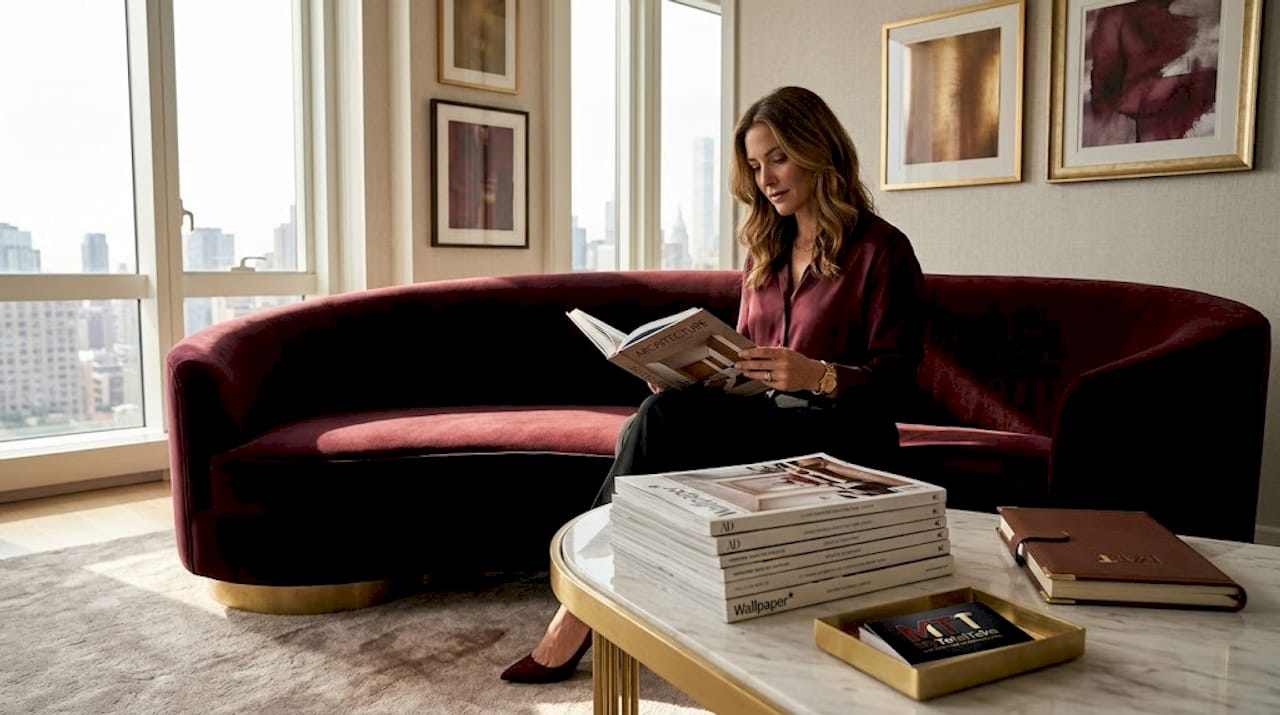
Luxury homes should feel as extraordinary as they look, yet many homeowners invest heavily in high-end finishes and still find something quietly wrong with the result. The sofa sits awkwardly against a sweeping wall. The dining table seems lost in a grand room. The furniture checks every surface-level box, and yet the space feels impersonal, almost staged. This isn’t a failure of taste. It’s a failure of fit, scale, and meaning. Designer furniture exists to solve precisely these challenges, offering not just visual beauty but architectural harmony, artisan-level craftsmanship, and the kind of exclusivity that transforms a house into a home that tells your story.
Table of Contents
- Designer furniture vs. generic options: Defining the difference
- Perfect scale and craftsmanship: Solving luxury fit problems
- Exclusivity and personalization: The value of unique design
- Smart strategy: Combining custom, designer, and vintage furniture
- Our take: What most articles miss about designer furniture
- Where to find designer furniture for your luxury space
- Frequently asked questions
Key Takeaways
| Point | Details |
|---|---|
| Perfect fit for luxury | Designer furniture solves scale and fit problems that generic options cannot for upscale spaces. |
| Exclusivity and personalization | Unique designs allow you to express individual style and add cultural value to your home. |
| Strategic furniture selection | Mixing custom anchors with designer and vintage pieces creates sophisticated, balanced luxury. |
| Long-term investment | Designer pieces often hold value, last longer, and raise the prestige of your property. |
Designer furniture vs. generic options: Defining the difference
Now that we’ve outlined the main challenges, let’s compare designer furniture to generic options to understand why the distinction matters.
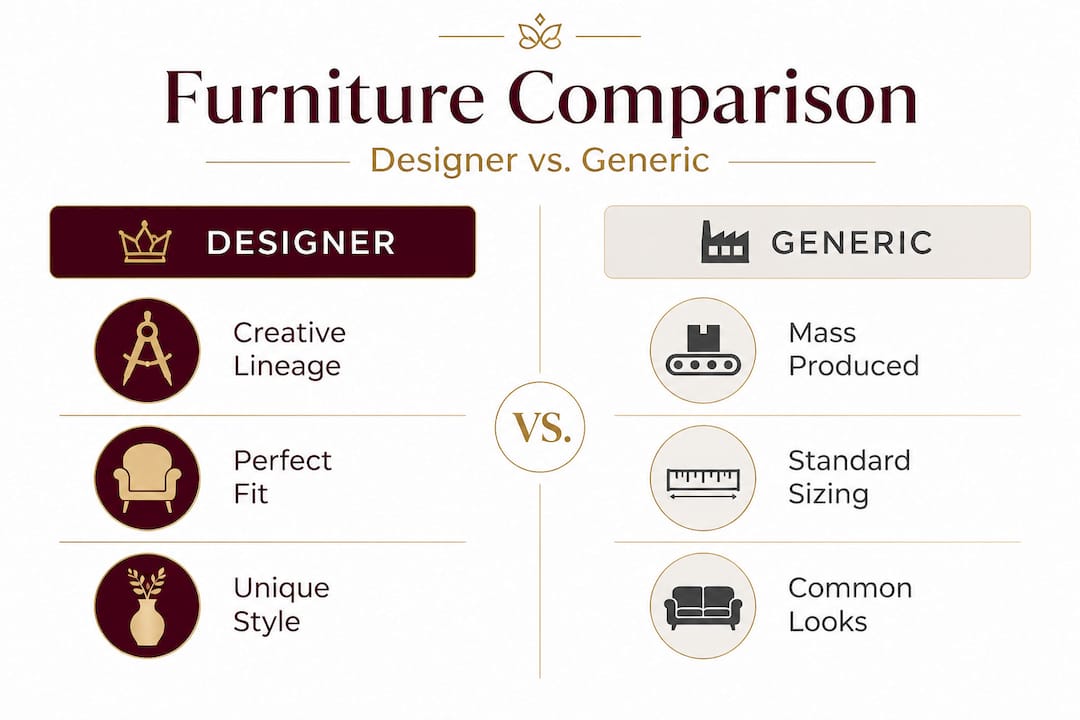
Designer furniture is not simply expensive furniture. The two things are entirely different. Mass-produced pieces are built to average dimensions for average spaces, manufactured at scale with cost efficiency as the primary goal. Designer furniture, by contrast, is conceived by recognized creative talents or specialized ateliers with a clear aesthetic vision, and produced using premium materials with a level of hand-finishing that factories simply cannot replicate.
When you’re investing in design furniture, you’re acquiring a piece with a defined creative lineage. The chair carries the philosophy of the designer. The table reflects choices made consciously, not by algorithm. That distinction shows up in how the piece lives in your home.
Here’s a direct comparison to make this concrete:
| Feature | Designer furniture | Generic/mass-produced |
|---|---|---|
| Materials | Hand-selected hardwoods, full-grain leather, artisan textiles | Engineered wood, bonded leather, synthetic fabrics |
| Production | Limited runs, skilled handcraft | High-volume factory output |
| Dimensions | Designed with proportional intent | Standardized for average rooms |
| Exclusivity | Limited editions or one-of-a-kind | Widely available, easily duplicated |
| Longevity | Heirloom-worthy, decades of use | 5 to 10 years typical lifespan |
| Price | Premium investment | Entry to mid-range cost |
Key characteristics that set designer furniture apart include:
- Proportional integrity: Each piece is designed with visual weight and room scale in mind.
- Material honesty: What looks like wood is solid wood. What looks like leather is full-grain leather.
- Narrative identity: Many pieces carry cultural or historical references that give depth to a room.
- Resale value: Unlike generic furniture, well-known designer pieces often hold or appreciate in value.
When exploring timeless furniture design, you quickly realize that great design is not about trends. It’s about pieces that remain visually and functionally relevant for generations. As one industry source notes, designer furniture provides perfect scale and fit to architecture, eliminating the sizing issues that plague luxury homes with unique proportions.
“In a luxury home, off-the-shelf sizing is often the single biggest visual mistake. A sofa two inches too short against a twelve-foot wall changes the entire energy of a room.”
Perfect scale and craftsmanship: Solving luxury fit problems
With the foundational differences clear, let’s look at how designer choices solve fit and craftsmanship challenges in upscale homes.
Scale is one of the most underestimated problems in luxury interior design. When a home features double-height ceilings, wide-open floor plans, or architectural details like coffered ceilings and oversized windows, standard furniture simply fails. A sofa that works perfectly in an average living room looks like a toy in a grand salon.

The decor craftsmanship and style conversation always comes back to this: the difference between furniture that fills a room and furniture that belongs in it. Designer and custom pieces are conceived with architectural context in mind.
Here are the most common fit challenges and how designer furniture addresses them:
| Fit challenge | What goes wrong with generic options | Designer furniture solution |
|---|---|---|
| Oversized rooms | Furniture looks undersized and disconnected | Pieces scaled to wall lengths and ceiling heights |
| Unique floor plans | Standard configurations block flow or leave dead zones | Custom layouts and modular configurations |
| Tall ceilings | Low-profile pieces disappear visually | Taller backs, statement profiles, vertical proportions |
| Alcoves and built-ins | Off-the-shelf pieces create awkward gaps | Bespoke dimensions that slot in perfectly |
| Curved architecture | Straight furniture clashes with curved walls or bays | Custom curved sofas or arc-form tables |
According to industry research, sofas scaled to wall lengths and dining tables calibrated to room sizes represent the strongest approach, and while custom upholstery can cost 40 to 60 percent more, the result is a room that actually works.
Here’s a practical step-by-step approach for optimizing your space with designer solutions:
- Measure everything, twice. Before selecting any piece, map your room with exact dimensions including ceiling height, window sill levels, and architectural features.
- Identify your visual anchors. These are the one or two pieces that define the room’s scale, typically the main sofa and the dining or coffee table.
- Choose designer or custom for anchors first. Get these right and everything else can be layered in with more flexibility.
- Consider visual weight, not just physical size. A heavy stone-topped table may need lighter chairs to balance the eye.
- Work with natural light. Designer furniture in deep woods or rich fabrics needs to be positioned where light can activate those materials.
- Leave room for the architecture. Grand homes need breathing space. Overcrowding with even beautiful pieces defeats the purpose.
Visiting a showroom that specializes in something like the interior design cloud couch aesthetic can give you a real sense of how proportions shift when a piece is designed for volume and comfort rather than minimal footprint.
Pro Tip: Before committing to any significant furniture investment, create a scaled floor plan and cut out paper templates of prospective pieces. It takes twenty minutes and it has saved many homeowners from six-figure mistakes.
Exclusivity and personalization: The value of unique design
Beyond fit and quality, let’s explore how designer selections elevate luxury through exclusivity and personalization.
There is a particular satisfaction in owning something that no one else has. That feeling is not vanity. It’s the natural human response to something created with intention specifically for you, or for a very limited audience. Designer furniture delivers this experience at multiple levels.
At the highest tier, bespoke commissions mean a piece is made to your exact specifications, incorporating your choice of materials, finishes, dimensions, and even embedded personal details. At the next level, limited-edition designer pieces offer exclusivity through scarcity. A dining chair from a run of fifty is fundamentally different in meaning from one produced in tens of thousands.
What personalization actually means in practice:
- Material selection: Choosing between Italian Nubuck, aged cognac leather, or hand-loomed Belgian linen for upholstery.
- Finish customization: Selecting lacquer colors, metal patinas (aged brass vs. polished chrome), or wood stains to complement your existing palette.
- Dimensional adjustment: Requesting a sofa three inches deeper for a specific sitting preference or a bed frame two inches taller for a raised platform floor.
- Inlay and detail work: Custom marquetry, hand-carved legs, or signature joinery that becomes a conversation piece.
- Provenance and story: Sourcing vintage pieces from known collections, designers, or specific cultural traditions.
The cultural dimension is worth pausing on. As Architectural Digest notes, unique designs reflecting individual style, cultural value, and one-of-a-kind status are what elevate a space from expensive to genuinely singular. A mid-century Scandinavian sideboard brings the design philosophy of an entire era into your home. A hand-carved console from a Moroccan artisan carries the memory of a craft tradition that stretches back centuries.
Exploring luxury decor styles reveals how cultural references can be woven into a space without it feeling like a museum. The key is intentionality. Each piece you choose should mean something, whether that meaning is aesthetic, historical, or personal.
Pro Tip: When sourcing vintage or designer pieces with cultural heritage, ask the seller for provenance documentation. Knowing who made something, when, and why adds irreplaceable depth to your home’s narrative, and it protects your investment.
Smart strategy: Combining custom, designer, and vintage furniture
Having seen the benefits of exclusivity, here’s how to approach furniture selection with real-world strategy and expert guidance.
The most sophisticated luxury interiors are rarely furnished from a single source. They are curated, meaning each piece was chosen with purpose and placed with knowledge of how it relates to every other element in the room. A pure bespoke approach can feel overly formal and lacking personality. A room filled only with mass-market pieces, however premium the brand, can feel like a showroom.
The design impact on luxury decor is most powerful when contrast and intentionality work together. A custom-built sofa paired with a vintage Florence Knoll coffee table and a contemporary artist’s sculpture creates dialogue between eras and sensibilities.
As one design authority articulates it:
“The optimal strategy combines custom for anchor pieces requiring precise fit with designer and vintage selections for cultural value and personality. A room that is purely bespoke or purely mass-produced lacks the sophistication that comes from thoughtful curation.”
Source: Custom vs. Designer Furniture
Here’s how to build this strategy in your own home:
- Audit your space first. Identify which rooms have the most complex architectural challenges. These are where custom fit will matter most.
- Define your anchor pieces. The main sofa, dining table, and primary bed frame are your anchors. Invest in custom or precision-sized designer options here.
- Build in personality with vintage or designer accent pieces. Side tables, armchairs, console tables, and decorative lighting are ideal for vintage or limited-edition designer finds.
- Establish a tonal thread. Even when mixing eras and styles, maintain a consistent material palette. For example, warm brass, aged oak, and cream tones can unite pieces from very different periods.
- Resist the urge to fill every space. Negative space is a design choice. Luxury interiors breathe.
- Review the full room before finalizing any single piece. Every addition changes the balance. What looks perfect in isolation may overwhelm when placed in context.
Using a premium decor guide as a framework helps you avoid the common mistake of collecting beautiful things without a clear compositional logic.
Our take: What most articles miss about designer furniture
Most coverage of designer furniture focuses on surface aesthetics, brand prestige, and price points. What gets missed is more interesting, and more important.
Designer furniture is a vehicle for meaning. When someone chooses a Hans Wegner chair or commissions a table from a regional woodworker, they are not just solving a seating problem. They are making a statement about what they value: craft, time, human skill, and creative legacy. That meaning lives in the room every day. It changes how guests experience the space and, quietly, how you experience it yourself.
We’ve observed this consistently in how people describe their most beloved furniture pieces. The response is never purely aesthetic. It is almost always tied to story. “This was made by a craftsman in Vermont who uses wood salvaged from old barns.” “This chair belonged to my grandmother, who bought it from a designer she admired.” “We had this table made to fit this exact window view.” The furniture carries memory and intention.
The emotional impact of this is real. A space furnished with meaning feels warm and alive in a way that even the most perfectly staged showroom never does. It invites you in rather than keeping you at a respectful distance.
What this means practically is that the best investment decisions in luxury furnishing are not purely rational. Craftsmanship matters, scale matters, and so does the story you are buying into. Read more about decor craftsmanship perspective to see how this philosophy translates into real purchasing decisions.
Our honest guidance is this: before asking “what’s the best designer sofa,” ask “what do I want this room to say about how I live.” The answer shapes every purchase that follows.
Where to find designer furniture for your luxury space
Ready to bring designer style and quality into your home? Here’s where to take the next step.
At mytotaltake.com, we’ve curated a selection of premium home furnishings and decor chosen specifically for discerning homeowners who understand that true luxury is in the details. Whether you’re furnishing a grand living room, a refined study, or a master suite, our collections span the full spectrum of high-end design.

You can explore high-end decor across our full catalog, where each piece is presented with full material details, dimensions, and styling context so you can make confident, informed choices. For those ready to move quickly on a significant piece, our luxury furniture delivery service ensures your investment arrives safely, on your timeline, with white-glove handling. Premium shopping should feel as refined as the products themselves. That is the experience we’ve built.
Frequently asked questions
Is designer furniture really worth the higher cost?
Designer furniture provides perfect scale and fit to unique architectural spaces, and its superior craftsmanship means it outlasts generic options by decades, making the long-term value significantly stronger.
How does designer furniture affect my home’s value?
Spaces furnished with pieces that carry unique designs reflecting individual style and cultural value often command greater prestige and perceived property value compared to generically furnished interiors.
Can designer furniture be customized to my taste?
Yes. Most designer furniture can be tailored to specific dimensions, upholstery choices, finishes, and proportions, and custom allows tailored details without compromise for a truly one-of-a-kind result.
What’s the best way to mix designer, custom, and vintage pieces?
The optimal strategy combines custom anchor pieces needing precise fit with designer or vintage selections for cultural richness and personality, avoiding the flatness of going entirely in one direction.
Recommended
Top 3 Openspace.ai Alternatives 2026
Comments
[…] from inspiration to acquisition? Mytotaltake brings together the most carefully selected pieces in designer furniture, premium home decor, and wellness-focused living products for homeowners who refuse to […]
[…] aesthetics. It is about getting full value from the craftsmanship already in your home. Explore why designer furniture is worth choosing and you will see that the investment only pays off when the upkeep matches the […]
[…] is one area where craftsmanship matters. Because the room will not be distracting from the bed, details like joinery, fabric texture, and […]







Leave a comment