
Why Choose Handcrafted Items: Value, Craft, and Meaning
Most people assume handcrafted items are overpriced novelties, a premium you pay for aesthetics rather than substance. That assumption deserves a second look. When you understand why choose handcrafted items goes far beyond surface appeal, the calculus changes entirely. You are not paying more for something pretty. You are investing in durability, cultural legacy, and a product shaped by human judgment rather than factory automation. This article breaks down the real benefits of handcrafted goods, how to identify authentic pieces, and why the smartest buyers are moving away from disposable mass production.
Table of Contents
- Key Takeaways
- Why choose handcrafted items over mass-produced goods
- Durability, sustainability, and long-term value
- Emotional, cultural, and societal benefits
- How to identify authentic handcrafted items
- My perspective on handmade in modern consumer culture
- Discover artisanal quality at Mytotaltake
- FAQ
Key Takeaways
| Point | Details |
|---|---|
| Handmade means human judgment | True artisanal items reflect skill and deliberate decision-making at every production stage. |
| Durability is the core value | Handcrafted goods are built to last decades and can often be repaired, not just replaced. |
| Sustainability comes built in | Artisans typically use local materials and minimal packaging, reducing environmental impact meaningfully. |
| Culture and connection matter | Buying handmade supports living artisan traditions and creates emotionally resonant objects for your home. |
| Authentication is a learnable skill | Visible tool marks, weight, material thickness, and provenance stories are reliable authenticity signals. |
Why choose handcrafted items over mass-produced goods
Before you can appreciate the advantages of handmade products, you need to understand what “handcrafted” actually means. The word gets used loosely, sometimes by brands that have no business using it.
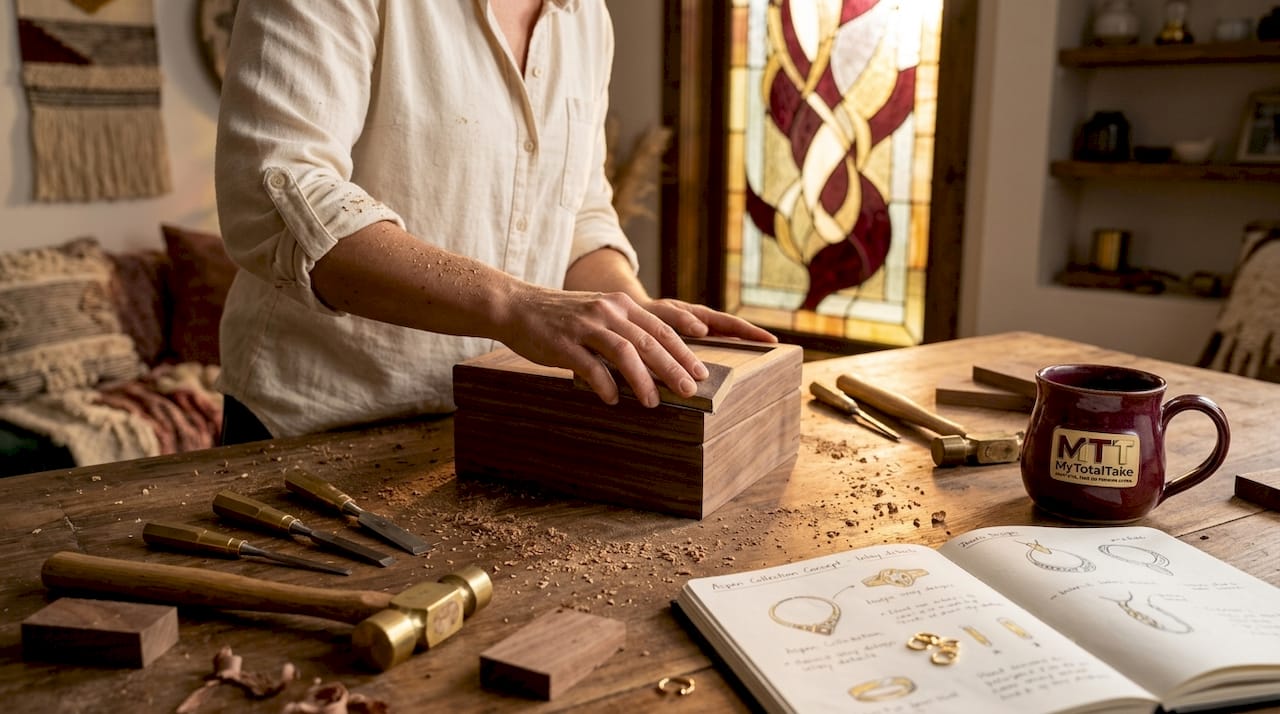
A genuinely handcrafted item involves a maker’s hands and judgment at every meaningful stage. The potter decides how thick to press the walls. The furniture maker chooses which grain faces outward. The jeweler assesses each stone before setting it. These are not assembly-line decisions delegated to a machine sensor. They require skill accumulated over years.
Here is what distinguishes authentic handmade from mass-produced:
- Material selection: Artisans typically source materials based on quality, not the lowest available price point.
- Small-batch production: True handcrafted work limits output by nature. An artisan producing 40 ceramic bowls a week operates very differently from a factory producing 40,000.
- Visible imperfections: Slight irregularities and texture variations are markers of genuine artisanship, not flaws to apologize for.
- Adaptability: A skilled maker can customize dimensions, finishes, or materials to your exact needs. A factory cannot.
The “handmade” label gets misused often. Some products described as artisanal are assembled from machine-made components with minimal human input. The distinction matters when you are spending premium prices and expecting premium results.
Pro Tip: Ask the seller to describe the production process step by step. A genuine artisan can tell you exactly where and how each component was made. Vague answers like “crafted with care” without specifics are a red flag.
Durability, sustainability, and long-term value
This is where the economics of handcrafted goods start to make undeniable sense. Handmade items are built for longevity, often lasting years or decades with proper care, while mass-produced alternatives cycle in and out of your life every few years.
Think about what that actually means financially. A handmade leather bag purchased at $400 and used for fifteen years costs you roughly $27 per year. The $80 factory bag you replace every two years costs $40 annually, and generates far more waste in the process.
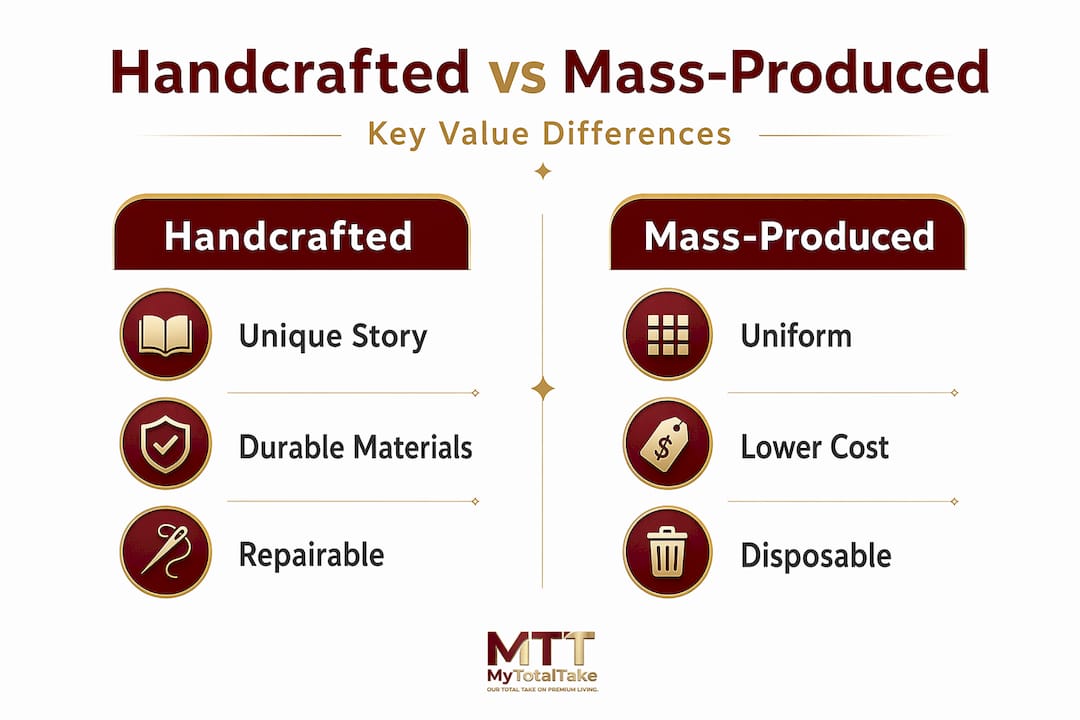
The sustainability story goes deeper than personal cost:
| Factor | Handcrafted | Mass-produced |
|---|---|---|
| Energy use | Low, primarily human skill | High, factory machinery |
| Packaging | Minimal, often recycled | Standardized, often excessive |
| Material sourcing | Local or carefully selected | Global, cost-driven |
| Repairability | Typically yes | Rarely supported |
| Lifespan | Decades with care | Often 2-5 years |
Artisans typically use local materials and minimal packaging, which directly lowers the environmental footprint of each piece. This is not a marginal difference. It is a structural one built into how handmade production works.
Repairability and durability features such as replaceable components and clear care instructions are standard in quality handcrafted work. When a seam loosens on a handmade chair, a skilled craftsperson can fix it. When the plastic connector on a factory chair breaks, you buy a new chair.
Pro Tip: When evaluating handcrafted furniture or accessories, ask specifically whether the maker offers repair services or can provide care guidance. Artisans who stand behind their work will almost always say yes.
Emotional, cultural, and societal benefits
The practical case for handcrafted goods is strong. The deeper case is what makes the choice genuinely meaningful.
Human involvement in production makes objects feel warmer and more personal than anything produced on an assembly line. When you own a hand-thrown ceramic vase, you own something that exists in exactly one form anywhere in the world. That is not sentimentality. It is a real distinction with real consequences for how you relate to your home and the things in it.
There is also the matter of cultural preservation. India’s artisan sector alone employs millions and produces goods that carry centuries of technique and cultural identity. When you buy artisanal items from communities where handicraft traditions run deep, you are participating in an act of preservation. Those skills do not survive without buyers who value them.
Supporting local artisans also means your money circulates differently. It reaches the maker directly, funds their livelihood, and stays within communities rather than flowing upward to shareholders of global manufacturing firms.
“Buying handmade is a lifestyle choice that transforms living spaces and reflects personal values more deeply than mass-produced decor ever could.” — How buying handmade can improve your life and your home
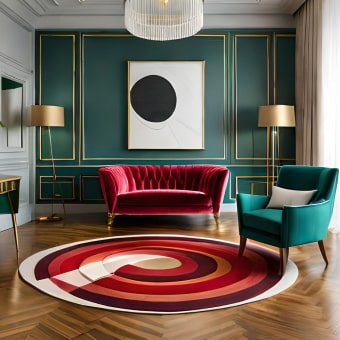
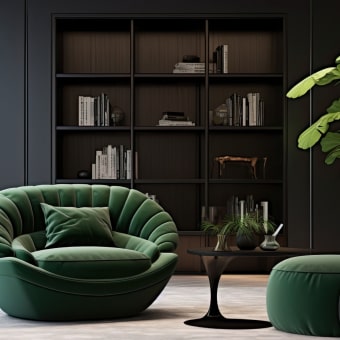
The importance of handcrafted products in shaping meaningful personal environments is something that takes time to appreciate fully. A room filled with unique artisanal gifts and one-of-a-kind pieces tells a story. A room furnished entirely from catalog pages tells a price point.
Authenticity and repairability represent a new definition of luxury that is gaining ground fast. Discerning buyers are no longer equating luxury with logo-heavy products at inflated prices. They are looking for pieces with documented provenance, real maker stories, and the kind of quality that improves with age.
How to identify authentic handcrafted items
Knowing why to buy artisanal items is only useful if you can actually find the genuine article. This is where many buyers stumble, and where a little practical knowledge pays off significantly.
The physical evidence of real craftsmanship is there if you know what to look for:
- Weight and thickness: Heavier pieces in handmade jewelry often indicate sturdier hand construction, as opposed to thin machine-stamped components. The same principle applies to ceramics and metalwork.
- Tool marks and joins: Visible hand-finished joins, slight surface texture, and tool impressions are signs of genuine work. Perfect uniformity across every unit is a factory signal.
- Material quality: Run your hand across the surface. Genuine artisan materials have character. Composite materials dressed up to look premium often feel hollow or overly smooth.
- Provenance and story: A clear product story including maker identity and material origins transforms an item from inventory into something credible and trustworthy.
Use this comparison when you are deciding between two pieces at similar price points:
| Indicator | Authentic handcrafted | Imitation or mass-produced |
|---|---|---|
| Maker information | Named artisan, specific location | “Artisan-inspired” or no maker details |
| Surface consistency | Slight natural variations | Perfect uniformity across all units |
| Material documentation | Origin explained, quality cited | Generic description only |
| Repair and care support | Offered by maker | Not available |
| Customization | Often possible | Fixed specifications only |
The most reliable question you can ask is: “Can you walk me through how this was made?” Genuine makers answer with specificity and often enthusiasm. Sellers representing mass-produced goods dressed as handmade will deflect or speak in vague generalities. True craftsmanship carries visible maker fingerprints that no factory replication fully eliminates.
For artisanal home decor, provenance matters just as much as aesthetics. A handwoven textile with a documented maker and regional technique is worth far more than an identical-looking machine print, and that value holds over time.
My perspective on handmade in modern consumer culture
I’ve watched the conversation around luxury shift considerably over the years I’ve spent studying premium goods and consumer behavior. And what strikes me most is how the old markers of luxury, the obvious logos, the over-packaged presentation, the factory-precision finish, are losing their appeal with the buyers who actually know what they are looking at.
What I’ve learned is that the value of handmade creations is inseparable from the human story behind them. A piece of handmade furniture built by a craftsperson who selects the timber, shapes every joint, and applies the finish by hand carries something a production line simply cannot replicate. Not nostalgia. Judgment. Every decision made by a skilled hand reflects accumulated knowledge that machines approximate but never fully match.
My honest take: the buyers who resist handcrafted goods on price grounds are often doing the math wrong. They see the upfront cost without calculating the replacement cycles, the repair costs, and the slow erosion of satisfaction that comes from owning things that were never built to last. Handmade items embody human effort in a way that generates real emotional attachment, which turns out to matter more than most people expect when they are furnishing a home or choosing what to keep for decades.
Buy fewer things. Choose them with intention. That is the shift worth making.
— Lysander
Discover artisanal quality at Mytotaltake

At Mytotaltake, we curate products for buyers who understand that quality and longevity are the true measures of value. If this article has reshaped how you think about what belongs in your home, the next step is simple: explore how handcrafted home decor can transform your living spaces with pieces that carry real maker stories and lasting elegance. We also recommend browsing our guidance on high-end home decor if you are building a space where every choice reflects discernment. For those looking beyond interiors, our curated selections of artisan-crafted seating offer that same commitment to quality in outdoor and lifestyle furnishings.
FAQ
What makes handcrafted items worth the higher price?
Handcrafted items are built to last for decades, often repaired rather than replaced, and carry materials selected for quality rather than cost, making the long-term value genuinely higher than most mass-produced alternatives.
How do I spot a fake “handmade” label?
Look for specific maker details, visible surface variations, and the ability of the seller to describe the exact production process. Generic descriptions and machine-perfect uniformity across every unit are reliable signs of mass production.
Are handcrafted items more sustainable?
Yes. Artisans typically use local materials, minimal packaging, and manual production methods, which significantly reduce energy consumption and waste compared to factory manufacturing.
Why does supporting local artisans matter?
Buying directly from artisans keeps money within communities, preserves traditional craft skills that would otherwise disappear, and funds livelihoods that depend on continued demand for genuine handmade work.
Can handcrafted items really improve your home environment?
Research consistently shows that handmade objects create stronger personal connections and a more meaningful sense of home, because each piece carries a unique character and story that mass-produced items cannot replicate.








Leave a comment