Why Invest in Upscale Lifestyle: Real Returns in 2026

Investing in an upscale lifestyle is defined by modern wealth strategists as allocating resources toward experiences, environments, and services that generate compounding returns in time, well-being, and social capital. The standard industry term for this approach is lifestyle asset allocation, and it has moved well beyond the old logic of buying things to signal status. Today, high-net-worth individuals treat their living environment, wellness routines, and curated experiences as strategic positions in a broader life portfolio. The question is no longer whether you can afford an upscale lifestyle. It is whether you can afford to ignore the returns it delivers.
Why invest in upscale lifestyle: the experiential shift driving real value
The most significant change in luxury spending over the past decade is the move from objects to outcomes. The experiential luxury market grew 8% in 2025 to reach $103.4 billion, with 55% of affluent consumers now prioritizing experiences over goods. That number tells you something precise: the majority of people with the means to buy anything have consciously chosen to buy moments instead.
Luxury brands recognized this shift early. Houses like LVMH, Four Seasons, and Aman have stopped selling products and started building immersive lifestyle worlds. These brands create ecosystems of wellness, travel, hospitality, and community that generate deep emotional resonance. When you invest in these worlds, you are not buying a hotel stay or a membership. You are buying consistent access to an environment that reflects your values and supports your well-being.
The practical benefits of luxury living in this experiential model are concrete:
- Wellness access: Curated spa programs, personal training, and nutrition services integrated into daily life rather than scheduled as separate appointments
- Travel quality: Private aviation partnerships, hotel brand loyalty ecosystems, and bespoke itinerary design that eliminate friction from every trip
- Community caliber: Proximity to peers who share similar values, ambitions, and standards, which research consistently links to higher life satisfaction
- Emotional alignment: Spending on experiences that reflect personal identity rather than external validation produces longer-lasting satisfaction
Pro Tip: When evaluating an experiential luxury investment, ask whether it compounds. A wellness membership that improves your sleep, focus, and energy delivers returns every single day. A status purchase does not.
Are branded residences a smart lifestyle investment?
Branded residences represent the clearest convergence of lifestyle and financial return in the current market. These are properties developed under the flag of recognized hospitality or luxury brands, such as Four Seasons Private Residences, Ritz-Carlton Residences, and Bulgari Residences, and they consistently outperform comparable non-branded stock.

The numbers are specific. Branded residences carry a premium resale value of 33% to 39% over non-branded equivalents, with 837 projects currently in development globally as of Q2 2026. Miami, Dubai, and Southern Europe are the three hottest geographic concentrations, driven by favorable tax environments, expatriate demand, and lifestyle infrastructure. This is not speculative growth. It is institutional-grade demand from a buyer pool that does not shrink in downturns.
| Feature | Branded residence | Standard luxury apartment |
|---|---|---|
| Resale premium | 33%–39% above market | Tracks local market only |
| Management | Hotel-grade operator handles all services | Owner coordinates independently |
| Rental income | Managed rental program during vacancies | Self-managed or agent-dependent |
| Amenities | Private club, spa, concierge, security | Building-level gym and lobby |
| Brand recognition | Global buyer pool recognizes the name | Local market dependent |
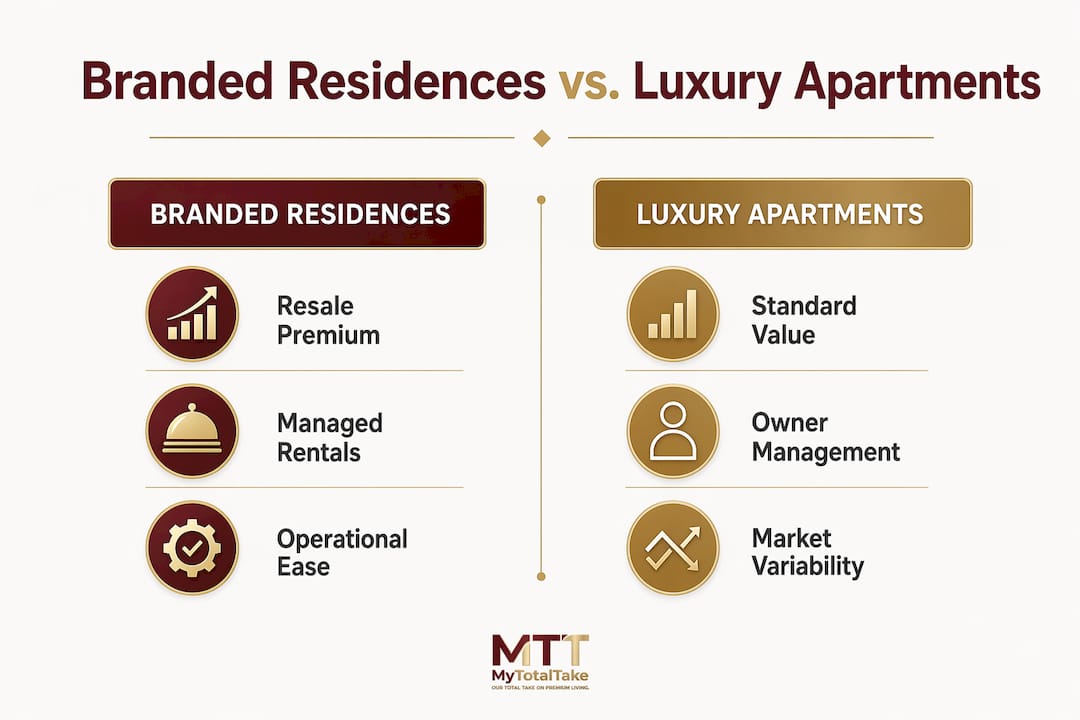
Beyond resale value, the operational model of branded residences removes a category of stress that most property owners underestimate. Rental programs managed by operators generate income during owner absences without requiring any management involvement. Hotel-level staff handle maintenance, cleaning, and guest services. Owners access private clubs, wellness centers, and concierge teams as standard features. The result is a property that functions as both a financial asset and a daily lifestyle upgrade.
Pro Tip: In markets like Dubai and Miami, branded residences in the ultra-prime segment have shown price stability even during broader real estate corrections. The brand acts as a floor on demand.
How upscale living saves time and reduces daily stress
Time is the one resource that cannot be replenished, and upscale living is fundamentally a time investment. Prime luxury locations save residents more than 700 hours per year in commute time alone. Most residents redirect that time toward self-development, fitness, family, or professional growth. That is the equivalent of nearly 18 full work weeks returned to your life annually.
The time savings extend well beyond commuting. Here is how luxury apartment living systematically reduces operational friction:
- Concierge services handle dry cleaning, reservations, deliveries, and scheduling, replacing tasks that would otherwise consume 30 to 60 minutes daily
- On-site maintenance teams resolve repairs within hours rather than the days or weeks typical of standard property management
- Centralized security eliminates the need for separate alarm systems, monitoring contracts, and access management
- Bundled amenities replace individual gym memberships, cleaning services, and storage units with a single monthly cost
The lifestyle-as-a-service model in luxury buildings financially offsets costs while simplifying daily routines. When you calculate the combined cost of a gym membership, cleaning service, doorman building, and parking in a major city, the gap between standard and luxury living narrows considerably.
“The principal value of upscale living for executives and frequent travelers is the elimination of operational friction, allowing significant reclaiming of personal time compared to traditional home ownership.”
Security and peace of mind deserve specific mention. Knowing that your building is staffed around the clock, that access is controlled, and that your property is maintained to a consistent standard removes a low-grade anxiety that most people do not notice until it is gone. That psychological relief is a genuine quality-of-life return.
What role do wellness and technology play in upscale lifestyle value?
Modern luxury living is defined by wellness-focused design and personalization that reframes investment value beyond surface opulence. The most sought-after upscale residences in 2026 integrate wellness amenities, eco-conscious materials, and bespoke spatial design as standard features rather than optional upgrades.
Smart home technology and ergonomic interiors support productivity and comfort in ways that directly affect daily performance. Acoustic control in home offices reduces cognitive fatigue. Circadian lighting systems regulate sleep quality. Climate automation maintains optimal conditions without manual adjustment. These are not aesthetic choices. They are functional investments in your cognitive and physical output.
The specific wellness and technology features that add measurable lifestyle value include:
- Air and water filtration systems that reduce exposure to pollutants linked to fatigue and chronic illness
- Infrared saunas and cold plunge pools now standard in ultra-prime buildings, replacing expensive spa memberships
- Integrated home automation platforms such as Control4 and Crestron that manage lighting, security, climate, and entertainment from a single interface
- Biophilic design elements including living walls, natural materials, and maximized natural light, all of which research links to reduced cortisol levels
Younger affluent buyers now treat wellness centers and smart tech as non-negotiable features rather than premium add-ons. This shift in buyer expectations is driving developers to build these features into base specifications, which means the resale market increasingly penalizes properties that lack them. Investing in a home with these integrations today is investing in a property that will remain competitive in the next decade’s market. Mytotaltake covers the full picture of smart home technology in luxury homes for readers who want to go deeper on this topic.
Traditional luxury vs. modern upscale lifestyle investment
The old model of luxury was defined by visible excess: large square footage, ornate finishes, and brand logos as social signals. The current model is defined by what Alea Global Group describes as the shift from “bling” to “being.” The distinction matters financially because the two models produce very different returns.
| Dimension | Traditional luxury | Modern upscale lifestyle |
|---|---|---|
| Primary signal | Possessions and size | Experiences and community |
| Financial return | Depreciating assets | Appreciating lifestyle assets |
| Sustainability | Resource-intensive | Eco-conscious design standard |
| Social value | Status display | Authentic community belonging |
| Daily experience | Maintenance burden | Frictionless, managed living |
Luxury urban properties have shown consistent appreciation, with high demand from high-net-worth individuals, expatriates, and corporate relocators producing stable prices and premium rental yields. Auckland luxury apartments, for example, appreciated 8.3% annually between 2020 and 2025. That figure reflects a broader pattern: well-located, well-managed luxury properties in global cities behave more like institutional assets than residential real estate.
Sustainability and authenticity now function as value drivers rather than marketing language. Buyers in the ultra-prime segment actively discount properties that cannot demonstrate green credentials, and they pay premiums for buildings with LEED certification, low embodied carbon, and genuine community programming. The financially smarter portfolio today balances lifestyle quality with long-term asset appreciation, and those two goals are no longer in tension.
Key takeaways
Upscale lifestyle investment delivers compounding returns across time, well-being, financial appreciation, and social capital when allocated toward experiences, branded residences, and wellness-integrated environments.
| Point | Details |
|---|---|
| Experiential value leads | 55% of affluent consumers prioritize experiences over goods, making lifestyle investments more satisfying than possessions. |
| Branded residences outperform | Properties under recognized luxury brands carry 33%–39% resale premiums and include managed rental income programs. |
| Time is the core return | Prime luxury locations save residents over 700 hours annually, directly restoring personal freedom and quality of life. |
| Wellness and tech add real value | Smart home systems and wellness amenities improve daily performance and protect long-term resale competitiveness. |
| Modern luxury means frictionless living | Bundled services in luxury buildings replace multiple memberships and reduce operational burden for a net lifestyle gain. |
Why time is the luxury that actually compounds
I have spent years analyzing how affluent individuals allocate their resources, and the pattern that surprises most people is this: the highest-satisfaction luxury investments are almost never the most visible ones. The person who invests in a branded residence in Miami or a wellness-integrated apartment in London is not buying a status symbol. They are buying back their mornings.
The conventional wisdom says luxury is about what you own. My experience says it is about what you no longer have to manage. The executives and entrepreneurs I observe who report the highest life satisfaction are not the ones with the largest homes. They are the ones who have eliminated the most friction from their daily lives and redirected that energy toward what they actually value.
Branded residences exemplify this logic better than any other asset class I have tracked. They appreciate financially, generate income during absences, and deliver hotel-level service as a daily standard. That combination of financial return and lifestyle return is genuinely rare. Most investments make you wealthier on paper. Branded residences make you wealthier in time, which is the only currency that matters at a certain level of achievement.
My recommendation is to evaluate every upscale lifestyle investment by asking one question: does this give me more of what I cannot buy back? If the answer is yes, the price is almost always worth it. If the answer is no, you are buying a possession, not an investment.
— Lysander
Elevate your home with curated luxury pieces from Mytotaltake
The upscale lifestyle you have read about starts at home, and Mytotaltake curates the pieces that make that vision real. Whether you are furnishing a branded residence or refining an existing space, the right furniture and decor do more than fill a room. They signal craftsmanship, support daily well-being, and hold their value over time. Explore luxury furniture that earns its place in your home, or browse premium home decor tips tailored for discerning homeowners who understand that quality is the only standard worth keeping. For outdoor spaces, Mytotaltake’s guide to lasting outdoor furniture covers every decision worth making.
FAQ
What does “investing in an upscale lifestyle” actually mean?
Lifestyle asset allocation refers to directing financial resources toward environments, experiences, and services that generate returns in time, well-being, and social capital. It differs from traditional luxury spending because the focus is on compounding quality-of-life returns rather than one-time status purchases.
Are branded residences worth the premium price?
Branded residences carry a 33% to 39% resale premium over comparable non-branded properties and include managed rental programs that generate income during owner absences. For high-net-worth buyers seeking both lifestyle quality and financial return, they represent one of the strongest dual-purpose assets available.
How does upscale living actually save time?
Living in a prime luxury location with full-service amenities saves residents more than 700 hours per year through reduced commutes, on-site maintenance, concierge services, and bundled lifestyle management. That time is the primary return most residents cite when asked why they chose upscale living.
Is wellness integration in luxury homes a real investment benefit?
Smart home systems, acoustic design, and wellness amenities such as infrared saunas and air filtration directly improve daily performance and sleep quality. Properties with these features also command higher resale values as buyer expectations in the ultra-prime segment now treat them as standard requirements.
How does modern luxury differ from traditional luxury spending?
Traditional luxury prioritized visible possessions and large square footage. Modern upscale lifestyle investment prioritizes frictionless daily living, community belonging, sustainability, and experiences that appreciate in personal value over time. The financial profile also differs: experiential and branded assets tend to appreciate, while depreciating possessions do not.
Recommended
How to Choose an Ergonomic Office Chair
Review Stainless Steel Espresso Machine Picks
Comments
[…] Why Invest in Upscale Lifestyle: Real Returns in 2026 […]







Leave a comment