
Step-by-Step Guide to Elegant Outdoor Spaces

An elegant outdoor space is a purposeful extension of your home, defined by functional zones, a restrained material palette, quality furnishings, layered lighting, and thoughtful greenery. This step-by-step guide to elegant outdoor spaces gives you a clear framework for creating a setting that works as beautifully at 10 p.m. as it does at noon. Whether you are starting from a bare patio or refining an existing garden, the process is the same: plan first, buy second, and let discipline drive every decision. Outdoor design professionals call this approach “landscape architecture,” and it applies just as powerfully to a 200-square-foot urban terrace as to a sprawling estate.
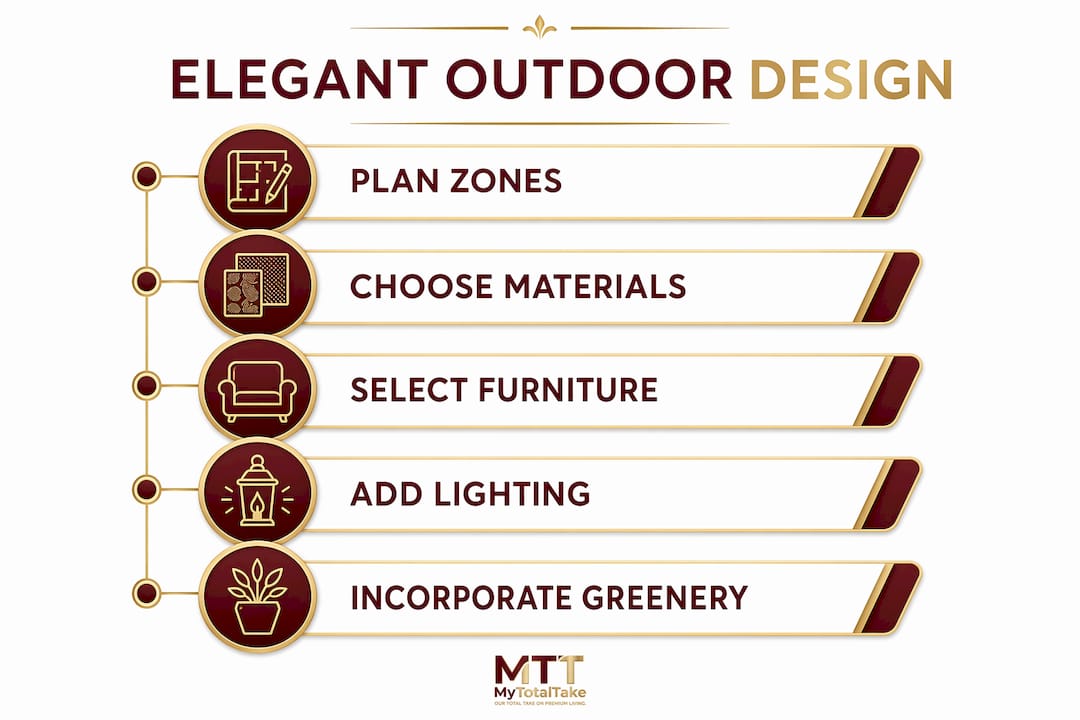
How do you plan and define functional zones in your outdoor space?
Zoning is the single most important step in creating elegant outdoor areas, and most homeowners skip it entirely. Designers recommend defining your activity areas before you purchase a single piece of furniture. Buying furniture first is the most common and costly mistake in outdoor design. It leads to overcrowding, awkward traffic flow, and spaces that look assembled rather than designed.
Start by identifying the activities your outdoor space needs to support. Common zones include dining, lounging, cooking, socializing, and a quiet reading corner. Each zone has its own spatial requirements and furniture footprint, so list yours before you measure anything.
Follow this numbered process to map your space correctly:
- Measure your total outdoor area and sketch it on graph paper or use a free tool like RoomSketcher to create a scaled floor plan.
- Mark fixed elements such as doors, windows, downspouts, and existing trees. These dictate where zones can and cannot go.
- Assign zones on paper based on your activity list. Place the dining zone near the kitchen door. Position the lounge zone where the best view or afternoon shade falls.
- Mark circulation paths between zones using tape on the actual ground. Circulation clearances run from 0.9 meters for tight spaces to 1.5 meters for generous ones. Anything narrower than 0.9 meters feels cramped and reads as poor planning.
- Test the layout physically by placing cardboard boxes or outdoor cushions where furniture will go. Walk through the space. Adjust until movement feels natural.
- Check sightlines from inside the home. The view from your main living area window should connect visually with the outdoor space, reinforcing the sense that both rooms belong to the same home.
A clear zoning masterplan locks in your layout and style so you can build the space over multiple seasons without losing coherence. This phased approach is how luxury outdoor projects stay on budget without sacrificing the end result.
Pro Tip: Use colored painter’s tape on your patio surface to outline each furniture zone before buying anything. Spend a weekend living with the layout. You will catch problems that no floor plan reveals.
What materials and color palettes create elegant and timeless outdoor spaces?
Material restraint is the defining characteristic of timeless outdoor design. Limiting your space to two or three primary hardscape materials and two or three color tones prevents the cluttered, inexpensive appearance that plagues most residential patios. The goal is a composed palette where every surface, textile, and finish feels like it belongs to the same family.
Here is what that restraint looks like in practice:
- Hardscape materials: Choose one primary paving material such as large-format porcelain tile, natural bluestone, or brushed concrete. Add one secondary material for borders or steps, such as corten steel edging or timber decking. Stop there.
- Color tones: Anchor the palette with a neutral base, warm white, charcoal, or warm gray. Add one accent tone through cushions or planters, such as terracotta, sage, or navy. Repeat that accent in at least two places to create rhythm.
- Textures: Combine one smooth surface with one natural texture. Polished concrete paired with teak or rattan reads as sophisticated. Three competing textures read as busy.
- Patterns: Avoid mixing geometric, floral, and striped patterns in the same space. One subtle pattern in a single textile is sufficient.
A restrained color palette with repetition and fewer materials creates timeless appeal that holds up across style cycles. The spaces that photograph beautifully in design magazines are almost always built on this principle.
| Approach | Result |
|---|---|
| 2 hardscape materials, 2 color tones | Composed, intentional, timeless |
| 4+ materials, mixed patterns | Cluttered, dated, inexpensive appearance |
| Consistent lighting temperature | Warm, cohesive evening ambiance |
| UV-protected, solution-dyed fabrics | Color retention and lasting elegance |
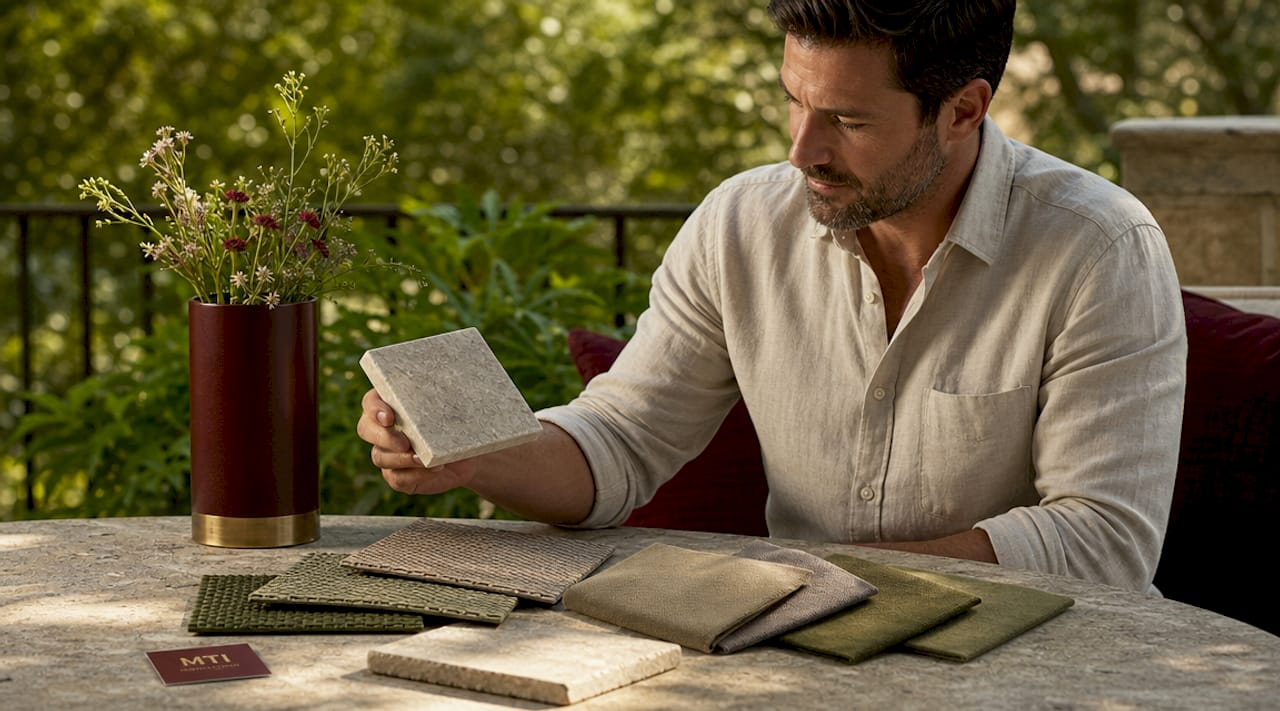
For materials that age well, PE wicker on powder-coated steel frames and Olefin or solution-dyed fabrics deliver durability with an upscale appearance. Consumer Reports data confirms that cleaning frequency and fading impact long-term satisfaction more than initial purchase price. Choose materials that require minimal maintenance and hold their finish through seasons of sun and rain.
Pro Tip: Before committing to a paving material, order samples and place them outdoors for two weeks. Observe how they look in morning light, afternoon glare, and at night under your planned lighting. Color and texture shift dramatically across conditions.
How to choose and arrange furniture for comfort and style in outdoor entertainment spaces
Furniture scale is the most underestimated factor in outdoor design. A sofa that looks proportionate in a showroom can overwhelm a 12-by-14-foot patio entirely. The rule is simple: furniture should occupy no more than two-thirds of any zone’s floor area, leaving the remaining third for circulation and visual breathing room.
Modular configurations offer the greatest flexibility for entertaining spaces. Brands like Restoration Hardware, Kettal, and Gloster build sectional systems that reconfigure from an intimate dinner setting to a large gathering layout without requiring new purchases. This adaptability is what separates a well-planned space from one that feels frozen in a single use case.
Key furniture selection principles for elegant outdoor spaces:
- Scale to the zone. A dining table for six requires a zone of at least 10 by 14 feet to maintain comfortable seating and circulation.
- Prioritize real comfort. High-back, deeply cushioned seating with lumbar support keeps guests seated longer and signals quality immediately. Thin cushions on low frames look elegant in photos but fail in practice.
- Maintain clearances. Keep 60 to 75 centimeters between seating edges and table edges for comfortable movement. Maintain 0.9 to 1.5 meters around the perimeter of each seating group.
- Choose durable frames. UV-protected wicker or powder-coated finishes with solution-dyed textiles deliver both durability and lasting elegance against the elements.
- Plan cushion storage. Outdoor cushions stored in a deck box or interior closet between uses last three to four times longer than those left exposed. Factor storage into your zone plan from the start.
For guidance on selecting pieces built to last, Mytotaltake’s outdoor furniture buying guide covers the specific frame materials, fabric grades, and construction details that separate heirloom-worthy pieces from those that deteriorate within two seasons.
Pro Tip: Sit in every piece of furniture before purchasing it. Outdoor furniture is often displayed indoors under flattering light. The real test is whether you want to stay seated in it for two hours.
What lighting strategies elevate your outdoor space from day to night?
Lighting is the element that separates a functional outdoor space from one that feels like a boutique hotel terrace. Treating lighting as a structural design element with ambient, task, and accent layers is the standard in luxury outdoor design. Most homeowners install a single overhead fixture and wonder why the space feels flat after dark.
Build your lighting plan in three layers:
- Ambient lighting provides safe, general illumination at ground level. String lights on a pergola, recessed deck lights, and low-profile path lights all serve this function. Aim for warm white bulbs in the 2700K to 3000K range to maintain a welcoming, residential feel.
- Task lighting serves specific functional areas. A pendant or wall sconce over the dining table, under-counter lighting at an outdoor kitchen, and a reading lamp beside a lounge chair all qualify. Task lighting should be dimmable wherever possible.
- Accent lighting highlights architectural and landscape features. Uplighting a specimen tree, grazing a stone wall with a narrow beam, or placing lanterns along a water feature creates depth and visual interest that flat overhead lighting cannot achieve.
Boutique hotel-inspired setups use warm ambient glows and carefully placed accent lighting to reinforce design symmetry and sustain mood through the evening. Pool lanterns and uplights placed symmetrically along a garden axis are a direct translation of this technique to residential spaces.
The practical benefit of layered lighting extends beyond aesthetics. A well-lit outdoor space is usable from dusk until late evening, effectively doubling the functional hours of your investment. For a deeper look at how luxury outdoor design principles apply to lighting and zoning together, Mytotaltake’s planning guide covers the full picture.
How does greenery and privacy shape an elegant, inviting outdoor environment?
Plants do more structural work in an outdoor space than most homeowners realize. Layering greenery with hedges, trees, and mid-level planting provides enclosure, softens hard surfaces, defines zones, and filters light. The result is a sanctuary effect that no fence or wall can replicate.
A planting plan built for elegance includes:
- A structural backbone. Clipped hedges of boxwood, hornbeam, or yew create clean, architectural edges that echo the geometry of your home. These are the walls of your outdoor rooms.
- Canopy layer. A single specimen tree, such as an olive, Japanese maple, or multi-stem birch, provides shade, scale, and seasonal interest. One well-placed tree does more for a space than a dozen shrubs.
- Mid-level planting. Ornamental grasses, lavender, and rosemary fill the zone between ground cover and canopy while adding fragrance and movement. Fragrant plants near seating areas create a multi-sensory experience that guests remember.
- Edible integration. A raised herb bed or a wall-mounted planter with basil, thyme, and mint near the outdoor kitchen adds both function and visual texture. It also signals intentionality, the hallmark of a designed space rather than a decorated one.
- Microclimate awareness. Choose plants suited to your specific conditions: sun exposure, wind exposure, and soil drainage. A plant struggling in the wrong microclimate looks worse than no plant at all.
Timeless elegance in outdoor design comes from disciplined execution using clean layouts, repetitive plant structure, and consistent edges that echo home architecture. Repeat the same plant species in groups of three or five rather than using one of everything. Repetition creates rhythm. Variety without repetition creates chaos.
Key takeaways
Elegant outdoor spaces are built through disciplined zoning, material restraint, and layered design rather than budget or trend-chasing.
| Point | Details |
|---|---|
| Zone before you buy | Define activity areas and test layouts with tape before purchasing any furniture. |
| Limit your palette | Use 2 to 3 hardscape materials and 2 to 3 color tones to achieve a composed, timeless look. |
| Scale furniture correctly | Furniture should occupy no more than two-thirds of any zone, with 60 to 75 cm clearances maintained. |
| Layer your lighting | Combine ambient, task, and accent lighting to make the space functional and polished after dark. |
| Use repetitive planting | Repeat the same species in groups to create rhythm, privacy, and year-round structure. |
Why I believe most outdoor spaces fail before a single chair is purchased
I have reviewed hundreds of outdoor design projects over the years, and the pattern is consistent. The spaces that disappoint share one trait: the owner started shopping before they started planning. A beautiful sectional sofa purchased without a zone plan becomes an obstacle. A fire pit placed without considering circulation becomes a hazard. The furniture is never the problem. The absence of a plan is.
The second failure I see repeatedly is palette overreach. Homeowners visit three different stores, fall in love with three different styles, and bring all of them home. The result is a space that looks like a showroom floor rather than a designed environment. Treating the outdoor area as an extension of indoor rooms with the same architectural discipline, proportion, rhythm, and sightlines, is what separates a composed space from a collected one.
My honest advice: accept that an elegant outdoor space takes time. A phased construction masterplan that locks in your layout and utility plan in year one, adds furniture and lighting in year two, and completes planting in year three will produce a better result than trying to finish everything in a single weekend shopping trip. Patience is a design tool. Use it.
— Lysander
Bring your outdoor vision to life with Mytotaltake
The difference between a good outdoor space and a genuinely elegant one often comes down to the quality of the pieces anchoring each zone.

Mytotaltake curates luxury outdoor furniture selected for durability, proportion, and lasting style. Every piece in the collection is chosen because it earns its place over years of use, not just the first season. From modular lounge systems to weather-resistant dining sets, the selection reflects the same disciplined approach this guide recommends. Browse the 2026 outdoor furniture trends collection to find pieces that align with your zone plan and palette, and explore the full range of high-end home decor to complete your outdoor room with the same standard of craftsmanship you bring indoors.
FAQ
What is the first step in designing an elegant outdoor space?
The first step is defining functional zones based on your lifestyle before purchasing any furniture. Designers recommend mapping circulation paths of 0.9 to 1.5 meters between zones to confirm the layout works before committing to any purchases.
How many materials should I use in an outdoor space?
Limit your design to two or three primary hardscape materials and two or three color tones. Using more than three materials or finishes causes spaces to look cluttered and inexpensive rather than composed and intentional.
What type of outdoor furniture lasts the longest?
Frames built from powder-coated steel or aluminum with PE wicker and cushions covered in solution-dyed or Olefin fabrics offer the best combination of durability and upscale appearance. These materials resist UV fading and moisture without requiring intensive maintenance.
How do I create privacy without building a solid fence?
Layer hedges, specimen trees, and mid-level planting such as ornamental grasses and lavender to create enclosure that softens the space rather than closing it in. Repeated plant species in groups of three or five create rhythm and a sense of sanctuary.
Why does outdoor lighting matter so much for elegance?
Layered lighting with ambient, task, and accent sources transforms a standard backyard into a polished, usable evening environment. Warm white bulbs in the 2700K to 3000K range and dimmable task lighting give you full control over mood and function after dark.
Recommended
Review Stainless Steel Espresso Machine Picks
10 Best Outdoor Pizza Ovens for Patios
Comments
[…] screens, deck tiles, planters, and outdoor lighting can transform the look immediately. Even a modest patio starts to feel more considered when the tub […]







Leave a comment