
Guide to Modern Bathroom Lighting
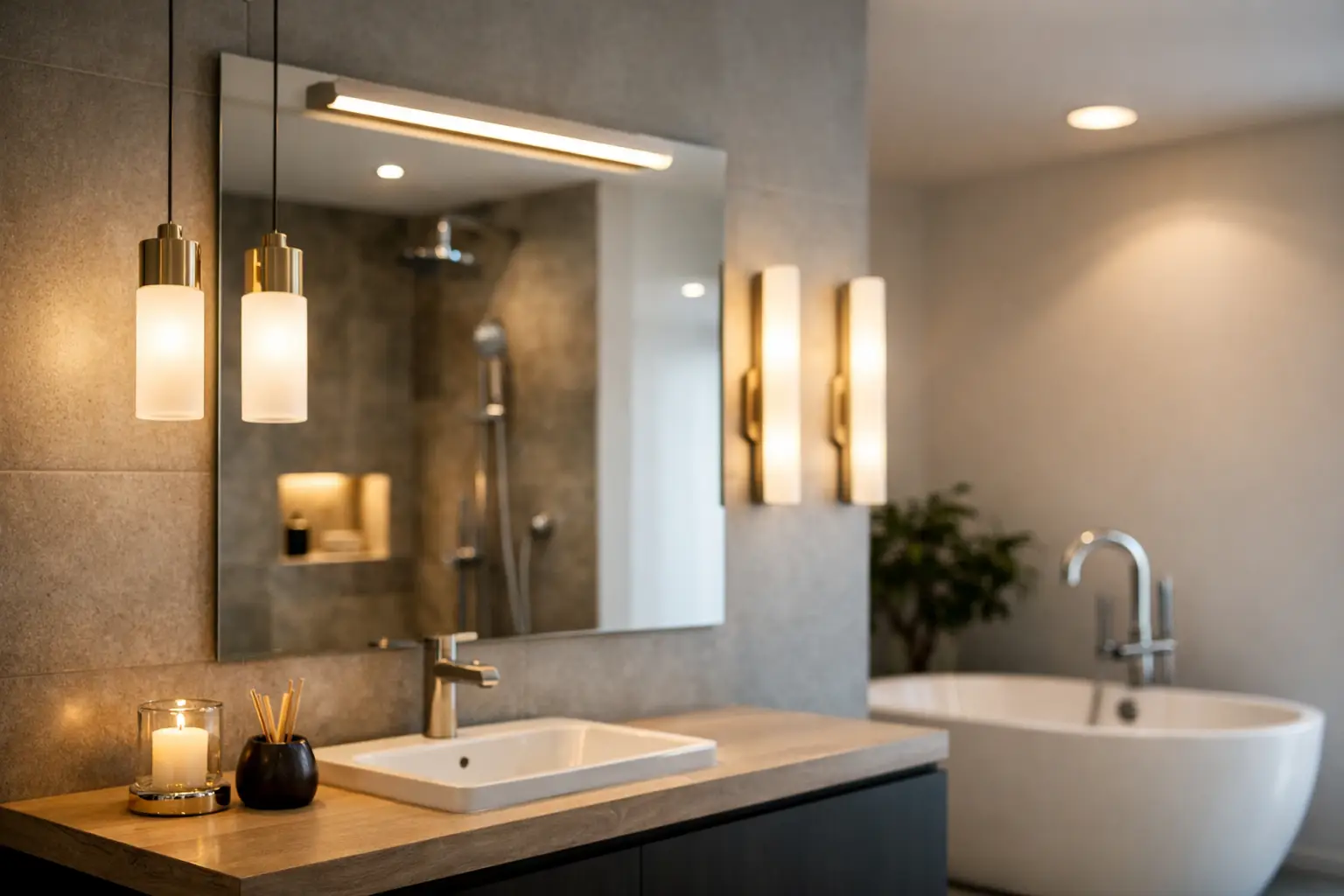
The fastest way to make a bathroom feel expensive is not always a new vanity or dramatic tile. Often, it is light. A smart guide to modern bathroom lighting starts with that truth: the right fixture placement, color temperature, and layering can turn a purely functional room into a refined daily retreat.
Bathrooms ask more from lighting than almost any other space in the home. You need clear illumination for grooming, flattering light for the mirror, enough ambient coverage for safety, and, ideally, a softer mood for evenings. Get one part wrong and the whole room can feel harsh, flat, or strangely dim, even when the finishes are beautiful.
What modern bathroom lighting really means
Modern bathroom lighting is less about one particular look and more about balance. Clean silhouettes matter, of course. So do premium materials, from matte black and brushed brass to smoked glass and sculptural metalwork. But the real hallmark of a modern setup is that each light has a job.
In older bathrooms, a single overhead fixture often did everything badly. It cast shadows on the face, left corners underlit, and made the room feel smaller. A modern scheme separates tasks. Ambient lighting fills the room. Vanity lighting supports grooming. Accent lighting adds depth and polish. In larger bathrooms, decorative lighting introduces a point of view.
That distinction matters because high-end design is not just visual. It is experiential. A bathroom should feel composed at 7 a.m. when you are getting ready quickly and equally considered at 10 p.m. when you want a calmer atmosphere.
A guide to modern bathroom lighting layers
If you want the room to feel finished rather than merely bright, think in layers.
Ambient lighting is your foundation. This is usually handled by recessed ceiling lights, a flush mount, or a semi-flush fixture. In compact bathrooms, one well-chosen ceiling fixture may be enough for general illumination. In larger primary baths, recessed lights usually create the cleaner, more even result.
Vanity lighting is where design and function meet most directly. This is the light you rely on for shaving, skincare, makeup, and hair styling. It should illuminate the face from the front or slightly from the sides, rather than from directly overhead. That is why wall sconces flanking the mirror tend to be more flattering than a single ceiling can light.
Accent lighting is what gives the room dimension. It might be an LED strip tucked beneath a floating vanity, a niche light in the shower, or a subtle toe-kick glow that adds drama without shouting for attention. These touches are not essential in every bathroom, but they often make the difference between a nice room and one that feels thoughtfully designed.
Decorative lighting comes last. A pendant over a freestanding tub, a sculptural sconce, or a statement flush mount can bring personality to the space. The trade-off is that decorative fixtures should never carry the full lighting load. They work best when the practical layers are already handled.
Vanity lighting: where most bathrooms go wrong
The mirror area is where poor lighting is most obvious. A single light bar above the mirror can work, but only if it is sized correctly and paired with enough output. Even then, top-down light often creates shadows under the eyes and chin.
For the most polished result, place sconces on both sides of the mirror at roughly eye level. This gives more even facial lighting and feels more custom. If your bathroom layout only allows one fixture above the mirror, choose a wide fixture that spreads light evenly across the face rather than concentrating it in the center.
Scale matters here. Tiny sconces beside a large double vanity can look lost. An oversized fixture above a narrow mirror can overpower the room. The best modern bathrooms feel proportionate. Every line looks intentional.
This is also the place to care about light quality, not just brightness. A fixture with beautiful metalwork means very little if it makes everyday grooming frustrating.
Choosing the right color temperature
Color temperature changes how your finishes, skin tone, and overall space appear. In bathrooms, most people prefer light in the 2700K to 3000K range. It feels warm, flattering, and elevated without turning yellow.
If you go cooler, around 3500K or higher, the bathroom may appear crisp and clinical. That can suit a minimalist aesthetic, but it often works better in commercial settings than in a home meant to feel inviting. On the other hand, lighting that is too warm can make a white bathroom look dull or overly creamy.
For many homes, 3000K is the sweet spot. It gives enough clarity for grooming while preserving a calm, upscale atmosphere. If your bathroom includes a lot of marble, bright white tile, or chrome, that middle range usually keeps the room fresh without feeling stark.
Brightness, dimmers, and the luxury factor
A well-lit bathroom should be bright when needed and softer when preferred. That is why dimmers matter. They add flexibility without requiring more fixtures, and they immediately make the room feel more tailored.
Morning routines benefit from stronger output. Evening baths, late-night check-ins, and overnight visits to the sink do not. A dimmer lets one room serve both moods. It is a small upgrade, but it consistently reads as high-end.
Brightness itself depends on room size, ceiling height, and surface reflectivity. Glossy tile, mirrors, and light stone bounce illumination around the room, while darker walls and matte finishes absorb more of it. That is why there is no universal number of fixtures that works for every bathroom. It depends on the room.
Fixture finishes and style direction
Modern bathrooms tend to favor cleaner lines and fewer visual interruptions, but that does not mean every fixture has to feel cold. The most compelling spaces often balance minimal forms with warm finishes.
Brushed brass adds softness and richness, especially against white oak vanities, creamy stone, or warm neutral tile. Matte black creates contrast and structure, particularly in bathrooms with sharp geometry and lighter surfaces. Polished chrome and nickel still earn their place in contemporary spaces because they reflect light beautifully and feel timeless rather than trendy.
Glass also changes the mood. Frosted glass softens glare. Clear glass feels more architectural but exposes the bulb, which means bulb choice becomes part of the design. Opal glass often gives the most refined, diffused effect around a mirror.
If your goal is a bathroom that looks curated rather than assembled, match the lighting finish to the room’s broader hardware story. Faucets, cabinet pulls, mirror frames, and sconces do not need to be identical, but they should feel related.
Wet-rated vs. damp-rated: the detail that matters
Bathrooms are humid spaces, and some zones are wetter than others. That affects what fixtures you can safely install. Around showers and tubs, you may need wet-rated fixtures. In less exposed areas, damp-rated fixtures are often appropriate.
This is one of those decisions that affects both safety and longevity. A beautiful fixture that is not rated for the environment may corrode faster or perform poorly over time. Premium design should hold up under real use, not just photograph well on installation day.
Common modern bathroom lighting mistakes
The biggest mistake is relying on one fixture to do everything. The second is choosing style before performance. A third is forgetting how light interacts with mirrors, tile, and paint.
Another common issue is installing recessed lights directly over the vanity user instead of slightly in front of the mirror zone. That placement can cast shadows where you least want them. Similarly, decorative pendants may look striking near a vanity, but if they block sightlines or provide uneven light, they become more frustrating than impressive.
It is also easy to overcorrect and make the room too bright. Bathrooms should feel crisp, not interrogational. Modern luxury is controlled, not glaring.
How to build a lighting plan that feels elevated
Start with the mirror because that is where function is most demanding. Then fill in ambient light based on the room size. After that, decide whether the bathroom would benefit from accent lighting, such as under-vanity LEDs or a soft niche light. Finally, add a decorative element if the room has space for one.
For a powder room, you can be bolder. These smaller spaces often allow for more sculptural fixtures and moodier lighting because they are used briefly and do not carry the same grooming demands. For a primary bathroom, comfort and accuracy come first, with decorative choices supporting that foundation.
If you are shopping with both style and practicality in mind, a curated retailer like mytotaltake.com can simplify the process. The best results usually come from selecting fixtures that share a design language while still serving different functions across the room.
Modern bathroom lighting is not about filling the ceiling with fixtures or following a showroom formula. It is about creating a space that works beautifully and feels composed every time you step into it. When the light is right, the entire room feels more finished, more flattering, and far more livable.







Leave a comment