
How to Choose a Home Theater Projector
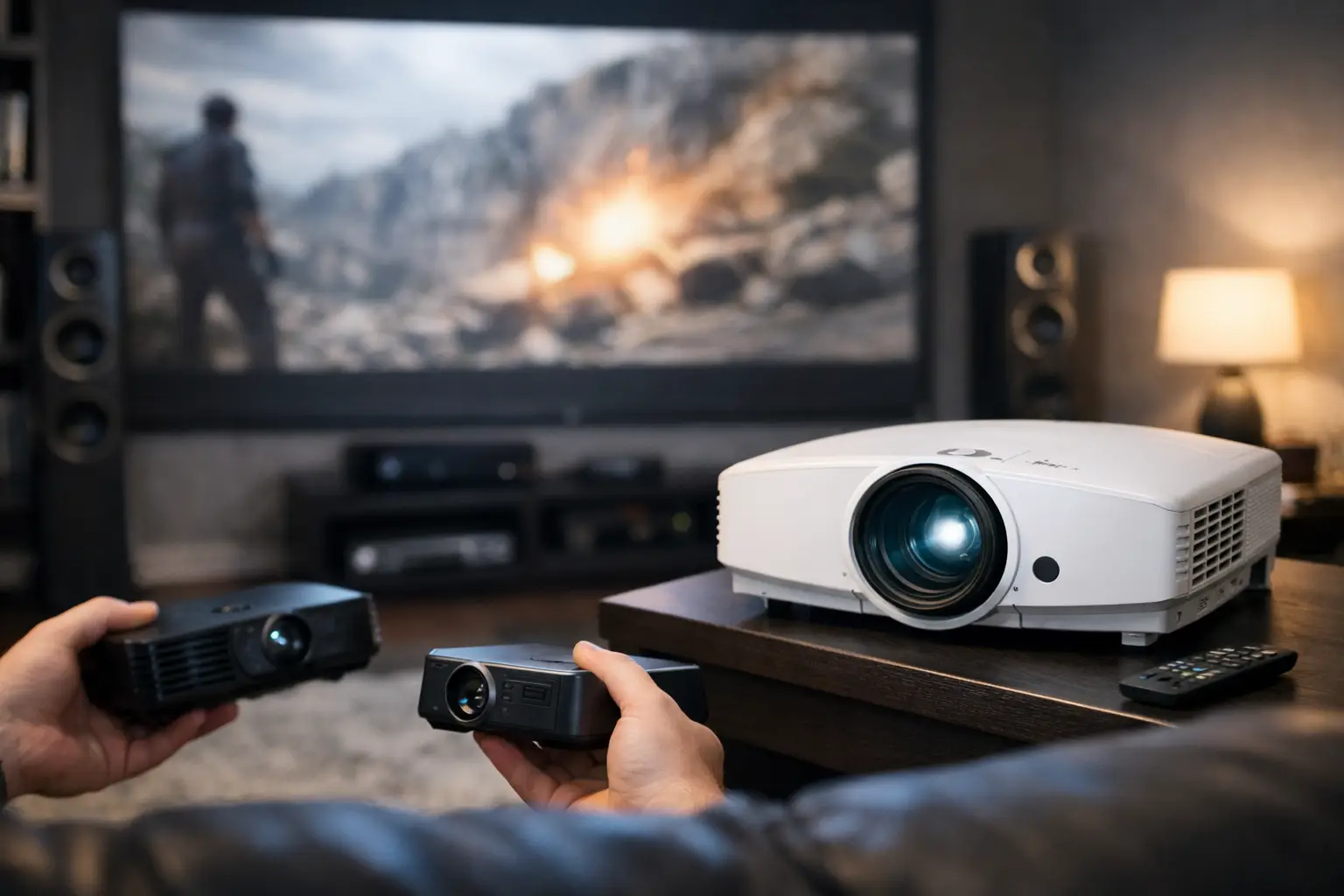
Movie night stops feeling ordinary the moment a home theater projector replaces the TV. The scale changes everything – the room feels more intentional, the viewing experience more immersive, and even familiar favorites take on a more cinematic presence. For shoppers building a refined entertainment setup, the right projector is less about chasing specs for their own sake and more about choosing a piece of technology that fits the room, the design, and the way you actually relax at home.
Why a home theater projector changes the room
A large television can look impressive, but a projector creates a different kind of atmosphere. It turns a den, media room, loft, or even a well-styled bedroom into a destination. That matters if you care about design as much as performance. A projector can disappear when not in use, leaving the room visually clean, then deliver a screen size that would feel oversized or expensive in a traditional TV format.
There is also a lifestyle advantage. A projector suits the way many people use their homes now – casual weeknight streaming, elevated sports viewing, family movie nights, and hosting friends without dedicating an entire room to a giant black screen. For design-conscious buyers, that flexibility is part of the appeal.
What to look for in a home theater projector
The best projector is not automatically the brightest, the most expensive, or the one with the longest feature list. It is the one that performs beautifully in your specific space.
Resolution matters, but not in isolation
If you want crisp image quality for movies, premium streaming, and gaming, 4K is usually the benchmark worth considering. It delivers sharper detail, better texture, and a more polished picture on larger screen sizes. That said, not every room demands it. In a smaller apartment media corner or a secondary entertainment space, a solid Full HD projector can still feel impressive.
The trade-off is simple. As screen size grows, lower resolution becomes easier to notice. If you are investing in a larger projection setup because you want that cinematic scale, higher resolution tends to justify itself.
Brightness should match your room, not the marketing
Brightness is where many projector purchases go right or wrong. If your room has controlled lighting, blackout curtains, or a dedicated viewing environment, you may not need extreme brightness. A projector designed for darker spaces can produce richer contrast and a more film-like image.
If your space is more open concept, has ambient light from windows, or doubles as a living room, brightness becomes more important. Daytime sports viewing and casual streaming call for a projector that can hold its image without the room feeling cave-like. The right balance depends on how often you watch with lights on, not just what looks best on a product page.
Throw distance will shape your options
Throw distance simply means how far the projector needs to sit from the screen or wall to create the image size you want. This is one of the most practical buying considerations, and it is often overlooked.
A standard throw model may work beautifully in a larger room with ceiling mounting or a rear shelf setup. In tighter spaces, a short throw or ultra short throw projector can be the more elegant solution. These models can create a large image from a much shorter distance, which is especially useful in apartments, multipurpose rooms, or interiors where you want a cleaner installation.
For many shoppers, this is the point where projector buying becomes real. A projector may look perfect in theory, but if it does not physically suit the room, the experience will never feel fully resolved.
Picture quality is more than resolution
Contrast brings depth to the image
A projector with strong contrast will make dark scenes look dimensional rather than washed out. This matters more than many first-time buyers expect. If your viewing habits lean toward films, prestige series, or visually rich content, contrast has a major effect on whether the image feels luxurious or flat.
A bright projector in a dark room is not always better if black levels suffer. For a true home theater feel, contrast deserves close attention.
Color performance affects realism
Good color should feel balanced and natural, not overly cool, harsh, or artificially vivid. Premium viewing is about refinement. Skin tones should look believable. Dark blue should still hold detail. Warm interior scenes should feel rich instead of orange.
If you appreciate thoughtful interiors, you will likely notice when image color feels off. The best projectors elevate the content without making the picture look exaggerated.
Built-in sound, streaming, and smart features
Some buyers want a projector that works almost straight out of the box. Others are creating a more complete theater system with dedicated speakers, a receiver, and carefully placed components. Neither approach is wrong.
If simplicity matters, built-in speakers and integrated smart features can make setup easier. This works well for casual users, apartment dwellers, or anyone designing a clean entertainment space without extra equipment. The convenience is real, especially for rooms where minimal clutter is part of the aesthetic.
If performance comes first, external audio usually delivers a fuller, more enveloping sound. A projector image can be stunning, but weak sound can make the whole experience feel incomplete. If you care about cinema-level immersion, plan for audio as part of the investment.
Matching the projector to your lifestyle
For dedicated media rooms
A darker, more controlled room gives you the most freedom to prioritize picture quality. In this setting, 4K resolution, excellent contrast, and carefully tuned color become the stars. You can lean toward a model designed for film performance rather than brute-force brightness.
For living rooms and open-plan spaces
These rooms call for a projector that balances design flexibility with enough brightness to handle ambient light. Short throw and ultra short throw models are often the most practical fit, especially if you want a polished setup that does not dominate the room.
For smaller homes and apartments
Space efficiency matters. A projector with flexible placement, straightforward setup, and all-in-one convenience often makes more sense than a complex multi-component system. You still want visual impact, but you also want the room to function beautifully the other 90 percent of the time.
The screen question: wall or dedicated screen?
A projector can display on a plain wall, but a dedicated screen usually improves clarity, brightness, and perceived contrast. If you are investing in a premium home setup, the screen is not just an accessory. It is part of the finish.
That said, a wall can be a smart starting point if you are testing placement or building the room in stages. There is no need to overbuild on day one. The better approach is to create a setup that works now and can be elevated later.
Design and placement deserve more attention than people think
A home theater projector is not only a tech purchase. It is part of the room. Ceiling-mounted projectors create a clean, intentional look but require more planning. Console-mounted or shelf-mounted options can be easier to live with, especially in homes where flexibility matters.
You should also think about cable management, ventilation, and the visual footprint of the unit itself. In a thoughtfully designed interior, these details have an outsized effect. The best setup feels integrated, not improvised.
For shoppers drawn to curated, high-end living, this is where the right projector stands apart. It should perform beautifully, but it should also belong in the space.
When spending more is worth it
Not everyone needs a top-tier projector, but there are moments when paying more genuinely improves the experience. If you want a large image, watch often, care about design, and expect the projector to be a centerpiece of your entertainment setup, quality becomes easier to justify.
Better projectors tend to offer stronger image processing, more convincing contrast, improved color accuracy, quieter operation, and more refined build quality. Those upgrades may sound subtle on paper, but together they shape how premium the experience feels night after night.
That is often the difference between a projector that feels like a novelty and one that becomes part of how you enjoy your home. Retailers with a curated approach, including platforms like mytotaltake.com, make that decision easier by filtering out the forgettable options and focusing on pieces that align with elevated living.
Common mistakes to avoid
The biggest mistake is buying for specs alone. A projector that looks impressive online may disappoint if it is too dim for your room, too large for your setup, or dependent on external gear you never planned to add.
Another common misstep is underestimating installation. Lens placement, screen height, throw distance, and sound all affect satisfaction. The easier the setup fits your real space, the more likely you are to use and enjoy it.
There is also the temptation to overspend on features you will not notice. If you mostly stream shows in a moderately lit family room, some ultra-specialized theater features may matter less than brightness, ease of use, and smart placement flexibility.
A beautiful home theater setup should feel considered, not complicated. Choose the projector that complements your space, supports the way you watch, and adds a little more occasion to the hours you already enjoy at home.







Leave a comment