
How to Curate a Luxury Home: 5 Steps That Work

Curating a luxury home comes down to five focused moves: edit ruthlessly, define a tight palette and materials, layer your lighting, choose proportionate anchor pieces, and source with intention. That sequence, applied room by room, produces spaces that feel authored rather than assembled.
Here is the short version you can act on today:
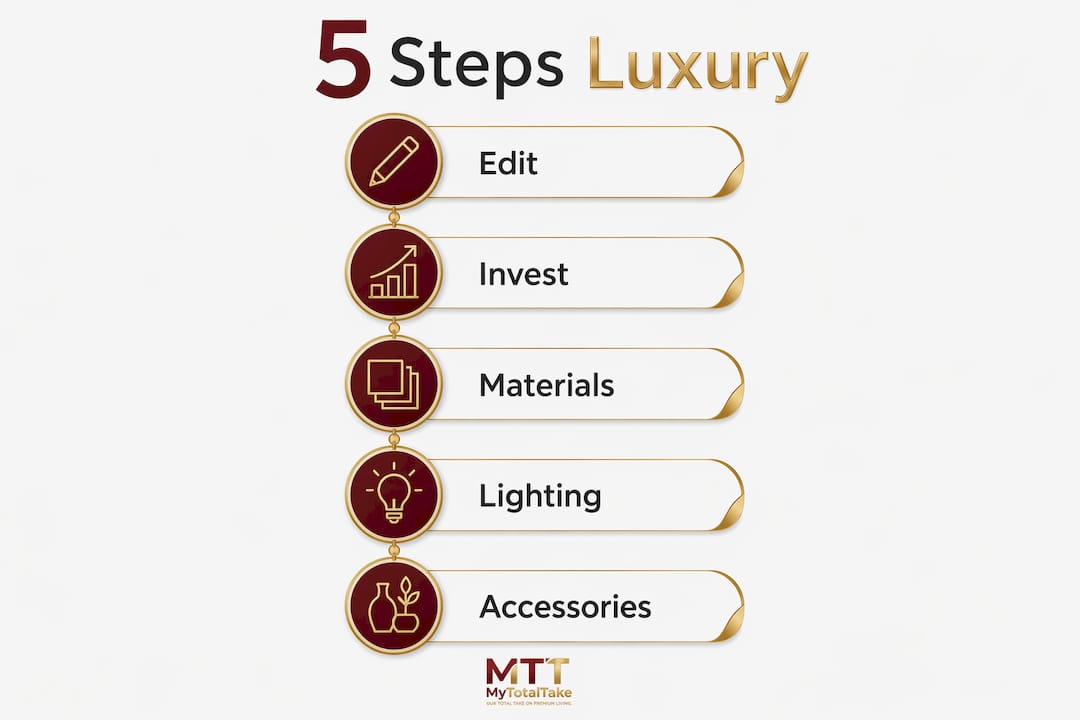
- Edit first. Clear every surface. Remove anything that does not earn its place.
- Set your palette. Use the 60-30-10 rule: one dominant neutral, one secondary tone, one accent.
- Layer light. Install dimmers and use warm LEDs in the 2700K–3000K range for ambient, task, and accent layers.
- Anchor with proportion. Invest in one or two statement pieces per room; let everything else support them quietly.
- Source intentionally. Prioritize craftsmanship and provenance. Mytotaltake offers curated luxury home decor that fits this workflow directly.
Table of Contents
- How to curate a luxury home: the principles that separate curation from decorating
- Editing, decluttering, and eliminating visual noise
- Materials, texture, and color: the tactile vocabulary of luxury
- How should you layer lighting for a luxury feel?
- Furniture: proportion, anchors, and when to invest
- Accessories, art placement, and the role of patina
- Layout, flow, and function: how arrangement supports a luxury feel
- How to shop: where to spend, where to save, and a recommended source
- A simple room-by-room styling workflow and checklist
- Key Takeaways
- Where to start building your curated collection
How to curate a luxury home: the principles that separate curation from decorating
The single most important shift is intentionality over accumulation. Luxury curation means filtering every choice against a personal vision, not reacting to trends or filling space because it feels empty. Designers frame this as a consistent practice, not a one-time project.
The “less, but better” approach limits your palette to one dominant neutral, one secondary tone, and one accent. It also means prioritizing craftsmanship and provenance over novelty. A room with five considered pieces reads as more refined than one with twenty competing objects.
Negative space is not emptiness. It is what allows your anchor pieces to breathe and your architectural features to register. Patina matters too: a home that looks too pristine can feel cold and unwelcoming. Mixing a softened leather chair or a linen throw with newer pieces creates depth and authenticity that no showroom-fresh setup can replicate.
Pro Tip: Before buying anything new, write a one-sentence vision for the room. If a piece does not serve that sentence, it does not get in.
Editing, decluttering, and eliminating visual noise
Start by pulling every surface clear. That single act reveals the room’s bones and shows you what actually belongs. Visual noise undermines luxury; when cables, clutter, and competing objects crowd a space, statement pieces lose their authority.
Use a three-bucket pass: keep, donate, and pause. The pause bucket is the most useful one. Items you are unsure about go into storage for 30 days. If you do not miss them, they leave. This technique, drawn from designer-recommended curation practice, prevents impulse disposal and impulse buying in equal measure.
For each room, work through this sequence:
- Clear all surfaces completely.
- Sort objects into keep, donate, and pause.
- Store pause items for 30 days before deciding.
- Hide all cables behind furniture or through wall channels.
- Replace multiple small artworks with one large, high-impact piece.
- Choose a single architectural plant to create a grounded focal point instead of using multiple small ones.
- Create a landing zone near the entry so daily items disappear when not in use.
For premium home organization that holds over time, build hidden storage into the design rather than adding it as an afterthought.
Materials, texture, and color: the tactile vocabulary of luxury
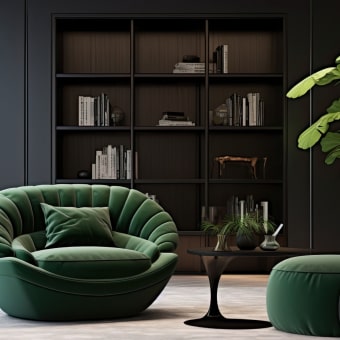
Prioritize natural materials: stone, linen, wool, solid wood, and leather. These age well, feel distinct underhand, and carry a warmth that synthetic alternatives cannot match. Repeat two or three defining materials across a room to create continuity without monotony.
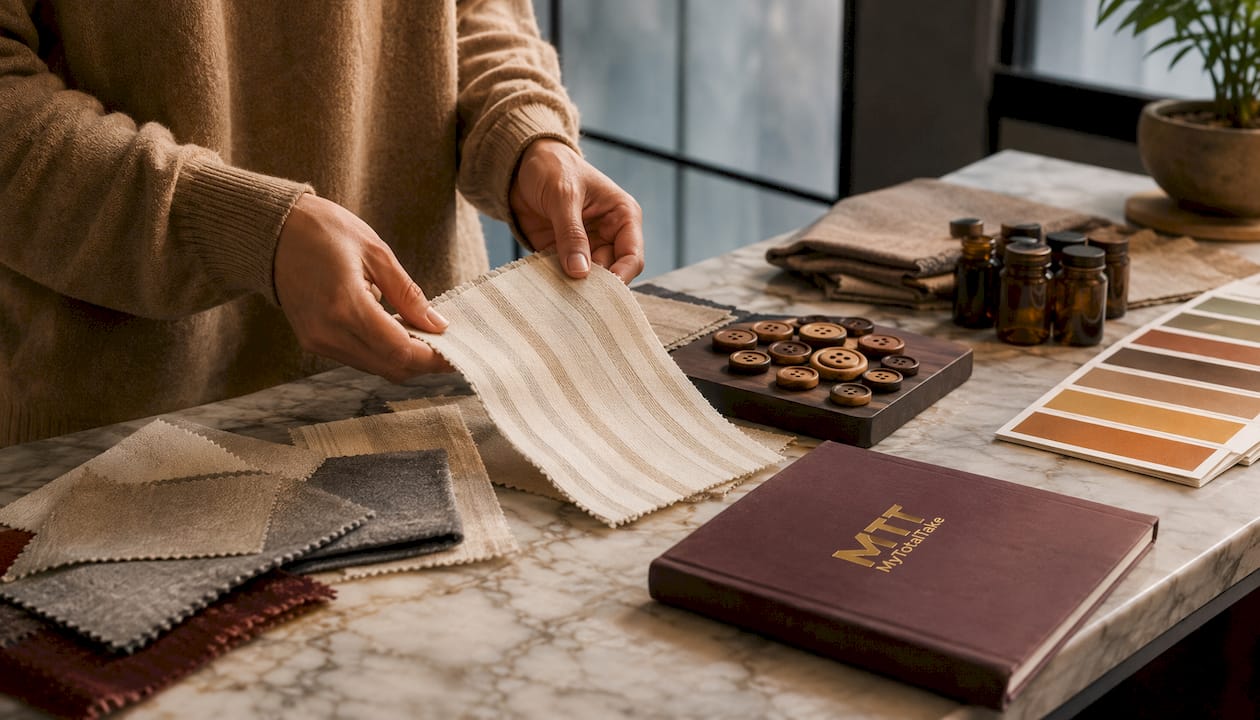
The 60-30-10 palette rule keeps rooms visually coherent. Choose undertones rather than isolated swatches: a warm greige wall reads differently under incandescent light than under cool daylight, so test samples in the actual room at different times of day. Monochromatic palettes work especially well in luxury spaces because they shift the viewer’s attention to material variation, which is where the real richness lives.
A few practical swaps that upgrade daily-touch surfaces without a full renovation:
- Replace synthetic bedding with high-thread-count linen or cotton percale.
- Swap polyester cushion covers for wool, velvet, or Belgian linen.
- Add a thick wool or natural-fiber rug over hard flooring.
- Use brass or bronze hardware on cabinetry; these metals develop a soft patina over time.
Invest in materials you touch every day. Save on purely decorative items that sit at a distance. For a deeper look at craftsmanship and material selection, the principles behind choosing finishes that last are worth understanding before you spend.
How should you layer lighting for a luxury feel?
Layered lighting on dimmers transforms atmosphere more affordably than any furniture upgrade. The three tiers are ambient (overall fill), task (functional zones), and accent (art, architecture, and focal points). Every tier needs its own switch or dimmer.
Warm LEDs in the 2700K–3000K range are the standard for high-end interiors. Cooler temperatures read as clinical; warmer ones make materials and skin tones render naturally.
Quick upgrades that deliver high perceived value:
- Replace cool-white bulbs with 2700K warm LEDs throughout.
- Add dimmer switches to existing overhead circuits.
- Place a floor lamp in dark corners to increase apparent room size.
- Use a directional spotlight on your primary artwork.
- Choose a sculptural pendant as a statement piece, not just a light source.
Pro Tip: Look for bulbs with a Color Rendering Index (CRI) of 90 or above. High-CRI sources show the true color of stone, wood, and textiles, which is exactly what makes those materials worth having.
Furniture: proportion, anchors, and when to invest
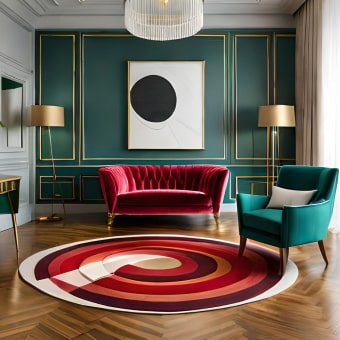
Invest in a few anchor pieces and let supporting furniture stay quieter. The sofa, bed, and dining table are the right places to spend; side tables, shelving, and accent chairs can be more modest without undermining the room’s quality. Luxury interior design consistently points to cohesion and restraint as the real markers of a high-end space.
Proportion matters as much as price. Furniture that is too small for a room makes the space feel sparse in the wrong way. Float seating away from walls to create breathing room and improve circulation. Check sightlines from the entry: what you see first should be your best piece.
For craftsmanship cues, look at joinery (dovetail or mortise-and-tenon joints over staples), solid-wood frames over particleboard, and replaceable cushion covers. Ask about warranties. A piece built to last will have one. Handmade furniture often signals these qualities directly.
| Category | Where to prioritize budget | What to look for |
|---|---|---|
| Anchor pieces | Sofa, bed, dining table | Solid frames, quality upholstery, long warranty |
| Support pieces | Side tables, shelving, accent chairs | Durable finish, proportionate scale |
| Decor accents | Cushions, throws, small objects | Natural materials, replaceable, mix freely |
Accessories, art placement, and the role of patina
One great artwork outperforms a wall of smaller competing pieces every time. Scale it to the wall: the art should feel like it belongs to the architecture, not like it was hung to fill a gap. Spatial hierarchy requires legible breathing room between anchors.
For accessories, the rule is repetition: repeat a finish, color, or material at least twice in a room to create rhythm. A single brass candlestick reads as random; three brass objects at different heights read as intentional. Keep the total count low.
- Limit accessories on any surface to three to five objects, grouped by material or tone.
- Mix one patinated or vintage piece with newer items for depth.
- Use a single large architectural plant rather than several small ones.
- Avoid matching sets; slight variation within a material family reads as more considered.
- Rotate seasonal objects rather than displaying everything at once.
For upscale styling techniques that cover art placement and finish mixing in more detail, the principles translate directly to any room.
Layout, flow, and function: how arrangement supports a luxury feel
Design the layout for real routines first. Where do you drop keys? Where does morning coffee happen? Landing zones, clear circulation paths, and unobstructed sightlines are what make a room feel effortless to live in, which is the foundation of perceived luxury.
In open-plan spaces, use rugs, lighting, and furniture groupings to define zones without walls. Each zone should have its own light source and a clear anchor piece. Vertical rhythm matters too: vary heights across a grouping (low sofa, mid-height console, tall lamp) to create depth.
A room arranged for how you actually live will always feel more luxurious than one arranged for how it photographs. Comfort and circulation are not compromises — they are the point.
Entryways deserve the same care as primary rooms. A console, a mirror, and one considered object set the tone for everything that follows. In bedrooms, keep the path from door to bed clear and position the bed so it faces the room’s best feature, whether that is a window, a fireplace, or a piece of art. Glass interior doors can also serve as architectural features that extend sightlines and add light between spaces.
How to shop: where to spend, where to save, and a recommended source
Spend on daily-touch items and structural finishes. Save on purely decorative objects that sit at a distance. That single heuristic allocates most budgets correctly without a spreadsheet.
| Spend here | Save here |
|---|---|
| Sofa, bed, dining table | Accent tables, decorative trays |
| Bedding and primary textiles | Seasonal cushions and throws |
| Flooring and architectural hardware | Wall art prints (vs. originals) |
| Primary lighting fixtures | Secondary lamps and shades |
When evaluating a piece, ask for maker details, material sourcing, and warranty terms. Provenance matters: a piece with a traceable maker and a documented construction method holds its value and its integrity. For bespoke commissions, budget extra lead time and a clear brief. Understanding what defines luxury materials before you walk into a showroom saves both money and regret.
Mytotaltake curates collections across furniture, textiles, and home accessories with a focus on craftsmanship and free returns, which makes it a practical fit for the sourcing workflow described here, particularly for anchor buys and textile upgrades.
A simple room-by-room styling workflow and checklist
Apply this sequence to one room at a time. Rushing across the whole house produces inconsistency.
- Edit. Clear all surfaces. Run the three-bucket pass.
- Set palette and materials. Confirm your 60-30-10 colors and your two or three defining materials.
- Place the anchor. Position your primary furniture piece first; arrange everything else around it.
- Layer light. Install dimmers, set bulb temperature to 2700K–3000K, and place lamps for each zone.
- Style accessories. Add art, objects, and textiles in small groups. Repeat finishes at least twice.
- Live with it for 30 days. Note what feels off before making permanent changes or new purchases.
Room-specific priorities: the entry needs a landing zone and a mirror; the living room needs a clear anchor and zoned lighting; the bedroom needs unobstructed circulation and layered textiles; the dining room needs a statement light fixture scaled to the table. Your home decor styling workflow can follow this same sequence for every space.
Key Takeaways
A curated luxury home is built on editing first, investing in anchor pieces, and repeating materials and finishes to create rhythm and coherence across every room.
| Point | Details |
|---|---|
| Edit before you buy | Clear surfaces and run a three-bucket pass; use a 30-day pause before discarding or purchasing. |
| Apply the 60-30-10 palette | One dominant neutral, one secondary tone, one accent keeps rooms visually coherent. |
| Layer light with dimmers | Use ambient, task, and accent tiers at 2700K–3000K with high-CRI bulbs for a warm, polished result. |
| Invest in anchor pieces | Spend on sofa, bed, and dining table; let support pieces and decor accents be quieter and more modest. |
| Source from Mytotaltake | Mytotaltake’s curated collections, craftsmanship focus, and free returns make it a practical starting point for anchor buys and textile upgrades. |
Why curated luxury should feel lived-in, not staged
The rooms that stay with you are never the ones that look untouched. They carry a sense of time: a leather chair worn soft at the armrests, a linen throw that has been used, a piece of art chosen for meaning rather than market value. That quality, patina, is not accidental. It is the result of choosing materials that age well and resisting the urge to replace things the moment they show life.
The workflow in this article is built around that philosophy. Edit to a vision, invest in pieces that earn their place, and let the room develop over time rather than trying to finish it in a weekend. Start with one room. Get it right. Then carry those decisions into the next space.
Where to start building your curated collection

Mytotaltake is the practical starting point for homeowners who want curated pieces without the showroom markup or the guesswork of sourcing independently. The collections span luxury furniture built for longevity, premium textiles, and home accessories selected for craftsmanship and finish quality. Every order ships fast and comes with free returns, so you can bring a piece home, live with it, and decide with confidence.
For anchor purchases, start with the furniture collection. For textiles and accessories, the home decor range covers the daily-touch upgrades that deliver the most immediate impact. Browse the full home decor selection and begin with one room.
Further reading and the sources behind these recommendations
- The new luxury: less but better — source for the 60-30-10 palette rule and the “less, but better” curation mindset.
- Luxury Interior Design: Top 12 Insider Tips — landing zones, art placement, and reducing visual noise.
- What is layered lighting and how can it transform your home? — dimmer switches and the layered lighting rationale.
- The rise of luxury lifestyle design — intentionality as a filtering practice.
- Designing with patina: the rise of timeworn luxury — patina, worn materials, and why pristine spaces can feel cold.
- How to curate, not decorate — the three-bucket pass and the 30-day pause test.
- Luxury interior design guide — cohesion, restraint, and investing where you touch.
- Collector’s guide: curating a personal museum at home — spatial hierarchy, anchors, and breathing room between statement pieces.







Leave a comment