
The Role of Luxury in Lifestyle Enhancement: A Guide
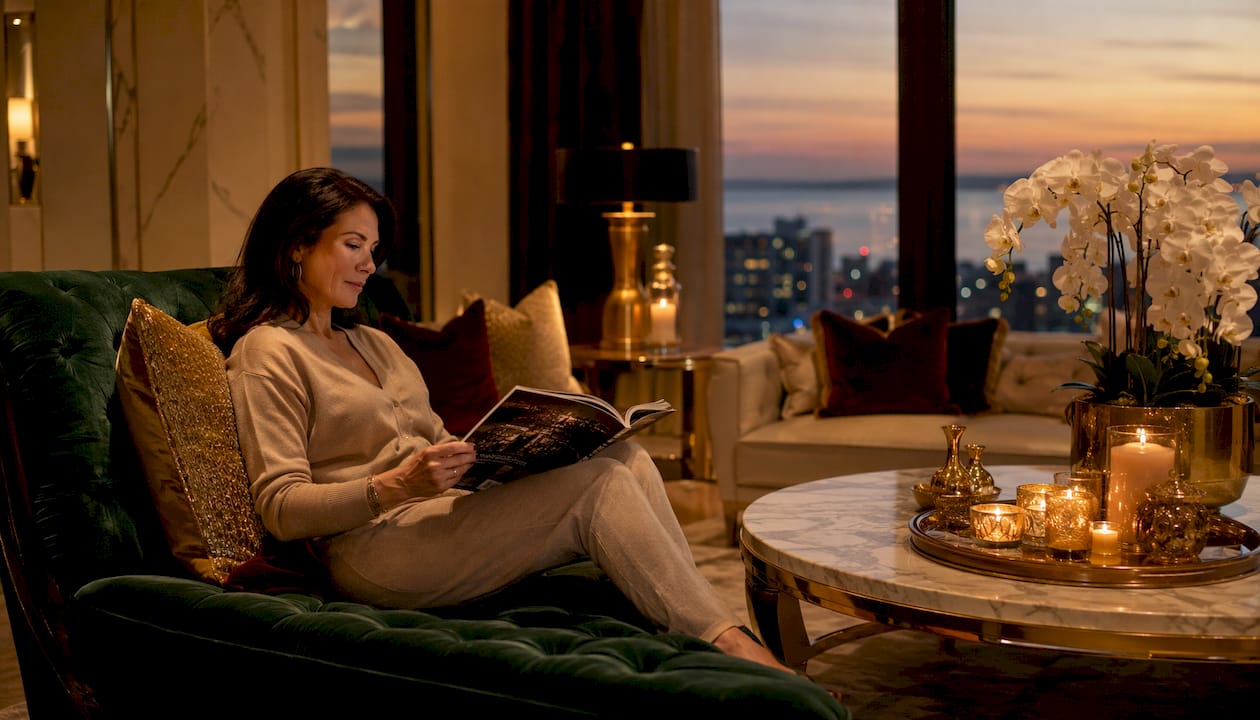
Luxury enhances lifestyle by redirecting your scarcest resources — time, attention, environment, and care — into experiences and surroundings that build long-term wellbeing and personal meaning. That is the core claim, and the evidence behind it is more rigorous than most people expect. The role of luxury in lifestyle enhancement is not about accumulating expensive things; it is about choosing with enough intention that each acquisition or experience shifts the quality of your daily life upward in a measurable way. The channels through which that shift happens are consistent across academic literature and industry research:
- Time freedom: premium services and well-designed environments reduce daily friction, returning cognitive energy for higher-order living
- Directed attention: curated spaces and objects train your senses toward calm, beauty, and purpose rather than noise
- Restorative environments: luxury home design built around wellness rather than display creates infrastructure for emotional recovery
- Meaningful relationships: shared experiences and heirloom-worthy objects anchor social bonds in ways that disposable goods cannot
- Ritual and rhythm: a well-chosen object or space becomes a daily cue that reinforces identity and intention
Bain’s analysis of the contemporary luxury market identifies five pillars of modern luxury consumption: time freedom, meaningful experiences, emotional balance, wellness, and intentional living. Mytotaltake curates products across all five, which is why the framework running through this article maps directly to what you will find there.
Table of Contents
- What do academic frameworks say about luxury and lifestyle?
- How does luxury actually change your mind and behavior?
- What is the four-dimension framework for luxury and wellbeing?
- Experiential vs. material luxury: which one enhances your life more?
- What are the real benefits and risks of luxury for your wellbeing?
- How do you evaluate whether a luxury purchase will actually improve your life?
- How do people use luxury to improve their homes, health, and daily rituals?
- What does the evidence actually support, and where is it weak?
- Key Takeaways
- Luxury should earn its place in your life
- Mytotaltake brings the four-dimension framework to your front door
- Useful sources and further reading
What do academic frameworks say about luxury and lifestyle?
The academic study of luxury consumption has gone through a genuine intellectual evolution over the past three decades, and understanding that arc helps you read the evidence more clearly.
The earliest dominant model was Thorstein Veblen’s conspicuous consumption: luxury signals social rank, and buyers purchase it primarily to be seen doing so. That frame held for most of the 20th century. By the 1990s and early 2000s, researchers began distinguishing between hedonic and eudaimonic wellbeing outcomes. Hedonic wellbeing is the short-term pleasure a purchase delivers — the thrill of unboxing, the compliment received, the sensory hit of fine materials. Eudaimonic wellbeing is deeper: a sense of growth, purpose, authenticity, and connection that persists over time. The distinction matters because hedonic gains from luxury tend to fade quickly through a process called hedonic adaptation, while eudaimonic gains are more durable.
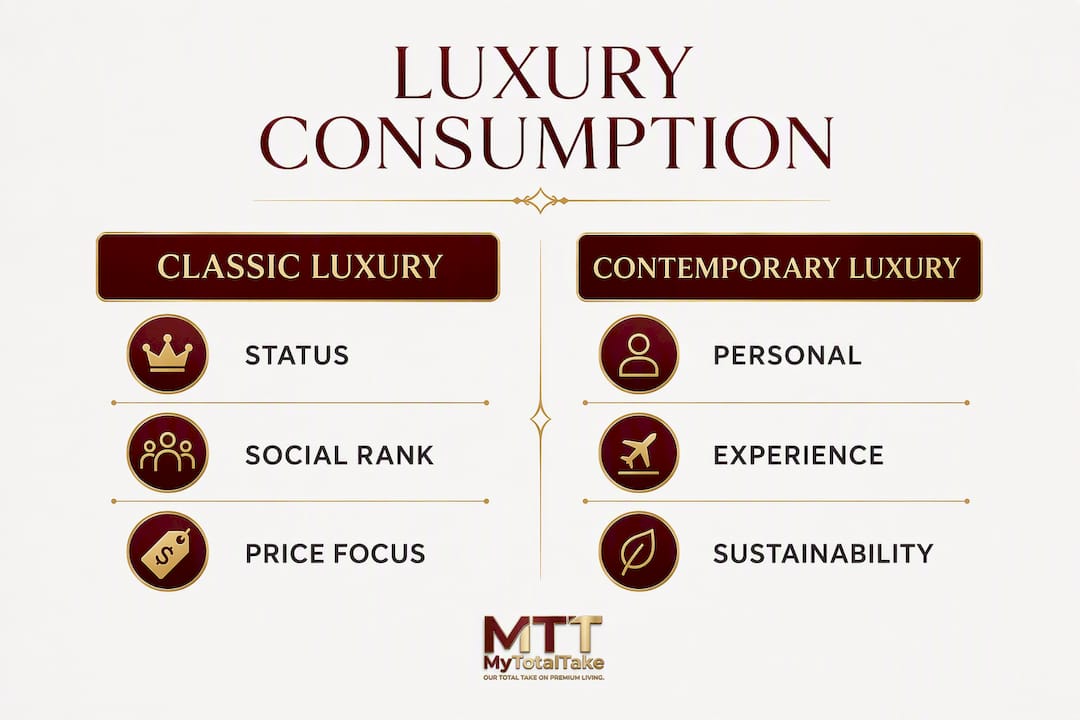
The most recent and arguably most useful frame is transformational luxury, which a systematic review of 109 academic studies found to be the category most reliably linked to lasting wellbeing. Transformational luxury prioritizes purpose, sustainability, and personal growth over status display. The shift in industry language reflects the same movement: as Unity Marketing and Bain commentary put it, meaning is now the currency of luxury, with consumers asking whether a purchase will improve their life rather than whether it signals the right status.
| Dimension | Classic luxury | Contemporary luxury |
|---|---|---|
| Primary driver | Status signaling, social rank | Personal meaning, wellbeing, self-actualization |
| Time horizon | Short-term (impression management) | Long-term (identity, growth, restoration) |
| Typical outcome | Hedonic pleasure, social capital | Eudaimonic wellbeing, purposeful living |
| Measure of success | Visibility, brand recognition | Life quality, emotional durability |
| Sustainability concern | Low | High and rising |
| Relationship to objects | Conspicuous display | Intentional curation, quiet quality |
The BCG x Altagamma True Luxury Global Consumer Insights report adds an important nuance: product fundamentals — craftsmanship, timelessness, and material honesty — remain core purchase drivers even as meaning-seeking grows. The shift is not away from quality; it is away from pure status performance toward quality that serves a life.
How does luxury actually change your mind and behavior?
The psychological mechanisms connecting luxury to identity and wellbeing are well-documented, and they operate at several levels simultaneously. Knowing which mechanism is driving a purchase is one of the most useful things you can do before spending.
- Status signaling: luxury goods communicate social rank and group membership. Research consistently shows this produces short-term gains in perceived social standing and self-esteem, but the effect is contingent on audience recognition. When the audience changes or the signal becomes common, the wellbeing boost evaporates.
- Self-concept and identity work: luxury purchases can reinforce or extend your sense of self. A person who buys a handcrafted writing desk is not just buying furniture; they are affirming a self-image as someone who values craft, permanence, and focused work. This mechanism tends to produce more durable satisfaction because it is internally referenced rather than socially contingent.
- Social comparison: luxury consumption often involves comparing upward (aspiring to a higher tier) or downward (affirming distance from a lower one). Research on psychological entitlement and mindset shows that when social comparison is the primary driver, purchases tend to generate anxiety as much as satisfaction, because the comparison target keeps moving.
- Novelty and hedonic adaptation: new luxury items deliver a burst of hedonic pleasure that fades within weeks or months for most people. The ESCP synthesis of academic findings confirms that hedonic excitement from luxury fades quickly, while experiential, sustainable, and purpose-driven purchases support longer-lasting wellbeing.
- Coping and avoidance: some luxury purchases are made to manage stress, reward effort, or escape discomfort. Used occasionally, this is benign. Used habitually, it can become a form of emotional avoidance that substitutes spending for addressing the underlying condition.
The psychology of luxury in living spaces adds a dimension most buyers overlook: subtle environmental cues — lighting temperature, texture, spatial proportion, and restraint — create genuine perceptions of luxury and support wellbeing even when individual pieces are not overtly expensive. The mechanism is behavioral, not financial.
That finding reframes the entire conversation. The question is not whether luxury is good or bad for you. The question is which mechanism is running the purchase.
What is the four-dimension framework for luxury and wellbeing?
The most operationally useful framework to emerge from recent academic work comes from a qualitative study of “luxury excursionists” — people who consume luxury occasionally rather than habitually — published in the Journal of Business Research. The study identified four dimensions of eudaimonic wellbeing that these consumers consistently associated with their luxury choices. Each dimension is both a description of what luxury can deliver and a criterion you can use to evaluate whether a specific purchase is likely to enhance your life.
Relationality
Luxury that enhances relationality deepens your connections with other people or with the natural world. A private garden designed for gathering, a dining table built to last generations, a curated travel experience shared with people you love — these are relational luxury choices. They produce wellbeing not through the object itself but through what the object or experience makes possible. When you evaluate a purchase through this lens, the question is: does this bring me closer to the people and places that matter?
Intentionality
Intentional luxury is chosen deliberately, with a clear sense of purpose and fit. It is the opposite of impulse buying at the premium tier. An intentional purchase has a defined role in your life — it replaces something that was not working, fills a genuine gap, or supports a specific practice or habit. The styling and design guidance that prioritizes function alongside aesthetics reflects this dimension well: a beautifully designed room that also works for how you actually live is intentional luxury.
Excellence
Excellence refers to the quality of craft, materials, and design that makes a luxury item genuinely superior in use, not just in appearance. This is where product fundamentals — the BCG x Altagamma finding that craftsmanship and timelessness remain core drivers — connect to wellbeing. An item built with material honesty and proportion tends to age well, require less replacement, and deliver persistent satisfaction rather than fading novelty. Quiet status symbols, the ones whose quality reveals itself over years of use, often deliver more durable wellbeing than conspicuous pieces.
Mindfulness
Mindful luxury involves awareness of how a purchase affects your inner life, your time, and your broader environment. It includes sustainability considerations, ethical sourcing, and the simple question of whether this thing will add calm or complexity to your daily routine. The data here is striking: 60% of luxury buyers in 2024 reported seeking customized wellness spaces or private gardens, showing that the affluent market now treats the home as a restorative environment, not a showcase.
When you run a potential purchase through all four dimensions — relational depth, intentional fit, material excellence, and mindful impact — you have a reliable filter for separating lifestyle-enhancing luxury from expensive noise.
Experiential vs. material luxury: which one enhances your life more?
The honest answer is that it depends on your goals, your personality, and the specific context. Both routes can deliver genuine lifestyle enhancement, and both carry distinct risks. The table below maps the key differences.
| Factor | Experiential luxury | Material luxury |
|---|---|---|
| Typical wellbeing time-horizon | Longer (memories, skills, relationships formed) | Shorter unless item has high daily use |
| Hedonic adaptation risk | Lower — experiences are harder to habituate to | Higher — novelty fades with familiarity |
| Social sharing value | High — stories and shared memories compound | Moderate — visible status signal, but static |
| Cost-per-use logic | Difficult to calculate; value is often non-linear | Straightforward for high-use daily items |
| Longevity of benefit | Tied to memory and meaning, not physical condition | Tied to material quality and maintenance |
| Best for | Identity exploration, relationships, milestone moments | Daily rituals, home environment, craft appreciation |
| Risk of misalignment | Choosing experiences that don’t fit your values or pace | Buying for status rather than genuine daily use |
A few practical signposts help clarify the choice. Choose an experience when the goal is a milestone, a relationship investment, or a new capability — a culinary retreat, a private wellness program, a curated journey that changes how you see something. Choose a material luxury when the item will be used daily, when its quality will be felt every time you interact with it, and when it has the potential to become a ritual anchor in your life. A well-made piece of designer furniture used every day for a decade delivers more total wellbeing than a one-time experience at the same price point, simply through accumulated contact.
Cost-per-use is a useful but incomplete metric. A $3,000 sofa used daily for ten years costs roughly $0.82 per day. A $3,000 weekend retreat costs $3,000 for two days of experience. Neither number tells you which is more valuable — that depends on what each delivers against the four dimensions. The more useful question is: how much of my daily life will this touch, and will that contact be restorative or neutral?
Natural materials in both experiential and material luxury tend to perform better on the mindfulness and excellence dimensions. The case for natural materials in interior design is not purely aesthetic; it connects to sustainability, tactile quality, and the kind of aging that improves rather than degrades.
What are the real benefits and risks of luxury for your wellbeing?
The benefits of luxury consumption, when chosen well, are documented across both hedonic and eudaimonic dimensions. The risks are equally real and worth naming plainly.
Documented wellbeing benefits:
- Short-term hedonic pleasure from sensory quality, novelty, and social recognition
- Increased self-esteem and confidence when purchases reinforce a coherent self-concept
- Social capital and belonging when luxury facilitates shared experiences or signals group membership authentically
- Reduced daily friction when premium design, services, or environments remove low-value tasks from your cognitive load
- Long-term eudaimonic growth when purchases align with the four dimensions — particularly relationality and intentionality
- Restorative environmental effects from well-designed spaces, as Architectural Digest’s reporting on luxury interior design confirms: lighting around 3000K, biophilic elements, and spatial proportion measurably affect occupant comfort and attachment
Documented risks and failure modes:
- Hedonic adaptation: the pleasure from a new luxury item typically fades within weeks to months, leaving you at the same baseline and often wanting the next purchase
- Coping purchases: buying luxury to manage stress or reward yourself after difficulty can become a habit that substitutes spending for genuine emotional processing
- Social comparison traps: when the primary motivation is keeping up with a reference group, the target keeps moving and the wellbeing gain is always temporary
- Overconsumption pressure: the accumulation of premium goods can create maintenance burden, storage complexity, and a cluttered environment that undermines the calm luxury is supposed to deliver
- Financial stress: luxury purchased beyond your means produces anxiety that cancels any wellbeing gain
Pro Tip: Before any significant luxury purchase, identify which of the five motivations is driving it: status, self-expression, coping, novelty, or genuine daily use. If the honest answer is status or coping, pause for 48 hours. Purchases driven by self-expression and genuine daily use are the ones most likely to deliver lasting lifestyle enhancement.
How do you evaluate whether a luxury purchase will actually improve your life?
A structured pre-purchase evaluation takes about ten minutes and dramatically improves the odds that a luxury investment will deliver lasting lifestyle enhancement rather than short-term pleasure followed by regret.
- Clarify the motivation. Write down in one sentence why you want this. Is it for daily use, a specific experience, a relationship, or social signaling? Honest answers here determine everything downstream.
- Test it against the four dimensions. Does it deepen a relationship (relationality)? Does it fill a genuine, defined gap in your life (intentionality)? Is its quality evident in use, not just appearance (excellence)? Does it add calm or complexity to your routine (mindfulness)?
- Calculate cost-per-use. Estimate how many times per year you will use or interact with this item or experience. Divide the price by that number, then multiply by the years of expected useful life. A $500 item used 300 times a year for five years costs $0.33 per use. A $500 item used twice and forgotten costs $250 per use.
- Check for substitution. What does this replace? If it replaces something that was not working, the case is strong. If it adds to an already-full category, the case is weaker.
- Assess repairability and longevity. Premium goods that can be repaired, resoled, reupholstered, or refinished deliver far more value over time than those designed for replacement. Mytotaltake’s guide to upscale products that last covers this in detail.
- Apply the sustainability filter. Does the production process align with your values? Ethical sourcing and material transparency are not peripheral concerns; they affect how you feel about an object every time you use it.
- Run the future-self test. Imagine yourself one year from now, three years from now, and five years from now. Is this purchase still part of your life in each scenario? Does it fit the person you are becoming, or only the person you are today?
The future-self test is particularly useful for experiential luxury. A wellness retreat that fits your life at 35 may not fit at 40, while a well-chosen piece of furniture or a curated home environment tends to grow with you. For premium home enhancement, the five-year test almost always favors quality over quantity.
How do people use luxury to improve their homes, health, and daily rituals?
The most persuasive evidence for luxury’s role in lifestyle enhancement is not in academic papers. It is in the specific, repeatable ways people integrate premium choices into their daily lives and notice the difference.
Luxury in the home environment
The home is where luxury delivers its highest return, simply because you spend more time there than anywhere else. Subtle interventions — warm lighting at 3000K, natural textures on surfaces you touch daily, spatial editing that removes visual clutter — produce measurable reductions in stress and improvements in perceived comfort. These are not necessarily expensive changes. They are intentional ones. A high-end living room designed around how you actually live, rather than how it photographs, is a daily restorative environment.
Curated travel and wellness retreats
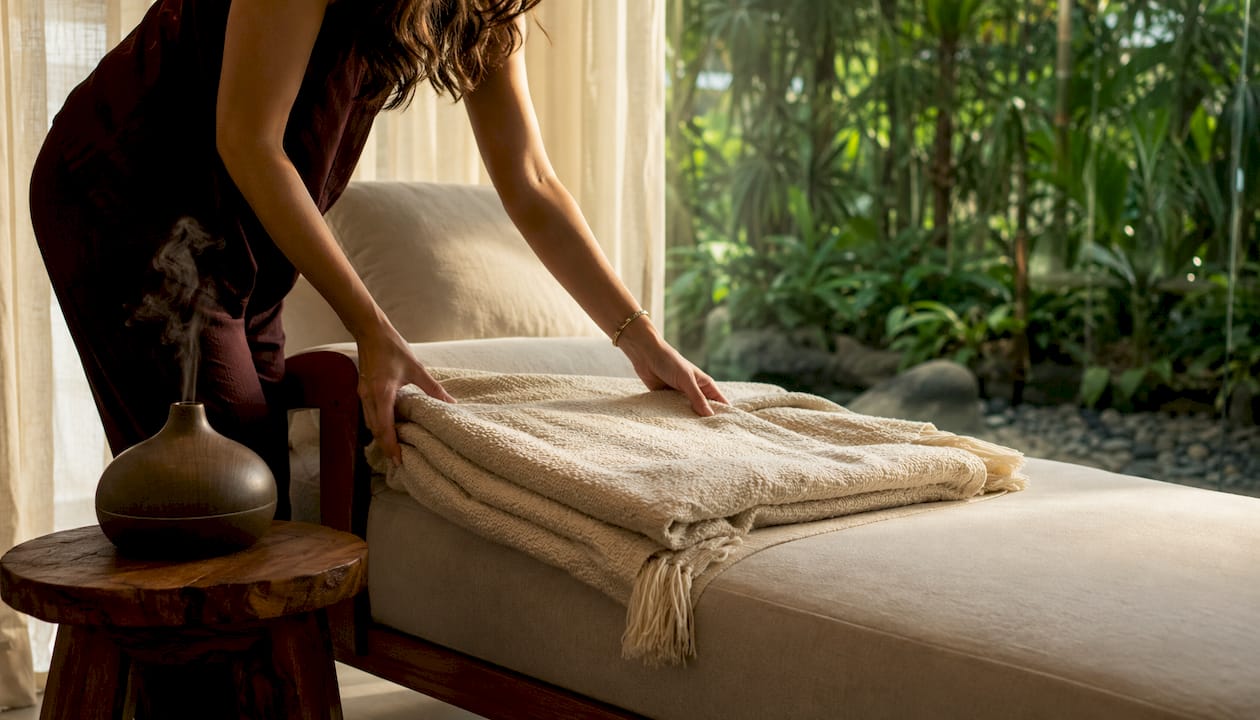
A private wellness retreat or a carefully chosen travel experience delivers its wellbeing benefit through memory, perspective shift, and the relationships it deepens. The key word is “curated” — a trip designed around your specific restoration needs (solitude, movement, cultural immersion, or social connection) outperforms a generic luxury hotel stay on every eudaimonic measure. The experience becomes a reference point you return to mentally long after the trip ends.
Wellness products and daily rituals
Premium wellness products — quality sleep systems, curated skincare, ergonomic tools — work because they reduce daily friction at the moments when your body and mind are most vulnerable. Morning and evening rituals anchored by well-chosen objects create behavioral consistency that compounds over time. Mytotaltake’s luxury wellness product range is built around this principle: products that earn their place through daily use, not occasional display.
Designer furniture as ritual anchors
A dining table, a reading chair, a writing desk — these are the objects around which daily life organizes itself. When they are built with genuine craft and material honesty, they become what designers call “quiet anchors”: pieces that define the character of a space without demanding attention. The case for designer furniture rests not on aesthetics alone but on the behavioral reality that the quality of your furniture shapes the quality of the activities you perform around it.
Time-use services and cognitive load reduction
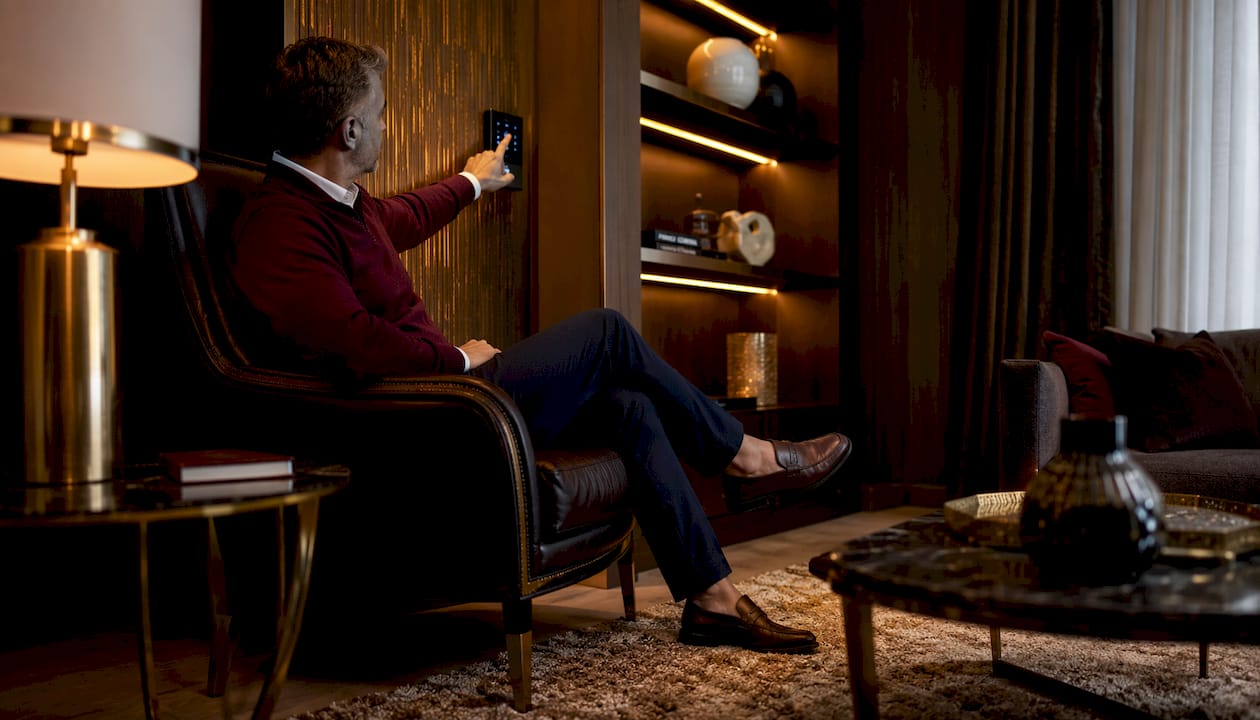
Concierge services, home automation, and curated subscription models all operate on the same principle: outsourcing low-value decisions and tasks preserves cognitive energy for the things that actually matter to you. This is luxury as infrastructure, and it is one of the most underappreciated advantages of premium living. Home automation trends in 2026 are increasingly designed around this logic — reducing friction rather than adding features.
What does the evidence actually support, and where is it weak?
The research base for luxury’s impact on wellbeing is growing but uneven. Some claims rest on solid empirical ground; others are more speculative.
Well-supported findings:
- The hedonic/eudaimonic distinction in luxury outcomes is robust across multiple studies and methodologies
- Transformational luxury — purpose-driven, sustainable, growth-oriented — consistently outperforms status-driven luxury on long-term wellbeing measures in the 109-study systematic review
- Environmental design cues (lighting, texture, proportion) reliably affect perceived comfort and occupant wellbeing
- The four-dimension framework (relationality, intentionality, excellence, mindfulness) is grounded in qualitative research with luxury excursionists and maps well to broader eudaimonic wellbeing literature
Areas where the evidence is weaker or mixed:
- Most luxury and wellbeing studies rely on self-reported measures, which are subject to social desirability bias
- Sample populations in academic luxury research skew toward Western, educated, and higher-income groups, limiting generalizability
- Long-term follow-up studies (beyond 12 months) are rare; most research captures short-to-medium-term effects
- The claim that roughly 75% of global luxury purchases come from consumers earning $40,000–$150,000 annually is widely cited in industry commentary but should be treated as an approximation rather than a precise figure, given variation in how “luxury purchase” is defined across studies
- Cultural variance is significant: the wellbeing mechanisms that operate in individualist cultures (self-expression, identity) differ from those in collectivist cultures (group harmony, face), and most published research reflects individualist assumptions
How to read luxury surveys and reports:
Industry reports from Bain, BCG, and Unity Marketing are valuable for tracking directional shifts in consumer behavior, but they are commissioned by or for the luxury industry and should be read with that context in mind. Academic peer-reviewed studies offer more methodological rigor but often study narrow populations. The most reliable conclusions come from findings that appear consistently across both types of sources.
Key Takeaways
Luxury enhances lifestyle most reliably when it is chosen through the four dimensions of relationality, intentionality, excellence, and mindfulness rather than driven by status signaling or hedonic novelty.
| Point | Details |
|---|---|
| Transformational luxury outlasts hedonic luxury | Purpose-driven, sustainable purchases deliver more durable wellbeing than status-display goods, per a review of 109 studies. |
| The four dimensions are your filter | Evaluate every luxury purchase against relationality, intentionality, excellence, and mindfulness before committing. |
| Hedonic adaptation is the primary risk | Pleasure from new luxury items fades within weeks to months; daily-use items and experiences tied to meaning resist this pattern. |
| 60% of luxury buyers prioritize wellness spaces | In 2024, 60% of luxury buyers reported seeking customized wellness spaces or private gardens, treating home design as restorative infrastructure. |
| Mytotaltake curates for lasting value | Mytotaltake’s collections across home, wellness, furniture, and tech are built around craft, longevity, and the four-dimension framework. |
Luxury should earn its place in your life
Most articles about luxury and lifestyle enhancement make the same mistake: they treat luxury as a category of goods rather than a quality of decision-making. The distinction matters enormously in practice.
What the research actually shows is that the same dollar amount spent on two different luxury purchases can produce radically different wellbeing outcomes depending entirely on the motivation behind the purchase and the fit between the object or experience and the buyer’s actual life. A $2,000 sofa chosen because it fits how a family actually gathers, built from materials that will age honestly, and placed in a room designed for real use — that is lifestyle-enhancing luxury. The same $2,000 spent on a piece chosen primarily because it photographs well or signals a particular taste level is likely to produce a few weeks of satisfaction and then fade into the background.
The four-dimension framework is not a luxury industry invention. It comes from academic research on people who consume luxury occasionally and thoughtfully, and it maps directly to what the broader wellbeing literature says produces lasting life satisfaction. Relationality, intentionality, excellence, and mindfulness are not luxury-specific virtues; they are the conditions under which any significant investment in your life tends to pay off.
Where I think the conventional conversation goes wrong is in treating experiential luxury as automatically superior to material luxury. The evidence does not support that hierarchy. A well-chosen object, used daily, in a space designed for your actual life, can deliver more cumulative wellbeing than a dozen curated experiences that don’t connect to your ongoing identity and habits. The question is always fit, not category.
Mytotaltake brings the four-dimension framework to your front door
Choosing luxury that genuinely improves your life is harder than it looks. Most premium marketplaces optimize for visual appeal and brand recognition. Mytotaltake is built around a different premise: that the products worth your investment are the ones that earn their place through daily use, lasting craft, and genuine fit with how you live.
Every category on Mytotaltake — from designer furniture that anchors a room and ages with it, to wellness products that reduce friction in your daily rituals, to curated home decor that shapes the character of your space — is selected with the four dimensions in mind. Craftsmanship, longevity, and purposeful design are the filters, not trend cycles or logo visibility. Fast delivery and free returns mean you can evaluate a piece in your actual space before committing. Browse the full collection at Mytotaltake and find the pieces that belong in your life.
Useful sources and further reading
The sources below form the primary evidence base for this article. Each is annotated for the type of evidence it contributes and its main limitation.
-
On the Transformative Nature of Luxury Consumption and Consumer Well-Being: A Systematic Literature Review and Research Agenda — Synthesizes 109 peer-reviewed studies on luxury and wellbeing; the strongest academic source for the hedonic/eudaimonic distinction and the transformational luxury framework. Limitation: review methodology means findings reflect the existing literature’s biases, including Western sample skew.
-
Virtue in luxury: eudaimonic well-being among luxury excursionists (Journal of Business Research) — Qualitative study of 42 interviews that produced the four-dimension framework (relationality, intentionality, excellence, mindfulness). Limitation: qualitative design; findings are conceptual rather than statistically generalizable.
-
Global luxury stabilizes as brands race to amplify meaning (Bain) — Industry analysis identifying five pillars of modern luxury and the shift toward meaning-driven consumption. Limitation: industry-commissioned perspective; directional rather than causal.
-
True Luxury Global Consumer Insights 2026 (BCG x Altagamma) — Large-scale consumer survey showing that product fundamentals (craftsmanship, timelessness) remain core drivers alongside rising emphasis on time and health. Limitation: survey methodology; self-reported preferences may not reflect actual purchase behavior.
-
Meaning Is The New Currency Of Luxury (Unity Marketing) — Industry commentary arguing that quality of life now outranks quantity of things as the luxury value proposition. Limitation: commentary rather than primary research; reflects a particular market perspective.
-
What if luxury no longer makes us happier? (ESCP — The Choice) — Academic synthesis confirming that hedonic excitement from luxury fades quickly while purpose-driven purchases support longer-lasting wellbeing. Limitation: summary format; readers should consult primary studies for methodological detail.
-
The new luxury home is not about more — it’s about living better (Times of India) — Source for the 2024 survey finding that 60% of luxury buyers sought customized wellness spaces or private gardens. Limitation: single survey; sample composition not fully disclosed.
-
The Psychology of Luxury in Everyday Living Spaces — Design-science and practitioner commentary linking environmental cues (lighting, texture, restraint) to wellbeing perceptions. Limitation: practitioner source rather than peer-reviewed; useful for applied guidance.
-
The Psychology of Luxury Interior Design (Architectural Digest) — Reporting on how specific design decisions (3000K lighting, biophilia, proportion) affect occupant comfort and buyer attachment. Limitation: contributor content; not peer-reviewed.
-
Exploring the interplay of psychological entitlement, mindset, and luxury consumption (PMC/NIH) — Peer-reviewed study on how psychological entitlement and mindset moderate the relationship between luxury consumption and wellbeing. Limitation: specific population studied; generalizability requires caution.
-
About 75% of global luxury purchases come from middle-income consumers (LinkedIn commentary) — Industry commentary on the democratization of luxury consumption. Limitation: widely cited approximation; definition of “luxury purchase” varies across sources, so treat as directional rather than definitive.







Leave a comment