
What Drone Features Matter for Photography?
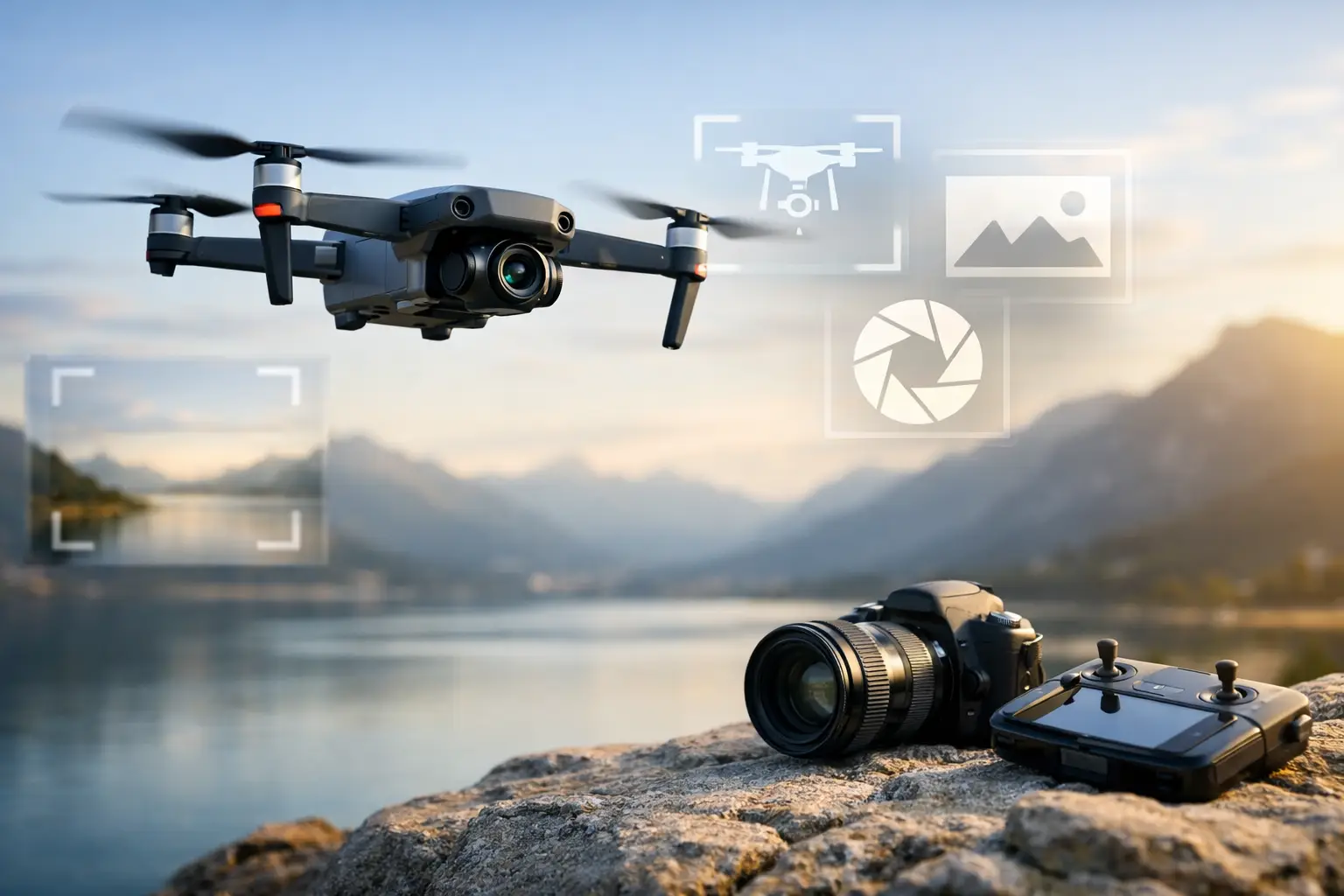
A beautiful aerial image rarely comes from altitude alone. It comes from the quiet detail in a sunrise, the clean geometry of a modern patio, or the cinematic sweep of a coastline captured without shake or clipped highlights. When deciding what drone features matter for photography, look beyond the promise of 4K video and focus on the camera system, flight confidence, and creative control that will shape every frame.
For shoppers building a refined travel kit or documenting a home, property, outdoor escape, or special occasion, the right drone should feel like a considered creative tool. Premium details make the difference between footage that merely looks airborne and imagery with real presence.
What Drone Features Matter for Photography? Start With the Camera
The camera is the first specification worth comparing, but megapixels are only one part of the story. A higher-resolution camera can provide more detail and flexibility for cropping, particularly when printing large images or editing architectural scenes. Still, a larger sensor is often more valuable than an inflated megapixel count.
Sensor size determines image depth
A larger sensor gathers more light, helping a drone preserve detail in shadowed trees, interior-facing windows, and the rich colors of early morning or late afternoon. It also tends to produce cleaner images at higher ISO settings, which matters when the light is not ideal.
For casual daylight photography, a smaller sensor can create impressive results. If you expect to photograph sunsets, evening entertaining, landscapes with deep contrast, or polished real estate imagery, a 1-inch-type sensor or larger is a meaningful upgrade. The images typically have smoother tonal transitions and more room for thoughtful editing.
RAW capture is a feature, not a luxury
Choose a drone that shoots RAW stills, ideally in DNG format. JPEG files are convenient and ready to share, but they discard much of the data captured by the sensor. RAW files preserve a wider range of information, making it easier to recover bright clouds, adjust white balance, and refine color without making an image look overprocessed.
This is especially useful when photographing elegant outdoor spaces. A pale stone patio, dark furniture, reflective pool water, and bright sky can challenge any camera. RAW capture gives you a better chance of retaining the texture and tonal balance that made the scene compelling in person.
Adjustable aperture adds creative freedom
An adjustable aperture is one of the most desirable high-end drone features for photography. It allows you to control how much light reaches the sensor without relying entirely on shutter speed or ISO. That is valuable for both still photography and video, particularly in bright sun.
For photos, aperture control can help you select settings that protect highlights and maintain image quality. For video, it supports a more natural shutter speed and cinematic motion. Fixed-aperture drones are not automatically limiting, but an adjustable aperture offers the kind of control that photographers appreciate as their skills grow.
A Three-Axis Gimbal Is Essential
Wind and movement are unavoidable in aerial photography. A three-axis mechanical gimbal keeps the camera level and steady as the drone banks, hovers, or corrects for a gust. It is the reason a carefully composed image can remain crisp rather than showing the subtle blur and tilted horizon common with lesser stabilization systems.
Avoid treating electronic stabilization as an equal replacement for a mechanical gimbal. Software can help smooth footage, but it cannot provide the same stable camera platform during a long exposure, a slow panoramic sweep, or a precise shot beside a building. For serious photography, a three-axis gimbal should be non-negotiable.
Gimbal range matters, too. A camera that can tilt upward as well as down opens up more interesting compositions, including towering trees, sculptural architecture, and mountain faces. That flexibility is not necessary for every buyer, but it can transform what is possible once you move beyond simple overhead views.
Flight Performance Protects the Shot
A drone can have an excellent camera and still disappoint if it is difficult to position. Stable hovering, responsive controls, and a dependable connection make it easier to frame an image with intention. Look for models with strong wind resistance, GPS positioning, and a controller that gives you a clear live view of the scene.
Flight time means more than minutes in the air
Manufacturers often advertise ideal flight times, measured in calm conditions with little movement. Real-world flight time will be shorter once you account for wind, camera use, subject tracking, and the reserve needed to return safely. A drone rated for 30 minutes may give you closer to 20 to 25 comfortable minutes of shooting.
Longer flight time is not simply a convenience. It gives you time to wait for better light, refine your angle, and make several careful passes over a subject. For travel and landscape photography, consider extra batteries part of the essential setup rather than an optional accessory. They turn a rushed session into a relaxed creative process.
Transmission quality affects composition
Your controller screen or phone feed is how you judge exposure, framing, and horizon level from the ground. A bright, high-resolution live view is easier to use in direct sun, while a reliable long-range transmission signal reduces interruptions when shooting across open landscapes or larger properties.
Range figures can be misleading because legal and safe flying requires keeping the drone within visual line of sight. The practical benefit of a stronger transmission system is not flying farther away. It is having a clean, dependable picture while operating responsibly in the space around you.
Intelligent Modes Should Support, Not Replace, Skill
Modern drones can follow a subject, orbit a point of interest, trace a programmed route, or create stitched panoramas. These features can be genuinely useful, particularly for solo travelers, families, or creators who want a polished perspective without a second operator.
Subject tracking is appealing for cycling, boating, and outdoor activities, but its quality varies with the drone’s sensors and the complexity of the scene. A person moving against an uncluttered beach is easier to follow than someone walking beneath trees. Orbit and waypoint modes can be excellent for repeatable architectural shots, yet they still require a careful preflight check for branches, power lines, and changing conditions.
Automatic modes are best viewed as a foundation. The most distinctive images usually come from choosing the right moment, adjusting the angle by a few feet, and letting the subject guide the composition.
Obstacle Sensing Builds Confidence, With Limits
Omnidirectional obstacle sensing can make a premium drone more reassuring to fly, particularly when navigating around trees, structures, or uneven terrain. Forward, rear, side, upward, and downward sensors offer more complete awareness than basic front-only protection. For new pilots, that extra support can prevent an expensive mistake.
However, no obstacle-avoidance system sees everything. Thin branches, wires, reflective glass, water, low light, and fast movement can confuse or defeat sensors. A drone should never be sent into a tight space just because an app says obstacle avoidance is enabled. The finest results come from leaving enough room to maneuver and flying with deliberate control.
Consider Lens Options and Filters for a More Finished Look
A wide-angle lens is the standard on most camera drones and remains the most versatile choice for landscapes, rooftops, and expansive outdoor settings. Some advanced models also offer medium telephoto or longer telephoto cameras. These lenses let you compress distance and isolate a subject without flying too close, which can create a more refined perspective for architecture, wildlife viewed at a respectful distance, and layered landscapes.
Multiple lenses do involve trade-offs. Telephoto cameras may use smaller sensors or have less impressive low-light performance than the primary camera. If image quality in every condition is your priority, compare each camera’s sensor and aperture separately rather than assuming a multi-camera drone performs equally across all lenses.
Neutral-density filters are another worthwhile consideration for photographers and videographers. They reduce incoming light so you can use preferred shutter speeds in bright conditions. For still images, they can also make longer-exposure effects possible, such as softly blurred water or motion in waves, when conditions permit.
Portability, Storage, and Practical Readiness
A compact folding drone is easier to bring to a weekend getaway, a mountain trail, or an outdoor gathering. A larger drone may offer superior stability, a bigger battery, or a more capable camera, but it is also more likely to stay at home if it requires a dedicated case and significant setup time. The better choice depends on whether you value maximum image quality or the freedom to carry it often.
Check storage options before buying. Internal storage can save a shoot when a memory card is forgotten, while support for fast, high-capacity microSD cards matters for high-resolution stills and video. It is also worth considering battery charging: a multi-battery charging hub, USB-C charging, and intelligent battery status indicators add welcome ease to a premium setup.
Before every flight, confirm the local rules, register the drone when required, and check airspace restrictions. Respecting privacy and keeping clear of people, airports, and restricted locations protects both your experience and the places you came to photograph.
The right drone does not need every specification at the top of the category. Choose the camera quality you will notice, the flight confidence you will use, and the portability that encourages you to bring it along. That balance is what turns an exceptional piece of technology into a camera you will reach for whenever the view deserves more than an ordinary angle.







Leave a comment