
Avoid Power Washing Damage: Outdoor Rug Care for Natural Fibers
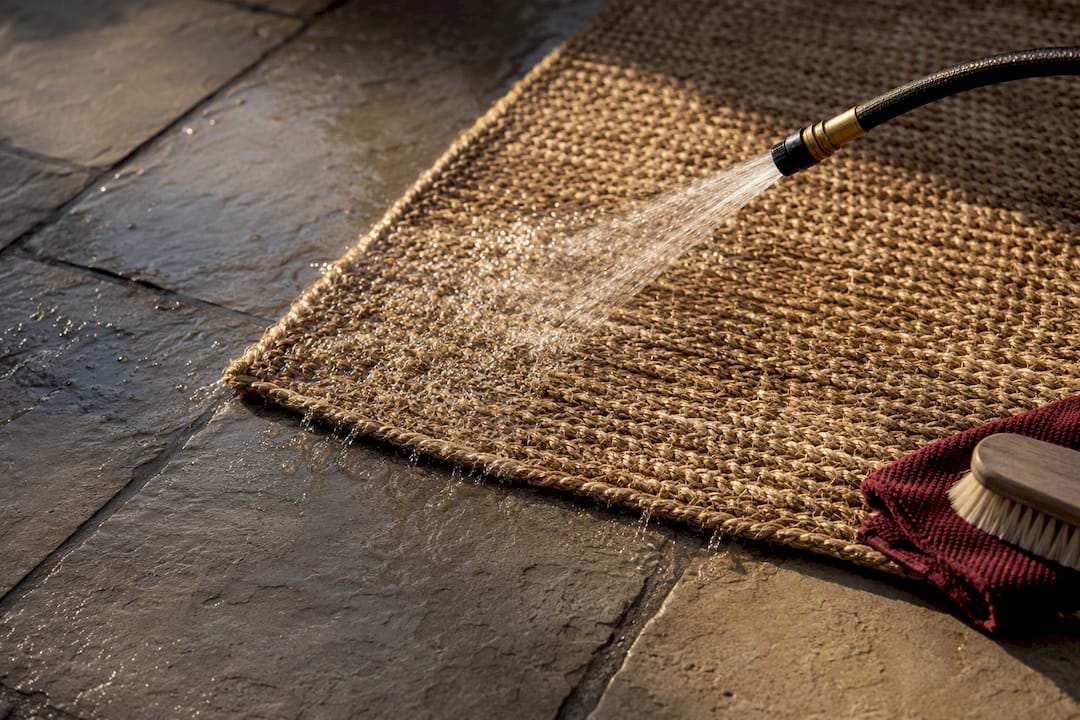
The recommended outdoor rug care routine is simple: shake or vacuum weekly, blot spills the moment they happen, wash with a mild soap solution every month or so and dry the rug completely before it goes back down. Skip any of these, especially the drying, and mildew moves in fast. Material matters too. Synthetic fibers tolerate a hose or low-pressure wash; natural fibers do not.
TL;DR:
- Synthetic outdoor rugs with solution-dyed yarn and dense weaves are best suited for low-maintenance cleaning and quicker drying times.
- Natural fiber rugs, such as jute and sisal, absorb water readily and should be limited to covered or dry areas to prevent mildew and damage.
- Regular routine care involves weekly shaking or vacuuming, immediate spill blotting, and monthly washing with a mild soap, with thorough drying to prevent mildew.
- Deep cleaning should follow a specific order: removal of debris, spot testing cleaner, gentle scrubbing, rinsing with low-pressure water, and complete drying on both sides.
- A second rug for high-use outdoor areas can prolong the lifespan of each rug by allowing rotation, drying, and reducing constant wear.
Table of Contents
- Outdoor Rug Care Checklist: Do These First
- How Often Should You Clean an Outdoor Rug?
- Which Rug Materials Handle Outdoor Weather Best?
- How Do You Deep Clean an Outdoor Rug?
- What’s the Best Way to Remove Stains From an Outdoor Rug?
- How Do You Dry an Outdoor Rug Without Getting Mildew?
- How Do You Store an Outdoor Rug for Winter?
- Why Does the Underside of an Outdoor Rug Matter?
- When Should You Call a Professional or Replace the Rug?
- A Second Rug Might Save You More Than a Cleaning Kit
- Ready for an Upgrade? Browse Rugs Built to Handle It
- Sources
- FAQ
Outdoor Rug Care Checklist: Do These First
Before you dig into deep-cleaning recipes and drying schedules, run through this fast sequence. It covers the moves that prevent most problems before they start.
- Shake out or vacuum the rug weekly, more often in high-traffic zones or during pollen season.
- Blot any spill the moment it happens. Food, wine, and pet stains set fast in heat.
- Test any cleaner on a hidden corner first, and check the manufacturer’s care tag for restrictions.
- Rinse and fully wash the rug when stains build up or the surface feels gritty underfoot.
- Lift the rug and let the underside air out weekly during rainy stretches, since trapped moisture is where trouble starts.
Get these five habits right and you’ll rarely need the heavier cleaning steps below.
How Often Should You Clean an Outdoor Rug?
The right cadence depends on foot traffic. A rug on a rarely used side patio needs less than one anchoring a busy dining set near the grill.
For low-traffic areas, a weekly shake and biweekly vacuum keeps grit from working into the fibers. Moderate-traffic spaces, like a covered porch used daily, do better with a light vacuum twice a week and a full mild-soap wash monthly. High-traffic zones, especially pool decks and outdoor kitchens, benefit from a quick sweep daily and a deeper clean every two to three weeks. This weekly light care, monthly scrub, and seasonal deep-clean rhythm mirrors what several rug care guides recommend as a practical baseline.

Use a vacuum on a bare-floor or low-pile setting with the beater bar off. A rotating brush can snag loops and fray the weave on flatwoven rugs.
Rotate the rug 180 degrees every few months. This evens out sun fade and foot-traffic wear, and it lets the underside dry evenly instead of always facing the same patch of shade or dampness.
Pro Tip: Lift a corner of the rug once a week and glance underneath. A musty smell or dark speckling means moisture is trapped, and it’s far easier to fix at that early stage than after mildew spreads.
Which Rug Materials Handle Outdoor Weather Best?
Material dictates almost everything about how you can clean and place a rug. Get this wrong and no cleaning routine will save the rug.
Polypropylene and PET (recycled plastic) rugs are the workhorses of outdoor decor. They dry quickly, resist fading with solution-dyed yarn, and generally tolerate a hose rinse or a low-pressure power wash without damage.
Natural fibers like jute and sisal look beautiful but absorb water readily. Consumer Reports notes these are best kept to covered porches or sunrooms, since they can trap moisture and develop mildew even when the surface looks dry.
Before buying or deep-cleaning any rug, check these construction details:
- Solution-dyed yarn (color runs through the fiber, resisting UV fade)
- Tight, dense weave rather than loose loops
- Breathable or mesh backing instead of solid rubber, which traps moisture against the floor
- Pile height and face weight, since denser rugs shed water faster than plush ones
Solution-dyed yarn and tight-weave construction correlate directly with better UV and stain resistance in hands-on testing. A rug sitting in full sun on a wood deck dries fast but fades faster; one under a covered porch fades less but needs closer watching for mildew, since airflow is usually weaker there. If you’re shopping for a rug built to handle these conditions from the start, a guide to choosing outdoor rugs that last walks through what to look for.
How Do You Deep Clean an Outdoor Rug?
A proper deep clean follows a set order. Skip a step and you risk streaking, trapped soap, or a rug that never fully dries.
- Prep the space. Shake off loose debris, then move the rug to a spot that slopes for drainage, ideally a driveway or lawn rather than a deck that pools water.
- Test first. Dab your cleaner on a hidden corner and wait a few minutes to check for color change before treating the whole surface.
- Hand-scrub with mild soap. Mix a small amount of dish soap or mild detergent, roughly a quarter cup per gallon of water, and scrub with a soft-bristle brush in small circular motions, working with the grain of the weave.
- Rinse until the water runs clear. Soap residue left behind attracts dirt faster than before you cleaned.
- Choose your rinse method by material. A garden hose works for most synthetics. If using a power washer, hold the nozzle at least 18 inches away on the lowest pressure setting, since too much force can delaminate the backing or fray yarns. Skip power washing entirely on natural fibers and anything with a glued rubber backing.
- Dry completely before use or storage.
Some rug systems, particularly two-piece covers or removable liners, are labeled machine washable. Check the tag before assuming, and always air-dry the cover afterward rather than using a dryer’s heat, which can shrink synthetic weaves.
Pro Tip: If you just need a quick refresh between deep cleans, a diluted all-purpose cleaner concentrate can outperform baking-soda or plain dish-soap spot treatments for surface grime, according to a side-by-side test on a recycled-plastic rug. Save the full scrub for monthly maintenance.
What’s the Best Way to Remove Stains From an Outdoor Rug?
Treat stains fast, and match the fix to the mess rather than reaching for one all-purpose solution.
- Food and drink spills: Blot immediately with a clean cloth, then dab with a diluted mild soap solution and rinse. Waiting lets sugar and acid set into the fibers.
- Grease: Use a dedicated degreaser rather than an oil-based solvent, which can degrade some synthetic coatings. Rinse thoroughly afterward.
- Mildew and algae: On colorfast synthetics, a diluted bleach solution of roughly one part bleach to ten parts water can lift the stain after a spot test. A vinegar-and-water rinse is a gentler alternative for lighter cases.
- Pet stains: An enzyme-based cleaner breaks down the odor-causing compounds that soap alone leaves behind. Rinse well and let the rug dry fully in the sun if possible, since UV exposure also helps neutralize lingering odor.
How Do You Dry an Outdoor Rug Without Getting Mildew?
Drying is where most outdoor rug care routines quietly fail. A rug that looks dry on top can stay damp underneath for days, and that’s exactly where mildew takes hold.
- Hang the rug over a railing or drying rack, or prop it at an angle against a wall so air moves across both sides.
- Flip it halfway through drying, typically after a few hours in warm weather, to expose the side that was facing down.
- Full drying can take anywhere from several hours in direct sun to a full day or more in shade or humidity, so plan the timing before you start a wash.
- Use risers, outdoor-rated pads, or even temporary click-lock deck tiles underneath to let air circulate beneath the rug once it’s back in place.
Pro Tip: If mildew keeps returning in the same spot, the issue usually isn’t the rug. It’s what’s underneath it. Check for a drainage problem or a backing that’s trapping water before you blame the fabric.
How Do You Store an Outdoor Rug for Winter?
Storage mistakes are how a perfectly good rug develops mold over a single off-season. The process is straightforward if you follow it in order.
- Make sure the rug is bone dry. Any residual dampness turns into mold inside a rolled-up rug within days.
- Roll it with the face turned inward rather than folding it, which prevents permanent creases and cracking in the backing.
- Wrap it in a breathable material like a cotton sheet rather than sealing it in plastic, which traps any residual humidity against the fibers.
- Store it off the ground and in a ventilated space, such as on a shelf in a garage or a breathable outdoor storage box, rather than directly on concrete.
- In colder climates, rinse off any salt or de-icer residue before storing. Both are corrosive to synthetic fibers over time.
Why Does the Underside of an Outdoor Rug Matter?
Most rug damage starts on the side you never look at. The floor beneath a rug and the rug’s own backing are the most common origin point for mildew, since moisture gets trapped there long after the top surface feels dry.
Choose a rug pad based on airflow, not just cushioning. Breathable, mesh-style pads let moisture escape, while solid rubber pads can hold water against both the rug and the floor. A glued rubber backing on the rug itself carries the same risk, trapping moisture that speeds up substrate damage underneath.
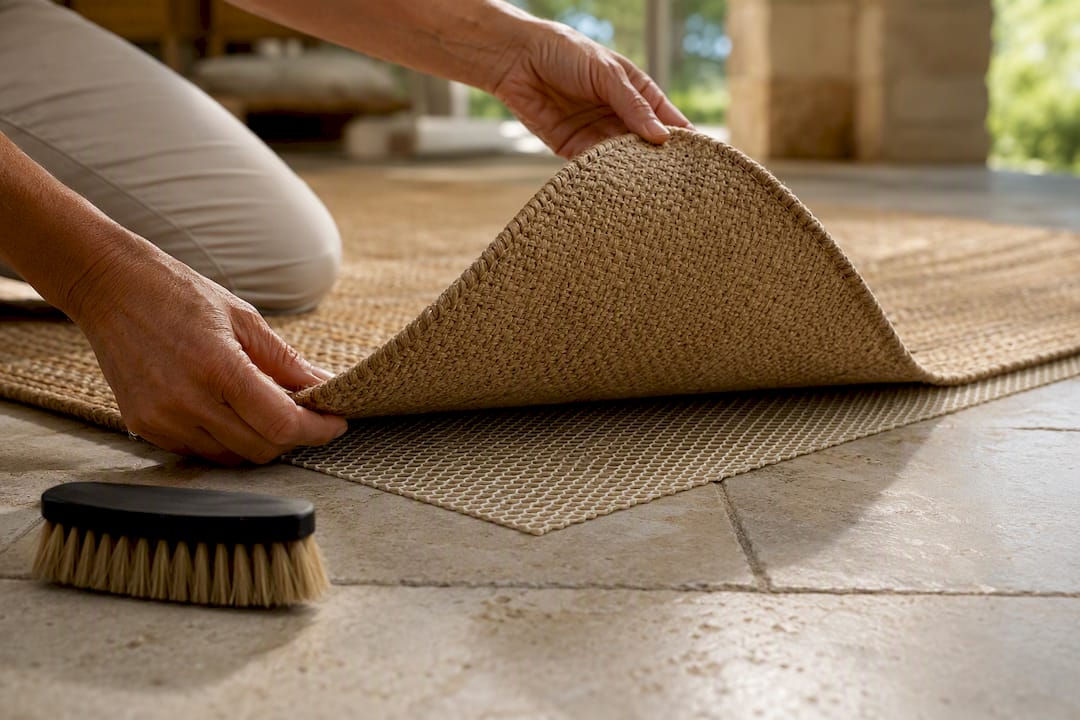
Clean and dry the pad along with the rug during every deep clean, and check it periodically for cracking or a slick, deteriorating surface. That’s a sign the backing is breaking down. Lift the rug every few weeks to inspect the deck boards, grout lines, or sealed concrete underneath for dark spots or a soft, spongy feel, both early signs of trapped moisture damage.
When Should You Call a Professional or Replace the Rug?
Most outdoor rugs respond well to home care, but a few warning signs mean it’s time to call in a professional cleaner or start shopping for a replacement.
Persistent odor after a full wash and dry cycle, visible dye bleed between colors, or backing that feels crumbly or rotted are all signs embedded mildew has gone deeper than surface cleaning can reach. At that point, outdoor rugs typically have a useful life of three to seven years depending on climate exposure and how consistently they were maintained, so weigh the cost of professional deep cleaning against simply replacing a rug nearing the end of that range. For a rug in a high-humidity climate or one that’s been outdoors year-round without a break, replacement is often the more sensible math.
A Second Rug Might Save You More Than a Cleaning Kit
Good outdoor rug care starts with good rug selection. A rug built with solution-dyed yarn and a breathable backing will outlast one that looks nearly identical on a showroom floor but skips those details, no matter how carefully you clean it. That’s the part of the equation most people skip past.
For high-use areas like a pool deck or an outdoor dining spot that sees daily traffic, consider owning a second rug and rotating them. One dries and rests while the other works, and both last longer because neither is under constant load. If you’re deciding what to buy next, choosing outdoor rugs that last and caring for outdoor cushions are worth reading side by side, since the same drying and material logic applies to both.
— Lysander
Ready for an Upgrade? Browse Rugs Built to Handle It
A rug that’s past saving doesn’t need more cleaning tricks. It needs a replacement built with better bones from the start. This article highlights outdoor rugs and furnishings chosen for the construction details that actually matter outdoors: solution-dyed fibers, breathable backing, and weaves that hold up to sun and moisture instead of just looking good on day one.

Reliable outdoor fabric performance isn’t unique to rugs either. Outdoor fabrics built for real-world exposure follow the same durability principles covered above, which is worth knowing if you’re furnishing an entire patio rather than replacing one rug. Browse the outdoor furniture fabric survival guide to see how different materials hold up over a season of sun and rain, then check the curated outdoor furniture buying guide to see current rug and furnishing selections worth the investment.
Sources
- How to Care for Outdoor Rugs – Consumer Reports
- Here’s How to Clean an Outdoor Rug That’s Seen Better Days | Reviews by Wirecutter
- How to clean an outdoor rug – 5 easy steps for an instant refresh | Homes & Gardens
- I Tried 3 Methods to Clean My Filthy Outdoor Rug | Apartment Therapy
FAQ
How Do You Maintain an Outdoor Rug?
Shake or vacuum it weekly, blot spills right away, wash it monthly with a mild soap solution, and always let it dry completely before putting it back down or storing it.
What’s the Best Way to Clean an Outdoor Area Rug?
For most synthetic rugs, hand-scrub with a mild soap dilution, rinse thoroughly with a hose or low-pressure power washer held at least 18 inches away, then dry fully on both sides.
Can You Leave an Outdoor Rug Outside All Year?
Many synthetic rugs can stay outside year-round in mild climates, but rugs in humid or freezing regions last longer if brought in and stored dry during the off-season, since constant moisture exposure shortens their typical three-to-seven-year lifespan.
My Outdoor Rug Is Turning Green. How Do I Fix It?
Green discoloration usually means algae or mildew growth from trapped moisture. Scrub the affected area with a mild soap solution or a diluted bleach rinse for colorfast synthetics, rinse well, and dry the rug completely on both sides before returning it to a spot with better airflow underneath.











Leave a comment