
Review Smart Air Purifier With App Control
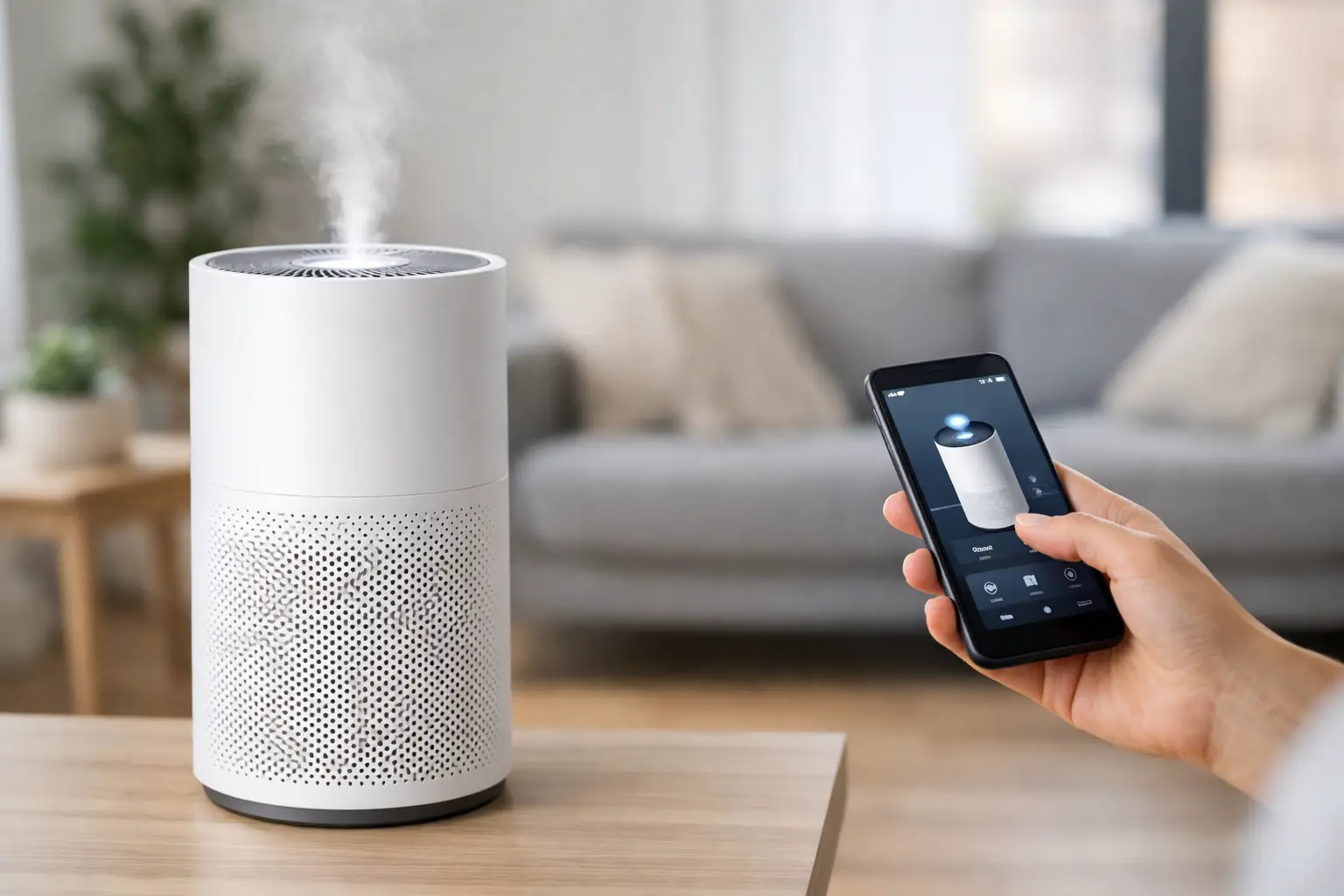
A beautiful home should feel as considered as it looks. Yet cooking aromas, pet dander, spring pollen, city dust, and the faint haze that follows an open window can quietly compromise that feeling. This review smart air purifier with app control guide examines whether connected purification is a worthwhile upgrade for a more polished, comfortable living space.
The short answer is yes, when the purifier itself is sized correctly and the app supports useful control rather than adding another screen to manage. A premium smart model can make cleaner air feel almost invisible: it adjusts to changing conditions, runs when you are away, and maintains a quieter atmosphere when you are home. But an elegant app cannot compensate for an undersized unit, weak filtration, or expensive replacement filters.
What a Smart Air Purifier Actually Adds
A traditional purifier asks you to choose a fan speed and remember to turn it on. A smart air purifier uses onboard sensors and a companion app to give you more context and control. Depending on the model, the app may display current particulate levels, track filter life, set schedules, enable automatic mode, and send reminders when air quality changes.
That convenience is especially appealing in homes where routines vary. You can set a purifier to increase its output shortly before arriving home, lower the fan speed at bedtime, or run a stronger cycle after dinner without leaving the table. For apartment dwellers, this is a refined way to manage the effects of shared hallways, nearby traffic, and compact kitchens.
The best app control feels purposeful. It should make the purifier easier to live with, not turn an everyday home essential into a technical project. Clear readings, straightforward controls, and dependable notifications matter more than an app filled with decorative charts.
Review: Smart Air Purifier With App Control Features
When comparing models, begin with purification performance and treat smart features as the finishing layer. A high-end design is welcome, but the machine needs enough airflow to clean the room where it will live.
Room Coverage Needs a Closer Look
Coverage claims can be confusing because brands may cite a large room size based on one air change per hour. For more meaningful cleaning in a bedroom, nursery, living room, or pet-friendly space, look for specifications that show how often the purifier can cycle the air at the stated square footage. More air changes generally mean more consistent particle reduction.
A compact purifier may be ideal beside a bed or in a home office, but it is unlikely to handle an open-concept great room at its quietest setting. Conversely, buying an oversized machine for a small bedroom can be worthwhile if you value low-noise operation. A larger unit can often maintain the space on a gentle speed instead of working hard all night.
Place the purifier where air can circulate around it. Avoid tucking it behind a sofa, inside a cabinet, or under a console table simply to preserve a clean visual line. Many premium models are designed to complement modern interiors, but they still need breathing room to perform.
Filtration Is the Detail That Counts
For everyday airborne particles, a true HEPA filter or a clearly stated equivalent high-efficiency particle filter is the feature to prioritize. This captures fine particles such as pollen, dust, pet dander, and smoke particles. A substantial activated carbon layer is valuable for odors and certain gaseous pollutants, particularly in kitchens, pet areas, and urban homes.
Not every purifier needs the most extensive carbon filtration. If your primary concern is seasonal allergies in a bedroom, particle filtration and quiet performance may matter most. If you cook frequently in a smaller home or want to soften persistent pet odors, a model with more carbon media is worth the additional investment.
Be cautious with vague claims about ionization, plasma, or ozone-based technology. Some customers appreciate optional ionizers, while others prefer to keep such features off. A purifier should state clearly how these functions work and give you control over them. Confidence comes from transparent filtration details, not broad promises.
Sensors Should Be Helpful, Not Overconfident
Air-quality sensors can make automatic mode genuinely useful, but they have limits. Most consumer models are best at detecting particulate changes. They may respond quickly to toast, candles, vacuuming, or an active pet, while odors and volatile compounds can be harder to measure accurately.
A well-tuned auto mode is still one of the strongest reasons to choose app control. The purifier can remain discreet during clean-air periods and respond when conditions shift. In a bedroom, that means less need to choose between a noticeable fan sound and peace of mind. In a kitchen-adjacent living room, it means a timely boost when the air needs it most.
The App Experience: Luxury Is Less Friction
The app should be easy to connect, easy to revisit, and perfectly usable from across the room. At minimum, look for fan-speed control, automatic mode, scheduling, filter-life status, child lock, and the ability to turn off display lights. These small details create a more restful experience, especially at night.
Scheduling offers more value than it initially seems. Set a quiet overnight routine for the bedroom, a higher-speed cleaning window after school or work, or an energy-conscious schedule for a seldom-used guest room. If a model supports voice assistants, that can be convenient, although it should not be the deciding factor. Physical controls remain important when your phone is charging or guests need to adjust the machine.
App privacy deserves consideration, too. Read the permissions during setup and favor brands that provide clear account, data, and firmware-update policies. Wi-Fi connectivity is practical, but it should never be required for basic on-device operation. A quality purifier should keep cleaning air even when the internet is down.
Design, Noise, and the Cost of Ownership
A purifier becomes part of the room, so its finish and proportions matter. In a carefully furnished living space, a sculptural cylindrical design, understated neutral palette, and concealed air intake can feel far more intentional than a bulky appliance. Still, performance should guide the final decision. An exquisite exterior is not a substitute for adequate airflow.
Noise is equally personal. A published decibel rating helps, but the character of the sound matters as much as the number. A soft, even fan tone can fade into the background, while a high-pitched whine can be distracting at a lower setting. For bedrooms, look for a dedicated sleep mode that dims lights and reduces the fan without stopping effective circulation entirely.
Before purchasing, check the cost and availability of replacement filters. This is the long-term expense many buyers overlook. A more expensive purifier can be the better value if its filters last longer, are reasonably priced, and are easy to source. Plan to replace filters according to real use, not only the calendar. Homes with pets, smoke exposure, or frequent cooking may need replacements sooner.
Who Should Choose App-Controlled Purification?
Smart purification is an excellent fit for households that want cleaner air without another daily chore. It suits allergy-conscious families, pet owners, design-minded renters, and homeowners creating a calmer bedroom or more inviting entertaining space. It also makes sense for anyone who appreciates checking a room’s status before arriving home.
It may be less compelling for a rarely used room, a very small budget, or buyers who prefer zero connectivity. In those cases, a well-built manual purifier with proper filtration can still deliver excellent results. The app is a convenience feature, not the core of clean air.
For a premium home upgrade, choose the model that balances sufficient coverage, credible filtration, low noise, and an app you will actually use. The right purifier does not demand attention. It quietly supports the atmosphere you have worked hard to create, leaving your rooms feeling fresher, more composed, and ready to enjoy.







Leave a comment