
What Size Mirror for Double Sink Vanity?
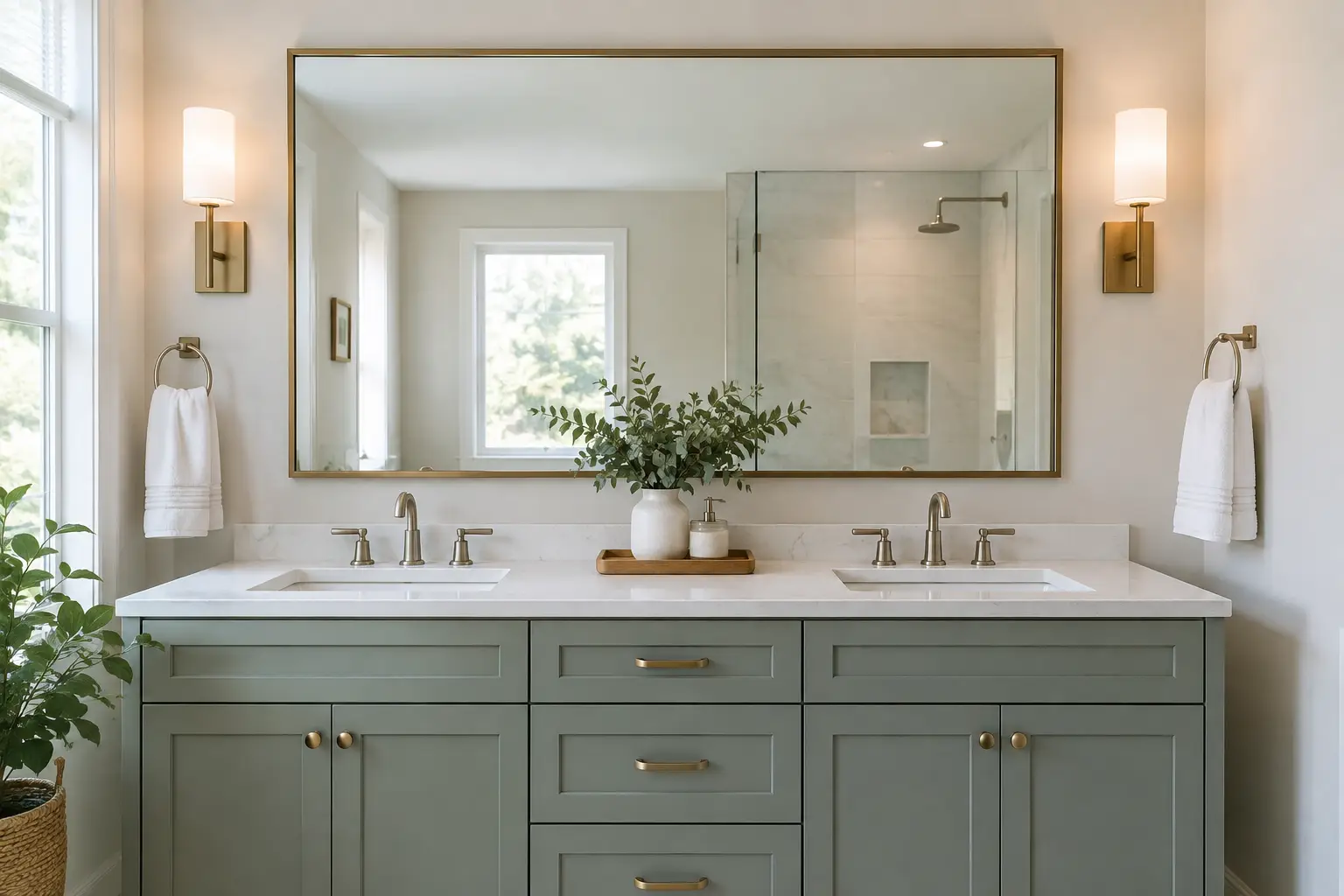
A double-sink vanity creates an immediate sense of luxury – twice the counter space, twice the daily convenience, and a stronger visual anchor for the room. The mirror is what completes that composition. If you are wondering what size mirror for double sink vanity will look intentional rather than undersized or overpowering, start with the vanity itself, then consider the wall, faucets, lighting, and the atmosphere you want to create.
There is no single measurement that suits every bathroom. A streamlined floating vanity calls for a different approach than a furniture-style cabinet with a statement stone top. Still, a few proportion rules make the decision remarkably simple and help your finished bath feel like the high-end haven it should be.
What Size Mirror for a Double Sink Vanity?
For one large mirror, choose a width that is roughly 70% to 100% of the vanity width. In most refined bathroom designs, the mirror is slightly narrower than the vanity – usually leaving 2 to 4 inches of wall visible on each side. This creates a composed, tailored border rather than making the room feel crowded.
For example, a 60-inch double vanity often looks best with a 54- to 58-inch-wide mirror. A 72-inch vanity can carry a mirror between 60 and 70 inches wide, depending on the surrounding wall space and the visual weight of the frame.
Height matters just as much. Most double vanity mirrors measure 30 to 40 inches high. A taller mirror can lend drama to a bath with high ceilings, while a 30- to 36-inch height is often ideal in standard rooms. The practical test is simple: each person using the vanity should be able to see their face and upper body comfortably without stooping or stretching.
The mirror should never extend beyond the vanity on either side. It can work in an intentionally eclectic room, but it rarely delivers the clean, elevated finish most homeowners want from a double-sink installation.
One Large Mirror or Two Separate Mirrors?
This choice shapes the personality of the whole room. A single wide mirror feels open, contemporary, and quietly luxurious. It reflects more light, makes a compact bathroom appear broader, and gives a wall-mounted double vanity a crisp architectural presence. It is especially effective when the sinks sit close together or when a broad window, shower glass, or pale finishes already give the room an airy quality.
Two individual mirrors offer a more symmetrical, personal setup. Each sink becomes its own dedicated station, which is useful during busy mornings. Separate mirrors also introduce structure above a long vanity and can make a traditional, transitional, or boutique-hotel-inspired bathroom feel more balanced.
For two mirrors, size each one in relation to its sink rather than simply splitting the vanity width in half. A good starting point is for each mirror to be slightly narrower than the sink cabinet or the area allotted to that sink. On a 72-inch vanity, two 28- to 32-inch mirrors commonly look polished, with enough breathing room at the ends and a deliberate gap at the center.
Avoid squeezing two oversized mirrors edge to edge. The result can feel visually busy, particularly when paired with bold sconces, veined stone, or prominent faucets. Negative space is part of a considered design, not wasted wall area.
When one mirror is the better choice
Choose one mirror when your priority is a clean, expansive look. It is a particularly smart choice for a narrow bathroom, a vanity with an off-center window nearby, or a modern room where a continuous stone backsplash and minimalist hardware are the stars. A wide rounded-rectangle mirror can soften a vanity with sharp lines, while a frameless design lets exquisite tile or wallcovering take the lead.
When two mirrors make more sense
Choose two mirrors when you want strong symmetry, individual grooming zones, or an opportunity to bring in a more decorative silhouette. Arched mirrors add a graceful vertical note over a boxy cabinet. Slim metal frames introduce contrast against warm wood or natural stone. If the faucets are centered over each basin, centering one mirror over each faucet almost always looks purposeful.
Start With the Sink and Faucet Placement
Vanity width provides the broad rule, but sink placement refines it. With two separate mirrors, center each mirror on its own sink, not necessarily on the full vanity. This is essential on asymmetrical designs, where drawers, open shelving, or uneven counter space can shift the visual center.
With a single mirror, center it on the vanity as a whole. If your sinks are widely spaced, make sure the mirror is wide enough to visually connect both basins. A narrow mirror over a long double vanity can leave each side looking unfinished, even if the measurement technically fits.
Faucet height can also influence mirror placement. Tall vessel faucets, widespread fixtures, and raised backsplashes occupy more vertical space, so they may call for a slightly taller mirror or a higher mounting position. The goal is a comfortable transition from countertop to mirror, not a cramped stack of competing elements.
Leave Room for Lighting
Lighting is where otherwise beautiful mirror plans often go wrong. Before ordering, decide whether your illumination will sit above the mirror, on either side, or be built into the mirror itself.
Sconces placed beside each mirror need clear wall space. In a two-mirror layout, this can mean putting one sconce on each outer edge and a pair between the mirrors, or using a single vertical fixture between the sinks where the layout allows. Side lighting is flattering because it reduces shadows around the face, but it needs thoughtful spacing to avoid a crowded wall.
An overhead vanity light is often easier with one large mirror. Leave enough room above the mirror for the fixture to cast useful light without visually pressing against the ceiling. As a general guideline, mount the mirror several inches above the faucet and leave a similar margin below any light fixture. Exact measurements depend on ceiling height and fixture scale.
Backlit mirrors bring a sleek, spa-like finish and reduce the need for a separate vanity bar. They work beautifully in contemporary spaces, though they are less forgiving if you need strong task lighting for makeup or close shaving. In that case, pair the ambient glow with discreet side sconces or ceiling lighting.
Consider Frame Thickness and Visual Weight
A mirror’s outside dimensions do not tell the entire story. A thick, dark frame has far more visual presence than a slim brass edge or frameless panel of the same size. If your vanity is richly grained wood, deep navy, or black, a substantial frame can create a confident, collected look. In a smaller room, however, that same frame may make the wall feel heavy.
Frameless mirrors tend to look larger and lighter. They are an excellent match for stone slab backsplashes, textured tile, and bathrooms where the cabinetry or hardware already supplies plenty of detail. Thin metal frames offer a middle ground: defined enough to feel finished, subtle enough to preserve openness.
Also consider the shape. Rectangular mirrors are the most adaptable and make it easy to align edges with the vanity. Oval and arch-top styles introduce softness, but they need more open wall space around them to look intentional. A pair of tall arches can be exquisite over a double vanity, especially where ceilings are generous and the cabinetry has a clean profile.
Mounting Height That Looks and Feels Right
A common installation approach is to position the bottom of the mirror about 5 to 10 inches above the countertop. This leaves room for the faucet while keeping the mirror low enough to be useful. If there is a backsplash, start above it whenever possible, unless the design calls for the mirror to rest directly on the stone or tile.
Rather than relying only on a standard height, use the people who will use the bathroom most often as your guide. The mirror’s center should generally sit around eye level, but a double vanity shared by people of different heights benefits from a taller mirror. Height offers more daily flexibility without disturbing the room’s proportions.
Before drilling, make a full-size paper template or use painter’s tape to mark the proposed dimensions on the wall. Stand back at the bathroom entrance, then view it from the vanity. This quick step reveals whether the mirror needs another inch of width, a little more height, or more space for lighting – details that are much easier to adjust before installation.
A well-sized mirror does more than provide a reflection. It gives a double-sink vanity its finished rhythm, catches the light at the right angles, and turns an everyday routine into a more considered moment at home.









Leave a comment