
Electric Smoker vs Pellet Smoker Compared
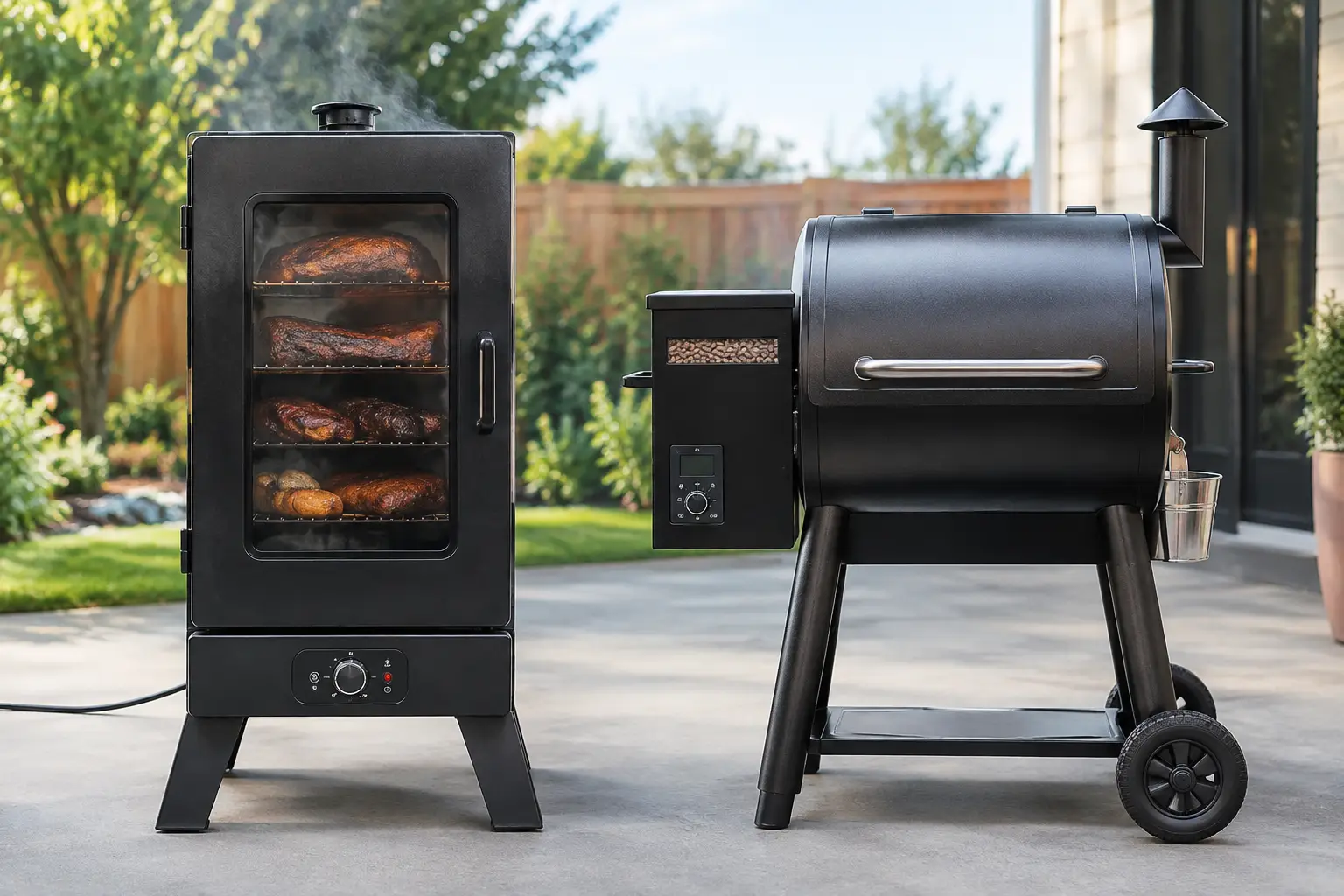
A rack of ribs can look identical coming out of two smokers, yet the experience of making them can feel entirely different. In the electric smoker vs pellet smoker decision, the better choice is rarely about which appliance is more impressive on paper. It is about how you want your outdoor kitchen to work on a busy Saturday, how much smoke character you enjoy, and whether you want your cooker to do more than low-and-slow barbecue.
Both options can turn a patio into a more considered entertaining space. They offer a cleaner, more approachable route to smoked salmon, brisket, chicken, vegetables, and cocktails-worthy appetizers than a traditional offset smoker. Their differences, however, matter well before the first meal reaches the table.
Electric Smoker vs Pellet Smoker at a Glance
An electric smoker uses a heating element to create steady heat inside an insulated cabinet. Wood chips, usually placed in a tray above the element, provide smoke. The design is simple, vertical, and focused on smoking rather than grilling. Most models plug into a standard outdoor-rated electrical outlet and rely on a thermostat or digital controller to maintain the set temperature.
A pellet smoker burns compact hardwood pellets fed automatically from a hopper into a fire pot. A controller manages the auger, fan, and ignition system to hold the selected temperature. Because it produces heat with real wood combustion, it generally offers a more pronounced wood-fired profile and can often cook at higher temperatures than an electric cabinet smoker.
Think of an electric smoker as a composed, specialized appliance for dependable smoked foods. A pellet smoker is closer to a versatile outdoor cooking station, capable of smoking, roasting, baking, and, on many models, grilling. Neither approach is inherently superior. The right one reflects your cooking habits, patio layout, and appetite for hands-on barbecue.
Flavor: Delicate Smoke or Wood-Fired Presence?
Flavor is usually the first meaningful divider. Electric smokers create smoke from wood chips that smolder over the heating element. The result is gentle, clean, and controlled. That is an advantage for fish, poultry, cheese, vegetables, and anyone who finds heavy smoke overwhelming. With an electric model, you can develop satisfying barbecue flavor without turning every ingredient into a bold smoke statement.
Pellet smokers deliver a deeper hardwood presence because pellets are the fuel source as well as the smoke source. The profile is still typically milder and cleaner than what a charcoal or stick burner can produce, but it is more noticeable than an electric smoker’s output. Pellet varieties also make it easy to tailor the result: fruit woods for pork and chicken, oak for an all-purpose foundation, or hickory and mesquite for richer beef cuts.
There is a practical caveat. A pellet grill running hot for pizza or seared vegetables will create less visible smoke than it does during a low-temperature cook. Meanwhile, an electric smoker can make excellent ribs and pork shoulder, but the bark may be softer and the smoke ring less dramatic. If a competition-style crust and pronounced smoke are central to your barbecue ambitions, pellet cooking has the edge. If you want quietly refined flavor with minimal fuss, electric is compelling.
Ease of Use and Temperature Control
Electric smokers are among the most forgiving outdoor cookers available. Set the temperature, add water if your recipe calls for it, load the racks, and replenish wood chips during the first part of the cook. Their enclosed cabinet format holds heat well, and many digital versions make it easy to maintain temperatures commonly used for smoking, often around 200 to 275 degrees Fahrenheit.
This makes electric smokers particularly inviting for first-time owners and apartment or suburban homeowners who want a straightforward addition to their outdoor routine. There is no charcoal to light, no fire to manage, and no bag of pellets to monitor. The main limitation is capacity and range. Cabinet smokers excel at smoking, but they are not designed to give you a high-heat grilling finish.
Pellet smokers also offer notable convenience. Modern controllers can hold a selected temperature with little intervention, and the hopper can support long cooks without frequent refueling. For a brisket that needs hours of stable heat, that automation is a genuine luxury. Many units include meat probes, connected controls, and wider temperature ranges that let one appliance handle a smoked turkey at noon and a roasted dinner later that evening.
Still, pellet cooking has more moving parts. An auger, fan, igniter, controller, and fire pot all require periodic attention. A pellet smoker is simple compared with tending a live-fire pit, but it is not quite as plug-in-and-proceed as an electric cabinet. It also needs pellets that are dry and in good condition, so a sealed storage bin becomes part of the setup.
Space, Design, and Outdoor Placement
An electric smoker’s upright footprint is ideal when your patio is elegant but not expansive. It occupies roughly the floor space of a compact cabinet, while multiple racks make efficient use of vertical room. It can be an especially polished choice beside a modern outdoor dining area where visual clutter is not welcome.
Because it depends on electricity, placement deserves thought. Use an outdoor-rated outlet and follow the manufacturer’s clearance guidance. Avoid extension cords unless the manual specifically permits an appropriate heavy-duty option. Like any smoker, it should operate outdoors in a well-ventilated area, away from combustible materials and under cover only if the space is designed for safe ventilation.
Pellet smokers are generally broader, with a hopper on one side and a barrel-shaped cooking chamber. They make more of a visual statement and often provide a larger cooking surface, which is useful for hosting. If your idea of a perfect weekend includes several racks of ribs, a whole packer brisket, or enough chicken for a gathering, the extra width earns its place.
Weather can influence both options. Wind and cold temperatures make any cooker work harder, but pellet smokers may use more fuel in challenging conditions. Electric smokers can also lose heat in winter, especially less insulated models. A protected patio location, used safely and according to the product instructions, makes either appliance more consistent.
Cleanup, Maintenance, and Ownership Costs
Electric smokers create little ash and have fewer mechanical components, so routine care is pleasantly restrained. Empty the grease tray, wipe interior surfaces after they cool, remove spent wood-chip residue, and clean the racks. The simplicity is attractive for cooks who want the reward of smoked food without turning cleanup into a project.
Pellet smokers require more deliberate maintenance. Ash should be vacuumed from the fire pot and lower chamber regularly to support reliable ignition and airflow. Grease management is equally important, particularly after rich cuts such as pork shoulder. None of this is difficult, but it is part of owning a high-performing pellet cooker.
Upfront prices vary widely by construction, insulation, controls, and capacity. In general, electric smokers are often the more economical entry point. Pellet smokers tend to cost more because of their larger format and automated fuel system. Operating costs depend on local electricity rates, cooking temperature, weather, and pellet prices. For occasional smoking, the difference may be modest. For frequent all-season cooking, calculate the cost of fuel alongside the features you will actually use.
Which Smoker Fits Your Cooking Style?
Choose an electric smoker if you value compact design, easy operation, light-to-medium smoke flavor, and a dedicated tool for reliably smoking food. It is an excellent fit for salmon, chicken wings, ribs, jerky, vegetables, and smaller gatherings. It also makes sense when you already own a capable gas or charcoal grill for high-heat cooking.
Choose a pellet smoker if you want richer wood-fired flavor and one appliance that can take on several outdoor cooking roles. It suits the host who cooks for a crowd, experiments with brisket and pulled pork, or wants the flexibility to roast, bake, and smoke with the same design-forward centerpiece. The additional maintenance and pellet storage are worthwhile when versatility is part of the appeal.
Before purchasing, measure the intended location, consider where fuel and accessories will live, and be realistic about your typical guest count. A beautifully built smoker that is too large for your patio or too involved for weeknight use will not feel like an upgrade. The best choice is the one that makes you eager to set the table, invite people over, and let a great meal unfold at an unhurried pace.











Leave a comment