
Gas Fire Pit vs Wood Fire Pit for Your Patio
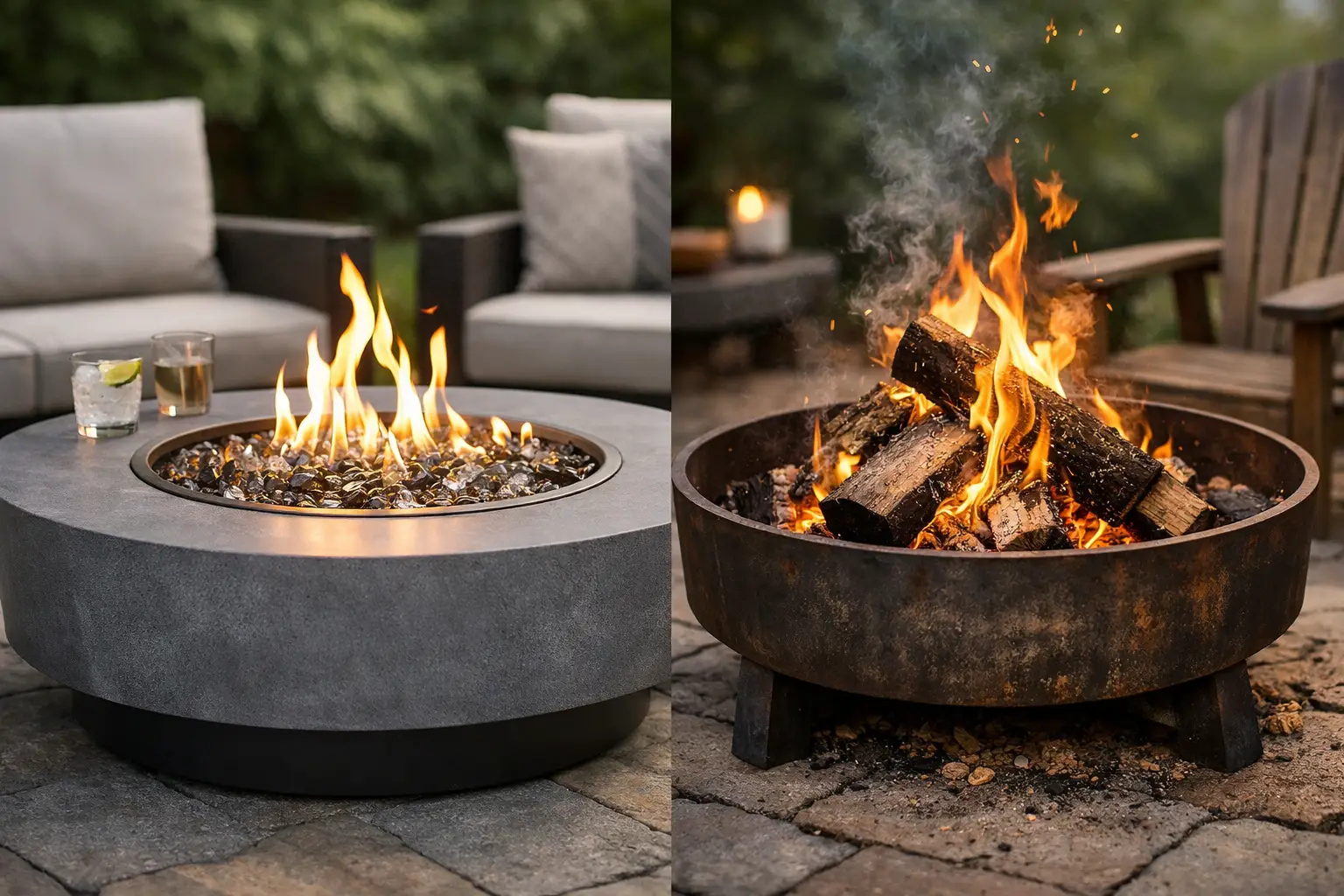
A fire feature changes more than the temperature of a patio. It sets the pace for late dinners, gives a lounge arrangement a natural focal point, and turns an underused corner into the place everyone gathers. In the choice between a gas fire pit vs wood fire pit, the best option is less about which flame is objectively better and more about how you want your outdoor space to feel and function.
A wood fire pit brings the crackle, scent, and ritual many people associate with a memorable evening outdoors. Gas delivers controlled warmth and a polished, ready-when-you-are experience. Both can be beautiful additions to a high-end haven, but they serve distinct lifestyles.
Gas Fire Pit vs Wood Fire Pit: The Essential Difference
The defining distinction is effort versus atmosphere. A gas fire pit starts with the turn of a key, push of a button, or electronic ignition. Its flame is consistent, adjustable, and easy to turn off when dessert is served or the weather shifts. For homeowners who entertain often, this convenience can make the patio feel like a true extension of the living room.
A wood-burning fire pit asks more of you, but offers more sensory character in return. You need dry firewood, a reliable way to light it, and time for the fire to build. At the end of the evening, you also need to let the embers cool and clear away ash. For many, those rituals are not inconveniences. They are the point.
The decision often becomes clear when you picture a typical night at home. If you want a refined fire feature for spontaneous weeknight use, gas usually earns its place. If you picture slow weekends, blankets, toasted marshmallows, and the unmistakable fragrance of a real campfire, wood has a pull that no burner media can fully recreate.
Flame Experience and Outdoor Ambiance
Gas fire pits are available in designs that feel architectural rather than utilitarian. A low concrete fire table can anchor a modern sectional, while a linear burner set into a stone wall can give a pool deck the quiet drama of a boutique hotel. Fire glass, lava rock, and ceramic logs allow you to tailor the look, from sleek and contemporary to softly traditional.
The flame itself is cleaner and more composed than a wood fire. It does not pop sparks across your cushions or send a plume of smoke toward guests when the wind changes. That makes gas especially appealing in compact patios, furnished decks, and outdoor rooms where upholstery, rugs, and carefully selected décor are part of the design.
Wood fire pits offer a more organic presence. The flames shift constantly, logs settle and glow, and each fire feels slightly different. This warmth can make a stone, steel, or cast-iron pit feel wonderfully grounded in a garden setting. If your patio leans rustic, lodge-inspired, or nature-forward, a wood fire pit may look more at home than a highly engineered gas feature.
Still, the romance of wood comes with smoke. Even seasoned hardwood can produce it, especially while the fire is getting started. Guests with asthma, sensitive eyes, or a low tolerance for campfire scent may find a gas fire pit more comfortable. The same consideration matters if your outdoor area is close to neighbors, open windows, or screened spaces.
Installation, Placement, and Safety
A propane gas fire pit is generally the simplest gas option. Many freestanding designs conceal a standard propane tank in their base, giving you placement flexibility without the visual interruption of a tank beside the furniture. Natural gas models can offer an even more integrated result and eliminate tank refills, but they require a dedicated gas line installed by a qualified professional.
That installation cost can be worthwhile for a permanent patio plan, particularly if the fire feature will be used throughout much of the year. Natural gas is also convenient for frequent hosts because the fuel supply is continuous. Before choosing either type, confirm local codes, clearance requirements, and whether your homeowners association has restrictions on outdoor flames.
A wood-burning fire pit does not need a fuel line, but its placement deserves just as much attention. It should sit on a noncombustible surface, at a safe distance from structures, fences, low branches, and outdoor furnishings. Deck use requires a model specifically designed and approved for that setting, along with appropriate heat protection.
Local rules matter here, too. Some municipalities limit open burning, and seasonal burn bans can temporarily take a wood fire pit out of rotation. Gas fire features may be allowed in situations where wood burning is not, though regulations vary. A premium outdoor setup should feel effortless, and confirming the rules before you buy prevents a beautiful feature from becoming an occasional-use piece.
Maintenance and Everyday Ownership
Gas wins decisively on cleanup. Once the flame is off and the unit has cooled, there is no ash, soot, or half-burned wood to manage. Routine care usually involves keeping the burner ports clear, checking the ignition, inspecting hoses and connections, and protecting the unit with a fitted cover when not in use. A quality cover also helps preserve finishes through changing weather.
Wood fire pits need regular ash removal, occasional deep cleaning, and dry fuel storage. Wood should be kept elevated and covered in a ventilated rack, not piled directly against the house. If you enjoy tending a fire, these tasks can feel satisfying. If your ideal Friday night begins after a long workday, they may be enough to keep the pit unused.
There is also the question of patio cleanliness. Wood carries bark, ash, and the possibility of stray sparks. Gas keeps the surrounding area more polished, which is valuable for design-forward spaces with pale stone, outdoor textiles, or a carefully maintained rug beneath a seating group.
Cost: Purchase Price Is Only One Part of It
Entry-level wood fire pits can be less expensive than gas models, especially portable steel designs. A thoughtfully made gas fire pit, particularly one built as a fire table or finished in concrete, aluminum, or premium stone-look materials, often costs more upfront. Natural gas installation adds another significant line item.
Operating costs vary by region, local fuel prices, and how often you use the fire feature. Propane requires tank exchanges or refills, while natural gas is billed through your utility. Wood may be inexpensive if you have a dependable source, but quality seasoned hardwood still has a cost, and cheap or damp wood produces a less enjoyable fire.
Rather than choosing by purchase price alone, consider cost per use. A gas fire pit that starts in seconds may become a weekly staple. A wood fire pit that creates a special occasion atmosphere may be used less often but deliver a richer experience every time. Value is tied to the kind of evenings you want to create.
Which Fire Pit Fits Your Patio?
Choose a gas fire pit if you prioritize clean design, immediate ignition, adjustable flames, and minimal upkeep. It is the natural match for contemporary patios, apartment terraces where permitted, poolside lounges, and entertaining areas that need dependable ambiance without smoke or ash. A fire table can also do double duty as a generous surface for drinks and small plates when the burner is off.
Choose a wood fire pit if authenticity is your priority and you have the space, permissions, and patience to enjoy it properly. It suits larger yards, casual gathering spaces, and households that love the tactile traditions of outdoor cooking and fireside conversation. A well-designed wood pit can become the soul of a backyard, especially when paired with comfortable lounge seating and thoughtful lighting.
For some homes, the answer is both. A gas fire table near the house supports easy, elegant entertaining, while a wood-burning pit farther into the yard creates a destination for weekends and cooler nights. The right layout lets each one do what it does best.
At My Total Take, the most compelling outdoor pieces earn their footprint through both form and function. Select the fire feature that makes you want to step outside more often, then give it the setting it deserves: comfortable seating, generous clearances, and room for the people who will gather around it.











Leave a comment