
A Guide to Choosing a Kitchen Range Hood
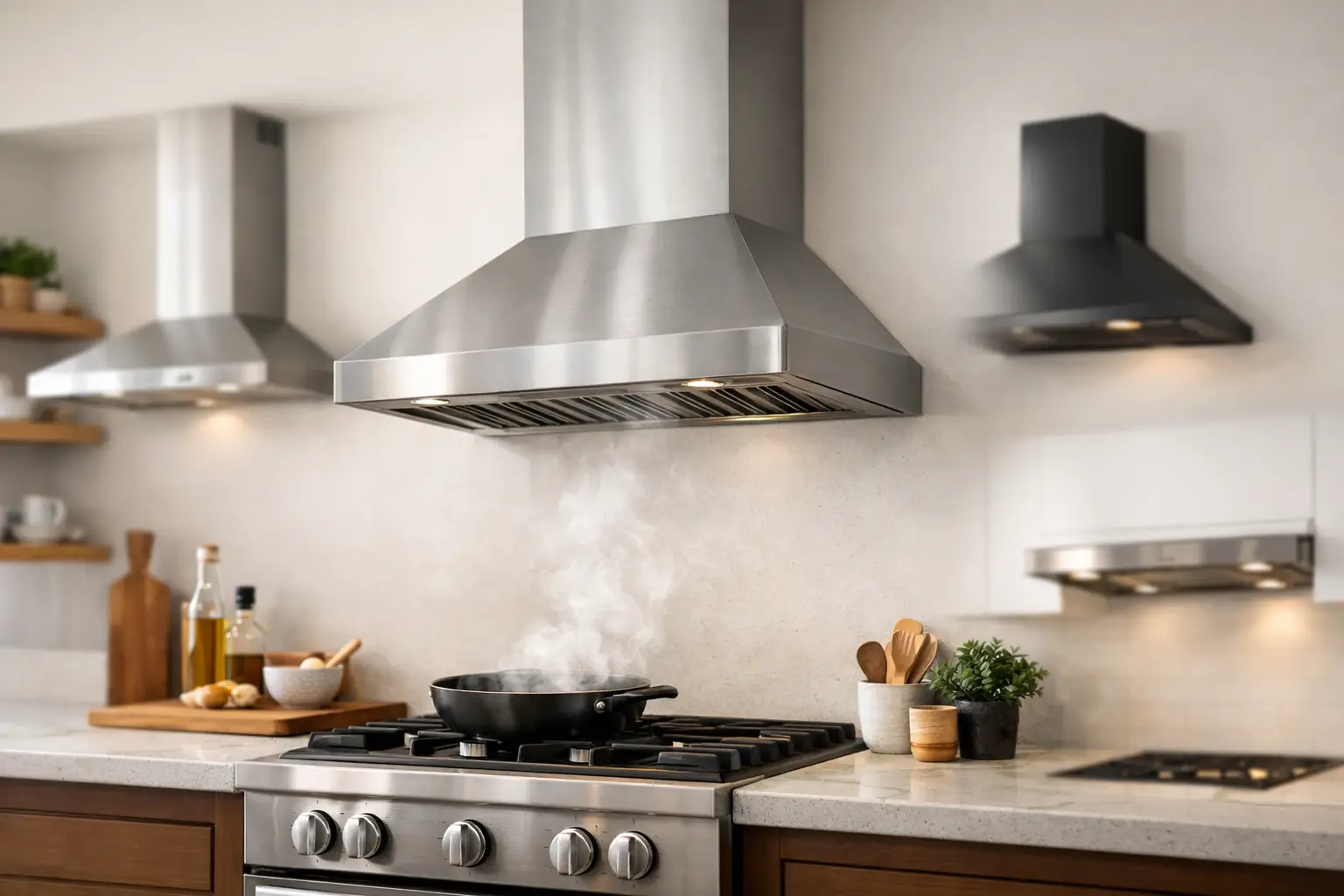
A beautiful kitchen can lose its appeal quickly when cooking odors linger in upholstery, grease settles on cabinetry, or steam clouds the room. This guide to choosing a kitchen range hood helps you select a piece that protects your finishes, supports the way you cook, and contributes to a more refined kitchen experience.
A range hood is not merely an appliance placed over the cooktop. It is a functional design element that can disappear into tailored cabinetry, create a dramatic focal point above an island, or bring a professional-inspired finish to a hardworking culinary space. The right choice depends on more than appearance. Ventilation performance, installation conditions, noise level, and proportions all deserve consideration before you commit.
Start With How You Actually Cook
Your cooking habits should guide nearly every decision. Someone who reheats simple meals on an electric cooktop has very different ventilation needs from a home chef who sears steaks, fries foods, or cooks with a high-BTU gas range several nights a week.
For lighter everyday cooking, a hood with modest airflow can be perfectly suitable. For frequent high-heat cooking, look for stronger extraction power and better capture coverage. Grease, smoke, moisture, and airborne particles are easiest to manage when the hood is designed to pull them away before they spread through the room.
The cooking surface matters as well. Gas ranges generally create more heat and combustion byproducts than electric or induction models, so they typically benefit from higher-capacity ventilation. A powerful pro-style range should be paired with a hood that can keep pace. Choosing a striking hood with insufficient airflow may leave you with a beautiful centerpiece that does not perform when the kitchen is busiest.
Ducted vs. Ductless Range Hoods
The most consequential choice is whether your hood will vent outdoors or recirculate filtered air back into the kitchen.
Ducted hoods deliver the strongest performance
A ducted range hood moves smoke, heat, odors, and moisture outside through ductwork. For homeowners who cook often, this is usually the preferred option. It offers the most effective way to preserve indoor air quality and protect nearby surfaces from grease buildup.
Ducted installation requires planning. The path to the exterior should be as straight and short as practical, with the correct duct diameter for the blower. Long duct runs, undersized ducts, and multiple sharp turns reduce airflow and can make the system louder. If you are renovating or building, this is the ideal time to prioritize a properly designed vent route.
Ductless hoods offer flexibility
A ductless, or recirculating, hood pulls air through grease filters and often charcoal filters before releasing it back into the room. This can be an elegant option for apartments, historic properties, or kitchens where exterior ducting is impractical.
The trade-off is performance. Recirculating hoods help reduce odors and capture grease, but they do not remove heat or humidity from the home in the same way a ducted system does. Filters also need regular replacement to remain effective. For a renter or a light-cooking household, that compromise may be worthwhile. For serious cooking, exterior ventilation is generally the better long-term investment.
A Guide to Choosing a Kitchen Range Hood by Size
A range hood should cover the cooking surface generously enough to capture rising heat and smoke. At minimum, select a hood that is the same width as your range. Many designers and installers recommend a hood that extends three inches beyond the cooktop on each side when space allows, especially for powerful gas ranges.
A 30-inch range often pairs well with a 30- or 36-inch hood. A 36-inch range may call for a 42-inch hood if cabinetry and layout permit. Wider coverage improves capture, which can matter more than simply selecting the highest CFM rating.
Depth is equally relevant. A shallow hood may look sleek, but it can struggle to capture vapor from the front burners. Look for a canopy that reaches over a meaningful portion of the cooktop, particularly if you rely on front burners for sautéing and searing.
Mounting height affects both performance and visual balance. Many under-cabinet and wall-mounted hoods are installed roughly 24 to 30 inches above an electric cooktop and 28 to 36 inches above a gas cooktop. Always follow the manufacturer’s specifications and local code requirements. Installing the hood too high weakens capture; installing it too low can interfere with sightlines and cooking comfort.
Choose Airflow With More Than CFM in Mind
Airflow is measured in cubic feet per minute, or CFM. Higher CFM can mean greater extraction capacity, but bigger is not automatically better. The best airflow rating is one that suits the range, the room, and the duct system.
For an average electric range, a hood around 300 CFM may be appropriate. Many gas ranges perform best with 400 to 600 CFM, while high-output professional-style ranges can require 600 CFM or more. These are useful starting points rather than universal rules. Burner output, hood width, hood depth, duct length, and cooking style all change the equation.
There is another practical consideration: makeup air. In many US jurisdictions, a kitchen hood rated above 400 CFM may trigger makeup-air requirements. A makeup-air system brings replacement air into the home so the hood can operate effectively without creating pressure issues. Your contractor or ventilation professional can confirm local requirements before installation.
Instead of selecting the largest number on a product page, focus on a complete system. A correctly sized hood with effective capture and properly matched ductwork will usually outperform an oversized blower constrained by poor installation conditions.
Do Not Overlook Noise Levels
Ventilation should make cooking more pleasant, not make conversation impossible. Hood noise is measured in sones, and lower sone ratings indicate quieter operation. A hood that is quiet at low and medium speeds is especially valuable because those are the settings many households use most often.
A variable-speed blower gives you welcome flexibility. Use lower settings for simmering, steaming, or everyday meals, then increase the power when cooking bacon, wok-frying, or searing at high heat. Remote or inline blowers can further reduce noise inside the kitchen by moving the motor farther from the hood, although they may increase installation complexity and cost.
Consider the kitchen’s relationship to the rest of the home. In an open-concept space, a quieter model can be worth prioritizing. In a separate kitchen used for more intensive cooking, a higher-powered hood may be the more valuable choice, even if it produces more sound at its top setting.
Select a Style That Complements the Architecture
The range hood has become one of the kitchen’s most expressive details. The right silhouette can reinforce the room’s character while giving a practical appliance a distinctly elevated presence.
Under-cabinet hoods are efficient, understated choices for kitchens where storage is at a premium. Wall-mounted chimney hoods create a clean architectural statement and work beautifully above a range without upper cabinetry. Insert hoods are built into a custom wood, plaster, or metal surround, making them ideal when you want a tailored, furniture-like finish. Island hoods are designed for exposed cooktops and often become a sculptural centerpiece in an open kitchen.
Material and finish should coordinate with the full composition, not just the range. Stainless steel offers a timeless professional look and pairs easily with many appliances. Matte black brings modern contrast. Brushed metals, custom cladding, and concealed inserts can give a kitchen a more bespoke feel. Keep maintenance in mind: polished surfaces and dark finishes may reveal fingerprints more readily than textured or brushed alternatives.
Look for Details That Improve Daily Use
The most satisfying hoods make routine cooking feel effortless. Dishwasher-safe baffle or mesh filters simplify cleaning, while baffle filters are especially well suited to kitchens that see frequent high-heat cooking. Bright, warm LED task lighting improves visibility over the cooktop without making the kitchen feel clinical.
Controls also shape the experience. Traditional push buttons are straightforward and dependable. Touch controls create a streamlined appearance, while remote controls and smart features can add convenience for some households. These enhancements are appealing, but they should not outweigh core performance, fit, and serviceability.
Before purchasing, confirm that replacement filters are readily available and that the hood can be serviced without dismantling custom cabinetry. A premium appliance should continue to feel considered long after installation day.
A well-chosen range hood allows the kitchen to stay fresh, composed, and ready for whatever the evening brings. Give performance the same attention you give finish and form, and the result will be a space that looks exceptional while working beautifully when it matters most.








Leave a comment