
A Practical Guide to Selecting Bathroom Faucets
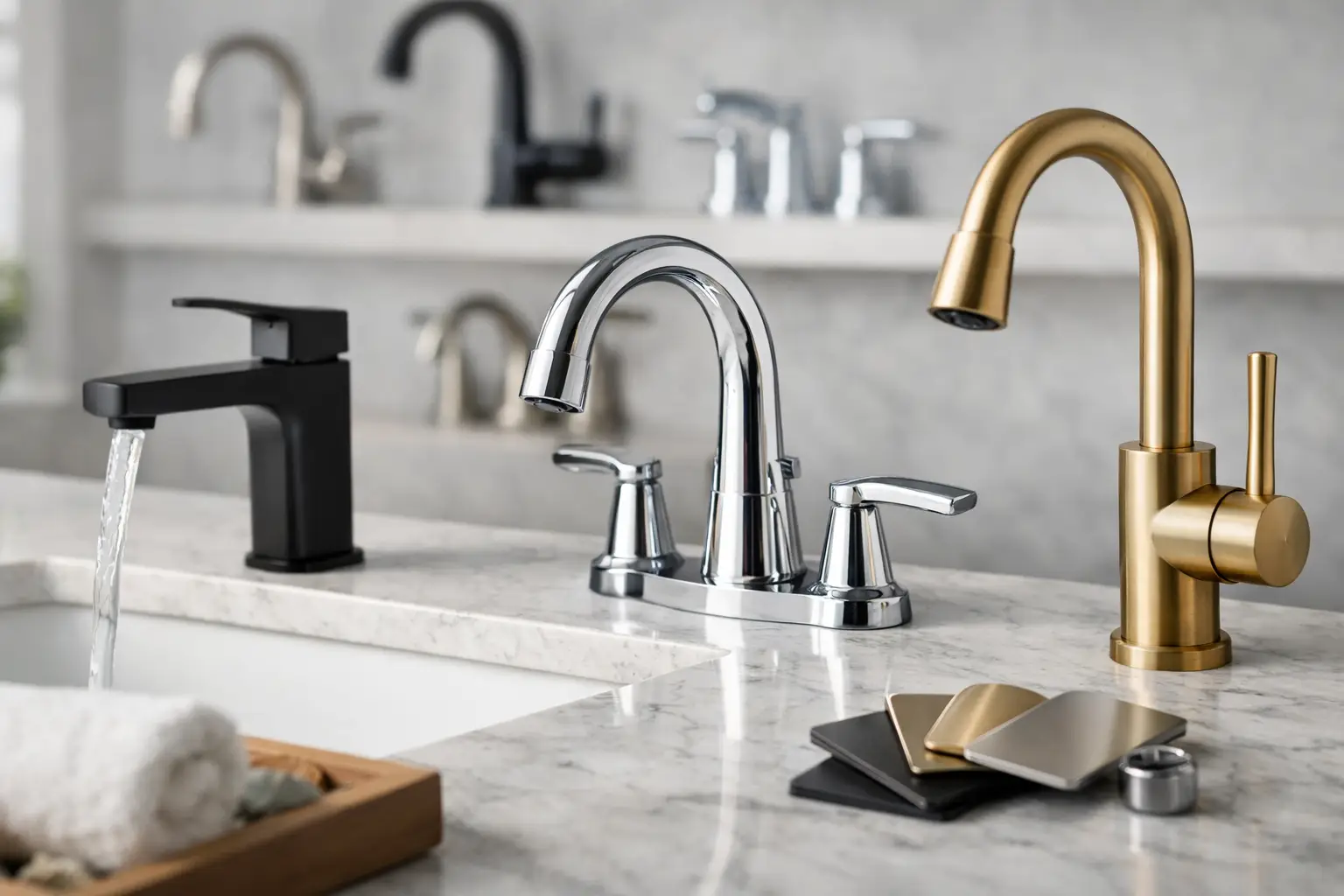
A bathroom faucet is one of the smallest fixtures in the room, yet it is among the first details you see and the one you use most often. This guide to selecting bathroom faucets helps you choose beyond the finish photo, so your new fixture feels as considered in daily use as it looks on the vanity. The right faucet brings proportion, comfort, water control, and a polished final note to a space designed for better routines.
A high-end bathroom does not require every element to shout for attention. Often, it is the quiet confidence of well-matched materials, precise installation, and thoughtful function that creates a more refined result. Start with the sink and the way you live, then let style follow with purpose.
Guide to Selecting Bathroom Faucets: Begin With Fit
Before choosing a silhouette or finish, confirm what your sink and countertop can accommodate. Faucets are not interchangeable by appearance alone. The number and placement of mounting holes, the depth of the sink, and the clearance behind the vanity all shape what will work beautifully.
A single-hole faucet combines the spout and handle in one clean, compact form. It suits contemporary vanities, smaller bathrooms, and anyone who prefers an uncluttered counter. Centerset faucets typically fit three holes set close together and offer a familiar, streamlined profile. Widespread faucets use separate hot and cold handles with a distinct spout, creating a more tailored, architectural presence on a larger vanity.
Wall-mounted faucets make a striking choice above vessel sinks or minimalist counters because they leave the surface open and easy to clean. They also require plumbing inside the wall, which makes them best suited to a renovation rather than a simple fixture swap. Measure carefully: the spout must extend far enough to deliver water near the center of the basin, not onto its back edge or directly over the drain.
Match Spout Height and Reach to the Basin
A tall faucet can give a vanity an elegant, sculptural look, especially with a vessel sink. But height alone is not a luxury feature. If the spout sits too high above a shallow basin, water can splash onto the counter and cabinetry. Likewise, a short spout may feel awkward when washing hands in a deep or wide sink.
Look at both spout height and reach. Height is measured from the counter or sink deck to the outlet, while reach is the distance the spout projects forward. A well-proportioned faucet directs water where your hands naturally meet the basin. For a family bathroom, that practical detail matters more than a dramatic profile.
Choose a Faucet Style That Belongs in the Room
A faucet should complement the vanity, mirror, lighting, and hardware without becoming an exact duplicate of every element. Matching finishes can create a composed look, but a carefully chosen contrast can feel equally elevated. A brushed brass faucet against deep walnut cabinetry, for example, adds warmth and distinction. Matte black lends definition to pale stone and modern white porcelain, while polished chrome offers bright, enduring simplicity.
For a clean-lined, contemporary bath, consider a single-handle faucet with a restrained geometric form. Transitional spaces often benefit from gently curved spouts and subtle detailing that sit comfortably between traditional and modern. In a more classic bathroom, bridge faucets, cross handles, and graceful arches can add character without making the room feel overly formal.
The goal is cohesion, not strict matching. If your lighting is black and your shower trim is brushed nickel, you do not necessarily need to replace either. Repeating one finish on a smaller detail, such as the mirror frame or cabinet pulls, can make an intentional mixed-metal scheme feel curated rather than accidental.
Think About Finish Beyond the First Impression
Every finish has a practical side. Polished chrome is bright, versatile, and easy to coordinate, though it shows water spots and fingerprints more readily. Brushed nickel offers a softer sheen and is forgiving in frequently used bathrooms. Matte black makes a confident design statement but can reveal mineral residue in areas with hard water. Brushed brass introduces warmth and an upscale, decorative quality, especially when paired with natural stone, oak, or creamy tile.
Finish durability also varies by manufacturing method and care. A quality PVD finish is especially resistant to scratching and tarnishing, making it a strong choice for a primary bathroom that sees daily use. Whatever finish you choose, use mild soap, water, and a soft cloth for cleaning. Abrasive pads and harsh chemicals can dull even an exquisite fixture over time.
Select Controls for Your Routine
The number of handles changes more than the faucet’s look. Single-handle models are easy to use with one hand and make it simple to find a comfortable temperature quickly. They are a natural fit for busy mornings, guest baths, and streamlined modern spaces.
Two-handle faucets offer separate control over hot and cold water, which many homeowners appreciate for their balanced symmetry and traditional appeal. They may take a moment longer to adjust, but they can make a vanity feel more substantial and considered. If accessibility is a priority, choose lever handles with a comfortable grip rather than small knobs that require twisting.
Touchless and touch-activated faucets bring another level of convenience. They can reduce fingerprints around the sink and are particularly useful in powder rooms, shared family bathrooms, and homes where hygiene is a top concern. The trade-off is that electronic components may require batteries or an outlet, and the look can lean more technological than timeless. Choose this option because it improves your routine, not simply because it is new.
Prioritize Materials and Valve Quality
A faucet’s exterior finish earns attention, but its internal construction determines how it will feel years from now. Solid brass bodies are a premium standard because they resist corrosion and provide reassuring weight. Stainless steel is also durable and well suited to moisture-rich environments. Plastic components can be found inside many faucets, but a fixture with a substantial metal body and a ceramic disc valve is generally a better long-term investment.
Ceramic disc valves use two hard ceramic discs to regulate water flow. They are valued for smooth operation and dependable resistance to drips. That does not mean every ceramic valve is identical, but it is a meaningful indicator of quality when comparing fixtures.
Also check the aerator and flow rate. Many bathroom faucets use 1.2 gallons per minute, offering efficient water use without making handwashing feel underpowered. In homes with very low water pressure, the faucet’s design can affect how satisfying that flow feels. A narrower spout may create a more concentrated stream, while an aerated flow often feels softer and fuller.
Do Not Overlook Installation Details
A beautiful faucet can become an expensive inconvenience if its installation requirements are ignored. Confirm the faucet’s mounting configuration, maximum deck thickness, included supply lines, and drain compatibility before ordering. A pop-up drain may be included, but its finish and operation should match your sink setup. An overflow drain is needed for sinks with an overflow opening, while a grid drain or non-overflow drain is appropriate for many vessel sinks.
If you are replacing an existing faucet, measure the hole spacing and inspect the condition of the shutoff valves beneath the vanity. A deck plate can cover unused holes when converting from a three-hole sink to a single-hole faucet, although it will not suit every design. For wall-mounted fixtures, rely on a qualified installer to set the valve body and spout projection correctly before tile or wall finishes are complete.
At My Total Take, a thoughtfully selected faucet is more than a finishing touch. It is a daily-use piece that can make a compact powder room feel more polished or turn a primary bath into a more composed personal retreat.
Make the Final Choice With the Whole Vanity in View
When several faucets meet your practical requirements, step back and compare them alongside the sink, vanity, mirror, and lighting. Consider scale first. A broad double vanity can carry a pair of more substantial widespread faucets, while a petite floating vanity often looks best with a restrained single-hole design.
Then consider longevity. An expressive silhouette can be memorable, but the most satisfying choices usually balance personality with a finish and form you will enjoy for years. A faucet should feel exceptional every morning, not merely impressive in a product image. Select the one that fits your basin precisely, supports your routine effortlessly, and gives the room the quiet sense of craftsmanship it deserves.










Leave a comment