
Portable Power Banks for Home, Travel, and Beyond
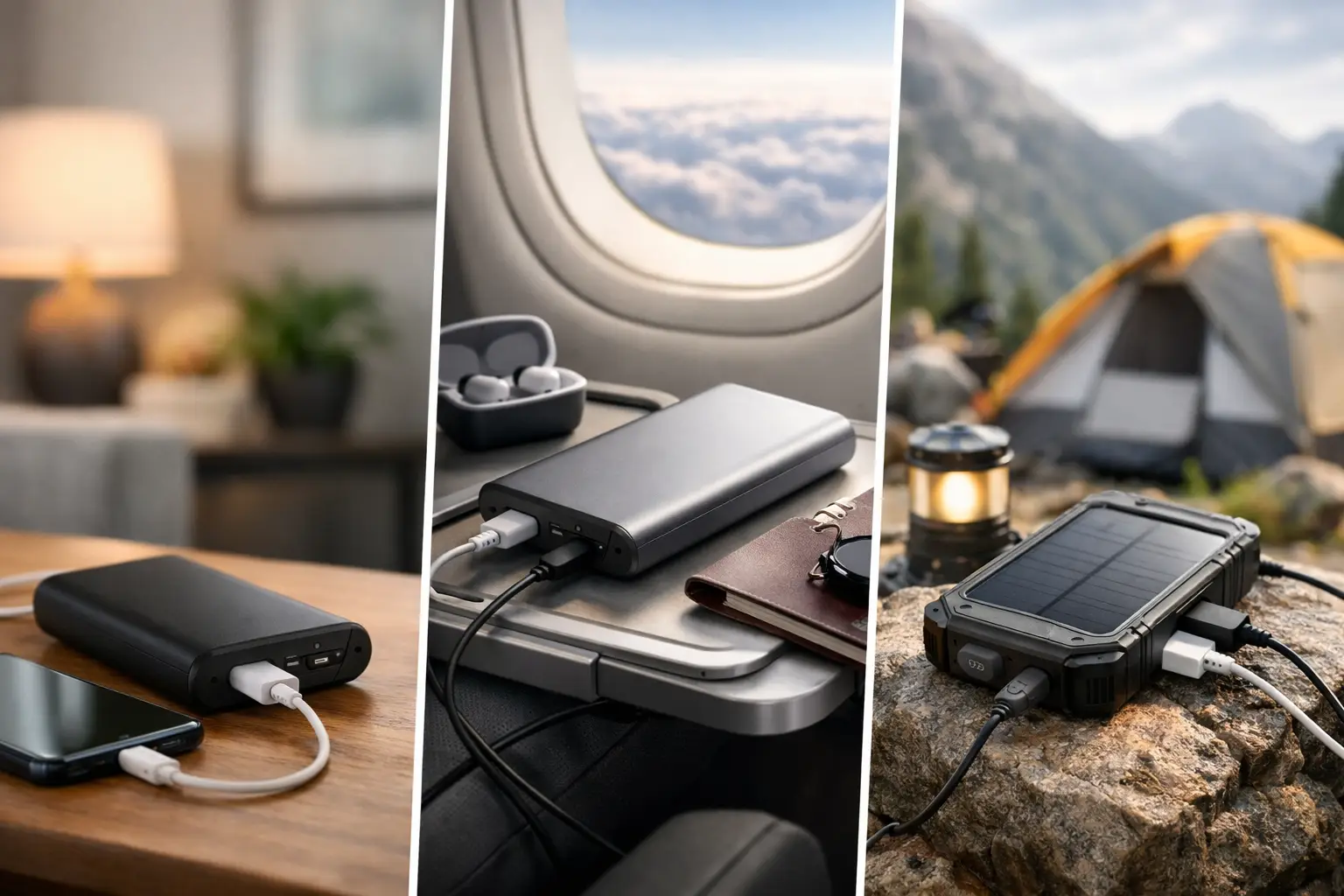
A dead phone at the gate, a laptop fading during a client presentation, or a campsite without an outlet can disrupt an otherwise well-planned day. The best portable power banks bring a quiet kind of confidence: your essential devices stay ready, whether you are commuting, hosting outdoors, traveling, or preparing for a brief interruption at home.
For a premium-minded buyer, capacity is only the starting point. A well-chosen power bank should fit naturally into your routine, charge the devices you actually use, and look as considered as the rest of your gear. Here is how to choose one that earns a permanent place in your bag, vehicle, or home office.
Portable Power Banks Start With the Right Scale
The phrase portable power bank covers a wide range of products. A slim model that slips into a jacket pocket serves a different purpose from a high-capacity unit designed to support a laptop, camera equipment, or several family devices. Selecting the right scale prevents two common mistakes: carrying more weight than you need or discovering that your charger cannot keep pace with your day.
Smaller power banks, often around 5,000 to 10,000 milliamp-hours (mAh), are refined everyday companions. They are ideal for keeping a smartphone topped up through errands, concerts, flights, and long commutes. A 10,000 mAh model will generally recharge a modern phone about one to two times, although the precise result varies with the phone’s battery size, charging losses, and how the device is being used.
Mid-size options in the 15,000 to 20,000 mAh range suit travelers and households that want flexibility without moving into bulky equipment. They can handle multiple phone charges, a tablet, wireless earbuds, and sometimes a compact laptop. This range is often the sweet spot for a weekend away or an organized work bag.
For more demanding needs, capacity is better expressed in watt-hours (Wh). This measurement makes it easier to compare larger batteries and determine whether a model can support higher-draw equipment. Once you need to power a laptop repeatedly, a small fan, a projector, or several devices at once, a portable power station may be a better fit than a conventional power bank. It is less pocketable, but its greater output and outlet options can make an outdoor gathering or short outage far more comfortable.
Look Beyond Capacity to Charging Output
A large battery is not automatically a fast or capable one. Output, measured in watts, determines how much power the bank can deliver at one time. A phone may charge adequately from a low-output USB port, while a modern laptop may need 45W, 65W, or more through USB-C Power Delivery.
For a polished, practical setup, USB-C Power Delivery is the feature to prioritize. It supports faster charging for compatible phones and tablets and opens the door to laptop charging on models with enough wattage. Check your laptop’s original charger or manufacturer specifications before buying. A 20W power bank can be excellent for a phone, but it will not replace a 65W laptop charger during a workday.
The number and mix of ports matter as well. USB-C is now the most versatile connection, but USB-A remains useful for older cables and accessories. If you travel with a partner or manage a family device lineup, two or three outputs offer meaningful convenience. Just review the total shared output. Some banks can charge several devices at once, but may reduce speed when every port is in use.
Wireless charging can create a particularly clean experience for a compatible phone. Magnetic models are appealing for quick top-ups at a café, in a rideshare, or while walking through an airport. Their trade-off is efficiency: wireless charging produces more heat and typically charges more slowly than a wired USB-C connection. It is elegant for convenience, while a cable remains the better choice when time is limited.
Recharge Speed Deserves Equal Attention
It is easy to focus on how quickly a power bank charges your devices and overlook how long it takes to refill the power bank itself. A high-capacity model connected to a low-watt wall adapter can take many hours to recharge. USB-C input with faster charging support makes ownership much more convenient, especially before a trip or after a busy weekend.
If you expect to rely on your power bank regularly, pair it with an appropriately rated wall charger and quality USB-C cable. The charging system is only as capable as its least powerful component.
Match the Design to Your Routine
A premium portable accessory should feel intentional, not like an emergency item you reluctantly carry. Weight, dimensions, finish, cable arrangement, and display design all shape how often you will use it.
A compact, flat power bank is easy to slide beside a notebook or into a crossbody bag. A model with an integrated cable can reduce clutter for frequent commuters, though a detachable cable is easier to replace and more flexible across devices. For outdoor use, a durable shell and protected ports are worth considering, particularly if the charger may encounter dust, moisture, or the loose items in a car console.
A clear battery display is another small luxury with real value. Four indicator lights are sufficient for casual use, but a percentage display gives you a more precise view before leaving home. For a larger power station, an informative screen that shows input, output, remaining runtime, and estimated recharge time makes planning much easier.
Color and finish may seem secondary, yet they matter in a product you carry daily. A clean, understated design pairs well with a thoughtfully organized work bag, nightstand, or travel kit. More importantly, a solid enclosure and well-fitted ports are often signs of better long-term durability.
Travel Rules and Safety Are Part of the Purchase
Portable batteries contain lithium-ion cells, so airline rules apply. In the United States, power banks generally need to travel in your carry-on luggage, not checked baggage. Most airlines permit batteries up to 100Wh without advance approval, while larger batteries may require airline authorization and are subject to stricter limits. Always verify the current policy with your carrier before flying, especially with high-capacity units.
At home, treat a power bank with the same care you would give any quality electronic device. Avoid leaving it in direct sun, a hot car, or beneath bedding while charging. Use reputable cables and wall adapters, and stop using the unit if it becomes swollen, damaged, unusually hot, or develops a persistent odor.
Look for essential protections against overcharging, overheating, overcurrent, and short circuits. These features are not glamorous, but they protect the devices you depend on and help preserve battery health over time. Choosing a well-made model from a trusted retailer is a better investment than treating portable power as a disposable accessory.
Choose by Scenario, Not Spec Sheet Alone
The right selection becomes clearer when you picture the moments it will support. A minimalist commuter may value a slim 10,000 mAh magnetic charger with USB-C backup. A frequent flyer may prefer 20,000 mAh, multiple ports, and quick USB-C recharging. A remote worker who moves between cafés, client sites, and shared spaces should focus on a 65W or higher USB-C model that can sustain a laptop.
For patio entertaining, road trips, and weekend escapes, a larger portable power station creates a more elevated experience. It can keep speakers, lights, phones, cameras, and select small appliances running without turning every gathering into a search for an outlet. However, check the continuous wattage and surge capacity before connecting anything with a motor or heating element. A compact station is excellent for electronics but may not be appropriate for a hair dryer, kettle, space heater, or full-size coffee machine.
At My Total Take, portable power belongs in the same category as the most useful home and travel upgrades: thoughtfully designed equipment that makes the day feel easier without demanding attention. The best model is not necessarily the largest one. It is the one that fits your devices, your pace, and the places where you want more freedom to stay connected.
Keep it charged before you need it, store the right cable alongside it, and let dependable power be one less detail competing for your attention.











Leave a comment