
What Size TV Fits Your Living Room?
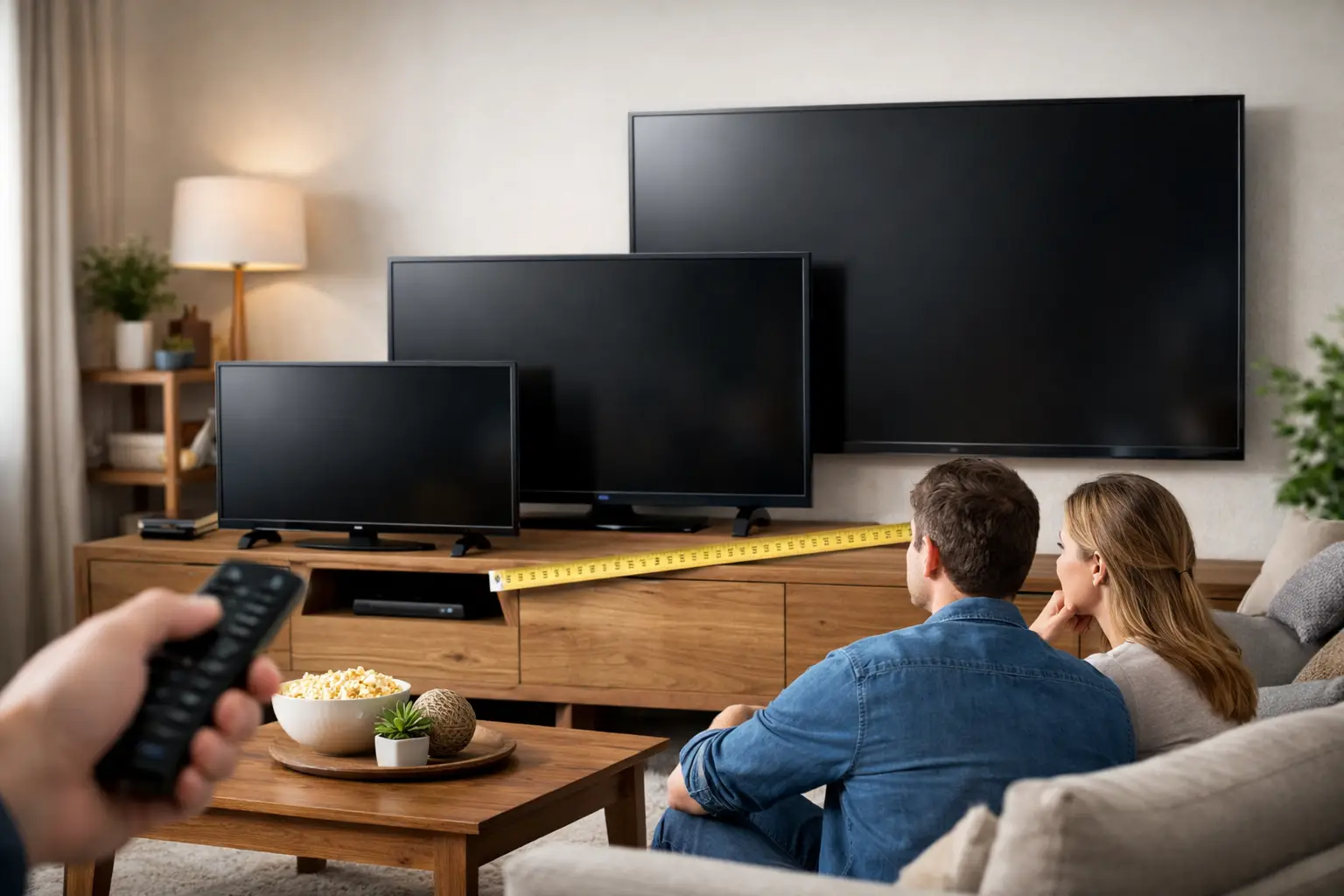
A TV can anchor a living room beautifully or throw the whole space out of balance. Too small, and even a well-designed room feels underwhelming. Too large, and the screen dominates every sightline, turning a refined setup into something closer to a sports bar than a polished retreat.
If you’re wondering what size tv for living room layouts actually makes sense, the answer is less about chasing the biggest screen and more about proportion. Viewing distance matters, of course, but so do your wall dimensions, seating style, console width, lighting, and how you want the room to feel when the TV is off.
What size TV for living room spaces works best?
For most living rooms, the sweet spot is between 55 and 75 inches. That range tends to deliver the most balanced mix of immersion, comfort, and visual harmony. Smaller apartments or compact seating areas often look best with a 50- to 55-inch model, while medium-size rooms usually suit 65 inches. If you have a large open-concept layout or a deeper seating arrangement, 75 inches can feel exceptionally well-judged rather than excessive.
That said, there is no universal right answer. A 65-inch TV in one living room can feel perfectly scaled, while the same screen in another may feel oversized because of low ceilings, narrow walls, or furniture that sits too close.
The easiest place to start is your viewing distance.
Start with how far you sit
A simple rule is to match screen size to the distance between your main seat and the TV. In general, if you sit about 6 to 7 feet away, a 55-inch TV usually feels comfortable. At 7 to 9 feet, 65 inches often lands well. At 9 to 11 feet, 75 inches tends to look more natural.
This is not a rigid formula, because personal preference plays a role. Some people want a more cinematic effect and prefer a larger screen at the same distance. Others want the TV to blend into a sophisticated living room design and lean a little smaller.
Resolution also changes the equation. With 4K TVs, you can sit closer without the image looking coarse, which makes larger screen sizes more practical than they used to be. That is one reason 65-inch and 75-inch TVs have become such strong choices for design-conscious homes.
Room scale matters as much as screen size
The question is not only what size tv for living room seating distance, but also what size works with the room itself. A TV is a functional object, but it is also a visual mass. In a carefully furnished space, that matters.
If your living room has one modest wall shared with shelving, art, or windows, an oversized screen can crowd everything around it. If you have a long media console and a broad feature wall, a larger TV often looks intentional and elevated.
A useful design guideline is to keep the TV visually in proportion with the furniture beneath it. A screen that is much wider than the console can look awkward. One that is dramatically smaller may look disconnected, especially in a room with substantial pieces and premium finishes.
When in doubt, picture the TV as part of a composition rather than a standalone tech purchase. The best setups feel curated. The screen, console, lighting, and decor should work together.
The most common living room TV sizes
55-inch TVs
A 55-inch TV is often the right choice for condos, apartments, and smaller living rooms where the sofa sits fairly close to the screen. It delivers a strong viewing experience without taking over the room. If your goal is a clean, design-forward setup that still feels warm and relaxed, 55 inches is often the most versatile option.
It also works well when the TV shares wall space with framed artwork, a fireplace surround, or built-ins.
65-inch TVs
For many households, 65 inches is the ideal middle ground. It feels substantial, modern, and immersive, yet it rarely overwhelms a standard living room. If your seating is around 7 to 9 feet from the screen, this size is often the easiest recommendation.
A 65-inch model also pairs especially well with larger sectionals, low-profile media units, and open layouts where a smaller TV might look visually lost.
75-inch TVs
A 75-inch TV can look exceptional in the right room. It suits spacious living areas, deeper furniture layouts, and households that treat movie nights, gaming, or major sports viewing as part of their weekly rhythm. The payoff is a more cinematic experience and a stronger focal point.
The trade-off is that a screen this large asks more of the room. You need enough wall space, enough distance, and furniture that can support the scale. In a smaller space, 75 inches can feel less luxurious and more imposing.
Wall mounting vs. using a media console
How you place the TV affects how large it feels. A wall-mounted TV usually reads cleaner and lighter, which can make a larger screen easier to integrate. It also helps preserve surface space and contributes to a more tailored look.
A TV on a console can still look beautifully finished, especially with a substantial stand and thoughtful styling around it. But because the furniture and TV are read together as one visual zone, bulk can build quickly. If you are using a console in a smaller room, you may want to be more restrained with screen size.
Height matters too. A TV that is mounted too high almost always feels less comfortable, no matter how expensive the setup. The center of the screen should sit close to eye level when you are seated. That keeps viewing relaxed and the room more balanced.
Don’t ignore lighting and glare
A large TV in a bright room can be frustrating if reflections constantly pull focus. Before choosing size alone, consider where windows sit, how much natural light fills the space, and whether you watch mostly during the day or evening.
In some rooms, a slightly smaller premium screen with excellent brightness and reflection handling will feel better than a bigger model with more visual interference. This is one of those cases where buying “more” does not always mean living better.
Lifestyle should guide the final choice
If your living room is your primary entertainment space, going bigger often makes sense. Households that stream films, host game nights, or watch live sports regularly tend to appreciate the extra scale. The screen becomes part of the experience, not just background equipment.
If the room serves multiple roles – conversation area, reading lounge, design showcase, or flexible family space – a more moderate size may feel more refined. The TV should support the room, not flatten it.
That is especially true in elevated interiors where materials, textures, and furniture silhouettes matter. A beautifully chosen TV size preserves the atmosphere you have built.
A quick way to choose with confidence
If you want the practical answer, use this approach. Measure the distance from your main seat to the wall where the TV will go. Then measure the width of that wall and the console, if you have one. Finally, think honestly about how you use the room.
If you sit close and want a polished, understated look, start with 55 inches. If you want a strong all-around choice for a standard living room, 65 inches is usually the safest and smartest investment. If your room is spacious and entertainment is central to how you live, 75 inches can feel striking in the best way.
At mytotaltake.com, that same thinking applies across the home – the best pieces are not simply bigger or bolder, but better suited to the way you live.
When to size down on purpose
There are times when the right move is intentionally choosing the smaller option. If your living room has a fireplace feature, delicate wall molding, limited mounting space, or a highly styled focal wall, a slightly smaller TV can preserve the room’s elegance. The difference between a 65-inch and 75-inch screen may not sound dramatic on paper, but visually it can be substantial.
Sizing down also makes sense if you are sensitive to visual fatigue. Some viewers find very large screens tiring in close quarters, particularly for casual daytime viewing.
When going bigger is worth it
If you have ever wished your movie nights felt more immersive, your current TV may simply be undersized. Many people live with screens that were chosen for an older room, a smaller apartment, or a time when large-format TVs felt less accessible.
In a larger living room, a TV that is too small can make the entire setup feel incomplete. Upgrading to the right size often improves not just picture enjoyment but the room’s overall sense of proportion.
The right TV size should feel effortless once it is in place. Not timid. Not overpowering. Just perfectly scaled to the way you relax, entertain, and enjoy the room around it.










Leave a comment