How to Invest in Premium Home Gadgets in 2026

Investing in premium home gadgets means selecting advanced, interoperable smart devices that deliver measurable returns in energy savings, security, and resale value. The industry term for this practice is smart home investment, and it covers everything from Ecobee and Nest thermostats to Schlage and Yale smart locks. Done right, a well-planned smart home costing $3,000–$6,000 delivers 50–65% resale ROI plus annual savings of $300–$500. The key is choosing devices that work together, starting with high-impact categories, and committing to one ecosystem before you spend a dollar.
How to invest in premium home gadgets: planning before you buy
The single biggest mistake affluent homeowners make is buying devices before assessing their home’s infrastructure. A $500 smart lock is useless if your Wi-Fi signal dies at the front door. Start with a clear-eyed audit of three things: your network coverage, your wiring, and your goals.
Assess your home’s network and wiring first
Whole-home mesh Wi-Fi networks are the foundation of any reliable smart home setup. Mesh systems for large homes eliminate dead zones that cause devices to drop offline, frustrating users and undermining the entire investment. Brands like Eero Pro and Orbi are purpose-built for large residences. Before adding any smart device, map your coverage and identify gaps.
Wiring matters just as much. Hardwired smart switches, for example, require a neutral wire that older homes often lack. Knowing this before purchase saves you from expensive retrofits or forced product swaps.
Set goals that drive device choices
Your goals determine your device priority list. If energy savings top your list, smart thermostats from Ecobee or Nest belong in your first purchase. If security drives you, video doorbells from Ring or Arlo and smart locks from Schlage or Yale take priority. If ambiance and convenience matter most, Lutron Caseta smart lighting and motorized shades from Lutron Serena are the right starting point.
Mixing goals without a ranked list leads to fragmented purchases that never form a cohesive system. Write down your top two priorities and buy for those first.
Choose one ecosystem and commit to it
Selecting a single platform early, whether Apple HomeKit, Amazon Alexa, or Google Home, prevents the costly tech silos that plague DIY smart homes. Each ecosystem has strengths: HomeKit prioritizes privacy and Apple device integration; Alexa offers the widest device compatibility; Google Home excels at search-based voice commands and Nest device integration.
The good news is that the Matter standard has increased ecosystem interoperability to 89% in 2026, with over 700 certified products available. That means more devices now work across platforms than ever before. Still, committing to one primary ecosystem simplifies automation routines and reduces troubleshooting time significantly.
Pro Tip: If you use an iPhone and MacBook, Apple HomeKit gives you the tightest privacy controls and the most polished automation experience. If your household is mixed between Apple and Android devices, Amazon Alexa offers the broadest compatibility.
Protocols like Z-Wave and Zigbee require dedicated hubs, a factor many buyers overlook until connectivity problems surface. If you plan to use devices running these protocols, budget for a hub like SmartThings or Hubitat from the start.
Which premium gadgets deliver the best ROI?
Not all high-end smart devices return equal value. The table below ranks the top device categories by cost, financial ROI, and lifestyle impact to help you prioritize your spending.
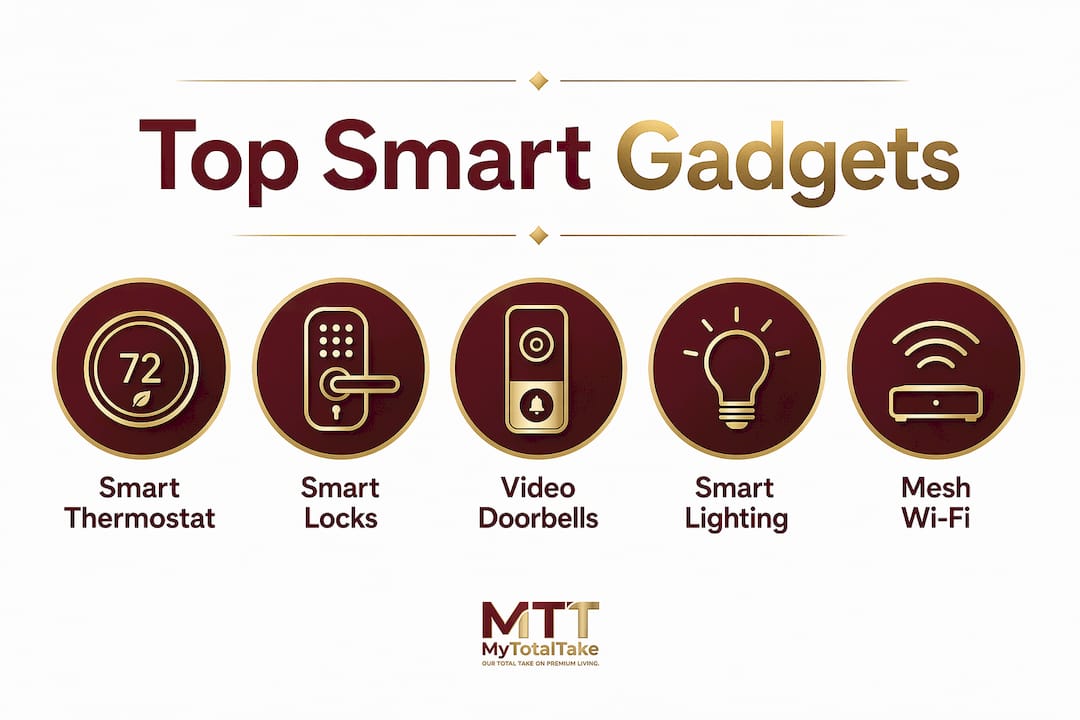
| Device Category | Typical Cost | Financial ROI | Lifestyle Impact |
|---|---|---|---|
| Smart Thermostat (Ecobee, Nest) | $100–$400 | High: 1–2 season payback | Comfort, energy control |
| Smart Locks (Schlage, Yale) | $150–$350 | Medium: resale appeal | Security, keyless access |
| Video Doorbell (Ring, Arlo) | $100–$300 | Medium: insurance savings | Security, remote monitoring |
| Smart Lighting (Lutron Caseta) | $200–$800 | Moderate: energy savings | Ambiance, automation |
| Mesh Wi-Fi (Eero Pro, Orbi) | $300–$700 | High: enables all devices | Reliability, whole-home coverage |
| Integrated Security System | $500–$2,000 | High: insurance discounts | Peace of mind, deterrence |
Smart thermostats lead the ROI rankings by a clear margin. Energy savings of $100–$240 annually mean the hardware cost pays back within one to two heating and cooling seasons. Ecobee’s SmartSensor technology and Nest’s learning algorithms both adapt to your schedule automatically, reducing waste without any manual input.
Smart locks and video doorbells contribute to resale value and can lower homeowner’s insurance premiums. Permanent, hardwired smart cameras and switches carry higher perceived buyer value than portable gadgets because they read as part of the home’s infrastructure, not as accessories.
Smart lighting from Lutron Caseta offers slower direct energy savings but delivers high convenience and ambiance value for luxury living. The ability to set lighting scenes for dinner, movies, or morning routines transforms how a home feels day to day. That experiential return is harder to quantify but consistently cited by homeowners as one of the most satisfying upgrades.
Pro Tip: Start with a smart thermostat and a mesh Wi-Fi system. These two purchases create the infrastructure and deliver the fastest financial payback. Add locks, lighting, and security cameras in phase two once your network is solid.
How do you integrate and maintain a premium smart home system?
Integration is where most smart home investments succeed or fail. Buying premium devices from reputable brands is only half the equation. How those devices communicate with each other determines whether your system feels like a luxury experience or a daily frustration.
Why professional installation matters
63% of homeowners prefer certified professionals such as CEDIA-certified installers to set up their smart home systems. Professional installation reduces expensive compatibility mistakes and ensures devices are configured to work together from day one. For whole-home automation covering lighting, security, HVAC, and audio, a certified installer is not a luxury. It is a practical necessity.
Complex systems require hubs, proper network segmentation, and device pairing sequences that DIY approaches frequently get wrong. A failed DIY setup often costs more to fix than professional installation would have cost upfront.
Future-proofing with matter and open standards
Future-proofing with Matter simplifies cross-brand integration and reduces fragmentation risk in luxury homes. Prioritizing Matter-certified devices means your investment stays relevant as the standard matures and more products adopt it. Avoid niche devices that rely on proprietary protocols with no clear path to Matter certification.
Maintenance best practices for a premium smart home system include:
- Update firmware regularly. Smart devices receive security patches and performance improvements through software updates. Set a monthly reminder to check for updates across all devices.
- Audit your network quarterly. Remove devices that are no longer in use and check that all active devices are connected to the correct network band (2.4 GHz vs. 5 GHz).
- Test backup power for critical devices. Smart locks and security cameras should have battery backups or UPS units to stay operational during power outages.
- Document your setup. Keep a simple log of every device, its ecosystem, its hub requirements, and its firmware version. This saves hours when troubleshooting.
- Plan for upgrades. Technology cycles in smart home hardware run roughly three to five years. Budget for periodic replacements, especially for cameras and hubs.
For a deeper look at choosing the right platform for your home, Mytotaltake covers the major ecosystems and their trade-offs in detail.
How does smart home investment affect resale value and lifestyle?
The financial case for investing in high-end smart devices is well-documented. The lifestyle case is equally compelling, and the two reinforce each other in ways that make this category of home improvement uniquely attractive.
The financial picture
| Metric | Data |
|---|---|
| Package cost range | $3,000–$6,000 |
| Resale ROI | 50–65% |
| Annual energy savings | $100–$240 (thermostat alone) |
| Annual combined savings (energy + insurance) | $300–$500 |
| Matter-certified products available | 700+ |
| Homeowners preferring professional installation | 63% |
Comprehensive smart home packages in the $3,000–$6,000 range deliver 50–65% resale ROI. That return is competitive with kitchen and bathroom renovations, which have historically dominated home improvement ROI rankings. The difference is that smart home upgrades also generate ongoing savings while you live in the home.
Buyers in the luxury market increasingly expect integrated technology as a baseline feature. A home with a fragmented or absent smart system reads as dated compared to one with a cohesive, professionally installed setup. Permanent fixtures like hardwired switches and built-in cameras signal quality and care to prospective buyers in ways that portable devices never can.
The lifestyle return
The daily experience of a well-integrated smart home is difficult to overstate. Waking to lighting that gradually brightens, a thermostat that has already adjusted to your preferred morning temperature, and a security system that arms itself as you leave adds up to a qualitatively different home experience. These are not novelties. They become the baseline of how you expect your home to function.
For a broader view of premium home upgrades that combine technology with lasting elegance, Mytotaltake curates the devices and installations that consistently deliver on both fronts.
Key takeaways
Smart home investment delivers the strongest returns when you commit to one ecosystem, prioritize high-ROI devices like thermostats and mesh Wi-Fi, and use professional installation to avoid costly integration failures.
| Point | Details |
|---|---|
| Plan infrastructure first | Audit your Wi-Fi coverage and wiring before purchasing any smart device. |
| Commit to one ecosystem | Choose Apple HomeKit, Amazon Alexa, or Google Home early to avoid fragmented setups. |
| Prioritize high-ROI devices | Smart thermostats pay back their cost within 1–2 seasons through energy savings. |
| Use professional installation | CEDIA-certified installers reduce compatibility mistakes and protect long-term value. |
| Future-proof with Matter | Matter-certified devices work across platforms and reduce obsolescence risk. |
Why i think most smart home buyers get the order wrong
After spending years evaluating luxury home technology, the pattern I see most often is this: buyers start with the devices they find exciting and work backward to infrastructure. They buy a premium smart speaker, a video doorbell, and a connected coffee maker before they have a mesh Wi-Fi system or a committed ecosystem. The result is a collection of gadgets that rarely talk to each other reliably.
The correct order is unglamorous but decisive. Network first. Ecosystem commitment second. High-ROI devices third. Everything else after that.
The other mistake I see consistently is undervaluing professional installation. The upfront cost feels avoidable, and it is, until it is not. A CEDIA-certified installer does not just connect devices. They configure network segmentation, set up proper automation logic, and document the system so that future upgrades are straightforward. That documentation alone is worth the fee in a home with 20 or more connected devices.
The Matter standard changes the calculus somewhat. With 89% interoperability across certified devices, the risk of buying into a dead-end ecosystem is lower than it was three years ago. But it does not eliminate the need for planning. It just makes good planning easier to execute.
My honest recommendation: treat your smart home investment the way you would treat any significant home improvement. Get a consultation, set a phased budget, and buy for the long term. The homes that hold their value and deliver the best daily experience are the ones where someone thought it through before the first device was unboxed.
— Lysander
Complete your luxury home with Mytotaltake

Technology transforms how a home functions. What surrounds that technology determines how it feels. At Mytotaltake, we curate furniture and decor that hold their own alongside premium smart home installations, pieces with the craftsmanship and presence to match the quality of the technology around them. If you have invested in a high-end smart home system, the furniture and decor in that space deserve the same standard. Explore our guide to luxury furniture that earns its place and discover how the right pieces complete a home that is built to impress and built to last. You can also explore our high-end home decor collection for pieces that bring lasting elegance to every room.
FAQ
What is the best first smart home device to buy?
A smart thermostat from Ecobee or Nest is the best first purchase. It delivers the fastest financial payback, with annual energy savings of $100–$240 that recover the hardware cost within one to two seasons.
Does a smart home increase resale value?
Yes. Comprehensive smart home packages in the $3,000–$6,000 range deliver 50–65% resale ROI, with permanent, hardwired fixtures carrying the highest perceived value among buyers.
What is the matter standard and why does it matter?
Matter is a connectivity standard that allows smart devices from different brands to work together. In 2026, it covers over 700 certified products and has raised cross-platform interoperability to 89%, reducing the risk of buying incompatible devices.
Should i hire a professional to install my smart home system?
63% of homeowners prefer CEDIA-certified professionals for smart home installation. Professional setup reduces compatibility errors and protects the long-term reliability of the system, particularly for whole-home automation.
Which smart home ecosystem should i choose?
Choose Apple HomeKit for privacy and Apple device integration, Amazon Alexa for the widest device compatibility, or Google Home for strong Nest integration and voice search. Commit to one platform early to avoid fragmented automation routines.











Leave a comment