
Why Material Quality Matters for Luxury Buyers
Material quality is the single most verifiable reason to pay luxury prices, and the data confirms it: EY’s 2026 Luxury Client Index reports that 65% of aspirational luxury consumers name material quality as their top purchase driver, outranking brand heritage ranks highly. Buy for the material first. The logo is secondary.
Key Takeaways
Material quality is the primary, verifiable purchase driver for luxury goods, outranking brand heritage, and the buyers who verify it before purchase consistently get better durability, resale value, and long-term satisfaction.
| Material quality leads purchase decisions | EY’s 2026 data shows 65% of aspirational luxury buyers rank it above brand heritage.
| Verify with specs, not claims | Use GSM, momme, Martindale counts, and leather grade to confirm what marketing copy asserts. |
| Provenance must be auditable | Demand named makers, batch numbers, and mill or tannery origin before committing to a price. |
| Certifications cut through greenwashing | LWG, FSC, GOTS, OEKO-TEX, and RDS are the shortlist worth checking against public registries. |
| Mytotaltake curates by material standard | Collections are selected against provenance, specification, and repairability criteria, not aesthetics alone. |
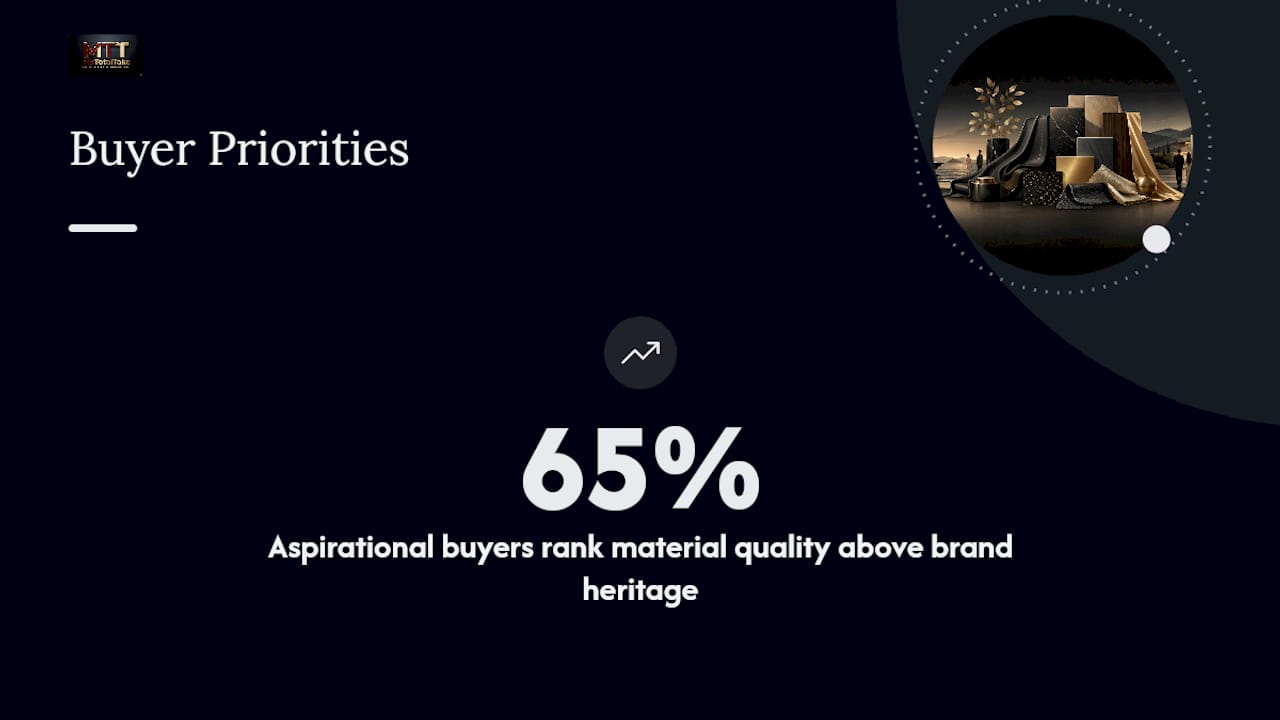
Table of Contents
- Why does material quality matter so much to luxury buyers?
- How can you evaluate material quality before you buy?
- What should you check in each product category?
- What provenance signals should you demand from a luxury brand?
- How do you weigh durability, sustainability, and rarity against each other?
- How does material quality change your total cost of ownership?
- How can you verify material claims and spot greenwashing?
- Why Mytotaltake prioritizes material quality above all else
- Mytotaltake curated collections: where to go next
- Sources
Why does material quality matter so much to luxury buyers?
The importance of material quality goes well beyond how something looks on a shelf. Premium materials deliver durability, tactile satisfaction, and resale resilience that cheaper alternatives simply cannot replicate over time.
“Returning to fundamentals — craftsmanship, material excellence, durability and transparency — is necessary to justify recent price rises and restore consumer trust.”
Agility Research & Strategy
That is not a soft opinion. Resale and certified pre-owned markets function as a forensic test: pieces that hold value are, almost without exception, better-specified and better-made. WWD reporting documents industry leaders publicly committing to “elevate quality everywhere,” with after-sales and maintenance cited as central to perceived value after price increases.
The core buyer drivers, in order of practical impact:
- Longevity and resale: Superior materials age gracefully and command stronger resale prices in certified pre-owned markets.
- Tactility and comfort: Weight, hand feel, and breathability are daily-use signals that cheap materials cannot fake.
- Authenticity and provenance: Named mills, tanneries, and woodworkers are proof points that resist marketing spin.
- Maintenance implications: Higher-grade materials typically require less frequent replacement, lowering lifetime cost.
- Status tied to tangible craft: Visible artisanal technique communicates value to anyone who handles the piece, not just those who recognize the logo.
How can you evaluate material quality before you buy?
Use three layers: tactile checks, objective specifications, and provenance evidence. Together they give you a picture no marketing copy can obscure.
Step-by-step evaluation checklist
- Weight the piece in your hand. Genuine full-grain leather, solid brass hardware, and dense-weave fabrics all carry perceptible mass. Hollow or feather-light hardware is almost always plated zinc or thin-gauge metal.
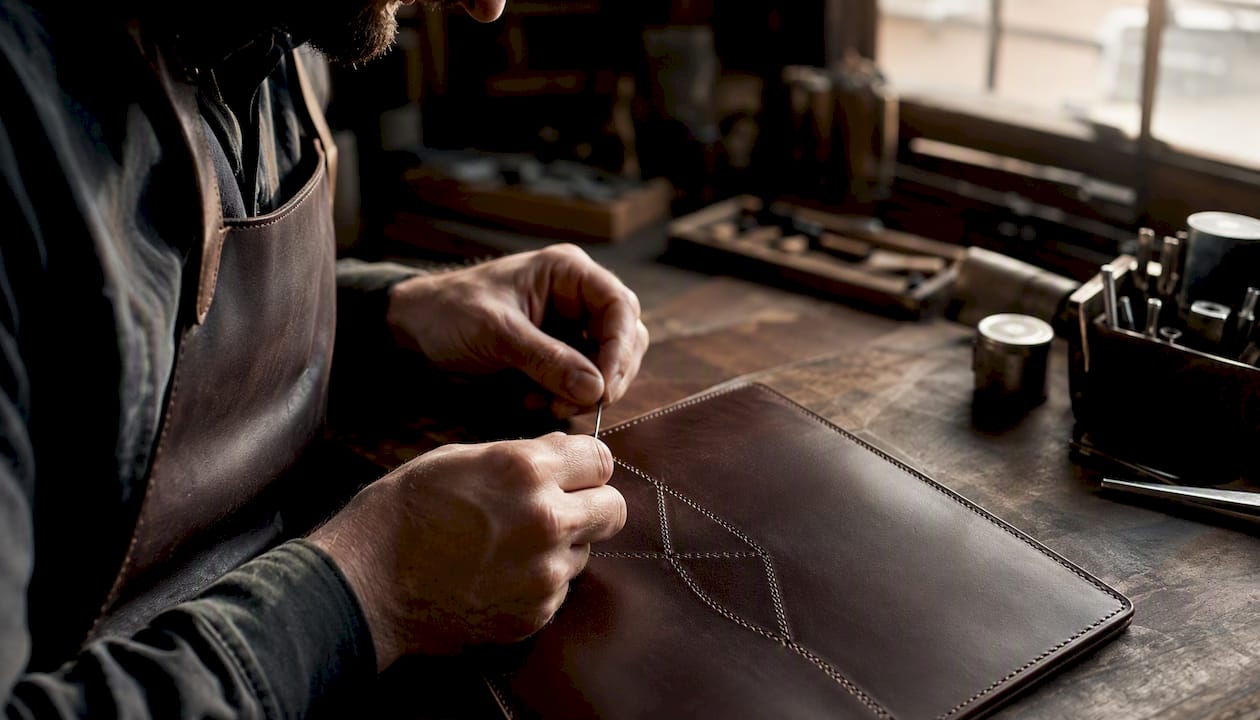
- Run your fingers across seams and edges. Hand-stitched seams sit slightly raised and show consistent tension. Machine-glued trims feel flat and may already be lifting at corners.
- Check drape and recovery. High-quality woven fabric returns to shape after a gentle scrunch. Stiff, papery recovery signals low thread count or synthetic blending.
- Smell the leather. Genuine full-grain and top-grain hides carry a faint, earthy scent. A sharp chemical or plastic smell points to bonded leather or heavy corrective coating.
- Inspect hardware engraving. Crisp, deep engraving on clasps and buckles indicates solid metal. Shallow, blurry stamping suggests thin plating over a base alloy.
- Ask for the repair policy in writing. A brand confident in its materials offers documented repair services. Evasion is a red flag.
Key material specifications and what they mean for you
Pro Tip: Bend a leather edge gently. Full-grain hide shows a fine, natural crease pattern. Corrected-grain or bonded leather cracks or separates at the surface coating — a non-destructive test you can do in under ten seconds.
What should you check in each product category?
Fashion and apparel
- GSM above 280 for tailored outerwear; below 120 in suiting signals a thin, short-lived cloth.
- Examine weave tightness by holding fabric to light — a tight, even weave with no visible gaps indicates quality yarn and construction.
- Check lining seams: French seams or bound edges inside a garment indicate the maker finished what you cannot see.
- Hardware (zippers, buttons, clasps) should feel heavy and operate smoothly with no lateral wobble.
Spot test: Pinch a seam allowance and pull gently. Quality construction holds firm; cheap stitching puckers or gaps immediately.
Leather goods
Full-grain leather retains the hide’s natural surface, including subtle variations that are a mark of authenticity, not a flaw. Corrected-grain leather has been sanded and coated to hide imperfections, which also removes breathability and longevity. For identifying premium materials in accessories, edge finishing is the fastest tell: hand-painted or burnished edges on a bag or wallet indicate individual attention; raw, unfinished, or heat-stamped edges do not.
Spot test: Press a fingernail lightly into an inconspicuous area. Full-grain leather shows a temporary impression that fades; bonded leather may crack or flake.
Furniture and upholstery
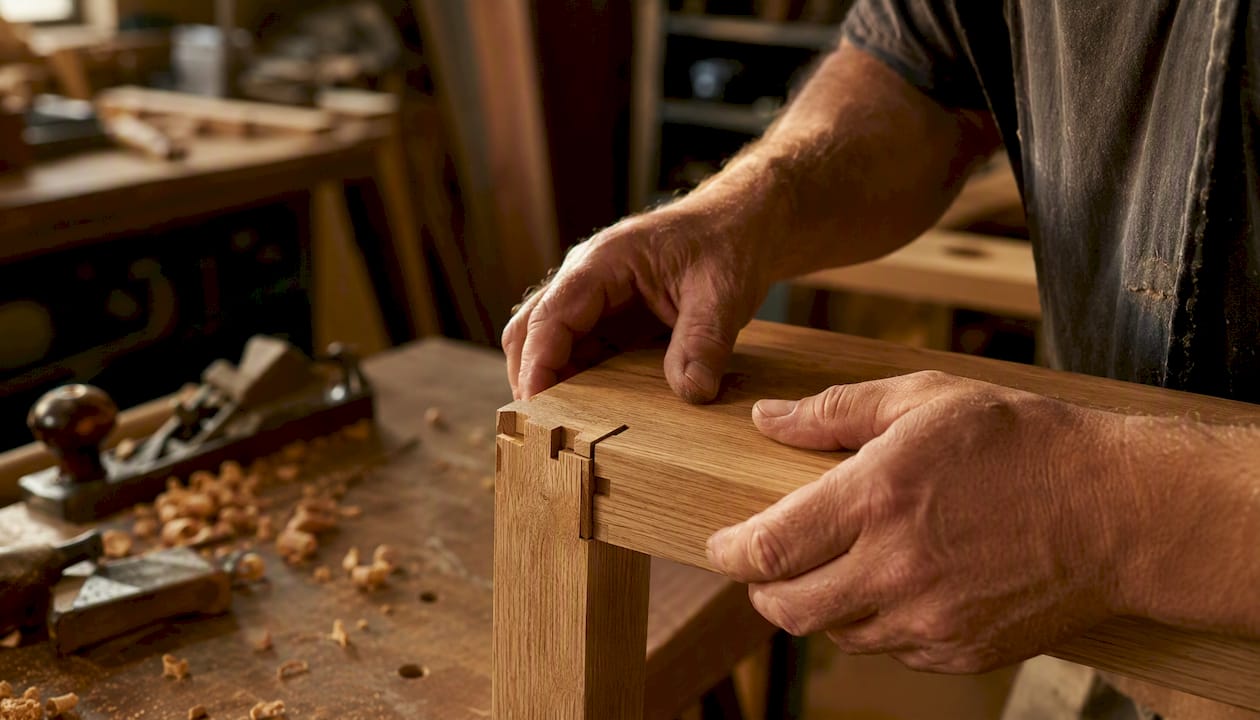
Solid hardwood frames (white oak, walnut, maple) resist warping and accept repair. MDF or particleboard frames are lighter, sound hollow when tapped, and cannot be re-jointed. For handmade furniture buyers, dovetail and mortise-and-tenon joinery are the gold standards: they interlock mechanically and do not rely on adhesive alone. Upholstery foam density above 1.8 lb/ft³ holds its shape through years of use; anything below 1.5 lb/ft³ compresses and sags within months.
Spot test: Lift one corner of a sofa. A solid hardwood frame feels noticeably heavier than a composite one of the same size.
Home decor and accents
Look for maker stamps, foundry marks, or edition numbers on metal and ceramic pieces. Real-metal plating on decorative objects should feel cool to the touch and show consistent color depth at edges. Glass and crystal weight and clarity distinguish hand-blown or lead-free crystal from pressed glass — the former rings when tapped, the latter thuds.
High-end tech
Aluminum and magnesium alloy chassis feel cool, rigid, and premium; polycarbonate flexes slightly under pressure. Anodizing quality shows in color consistency at edges and corners — thin anodizing chips there first. Button travel should be firm and consistent, not mushy. Repairability matters: modular designs with accessible screws and documented parts availability protect your investment over a multi-year ownership cycle.
What provenance signals should you demand from a luxury brand?
Finn Partners describes “craft-as-attitude” as the idea that auditable human inputs — named makers, traceable provenance, documented processes — are now primary credibility signals in luxury. The shift is significant: buyers no longer accept “handcrafted in Italy” as sufficient. They want receipts.
“Craft now must be auditable: named makers, documented processes, and traceable materials provide the receipts that distinguish genuine craft from marketing language.”
Finn Partners
Concrete provenance signals worth demanding:
- Named mill, tannery, or woodyard with a verifiable location
- Batch or lot numbers that trace production to a specific run
- Documented finishing processes (hand-stitching, hand-polishing, kiln firing)
- Repairability: stitched construction over glued, replaceable parts over sealed units
Ask these questions before purchase: Who made this piece specifically? Where was the primary material sourced? Can this be repaired, and by whom? Can you provide sourcing documentation? A brand with genuine craft credentials answers all four without hesitation. Understanding what craftsmanship actually means in a product context helps you frame those questions precisely.
Research in the Journal of Product & Brand Management by Tarquini et al. confirms that perceived craftsmanship, defined by superior quality, skills inheritance, and crafting dedication, correlates directly with greater brand loyalty — meaning the brands that make craft auditable earn repeat buyers, not just first-time ones.
How do you weigh durability, sustainability, and rarity against each other?
Durability tends to raise long-term value. Rarity raises desirability but can conflict with sustainability, particularly for animal-derived or geographically limited materials. A 2024 academic study found that both perceived natural rarity and perceived sustainability positively influence willingness to pay for luxury goods, mediated by consumer desire for luxury — meaning buyers will pay more for materials that feel rare and responsibly sourced.
Practical trade-off outcomes by material type:
- High durability, widely available (e.g., full-grain cowhide, solid oak): Strong resale, lower ethical flags, straightforward maintenance.
- Rare and natural (e.g., exotic skins, old-growth wood): High desirability, but subject to CITES regulations, import restrictions, and growing secondary-market scrutiny.
- Certified sustainable alternatives (e.g., FSC-certified wood, LWG-rated leather): Increasingly accepted in resale markets and carry lower regulatory risk.
Certifications that reconcile sustainability and quality claims:
- LWG (Leather Working Group): Audits tannery environmental practices and traceability.
- FSC (Forest Stewardship Council): Certifies responsibly managed timber and wood products.
- GOTS (Global Organic Textile Standard): Covers organic fiber content and processing conditions.
- OEKO-TEX Standard 100: Tests for harmful substances in textiles at every production stage.
- RDS (Responsible Down Standard): Certifies humane treatment in down and feather supply chains.
How does material quality change your total cost of ownership?
Better materials lower lifetime cost despite a higher purchase price. A full-grain leather bag that costs twice as much as a bonded-leather alternative will typically outlast it by a decade or more, with conditioning as the only recurring expense. Interior material choices follow the same logic: higher-grade finishes and solid-core construction reduce replacement frequency and protect resale value.
Care actions by material type:
- Leather: Condition every three to six months with a pH-neutral cream; store stuffed and away from direct light.
- Wood furniture: Re-oil or wax annually; avoid humidity swings above 10% to prevent warping.
- Upholstery: Rotate cushions quarterly; professional cleaning every 18–24 months for high-use pieces.
- Premium tech: Replace batteries before they degrade below 80% capacity; keep firmware current to extend hardware relevance.
Warranty terms to request: minimum two-year coverage, transferable repair rights, access to certified service centers, and written confirmation that replacement parts remain available for at least five years.
Pro Tip: Photograph your purchase receipt, care labels, and any provenance documents the day you buy. Store them in a cloud folder labeled by item. This documentation can add measurable value when reselling, and it satisfies warranty claims without friction.
How can you verify material claims and spot greenwashing?
Demand verifiable documentation and third-party certifications. Marketing language like “sustainably sourced,” “artisan-made,” or “premium leather” carries no legal definition in the U.S. unless backed by a named certifying body.
Verification steps before purchase:
- Request the specific certification name and certificate number, then cross-check it on the certifying body’s public registry.
- Ask for batch or lot numbers that trace the material to a named production run.
- Request production photos or maker names, not just country-of-origin labels.
- Inspect seams, hardware, and edge finishing in person or via high-resolution images.
- Get the repair policy in writing, including who performs repairs and at what cost.
Questions to ask sales staff or include in a pre-purchase email:
- “Which third-party certification covers the materials in this piece?”
- “Can you provide the tannery or mill name and location?”
- “What is your documented repair process if this item needs service in three years?”
- “Is this construction stitched or glued at the primary stress points?”
Evasive or vague answers to any of these are a reliable signal that the material claims are marketing, not fact.
Why Mytotaltake prioritizes material quality above all else
At Mytotaltake, curation starts with the material, not the margin. Every piece in our collections is selected against the same criteria this guide describes: named makers, traceable sourcing, repairable construction, and documented finishes. We do not list a product because it photographs well. We list it because it holds up.
Our editorial process draws on the same provenance signals and specification benchmarks outlined here, applied across fashion, home decor, furniture, and high-end tech. Fast delivery and free returns are part of the promise, but the real commitment is that what arrives at your door matches what the material claims say it should be.
Mytotaltake curated collections: where to go next
The guidance in this article is most useful when paired with products that already meet the standard. Mytotaltake’s curated collections are built around the material checks and provenance signals covered here, so you spend less time verifying and more time choosing.
Three concrete ways we help:
- Curated product lists by material and specification: Browse luxury furniture and premium accessories filtered by construction method and material grade.
- Pre-purchase verification guidance: Our editorial pages walk you through what makes a designer piece genuinely last, with specification benchmarks for each category.
- Aftercare and repair resources: Product pages include care instructions and repair referral information so your investment stays protected.
Visit Mytotaltake to browse collections selected for lasting material quality, not just visual appeal.
Sources
- EY luxury client index 2026 — new ownership models, experiences and AI could reshape how aspirational clients engage with luxury brands
- The experience of luxury craftsmanship – a strategic asset for luxury experience management
- The role of perceived natural rarity and sustainability in luxury willingness-to-pay (2024)
- Why luxury brands are grappling with the price‑value equation
- Luxury brands are grappling with issues of price, quality and value (WWD)
- Why the luxury world is falling back in love with craft (Finn Partners)
Recommended
Comments
[…] Why Material Quality Matters for Luxury Buyers […]











Leave a comment