
Weighted Blanket Benefits: What the Research Actually Shows

Weighted blankets can genuinely help some people sleep better and feel calmer, particularly those managing diagnosed anxiety or insomnia. A 2024 meta-analysis found weighted blanket use was associated with a meaningful drop in anxiety symptoms, and a randomized controlled trial in a psychiatric outpatient group reported real gains in both sleep quality and daytime functioning.
The catch: this evidence is strongest in clinical populations, not necessarily in healthy adults who just want a cozier bed.
- Verdict: Yes, with real nuance. Weighted blankets show measurable benefits, but mostly in people already dealing with anxiety, insomnia, or sensory-processing differences.
- The number that matters: anxiety reduction with a standardized mean difference of -0.47.
- The caveat: casual, healthy sleepers may notice comfort, but the data supporting dramatic change is thinner for that group.
Quick take: the strongest results come from clinical trials, not lifestyle testimonials.
Key Takeaways
Weighted blanket benefits are strongest for anxiety and clinical insomnia, with an SMD of -0.47 for anxiety reduction, while healthy casual users see milder, less-studied effects.
| Point | Details |
|---|---|
| Anxiety shows the clearest signal | A 2024 meta-analysis found an SMD of -0.47 for anxiety reduction versus controls. |
| Clinical populations benefit most | RCT evidence supports improved insomnia and daytime function in psychiatric outpatients specifically. |
| Follow the 10% rule loosely | Aim for 8 to 12% of body weight, and size down if you’re between options. |
| Know the contraindications | Avoid or seek clinician guidance for sleep apnea, COPD, circulatory issues, or young children. |
| Build a complete sleep setup | Mytotaltake’s curated bedding and mattress toppers help the pressure and comfort work together, not against each other. |
Table of Contents
- Weighted Blanket Benefits Start With Understanding the Construction
- How Weighted Blankets Work: Deep Pressure Stimulation
- Potential Benefits: Sleep, Anxiety, and Beyond
- Evidence and Limitations: Reading the Research Honestly
- Who Benefits Most, and Who Should Be Cautious
- Choosing Weight and Materials: The 10% Rule, With Nuance
- Using and Caring for Your Weighted Blanket Safely
- What This Blanket Can and Can’t Do for Your Sleep
- Bring the Comfort Home With Curated Bedding Essentials
- Sources
Weighted Blanket Benefits Start With Understanding the Construction
A weighted blanket is exactly what it sounds like: a blanket engineered to carry consistent, distributed weight across its surface rather than sitting light and even like a standard duvet. Manufacturers achieve this with glass microbeads, plastic pellets, or stitched pockets that keep the fill from clumping in one corner. Some newer designs use knit-weighted fabric instead of loose fill, which trades a bit of that “hug” feel for easier washing.
Weights typically run from a few pounds up to a heavier range, and the common clinical shorthand is roughly 10% of body weight. That’s a starting point, not gospel, and we’ll unpack the real math later.
- Bead-filled blankets tend to feel firmer and more consistently heavy.
- Knit-weighted styles are usually easier to machine wash.
- Breathability varies widely; cotton and bamboo covers sleep cooler than plush minky.
Pro Tip: If you run warm at night, prioritize a breathable outer cover over a slightly higher weight. Comfort compliance matters more than hitting an exact number.
How Weighted Blankets Work: Deep Pressure Stimulation
The leading mechanism behind weighted blanket benefits is deep pressure stimulation, or DPS, a form of firm, evenly distributed touch that resembles a swaddle or a firm hug.
That steady pressure appears to nudge the nervous system toward a parasympathetic state, the “rest and digest” mode that counters the fight-or-flight response driving racing thoughts at 2 a.m. Some clinicians point to correlated shifts in cortisol, serotonin, and melatonin, but these are proposed pathways rather than a fully mapped, end-to-end chain of cause and effect.
- DPS is the same principle behind swaddling infants and compression vests used in occupational therapy.
- The pressure needs to be even across the body, not concentrated in one spot.
- Individual sensitivity to touch pressure varies, which is why response isn’t universal.
Picture the mechanism as a dimmer switch, not an on/off button: firm, even pressure gradually turns down the body’s stress response rather than flipping it off instantly.
Potential Benefits: Sleep, Anxiety, and Beyond
Reduced anxiety carries the strongest backing of any claim in this space. The 2024 meta-analysis found an SMD of -0.47 (95% CI: -0.68 to -0.25, p < 0.001) for anxiety reduction compared with controls, a moderate effect that clinicians take seriously.
Improved sleep quality and insomnia symptoms sits on solid but narrower ground. The Swedish randomized controlled trial found weighted blankets improved insomnia symptoms and daytime functioning in psychiatric outpatients specifically, which is a meaningfully different claim than “everyone sleeps better under one.”
ADHD and autism-related sleep issues show a moderate signal. Occupational therapists have used weighted materials with sensory-seeking clients for decades, and some smaller trials report better settling behavior, though the research base here remains thinner than the anxiety data.
Reduced procedural anxiety, such as before chemotherapy infusions or dental work, shows a limited but encouraging pattern. Smaller studies and observational reports describe rapid subjective relief within minutes of use in some patients, though most of this evidence leans on self-report rather than physiological measurement.
Chronic pain and restless legs relief is the weakest claim on this list. Anecdotal reports exist, but rigorous trial data specific to pain or RLS populations is sparse.
- Anxiety: moderate to strong evidence, backed by meta-analysis.
- Insomnia in clinical samples: moderate evidence, RCT-supported.
- ADHD/ASD sleep issues: moderate but limited evidence.
- Procedural anxiety: limited evidence, promising early signals.
- Chronic pain/RLS: limited evidence, mostly anecdotal.
Evidence and Limitations: Reading the Research Honestly
The strongest data points come from two sources: the anxiety meta-analysis and RCT evidence in psychiatric and insomnia cohorts, both summarized in a 2024 narrative review that called weighted blankets a plausible safe intervention while pushing for larger, higher-quality trials.
The limitations are real and worth naming plainly. Most trials use small samples. Nearly all rely on self-report rather than objective sleep or anxiety markers. A true double-blind design is nearly impossible here, since participants can obviously feel whether their blanket is heavy.
- Small sample sizes limit how confidently results generalize.
- Self-report measures introduce bias that objective sensors would reduce.
- Blinding limitations mean placebo effects can’t be fully ruled out.
Who Benefits Most, and Who Should Be Cautious
People with diagnosed anxiety, insomnia, ADHD, or autism spectrum conditions report the clearest, most consistent benefits, according to clinicians who’ve studied this population directly. If you’re a generally healthy sleeper without a diagnosed condition, you might still enjoy the comfort, but expect subtler results.
Contraindications matter here. Children under the age recommended by the manufacturer, people with sleep apnea or COPD, those with circulatory issues, certain skin conditions, or significant claustrophobia should approach weighted blankets cautiously, ideally with clinician input. The Cleveland Clinic recommends trying a weighted blanket as a supplement, never a sole treatment, for anyone managing chronic insomnia. This caution extends to older adults with mobility limitations, where a caregiver safety review is worth consulting before introducing heavy bedding into a routine.
If you share a bed, use two separate weighted blankets rather than one oversized option, so each sleeper carries a weight matched to their own body mass instead of an uneven, shifting load.
Choosing Weight and Materials: The 10% Rule, With Nuance
Start with the 10% body-weight guideline, the standard occupational-therapy starting point, then adjust within an 8% to 12% range based on personal tolerance.
- Weigh yourself and calculate 10% of that number.
- Check available product weights and round to the nearest option.
- If you land between two sizes, choose the lighter one first.
- Test comfort for a week before committing to a heavier upgrade.
Material choice shapes the daily experience as much as weight does. Bead-filled blankets feel firmer but can be harder to wash. Knit-weighted styles launder more easily and breathe better for warm sleepers. Hypoallergenic removable covers add a practical layer of hygiene control.
Pro Tip: When unsure, size down and trial a lap pad first. It’s far easier to size up later than to return an oversized blanket that feels suffocating on night one.
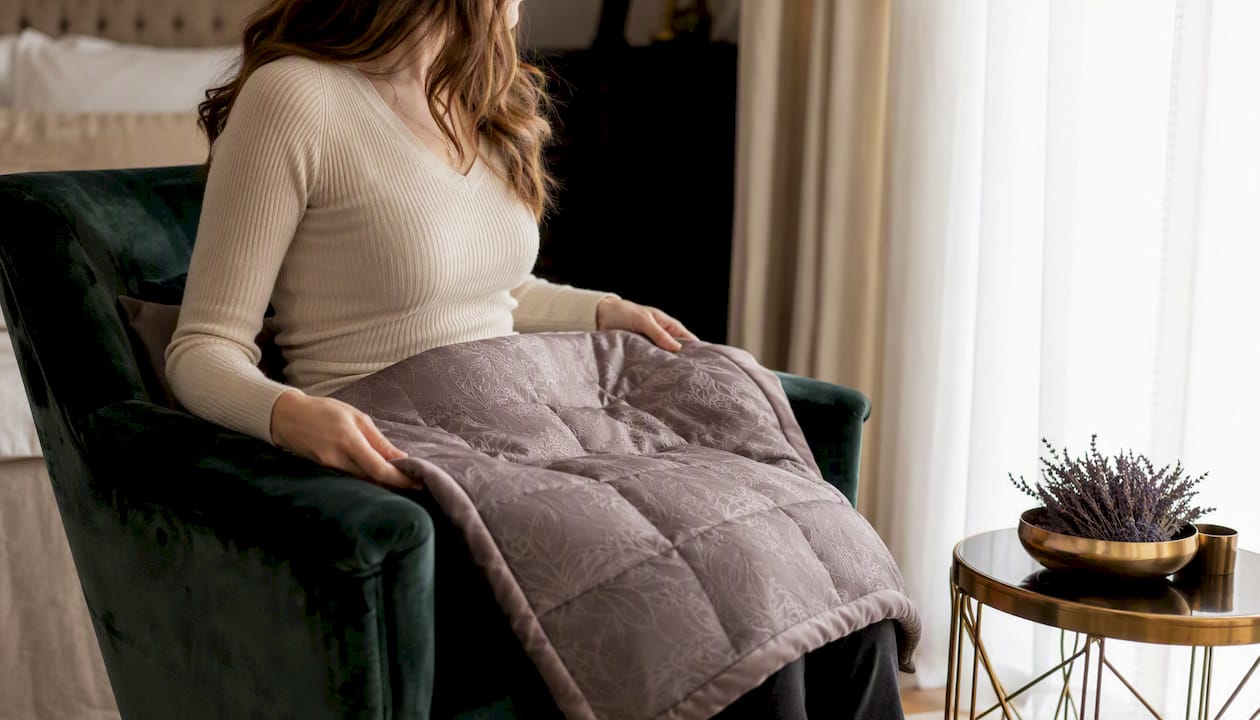
Using and Caring for Your Weighted Blanket Safely
Most adults can use a weighted blanket nightly if it feels comfortable and doesn’t restrict breathing or movement. Children and vulnerable adults need supervision or a clinician’s input before nightly use becomes routine.
- Start with short daytime sessions on the couch before trying a full night.
- Move to nighttime use only once the weight feels natural, not restrictive.
- Wash covers weekly and the insert per the manufacturer’s care label.
- Stop use and consult a clinician if you wake feeling trapped or short of breath.
Pairing the blanket with breathable bedding built for hot sleepers helps prevent overheating, a common reason people abandon weighted blankets within the first month.
What This Blanket Can and Can’t Do for Your Sleep
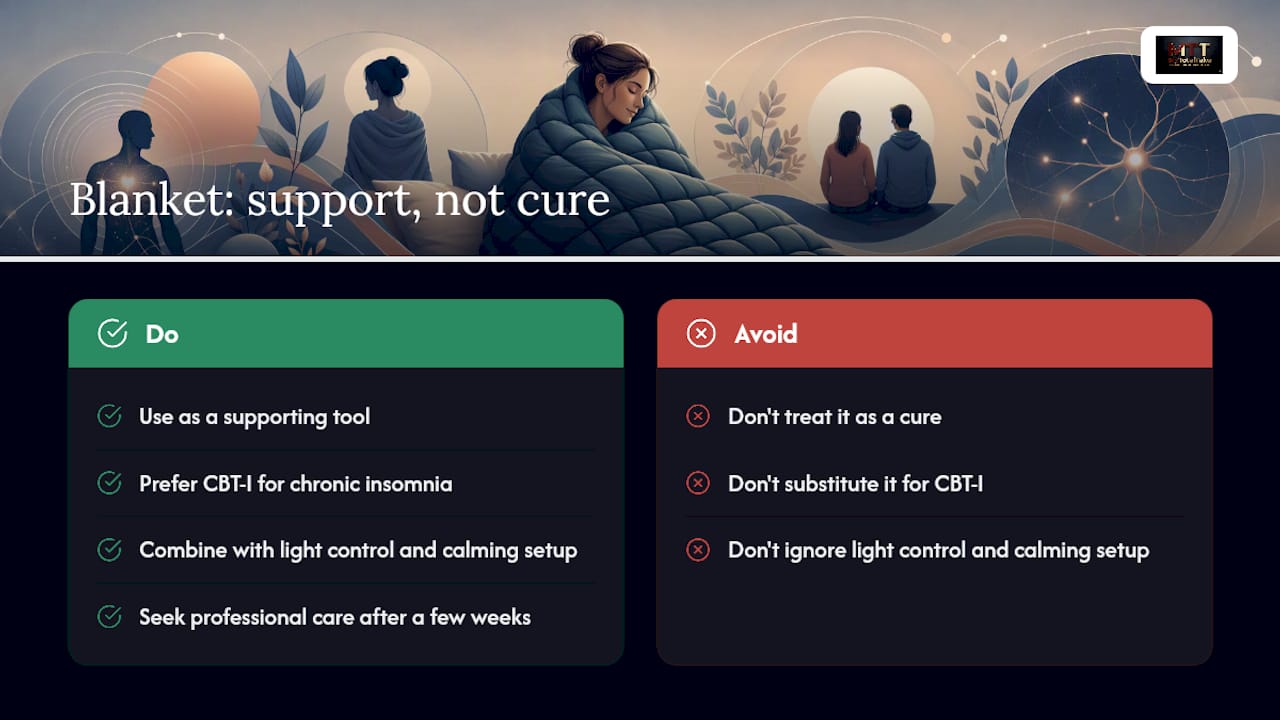
A weighted blanket earns its place as a supporting tool, not a cure. The anxiety and insomnia data are genuinely encouraging for the right person, but Harvard Health is direct about this: cognitive behavioral therapy for insomnia remains the first-line treatment for chronic sleep problems. Treat the blanket as one piece of a broader routine, alongside consistent light control and a calming bedroom setup, and seek professional care if insomnia persists beyond a few weeks.
Bring the Comfort Home With Curated Bedding Essentials
If the research has you considering a weighted blanket, the difference between a mediocre one and a genuinely restful one comes down to craftsmanship: even fill distribution, breathable natural covers, and stitching that holds up after a hundred washes. Mytotaltake curates bedding and home wellness pieces with exactly that standard in mind, so you’re not gambling on a mass-produced import that clumps after a month.

Pair a quality weighted blanket with the right foundation underneath it. A mattress topper chosen for pressure support changes how that weight actually feels against your body, and getting that combination right matters more than most shoppers realize. Browse Mytotaltake’s premium accessories guide to see what separates a heirloom-worthy bedroom piece from something you’ll replace in a year, and start building a sleep setup that earns its keep every night.
Sources
These sources anchor the article’s core evidence claims and are worth reading directly if you want the full data behind any figure cited above.
- Weighted blankets in sleep and related disorders: narrative review (Frontiers in Psychiatry)
- Weighted blanket weight chart / weighted blanket benefits (Sleep Foundation)
- Anxiety and stress weighing heavily at night? A new blanket might help (Harvard Health)
- The effect of weighted blankets on sleep and related disorders (PMC article)
This article is general information, not a substitute for advice from a qualified doctor. Consult a qualified healthcare professional about your own circumstances before acting on anything here.











Leave a comment