
Use the 2 Foot Rule: Patio Umbrella Size for Homeowners
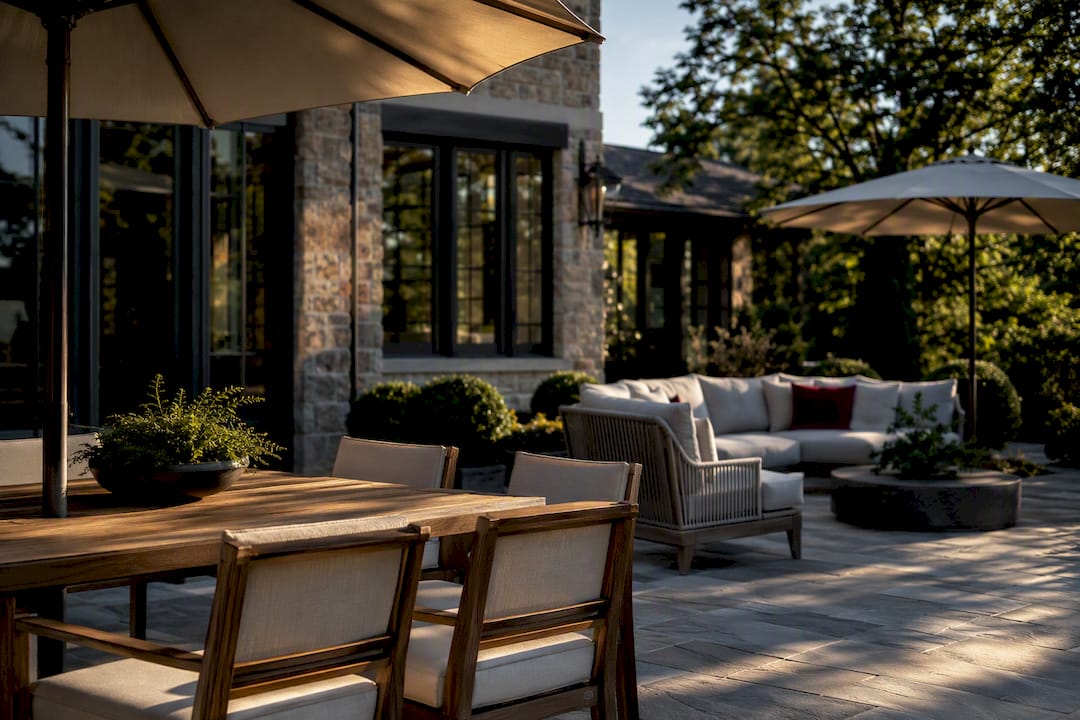
The rule that governs every good patio umbrella purchase is simple: the canopy should reach about 2 feet beyond your table or seating area on every side. For most 4 to 6 person dining tables, that works out to a 9-foot umbrella. When your measurements land between two sizes, go bigger. Always check your base weight and overhead clearance before you buy.
TL;DR:
- Most dining tables require a 9-foot umbrella for proper shade, with larger sizes needed for extensive seating or lounge areas.
- Measure your table’s dimensions and add at least 2 feet of overhang on each side, then round up to the nearest standard size for best coverage.
- For patios with multiple seating zones, using two mid-sized umbrellas provides better shade than stretching one oversized canopy across both areas.
- Base weights should be roughly 10 pounds per foot of canopy diameter, with heavier weights or bolted mounts necessary for larger or cantilever umbrellas.
- Quality materials and mechanisms, like solution-dyed fabrics and sturdy frames, extend an umbrella’s lifespan and ensure size and shape selections perform reliably in wind.
Table of Contents
- What Are the Common Patio Umbrella Sizes?
- How Do You Measure for the Right Umbrella Size?
- Center-Pole or Cantilever: Which Umbrella Style Fits?
- How Heavy Should Your Umbrella Base Be?
- How Much Overhead Clearance Do You Need?
- What Should You Check Before Buying?
- How Do You Maintain and Store a Patio Umbrella?
- Why Premium Materials Change the Sizing Equation
- Where to Find Premium Umbrellas and Bases Built to Last
- Sources
- FAQ
What Are the Common Patio Umbrella Sizes?
Umbrella canopies are sold in a fairly predictable range, and each size class serves a distinct kind of outdoor setup. Knowing the tiers before you shop keeps you from guessing at the store or, worse, ordering online and hoping it fits.
- 6 to 7.5 feet: These compact canopies suit bistro tables, small balconies, and two-top seating. Coverage tops out around 38 square feet at 7 feet, enough for a couple with morning coffee but not much else.
- 8 to 9 feet: The workhorse size for standard patio dining sets. A 9-foot canopy covers roughly 64 square feet, comfortably shading a table with four to six chairs.
- 10 to 11 feet: Built for larger dining tables or small groupings of lounge furniture. A larger canopy around 11 feet provides ample shade coverage suitable for six to eight seats without leaving anyone’s shoulders unprotected.
- 13 feet and up: This larger size tier, including many cantilever umbrellas, covers a significantly larger area appropriate for lounge areas or pool decks. It’s the right call for large lounge areas, pool decks, or commercial patios where furniture is spread out rather than clustered around one table.
Here’s the quick-reference version:
If your patio has two separate seating zones, say a dining set and a lounge grouping, don’t try to stretch one giant umbrella across both. Two mid-sized umbrellas almost always shade better than one oversized canopy stretched past its intended footprint.
How Do You Measure for the Right Umbrella Size?
Getting this right takes five minutes with a tape measure, and it saves you from the common mistake of eyeballing it and ending up with a canopy that’s too small once the chairs are pushed in.
- Measure your table’s diameter (round tables) or length and width (rectangular tables).
- Measure the full seating footprint, including chairs pulled slightly away from the table.
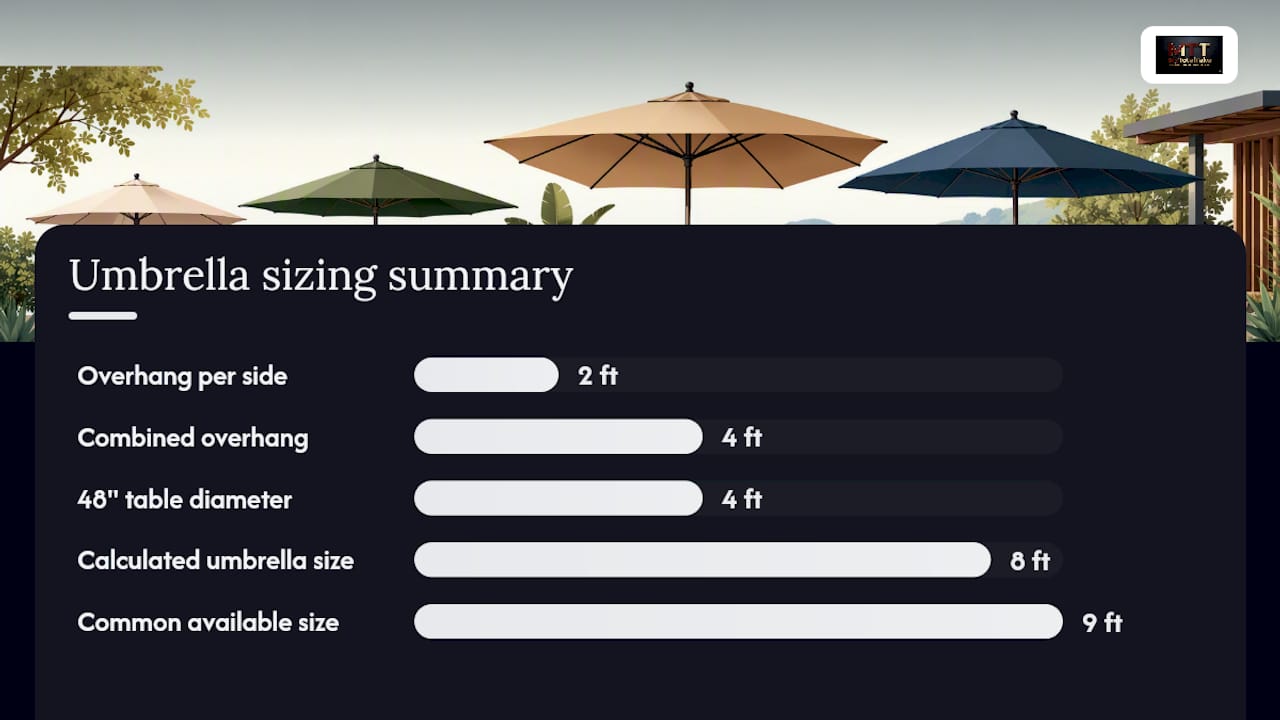
- Add 2 feet of overhang to every side, which means adding roughly 4 feet total to your table’s diameter or width.
- Round up to the nearest common umbrella size rather than down.
- Double-check that your patio has enough open space for the canopy at full extension.
A 48-inch round table, for example, needs 48 inches plus roughly 48 inches of combined overhang, which lands you at 96 inches, or 8 feet. Since 9-foot umbrellas are far more widely available than 8-foot ones, most homeowners round up and land exactly on the 9-foot recommendation that fits most dining sets.
Sun angle changes this math slightly. Early morning and late afternoon sun sits low on the horizon, casting long shadows that shift shade well past the umbrella’s actual footprint. If your patio gets heavy low-angle sun, lean toward the larger size in your range rather than the smaller one.
Pro Tip: Bring your tape measure outside at the time of day you actually use the patio most. A canopy that shades your table perfectly at noon can leave you squinting at 5 p.m. if the sun angle wasn’t part of your calculation.
Center-Pole or Cantilever: Which Umbrella Style Fits?
Shape and mounting style matter as much as diameter once you’ve settled on a size. A canopy that’s the right size but the wrong shape still leaves gaps in your coverage.
- Round canopies pair naturally with round tables, distributing shade evenly in every direction.
- Rectangular and square canopies match rectangular or square dining sets, following the table’s own lines instead of leaving triangular gaps at the corners.
- Center-pole umbrellas, generally 6 to 11 feet in diameter, are the simpler and typically less expensive option, and they work well for any table with a hole for the pole.
- Cantilever umbrellas, usually 9 to 15 feet, mount off to the side on an arm, freeing up the entire footprint below. That makes them the better pick for lounge chairs, sectional seating, or outdoor lounge sets where a center pole would get in the way.
If your patio holds two distinct groupings, say a six-seat table and a separate lounge area, don’t force one umbrella to cover both. Two appropriately sized umbrellas keep the shade balanced and the layout visually cleaner than one canopy stretched to its limits.
How Heavy Should Your Umbrella Base Be?
Base weight is where a lot of buyers cut corners, and it’s the single most common reason umbrellas end up tipped over in a gust of wind. The general guideline is about 10 pounds of base weight per foot of canopy diameter. A 9-foot umbrella wants roughly 90 pounds of base; an 11-foot canopy pushes toward 110.
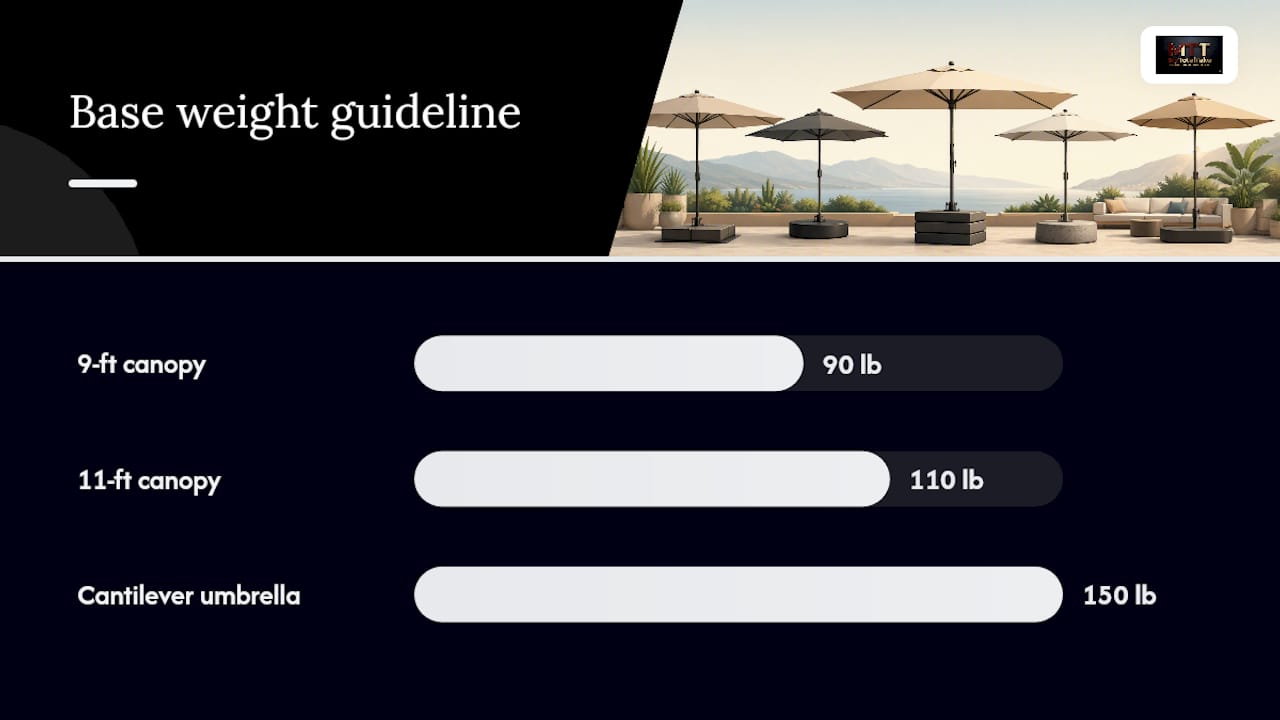
By the numbers: Cantilever umbrellas break this ratio entirely. Because their weight sits offset from the pole instead of centered over it, they often need bases in the 150-pound range or better, or a bolted mounting system to stay upright.
Your mounting options generally fall into three categories:
- Freestanding bases (filled with sand or water, or solid concrete/granite) work for most center-pole umbrellas and can be moved as needed.
- In-deck or in-table mounts anchor directly into a deck board or a table’s built-in sleeve, offering more stability without a bulky base taking up floor space.
- Bolted installations are close to mandatory for larger cantilevers and any umbrella in a consistently windy location.
A few habits protect your investment regardless of base type: choose a canopy with vents that let wind pass through rather than catch it, close the umbrella whenever you leave the patio unattended, and add tie-downs in regions prone to sudden gusts.
How Much Overhead Clearance Do You Need?
Vertical space matters just as much as diameter, especially if your patio sits under a pergola or covered porch, roof overhang, or covered porch. Most guides recommend about 7 feet of clearance minimum from the ground to the underside of the canopy, enough for an adult to walk underneath without ducking.
A few placement details are easy to miss until they cause a problem:
- Tilt mechanisms need extra headroom to operate; measure clearance with the umbrella tilted, not just standing straight.
- Covered patios and ceilinged porches limit how tall a pole you can use, so measure the full vertical span before ordering.
- Keep the canopy edge away from grill heat, which can scorch or discolor fabric over time.
- Position the umbrella so it doesn’t block sightlines to a pool, doorway, or walkway, particularly with larger 11 and 13-foot canopies.
What Should You Check Before Buying?
Once you know your size, shape, and base needs, the remaining decisions come down to materials and mechanisms. These details separate an umbrella that lasts a decade from one that fades and frays within two summers.
- Frame material: Aluminum resists rust and stays lightweight; fiberglass ribs flex in wind without snapping; steel offers strength but needs a rust-resistant coating.
- Canopy fabric: Solution-dyed acrylic holds its color far longer than standard polyester, resisting UV fade and moisture damage.
- Opening mechanism: A crank system with a smooth tilt function makes daily use far easier than a manual push-up pole, especially on larger canopies.
- Accessories: A protective cover, clip-on lighting, and the availability of replacement canopies all extend the umbrella’s usable life.
Pro Tip: If two umbrellas look nearly identical in the showroom, check whether the manufacturer sells replacement canopies separately. That single detail tells you whether you’re buying a piece meant to last or one meant to be replaced whole in three years.
How Do You Maintain and Store a Patio Umbrella?
Good sizing and a sturdy base only pay off if the umbrella survives more than one season outdoors.
- Close and secure the canopy whenever wind picks up, and use a fitted cover any time it’s not in active use.
- Clean solution-dyed acrylic or polyester canopies with mild soap and water; avoid bleach, which breaks down UV coatings.
- Store the umbrella indoors or under cover before winter, checking the frame joints and crank mechanism for rust or stiffness.
- Repair small rips or loose stitching promptly; replace the canopy or frame once fading, cracking ribs, or persistent wobble sets in.
A storage box built for outdoor gear makes the off-season transition easier if you don’t have garage or shed space for a full-length pole.
Why Premium Materials Change the Sizing Equation
Here’s what most sizing guides skip: the size you can confidently choose depends partly on what the umbrella is made of. A flimsy 11-foot canopy on a thin fiberglass frame is a liability in any wind above a light breeze. A well-engineered 11-foot canopy on a properly weighted aluminum frame is simply more shade.
That’s the case for prioritizing craftsmanship over price when you’re sizing up. Solution-dyed acrylic fabric and a frame built to spec let you choose the larger, more generous size your table actually calls for, without spending every windy afternoon wondering if the umbrella will hold. Quality construction doesn’t just look better on a well-furnished patio. It’s what lets the math in this guide work the way it’s supposed to.
— Lysander
Where to Find Premium Umbrellas and Bases Built to Last
Once you’ve settled on the right diameter, the harder part is finding a canopy and base that actually match the quality of the rest of your patio setup. Our collection features outdoor furniture and accessories selected for durability and quality materials designed to endure season after season.

Browse the luxury furniture collection for umbrella-ready dining and lounge sets, or check what defines premium accessories if you want to understand the frame and fabric details worth paying for before you commit to a size. Every order ships with fast delivery and free returns, so if a canopy doesn’t shade your table the way you measured for, sending it back costs you nothing but time. Start by browsing the current collection and match your measurements to a piece built to hold up outdoors for years, not seasons.
Sources
- How to Choose a Patio Umbrella: The Complete Buying Guide – Aosom
- Patio Umbrella Size Guide – Wabash Valley
- Patio Umbrella Size Guide Chart – Practical Backyard
FAQ
Is a 42 Inch Umbrella Big Enough for a Patio Table?
An umbrella of this size is too small for a standard dining table. It’s really meant for a single chair, a small side table, or a compact balcony setup, not a table seating two or more people.
What Is the Difference Between a 9-Foot and a 10-Foot Patio Umbrella?
A 9-foot umbrella covers about 64 square feet and suits most 4 to 6 person dining tables, while a 10-foot canopy adds noticeably more coverage and fits tables on the larger end of that range or seating with extra chairs pulled out. The extra foot matters most when your table sits closer to 60 inches long.
Is a 7.5 Foot Umbrella Big Enough for Outdoor Dining?
A 7.5 foot umbrella works for a small bistro table or a two-seat setup, but it falls short of the 2-foot overhang rule for a standard four-chair dining table. For anything beyond two seats, size up to 9 feet.
Is a 62 Inch Umbrella Big Enough for My Patio?
An umbrella of this size suits a small round table with two chairs, but it’s undersized for most dining sets. If your table exceeds typical small table dimensions, you’ll likely be sitting outside the shade line for part of the day.
How Do I Know If I Should Round Up to a Larger Umbrella Size?
If your measurements fall between two standard sizes, choose the larger one. An umbrella that’s slightly oversized still protects you as the sun shifts, while one that’s slightly undersized leaves gaps in coverage almost immediately.








Leave a comment