
Clean Teak Furniture Once or Twice a Year for Luxury Homeowners
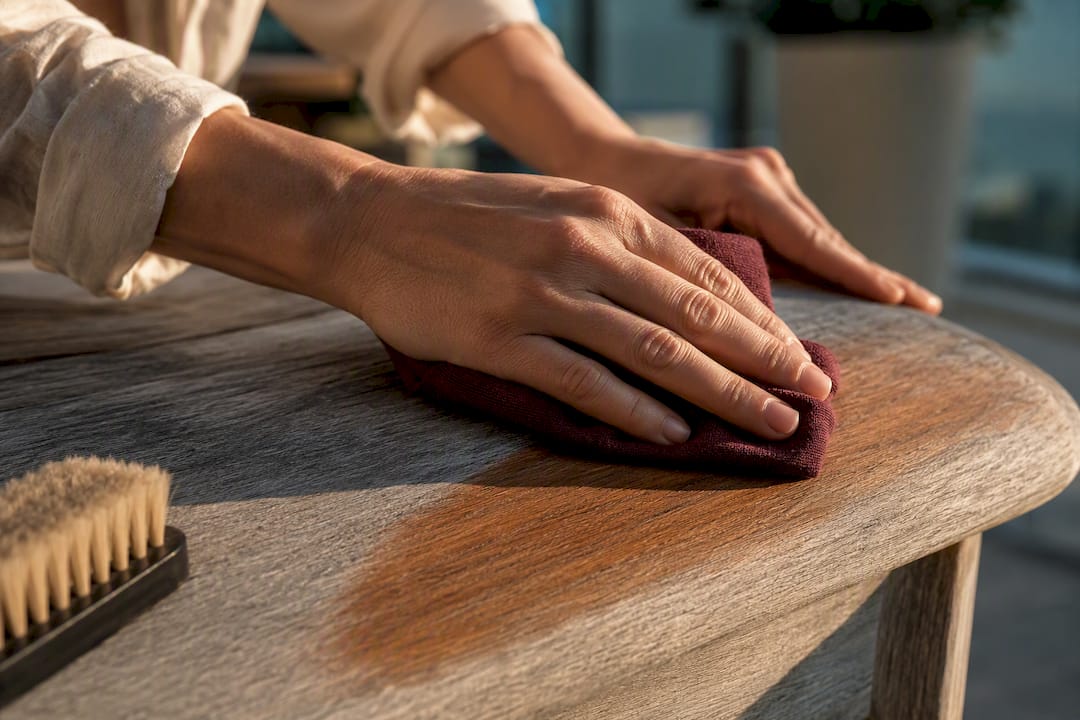
Clean teak furniture once or twice a year with mild soap and water, and skip the pressure washer. Teak’s natural oils already protect it from rot and insects, so oiling is optional. It changes the wood’s color, but does not affect its durability. The one habit that matters most: catch small issues, like loose hardware or fresh stains, before they set in.
TL;DR:
- Regular cleaning once or twice a year with mild soap and water prevents grime buildup, avoiding pressure washers or abrasive tools that can damage the wood.
- Deep stains or mildew require stronger cleaners or a gentle sanding with fine grit, followed by thorough drying for at least 48 hours before sealing or oiling.
- Leaving teak natural results in a silver-gray patina over time, while oiling restores a warm honey tone, and sealers help with color retention but require annual reapplication.
- Prompt removal of mildew, bird droppings, and spills prevents deeper embedding of stains and surface etching, especially on light fabric cushions stored on wet furniture.
- Hardware should be inspected twice a year, tightened if loose, and rusted fasteners replaced to prevent structural issues, with winter storage in a dry, breathable cover influencing longevity.
Table of Contents
- Teak Furniture Care Basics: The Routine Cleaning Steps
- How to Restore Weathered or Stained Teak
- Teak Oil vs Sealer vs Natural Patina: Which One Fits You?
- Removing Stains, Mildew, and Bird Droppings From Teak
- Hardware Checks and Seasonal Storage
- What to Buy: Tools, Cleaners, and Sealers Worth Trusting
- Why We Think Less Intervention Wins With Teak
- Sources
- FAQ
Teak Furniture Care Basics: The Routine Cleaning Steps
Most teak owners overthink this. Routine cleaning once or twice a year handles the job, depending on environment, with occasional rinses to prevent grime buildup.
The sequence itself is simple, and skipping steps is what leads to streaking or missed spots.
- Clear off leaves, dirt, and cushions before you touch water to wood.
- Pre-rinse the whole piece with a garden hose to loosen surface grime.
- Mix a mild soap solution, dish soap and warm water work fine, in a bucket.
- Scrub with a soft-bristle brush, always moving with the grain, never against it.
- Rinse thoroughly so no soap film dries on the surface.
- Let the piece air dry fully before reassembling cushions or covers.
A few tools make or break this process:
- Use: a soft-bristle brush, a sponge, and mild dish soap diluted in warm water.
- Avoid: pressure washers, wire brushes, and anything abrasive enough to gouge the grain. Manufacturer guidance from Gloster singles out pressure washers as a top cause of premature wear because they strip surface oils and roughen the wood.
Give the wood a full day to dry in the sun before cushions go back on, longer if humidity is high. And keep cushions off newly installed teak during that first season. New wood releases natural oils as it weathers, and those oils can transfer onto light fabric. A guide on keeping outdoor cushions in shape covers how to protect and clean fabric separately, which matters most in those early months.
How to Restore Weathered or Stained Teak
Deep gray patches, black speckling from mildew, or stains that don’t lift with a basic scrub call for something stronger than dish soap. If your furniture still looks blotchy after a standard clean, you’re past routine maintenance and into restoration territory.
Start light and escalate only if needed:
- Try a single-step teak cleaner first. These handle light to moderate graying without much elbow grease.
- Move to a two-part cleaner and brightener system if gray patches or mildew persist. Two-part systems use a stronger cleaning agent followed by a neutralizer, and they outperform single-step products on heavy discoloration and stubborn mildew.
- Sand only as a last resort, and only with the grain. Use fine grit, 120 to 150, and never a rotary sander on curved joints or carved details.
- Rinse completely and let the piece dry for at least 48 hours before applying any oil, sealer, or protector.
That drying window matters more than most people realize. Sealing damp wood traps moisture under the finish, which is exactly the environment mildew needs to come back stronger.
Pro Tip: Test any cleaner or brightener on a hidden section, like the underside of an armrest, before treating the whole piece. Teak brighteners can lighten wood past its natural tone if left on too long.
Teak Oil vs Sealer vs Natural Patina: Which One Fits You?
This is the decision that trips up most new teak owners, and the honest answer is that none of the three options is objectively “correct.” They just serve different priorities.
- Natural patina: Left untouched, teak shifts from golden brown to a soft silver gray over six months to two years, depending on sun and rain exposure. This process is entirely cosmetic and doesn’t compromise the wood’s structural strength. It’s also the lowest-maintenance path, since there’s nothing to reapply.
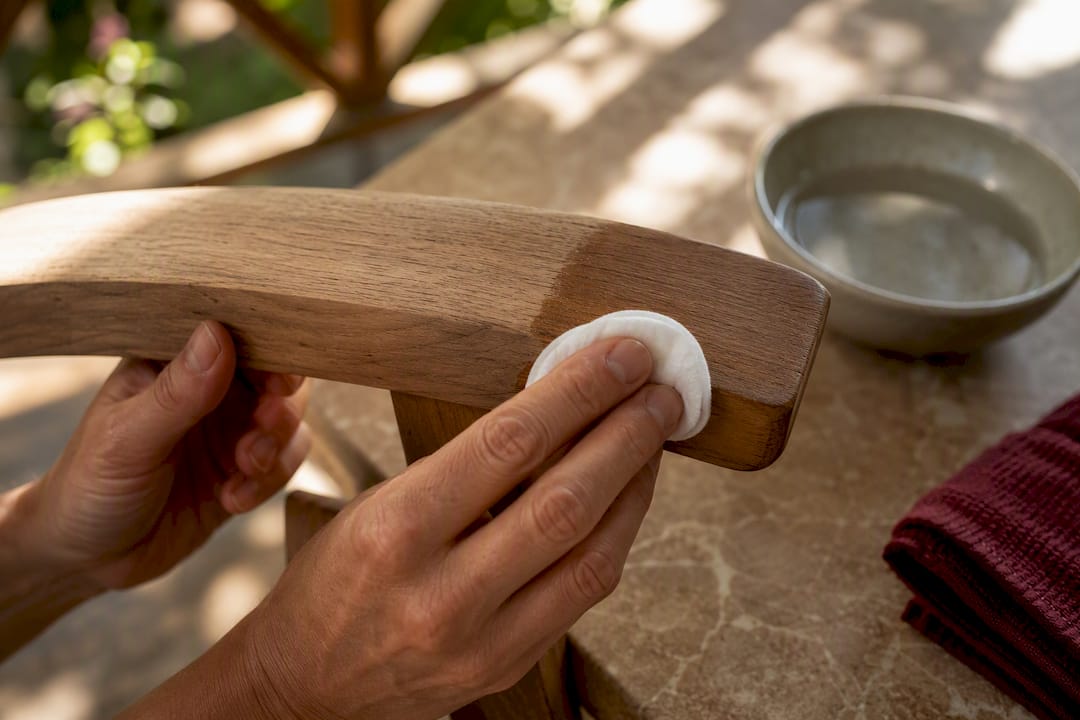
- Teak oil: If you prefer the honey brown look, oiling restores it. Apply a thin coat with a lint-free cloth, then wipe off any excess before it pools. Plan on reoiling roughly once annually if restoring the brown tone. Skip more frequent applications. Over-oiling traps dust and moisture against the surface, which encourages mildew growth and can darken the wood in a way that requires aggressive sanding to fix.
- Sealer or protector: For owners who want color retention without the oiling cycle, a UV-rated teak sealer builds a protective layer instead of soaking into the grain. Manufacturers typically recommend reapplying once a year on vertical surfaces and twice a year on horizontal ones like tabletops, which take the brunt of sun and standing water.
Weigh three things before choosing: how much direct sun and rain the piece sees, whether you want the original brown tone or you’re fine with gray, and how much yearly upkeep you’re realistically willing to do. A guide to choosing outdoor furniture built for the long haul can help you match a maintenance level to your lifestyle before you buy.
Removing Stains, Mildew, and Bird Droppings From Teak
Black speckling is almost always mildew, not rot or structural decay, and it responds well to prompt treatment. A diluted bleach solution—roughly one part bleach to ten parts water—applied with a soft brush and rinsed thoroughly afterward, clears most mildew spots. A dedicated manufacturer teak cleaner works as a gentler alternative if you’d rather skip bleach altogether.
- Treat mildew as soon as you spot it. Stains that sit for weeks embed deeper into the grain and need repeat treatments to fully lift.
- Wipe bird droppings and food or wine spills off immediately. Left to dry in direct sun, acidic spills can etch the wood’s surface, leaving a mark that outlasts a simple wash.
- Keep light-colored cushion fabric off new teak for the first few months. Fresh teak releases natural oils as it weathers, and that oil can stain fabric left in direct contact, especially after rain.
- If a stain resists two cleaning attempts, it’s likely set into the grain rather than sitting on the surface. Light sanding, following the deep clean steps above, is the next move.
One detail worth remembering: a handful of dark spots after a rainy week doesn’t mean your furniture is failing. It means it’s teak, doing what teak does when moisture sits too long on an unsealed surface.
Hardware Checks and Seasonal Storage
Teak expands and contracts slightly with humidity and temperature swings, and that movement is exactly why loose screws and rusted brackets show up over time. Left unchecked, minor looseness can turn into wobbly joints or cracked mounting points.
- Inspect all visible hardware, bolts, brackets, hinges, twice a year, ideally at the start and end of your outdoor season.
- Tighten anything that’s loosened. A quarter turn now prevents a much bigger repair later.
- Swap out any rusted or corroded fasteners for stainless steel replacements before they stain the surrounding wood.
- Before winter, decide on storage: a dry shed or garage is ideal. If the piece has to stay outside, use a breathable, waterproof cover, never plastic sheeting that traps condensation underneath.
- Bring cushions indoors regardless of what happens to the frame. Fabric and foam don’t tolerate freeze thaw cycles the way solid teak does.
Routine hardware checks are, frankly, the least glamorous part of teak furniture care and also the one owners skip most often, which is exactly why it’s worth putting on a calendar reminder.
What to Buy: Tools, Cleaners, and Sealers Worth Trusting
Stick to a soft-bristle brush, a non-abrasive sponge, and lint-free cloths for oil application. Skip anything with a wire brush, a scouring pad, or a pressure washer attachment. A resource on gentle cleaning methods and tool choices applies the same logic teak needs: match the tool’s abrasiveness to the material, not the stain.
- Choose a single-step cleaner for light upkeep, a two-part system for heavier graying or mildew.
- Look for sealers labeled specifically for teak or outdoor hardwood, with UV inhibitors listed on the packaging.
- Avoid raw linseed oil, olive oil, or generic “wood oil.” These aren’t formulated for outdoor exposure and can go rancid or attract mold.
- Follow the manufacturer’s application directions exactly, especially recoat timing, since oversealing has the same downside as over-oiling.
Curated picks that fit this profile are covered in our guide on patio furniture built to look good for years.
Why We Think Less Intervention Wins With Teak
Teak’s reputation as a luxury material comes from a quality most owners never quite believe until they’ve lived with it: it doesn’t need you to save it. The wood’s natural oil content is doing structural work long after installation, and every product marketed to “protect” or “restore” it is really just managing appearance, not durability.
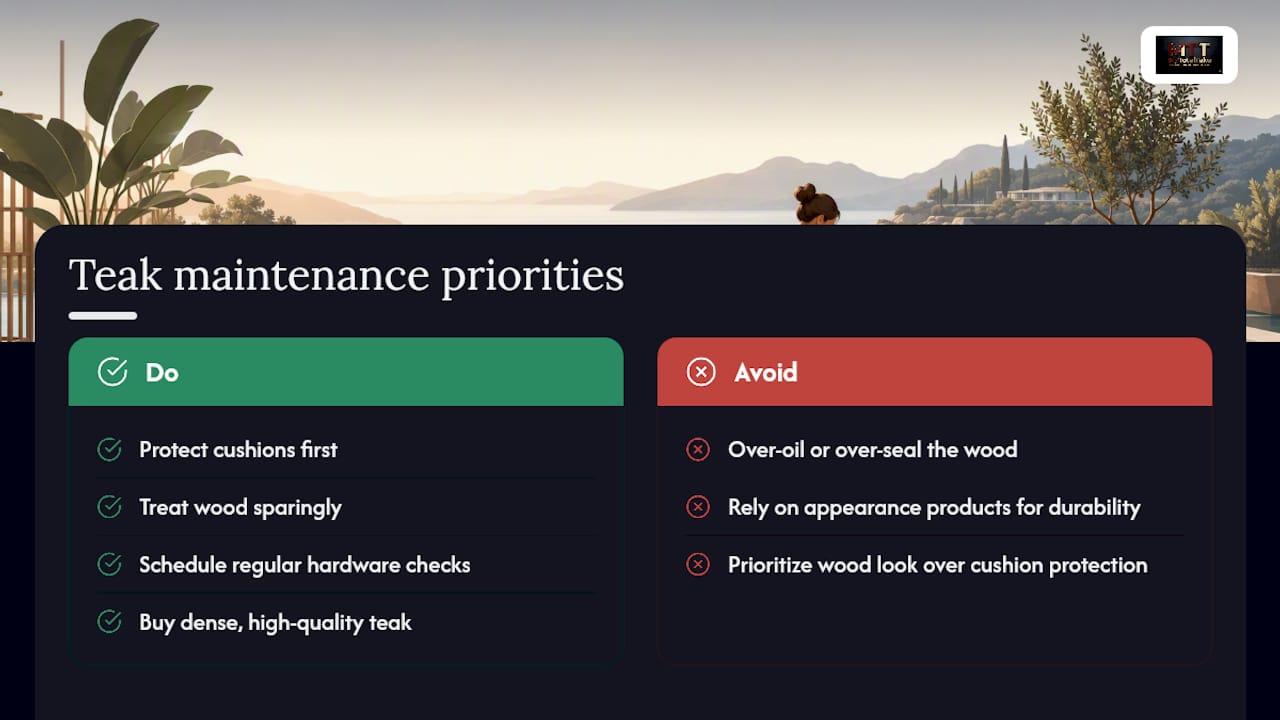
That’s the priority we’d push on any teak owner buying a serious piece: protect the cushions first, since fabric is far more fragile than the frame it sits on. Treat the wood sparingly, because over-oiling and over-sealing cause more mildew and discoloration than neglect ever does. And put hardware checks on a recurring calendar, because that’s the one maintenance task with a real cost to skipping it.
If you’re shopping for a piece that will still look right in a decade, start with furniture built from dense, high-quality teak rather than furniture that promises to be easy to maintain. Our guide on furniture that earns its place in a home digs into what separates a piece worth keeping from one you’ll replace in five years.
— Lysander
Sources
The recommendations above draw on manufacturer care documentation and specialist teak restoration guides, not general furniture advice.
FAQ
Is Murphy’s Oil Soap Good for Teak Wood?
Murphy’s Oil Soap is milder than many all-purpose cleaners, but a plain dish soap and water solution is the standard recommendation across teak manufacturer guides, and it avoids introducing added oils or fragrances that can affect the wood’s finish.
Does Teak Furniture Need to Be Oiled?
No. Teak’s natural oil content protects it from rot and insects without added treatment, and manufacturers confirm the wood weathers safely to gray without oiling. Oil is only necessary if you want to keep or restore the original brown tone.
Can You Use Dawn to Clean Teak Furniture?
Yes, a diluted Dawn or other mild dish soap solution, applied with a soft-bristle brush and rinsed thoroughly, is a standard and safe method for routine teak cleaning.
What Should You Seal Teak Furniture With?
Use a sealer or protector labeled specifically for teak or outdoor hardwood with UV inhibitors listed on the packaging. Apply once a year on vertical surfaces and twice a year on horizontal ones like tabletops, since those take the most sun and rain exposure.











Leave a comment