
Choosing a Quiet Bedroom Ceiling Fan With Remote
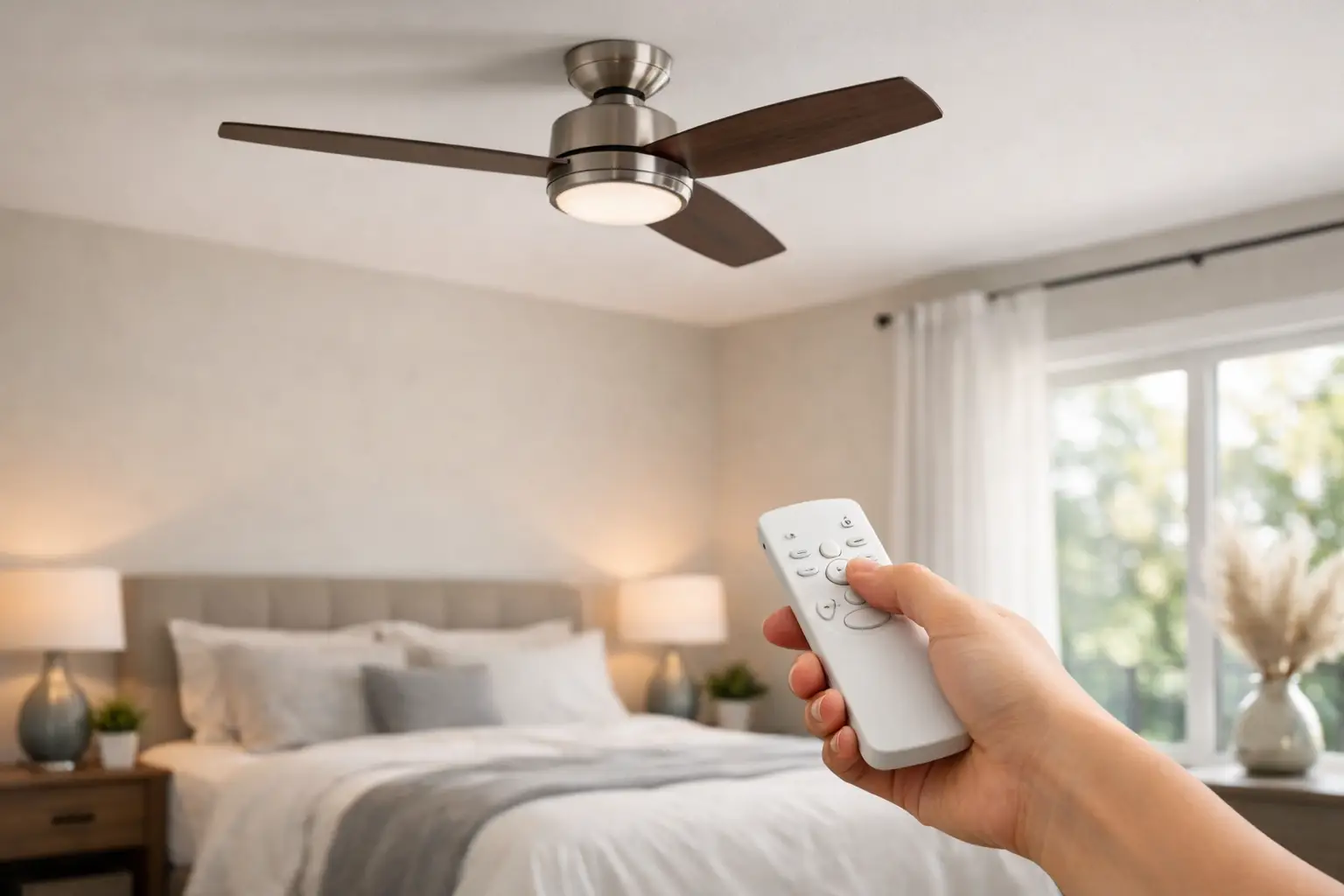
At 2:13 a.m., a fan’s subtle hum can feel far louder than it did in the showroom. A quiet bedroom ceiling fan with remote is not simply a way to circulate air – it is a considered upgrade for deeper rest, a more polished room, and comfort that never requires leaving the bed.
The best models combine restrained acoustics with handsome proportions and intuitive control. Yet “quiet” is only one part of the decision. Blade span, motor construction, mounting height, lighting, and even the remote’s usability determine whether a fan becomes an elegant part of your bedroom or a fixture you barely tolerate.
Why Quiet Matters in a Bedroom
Bedrooms ask more of a ceiling fan than living rooms or covered patios. The room is quieter, closer to the body, and used during the hours when every mechanical sound is more noticeable. A fan that produces a faint clicking, motor buzz, or blade wobble can interrupt a light sleeper even when it moves air effectively.
Look first for a DC motor. Compared with traditional AC motors, a quality DC motor generally runs more quietly, uses less energy, and provides a broader range of speeds. Its gentler low settings are particularly valuable in a bedroom, where a soft, consistent breeze often feels better than a forceful blast of air.
Quiet performance also depends on installation. Even a beautifully engineered fan can become noisy if the mounting bracket is loose, the blades are unbalanced, or the electrical box is not rated to support the fixture’s weight. A professional installation is often worthwhile for heavier statement fans, vaulted ceilings, or rooms with an existing light fixture of uncertain support.
Choosing a Quiet Bedroom Ceiling Fan With Remote
Start with the scale of the room, not the visual impact of the fan alone. A fan that is too small may need to operate at a higher, louder speed to make a difference. One that is too large can dominate a compact bedroom and create uncomfortable airflow near the bed.
For many bedrooms, a 42- to 52-inch blade span offers an excellent balance. Smaller rooms may suit a 36- to 44-inch fan, while a generous primary suite can accommodate 52 to 60 inches or more. Measure the room and leave adequate clearance between blade tips and walls. For low ceilings, a flush-mount or low-profile design helps preserve headroom without sacrificing comfort.
Ceiling height matters just as much. Fan blades should typically sit at least seven feet from the floor. In rooms with higher ceilings, a downrod positions the fan at a more effective height, improving air circulation and giving the fixture a deliberate, tailored appearance. A fan installed too close to a tall ceiling may look refined but move less air where it is needed.
The motor is the foundation of restful comfort
The advertised decibel level can be useful when a manufacturer provides it, but it does not tell the entire story. Pay attention to the motor type, customer feedback about humming or ticking, and the warranty. A manufacturer willing to stand behind the motor for an extended period is usually signaling greater confidence in its construction.
DC fans can cost more upfront, especially in design-forward finishes and larger sizes. The trade-off is often worth it for a bedroom used every night. Lower energy consumption and a more flexible speed range add everyday value, while the quieter operation supports the real goal: a room that feels composed after the lights go out.
Blade design affects sound and style
More blades do not automatically mean more quiet, and fewer blades do not automatically mean more airflow. What matters is the full engineering of the fan: blade pitch, blade shape, motor strength, and how precisely the blades are balanced. A three-blade contemporary fan can deliver exceptional circulation with a clean, sculptural profile. A five-blade design may better complement a transitional or classic bedroom.
Choose materials with the setting in mind. Solid wood or wood-look blades bring warmth to an upholstered, layered bedroom. Matte black metal details create a sharper modern contrast, while brushed nickel, soft brass, and white finishes can blend gracefully into a range of interiors. The fixture should support the room’s visual rhythm rather than compete with the bed, lighting, and artwork.
What a Good Remote Should Actually Do
A remote should make the fan feel easier to live with, not add another confusing device to the nightstand. At a minimum, it should control fan speed, power, and light level if the fan includes a light kit. A dedicated reverse function is especially helpful, although some fans require this adjustment on the housing itself.
For bedroom use, a timer is one of the most valuable features. It allows you to fall asleep with circulating air and have the fan switch off later, which can be ideal during mild weather or for anyone who wakes chilled in the early morning. A dimming function is equally thoughtful. Bright overhead light is rarely welcome just before sleep, while a warm, low setting can serve as a practical evening light.
Some remotes include a “breeze” mode that varies speed to imitate natural airflow. It can be pleasant in a sitting area, but it is not for everyone at night. The changing sound and airflow may be distracting for sensitive sleepers. In a bedroom, a dependable low setting is usually more useful than novelty modes.
Wall controls and smart-home integration can add another layer of convenience, but check compatibility before buying. If a fan uses a receiver in the canopy, it may not work properly with an existing dimmer switch. Smart features are appealing for scheduled routines and voice control, yet a clearly labeled physical remote remains the most reassuring option when you want immediate control in the dark.
Light Kit, No Light, or Separate Lighting?
A ceiling fan with an integrated LED light is a smart choice for bedrooms where the fan replaces the central ceiling fixture. It keeps the ceiling clean and organized, and modern integrated lights are often slim enough to maintain a refined silhouette. Look for dimmable LEDs and color temperature options around warm white for a more restful atmosphere.
Still, an integrated light is not always the right answer. If your bedroom already has carefully planned bedside lamps, sconces, or recessed lighting, a fan without a light kit may look more elevated. This is particularly true in bedrooms designed around a statement chandelier or pendant near a sitting area. The fan can then focus entirely on its purpose: quiet, effective comfort.
Consider maintenance, too. Integrated LEDs can last for years, but replacement methods vary by model. A fixture with a replaceable LED module may be more practical for long-term ownership than one requiring a proprietary component.
Details That Separate a Premium Choice From a Compromise
Before selecting a fan, look beyond its product photos. Confirm the fan’s airflow rating, mounting options, included downrods, remote functions, and light specifications. Read the dimensions of the motor housing and canopy, particularly if the bedroom has a tray ceiling, exposed beams, or a decorative medallion.
A few details deserve special attention:
- A reversible motor supports year-round use. In summer, the fan creates a cooling wind-chill effect. In winter, a gentle upward airflow can help redistribute warm air near the ceiling.
- A flush-mount option is valuable for standard-height ceilings, while an included downrod provides flexibility for taller spaces.
- A remote with a wall cradle is less likely to disappear beneath pillows, books, or bedside clutter.
- A damp-rated fan is not necessary for most bedrooms, but it can be useful in humid coastal homes or bedrooms with unusually high moisture exposure.
- A high-quality finish matters because a bedroom fan is viewed at close range every day. Look for even color, crisp hardware, and blades that feel substantial rather than flimsy.
The quietest fan in the world will not feel luxurious if its light is harsh, its remote is frustrating, or its proportions are wrong for the room. Conversely, a well-scaled design with a smooth DC motor can make even a straightforward bedroom feel more intentional and restorative.
A final practical note: use the return and warranty policies to your advantage. The character of airflow and sound is personal, especially for sleepers who prefer complete stillness. Choosing from a retailer that supports a confident purchase gives you room to prioritize both the craftsmanship you can see and the calm you will appreciate every night.
When the room is cool, the light is low, and control is within reach, a ceiling fan becomes one of the most quietly luxurious details in the home.











Leave a comment