Must-Have Tech for Modern Homes: 2026 Guide
What are the top essential smart home devices for 2026?
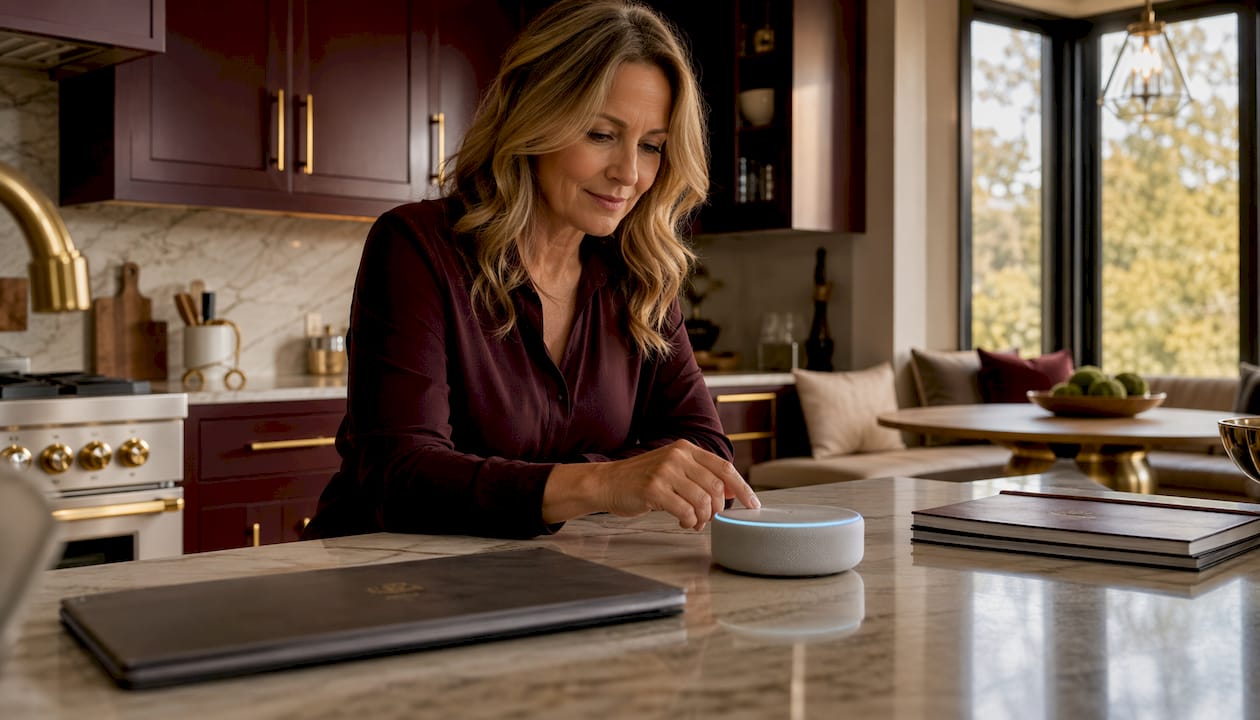
The short answer: a smart hub, a smart thermostat, connected lighting, a video doorbell, a smart lock, and at least one smart plug. Those six categories cover the majority of what transforms a house into a genuinely responsive home. Smart speakers act as central command hubs controlling lights, locks, thermostats, and more through Alexa, Google Assistant, or Siri, making the hub your first and most consequential purchase.
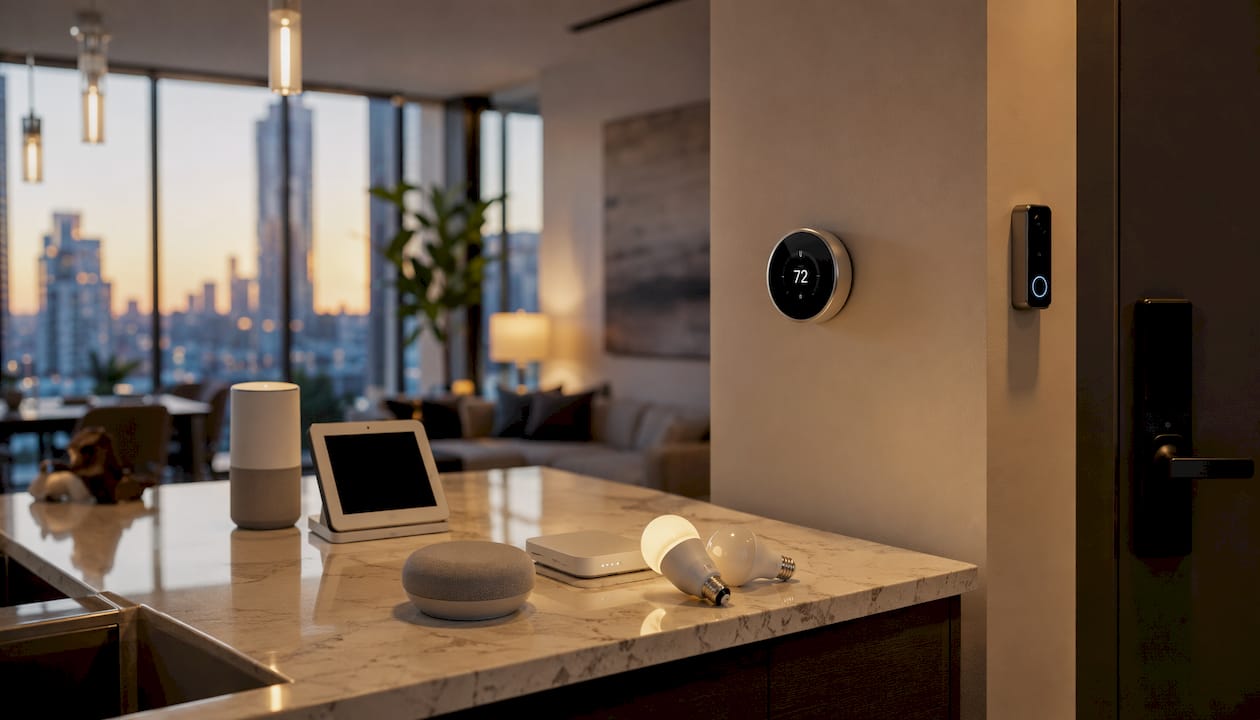
Here is a snapshot of the core categories, with standout products and what you can expect to spend:
| Device Category | Top Product Examples | Key Features | Compatibility / Ecosystem | Approx. Price Range |
|---|---|---|---|---|
| Smart Hub / Display | Amazon Echo Show 8, Google Nest Hub | Touchscreen, Thread border router, voice control | Alexa / Google Home / Matter | $130–$249 |
| Smart Thermostat | Ecobee SmartThermostat, Nest Thermostat | Remote sensors, scheduling, energy reporting | Matter, Google, Alexa | $130–$249 |
| Smart Lighting | Philips Hue | Color scenes, schedules, voice control | Alexa, Google, HomeKit, Matter | $8–$249 |
| Smart Security | Ring Video Doorbell, August Smart Lock | Motion alerts, keyless access, two-way audio | Alexa, HomeKit, Google | $130–$249 |
| Smart Plugs | Various (TP-Link Tapo, IKEA GRILLPLATS) | Remote on/off, scheduling, energy monitoring | Matter, Alexa, Google, HomeKit | $8–$25 |
| Smart Kitchen | Tovala Smart Oven, Dreo ChefMaker Combi Fryer | App-controlled cooking, scan-to-cook | Wi-Fi, app-based | $130–$249 |
| Smart Curtains | MOES Smart Curtain System | Motorized, app and voice control, schedules | Alexa, Google, Tuya | — |
| Smart Speaker | Apple HomePod, Amazon Echo | High-fidelity audio, Siri / Alexa, HomeKit | HomeKit / Alexa / Matter | $130–$249 |
- Hub first: your ecosystem choice shapes every purchase that follows.
- Matter-certified devices work across Apple, Google, and Amazon simultaneously, future-proofing your investment.
- Thread border routers (built into Echo Show 8, Nest Hub 2nd gen, HomePod mini) are the backbone of low-power mesh connectivity.
Which smart home hub should you choose?
Selecting a smart home assistant early avoids compatibility headaches later. The three dominant hubs each serve a distinct type of homeowner.
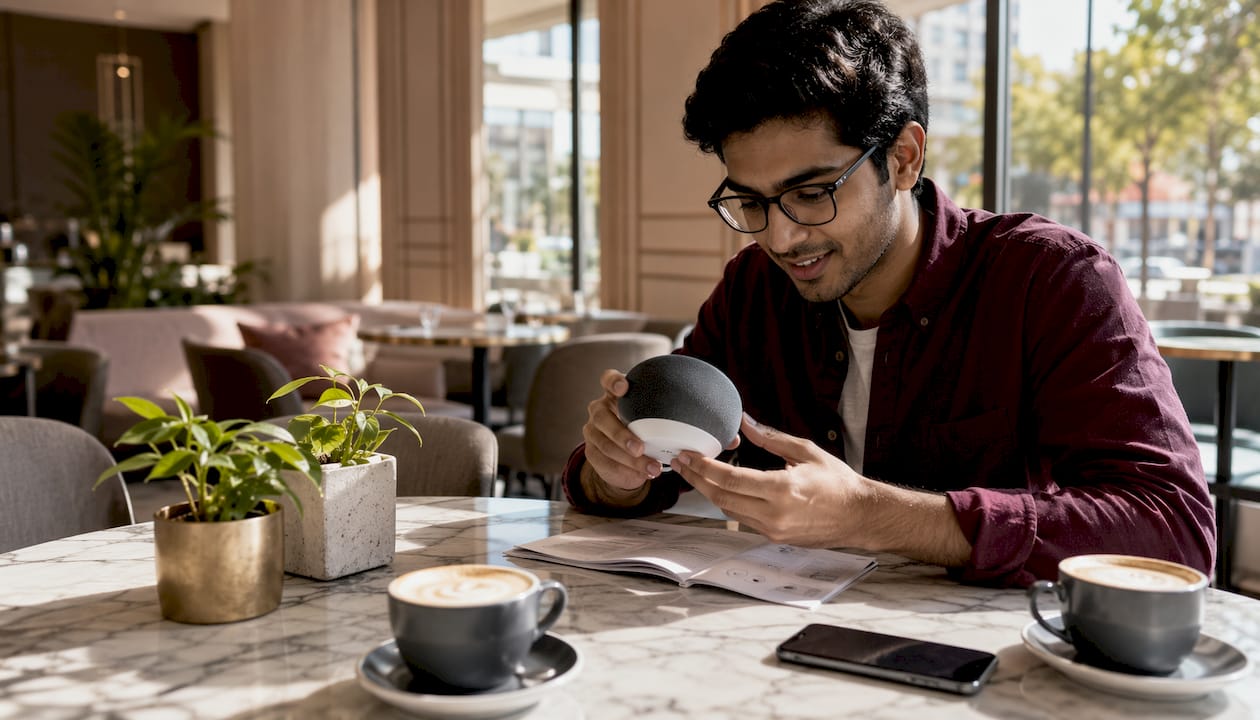
The Amazon Echo Show 8 (4th Gen, 2025) is the most versatile pick for mixed-brand homes. Its built-in Thread border router, updated AI capabilities, and touchscreen make it a genuine command center. Alexa’s device compatibility spans a vast range of products, the widest of any platform, so you will rarely hit a “not compatible” wall regardless of which brands you favor.
Google Nest Hub suits Android households and anyone already using Google services. The 2nd-gen model includes a Thread border router, a 7-inch ambient display, and Google Assistant’s best-in-class natural language understanding. It doubles as a sleep tracker using radar, with no camera required.
Apple HomePod is the premium audio and privacy choice. Apple built HomeKit with end-to-end encryption and local processing as core design principles, not afterthoughts. Commands go directly to your devices over your home network rather than bouncing through remote servers, which cuts latency and limits data exposure. The tradeoff is a smaller third-party device catalog than Alexa or Google Home.
- Echo Show 8: best for mixed-brand flexibility and Alexa routines
- Google Nest Hub: best for Google ecosystem and voice accuracy
- Apple HomePod: best for privacy, premium audio, and Apple households
How smart thermostats cut your energy costs
Smart thermostats enable remote control, scheduling, and automation that lower heating and cooling costs. The savings depend on how well you configure occupancy-based routines. A thermostat set to “away” mode while you are at work every day does more work than any hardware spec.
The Ecobee SmartThermostat Premium ($249) is the top pick for larger homes. It ships with a wireless room sensor, built-in air quality monitoring, and native Matter support. Ecobee’s SmartSensor system lets you prioritize comfort in specific rooms rather than conditioning your entire house based on a single hallway reading. For a deeper look at setup and scheduling, Mytotaltake’s smart thermostat guide covers the full configuration process.
The Nest Thermostat ($130) is the entry-level answer for Google ecosystem users. It learns your schedule within roughly a week and adjusts automatically. The design is genuinely sleek, and the Google Home integration is as tight as you would expect from a first-party product.
- Both models support remote control via smartphone app
- Occupancy-based scheduling delivers the greatest efficiency gains
- Matter compatibility on Ecobee means it works across all major platforms
What Philips Hue and smart lighting actually do for your home
Smart lighting is the category where the gap between a “connected” home and a truly automated one becomes obvious. Philips Hue remains the benchmark: an extensive bulb selection, reliable app control, and compatibility with Alexa, Google Home, Apple HomeKit, and Matter. You can set color scenes that shift from cool daylight in the morning to warm amber in the evening, all on a schedule that runs without any manual input.
The practical wins go beyond ambiance. Lights that turn off automatically when a room is empty, or that flash red when a doorbell rings, are the kind of integrations that make the whole system feel cohesive. Philips Hue’s smart home aesthetics potential is well-documented: the right lighting scene changes the perceived character of a room more than almost any other single adjustment.
- Voice control via Alexa, Siri, or Google Assistant
- Scheduling and geofencing for automatic on/off
- Color temperature control for circadian rhythm support
- Wide bulb selection from standard A19 to recessed and outdoor
Ring Video Doorbell and August Smart Lock: security that earns its keep
The front door is the most logical starting point for home security. The Ring Video Doorbell delivers motion-triggered alerts, two-way audio, and real-time video to your phone, with optional professional monitoring available through Ring Protect plans. It integrates directly with Alexa, so an Echo device can announce visitors and display the camera feed on a Show screen.
Smart locks provide keyless access and improved security through fingerprint, keypad, and app controls. The August Smart Lock adds app-based remote access and Apple HomeKit support, letting you grant temporary access to guests or service providers without cutting a physical key. For renters or homeowners who want a broader comparison, Mytotaltake’s smart lock rankings cover nine options across different budgets and access methods.
- Ring: motion detection, two-way audio, optional 24/7 monitoring
- August: fingerprint, keypad, app, and HomeKit access in one device
- Both integrate with major voice assistant platforms
Smart plugs: the fastest way to automate what you already own
Smart plugs transform non-smart appliances into remotely controllable devices through a simple outlet adapter. Plug your coffee maker in, set a morning schedule, and it brews before your alarm finishes. That is the entire pitch, and it works exactly as described.
Matter-certified options like the TP-Link Tapo P125M (three-pack for $25) and the IKEA GRILLPLATS ($8 each) work with Alexa, Google Home, and Apple HomeKit simultaneously. Thread-based smart plugs also serve as mesh relay nodes, strengthening your Thread network every time you add one. At $8–$15 per plug, they offer the best cost-to-usefulness ratio in the smart home category.
- No wiring required: plug in and configure via app in under five minutes
- Schedule any appliance: lamps, fans, coffee makers, space heaters
- Energy monitoring models track consumption per device
- Thread-based plugs double as mesh routers for other Thread devices
Tovala Smart Oven and Dreo ChefMaker: the connected kitchen
Connected kitchen appliances like the Tovala Smart Oven and Dreo ChefMaker Combi Fryer bring app-controlled cooking and smart presets to the modern kitchen. The Tovala’s scanner technology reads a meal’s barcode and automatically sets the correct time, temperature, and cooking mode. No guesswork, no manual adjustments.
The Dreo ChefMaker Combi Fryer takes a different approach: app-controlled cooking presets and a multi-function design that handles air frying, roasting, and steaming in one compact unit. Both appliances connect via Wi-Fi and work with companion apps for recipe management and remote monitoring. For homeowners who want the kitchen to feel as considered as the rest of the house, the MOES Smart Curtain System rounds out the picture, adding motorized window treatments with app and voice control that integrate with Alexa, Google, and Tuya-based platforms.
- Tovala: scan-to-cook technology, automatic settings, app control
- Dreo ChefMaker: multi-function cooking, app presets, efficient footprint
- MOES: motorized curtains, customizable schedules, major platform support
How to choose devices: compatibility, security, and privacy
Ecosystem choice is the single decision that shapes everything else. Matter and Thread are the protocols that make cross-platform compatibility real: a Matter-certified device works with Apple, Google, Amazon, and Samsung simultaneously. Thread is a separate low-power mesh protocol for battery-powered devices like sensors and locks. It requires a Thread border router to connect to your IP network. The Amazon Echo Show 8, Google Nest Hub (2nd gen), and Apple HomePod all include built-in Thread border routers.
Securing your router is the foundation of smart home security. The FTC recommends changing default router credentials, enabling encryption, using two-factor authentication, and updating device firmware regularly. Every connected device in your home is only as secure as the router it connects through. Prioritize devices with a clear, ongoing firmware update path; abandoned hardware with no security patches becomes a vulnerability over time.
Voice assistants store recordings and can activate on misheard wake words. The FTC advises using physical mute controls, reviewing privacy settings, and enabling multi-factor authentication on voice assistant accounts. Check whether human audio review is enabled in your assistant’s privacy policy and opt out if you prefer.
- Verify Matter certification before purchasing any new device
- Separate IoT devices onto a dedicated 2.4 GHz network to reduce congestion
- Change all default usernames and passwords on setup
- Disable remote management features you do not actively use
Pro Tip: Deploy mains-powered Thread devices (smart plugs, always-on bulbs) throughout your home before adding battery-powered sensors. Each powered device acts as a relay node, and a well-distributed mesh prevents the dead-zone connectivity problems that plague single-router Thread setups.
Why your Wi-Fi network is as important as your devices
A smart home is only as reliable as the network underneath it. Most smart home devices operate on the 2.4 GHz band, and a congested network produces the lag and drop-outs that make automation feel unreliable. The fix is straightforward: separate IoT devices onto a dedicated 2.4 GHz network and keep your 5 GHz band clear for streaming and work.
Wi-Fi 6 mesh systems handle the concurrent connection load that a fully equipped smart home demands. Eero, Google Nest WiFi Pro, and similar mesh routers distribute coverage evenly and, in several models, include built-in Thread border routers. That combination of Wi-Fi mesh and Thread border routing in a single device simplifies the network architecture considerably. Thread devices form their own self-healing mesh on top of your Wi-Fi, so adding more Thread devices actually improves network reliability rather than straining it.
Smart entertainment: Apple HomePod, Amazon Echo, and Klipsch
The living room is where audio quality becomes a genuine differentiator. Apple HomePod delivers high-fidelity sound with spatial audio, Siri integration, and HomeKit control, making it the natural anchor for Apple households who want premium performance without a separate receiver. Amazon Echo covers the Alexa ecosystem with a range of form factors from the compact Echo Dot to the Echo Studio, which supports spatial audio and can pair with a second unit for stereo or home theater sound.
For homeowners who want audiophile-grade performance, Klipsch brings distinguished craftsmanship and speaker engineering to the smart home. Klipsch systems pair with smart amplifiers and streaming platforms, delivering the kind of sound quality that justifies the investment in a well-appointed listening room. Smart TVs from Samsung, LG, and Sony complete the picture, with built-in voice assistant support and Matter compatibility arriving on newer models. Explore how technology integrates with luxury home design for a broader perspective on entertainment and aesthetics.
Home automation scenarios that actually change how you live
Automation routines are where individual devices become a system. A “good morning” routine can raise the thermostat, turn on kitchen lights at 50% brightness, and start the coffee maker, all triggered by a single voice command or a scheduled time. A “leaving home” routine locks the front door, sets the thermostat to away mode, and turns off every light in the house.
Presence-based lighting is one of the most practical applications: a motion sensor detects arrival in a room and turns on the lights, then turns them off after ten minutes of inactivity. Energy management routines use smart plugs with power monitoring to trigger actions when an appliance finishes a cycle. For a full breakdown of what is possible in 2026, Mytotaltake’s home automation trends guide covers the scenarios that deliver the most consistent value.
What does a smart home upgrade actually cost?
Budget planning starts with the hub, which sets the ecosystem and shapes every subsequent purchase. A functional smart home covering voice control, automated lighting, a smart plug, and a thermostat can be assembled for under $250 with entry-level hardware. A premium setup with a high-end hub, Ecobee thermostat, Philips Hue lighting throughout, Ring doorbell, and August lock runs $700–$1,000 before installation.
The Ecobee SmartThermostat Premium at $249 and the Nest Thermostat at $130 represent the two main thermostat tiers. Smart plugs are available at affordable prices. Philips Hue bulbs include options from basic white lighting to more advanced color kits. Ring Video Doorbell models vary in price according to resolution and features. For guidance on where to invest for lasting quality, Mytotaltake’s premium gadget investment guide is worth reading before committing to a full setup.
Mytotaltake: curated luxury tech for the discerning homeowner
Mytotaltake curates premium smart home technology alongside luxury furniture and high-end home decor, specifically for homeowners who want their technology to match the quality of everything else in their home. The difference between a smart home and a refined smart home often comes down to the objects themselves: how they look on a shelf, how they feel in hand, and whether they hold their value over time.

Mytotaltake’s collections are selected for craftsmanship, design integrity, and long-term durability, not just spec sheets. Whether you are outfitting a primary residence or a second home, the platform offers fast delivery, free returns, and a curated edit that filters out the noise. For homeowners who want technology that earns its place aesthetically as well as functionally, Mytotaltake is the destination worth bookmarking.
Key Takeaways
The most effective smart home in 2026 is built on a clear ecosystem choice, Matter-certified devices, and a secured network foundation.
| Point | Details |
|---|---|
| Start with your hub | Choose Amazon Echo Show 8, Google Nest Hub, or Apple HomePod based on your existing ecosystem before buying anything else. |
| Matter certification future-proofs your investment | Matter-certified devices work across Apple, Google, and Amazon simultaneously, so platform switches do not strand your hardware. |
| Thermostats deliver the clearest return | Ecobee SmartThermostat Premium ($249) and Nest Thermostat ($130) pay back their cost through occupancy-based scheduling and energy savings. |
| Network security is non-optional | Change default router credentials, enable encryption, update firmware regularly, and separate IoT devices onto a dedicated 2.4 GHz network. |
| Mytotaltake for premium integration | Mytotaltake curates smart home technology alongside luxury home decor for homeowners who want quality and aesthetics in equal measure. |










Leave a comment