
Defining Timeless Design: Principles for Lasting Elegance

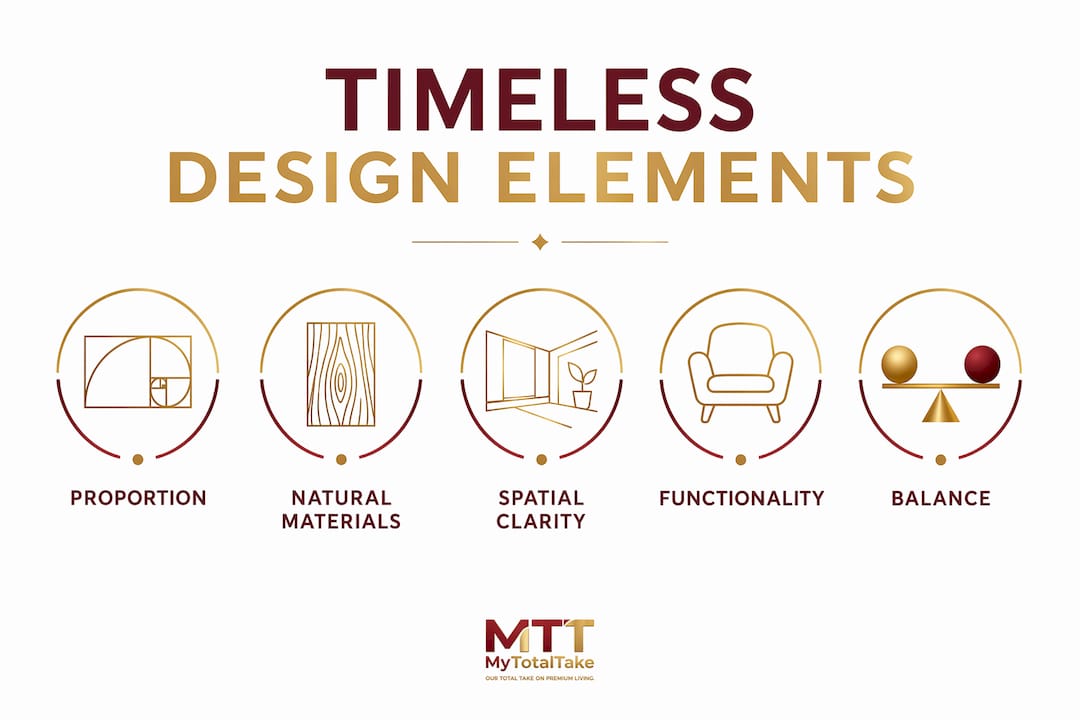
Timeless design is defined as a design quality, not a style, built on balanced proportions, high-quality natural materials, spatial logic, and functional clarity that together create enduring, elegant living spaces. Defining timeless design correctly matters because most homeowners confuse it with a specific aesthetic, like mid-century modern or traditional Georgian, when the real goal is creating spaces that resist fleeting trends and remain beautiful for decades. The principles behind lasting interiors are grounded in spatial relationships, material behavior, and how people actually live. Get those right, and your home will not need reinvention every ten years.
What are the key principles of timeless design?
Timeless design rests on seven core principles: balance, proportion, rhythm, emphasis, unity, contrast, and functionality. Together, these prevent a space from feeling dated, regardless of when it was designed. Each principle addresses a different layer of how a room is perceived and used.
Here is what each principle delivers in practice:
- Balance distributes visual weight evenly across a room, so no single element dominates or feels out of place.
- Proportion governs the size relationships between furniture, architecture, and open space. A sofa that is too large for a room will always look wrong, no matter how expensive it is.
- Rhythm creates visual flow through repeated elements, like a series of windows or a consistent material palette, that guide the eye naturally through a space.
- Emphasis establishes a focal point, such as a fireplace or a statement piece of art, that anchors the room’s identity without relying on trend-driven choices.
- Unity ties all elements together through a coherent material, color, or tonal story so the room reads as intentional rather than assembled.
- Contrast adds depth and prevents monotony. A room with no contrast feels flat; one with too much feels chaotic.
- Functionality ensures the space works for the people living in it. A beautiful room that fails to function will always feel wrong, no matter how well-proportioned it is.
These principles are not decorating rules. They are the structural logic behind why certain rooms feel right the moment you walk in, and still feel right twenty years later.
Pro Tip: Before purchasing any major furniture piece, sketch the room to scale. Proportion errors are the most common reason well-budgeted interiors feel off, and they are nearly impossible to fix after the fact.
How do material choices impact timeless design?
Material selection is where timeless design either holds or fails over time. Natural materials like stone and hardwood age gracefully, developing character rather than deteriorating. Engineered alternatives, by contrast, tend to degrade faster and rarely improve with age.
The key distinction is between materials that patina and materials that wear out. A marble countertop develops a subtle history of use that adds depth. A laminate surface simply shows damage. This is not snobbery. It is material science applied to interior longevity.
- Invest in natural stone for fixed surfaces. Limestone, travertine, and marble are proven performers across centuries of architecture. They absorb light differently as they age, which keeps them visually interesting.
- Choose solid hardwood over engineered alternatives for flooring. Solid hardwood can be refinished multiple times. Most engineered products cannot, which limits their lifespan significantly.
- Select hardware in brass, bronze, or stainless steel. These metals age predictably and can be polished or left to develop a patina, both of which read as intentional.
- Avoid trend-driven fixed surfaces. Over-specifying distinctive fixed surfaces limits flexibility. Reserve bold designs for replaceable elements like paint, cushions, and accessories, where change is low-cost.
“Quality of craftsmanship often outlasts style specificity. Well-executed simple cabinetry ages better than stylistically trendy pieces because durable joinery and construction techniques are the real measure of longevity.”
This insight reframes how you should evaluate any major purchase. Ask not whether a piece is fashionable, but whether it is well-made. A designer piece with lasting qualities will outlast a trendy one by decades, regardless of which style was popular at the time of purchase.
Why are proportion and spatial clarity critical for lasting design?
Proportion is the single most powerful tool in timeless interior design. Rooms with correct proportional relationships last over 20 years without requiring renovation, while rooms that lack proportional logic typically need intervention within 10 years. That gap represents a significant financial and emotional cost.
Spatial clarity means that the layout of a room serves its function without confusion. Traffic flows naturally. Furniture does not block light. Storage is integrated rather than added as an afterthought. These qualities are invisible when done well and glaring when done poorly.
| Spatial element | Why it matters for longevity |
|---|---|
| Ceiling height to room volume ratio | Rooms feel oppressive or cavernous when this ratio is wrong, regardless of decor |
| Furniture scale relative to floor area | Oversized furniture shrinks a room visually; undersized furniture makes it feel sparse |
| Window placement and natural light | Fixed light sources define how a room feels at every hour of the day |
| Traffic flow and clearance | Poor circulation creates daily friction that erodes satisfaction with a space |
Spatial planning deserves the majority of your design budget and attention, well ahead of finish selection. Investing in floor plans and millwork over surface finishes is the single most reliable way to protect the long-term value of an interior.
Pro Tip: When evaluating a room’s proportions, stand at the entry point and look straight ahead. If your eye has nowhere natural to land, the room lacks emphasis. If it feels crowded before you enter, the furniture scale is wrong.
How does functionality and flexibility contribute to a timeless home?
A room that looks perfect but functions poorly will never feel timeless. Authentic design for how clients actually live, rather than how they imagine they might live, produces longer-lasting satisfaction and usability. Designing for aspirational appearances is the most common mistake homeowners make when renovating.
Functionality in timeless design covers several practical layers:
- Storage integrated at the architectural phase prevents the clutter that deteriorates interiors over time. Built-in millwork and appropriately sized closets maintain interior order without requiring ongoing effort from the occupants.
- Layered lighting infrastructure with multiple zones and dimming provisions allows a room to shift from daytime work to evening entertaining without structural changes. Flexible lighting with dimming zones is one of the most cost-effective investments in long-term adaptability.
- Neutral foundational finishes on walls, floors, and large upholstered pieces allow the room to absorb changing accessories and art without requiring a full redesign.
- Furniture that serves multiple functions extends the usable life of a room as household needs evolve. A dining table that doubles as a workspace, or a guest room that functions as a study, reflects real-life flexibility rather than rigid room assignments.
Homes designed for evolution and occupant flexibility are the most successful over time. This is not about designing for every possible future. It is about avoiding decisions that lock a space into a single use or a single era.
How can homeowners apply timeless design principles personally?
Timeless design is not a universal formula. The real goal is finding your personal brand of timeless design, which means identifying the aesthetic and functional qualities that will satisfy you for decades, not just seasons. Designers achieve this by asking lifestyle questions before making any material or spatial decisions.
Here is a practical process for applying these principles to your own home:
- Identify your non-negotiables. Write down the three qualities your home must have to feel right to you. These might be warmth, light, quiet, or a connection to nature. Every design decision should serve at least one of these qualities.
- Separate permanent from rotatable elements. Floors, built-ins, and structural finishes are permanent. Art, cushions, rugs, and paint are rotatable. Invest the majority of your budget in permanent elements and keep rotatable elements affordable enough to change without guilt.
- Test every major decision against a ten-year question. Ask yourself: “Will I still want this in ten years?” If the honest answer is uncertain, choose the simpler option. Simplicity ages better than specificity in almost every case.
- Build a neutral foundation, then add personal accents. A warm white wall, a natural wood floor, and a linen sofa give you a canvas that absorbs almost any accent color or decorative style. Start there, then layer in personality through premium home decor that reflects your taste rather than the current trend cycle.
The homeowners who are most satisfied with their interiors over time are those who designed for their actual daily life, not for the version of their life they hoped to have. That distinction is the practical heart of timeless design.
Key takeaways
Timeless design succeeds when proportion, natural materials, spatial clarity, and authentic functionality work together as a unified system rather than as separate decorating choices.
| Point | Details |
|---|---|
| Proportion drives longevity | Rooms with correct proportional relationships last over 20 years; those without typically need renovation within 10. |
| Natural materials age better | Stone, hardwood, and quality metals develop character over time; engineered alternatives degrade and limit refinishing options. |
| Invest in permanent elements | Allocate the majority of your budget to spatial planning and millwork, not surface finishes or trend-driven accessories. |
| Functionality prevents obsolescence | Storage integrated at the architectural phase and layered lighting infrastructure keep a space usable as life evolves. |
| Timeless design is personal | Finding your own brand of timeless design, grounded in how you actually live, produces lasting satisfaction that no formula can replicate. |
Why timeless design is the most honest investment you can make
Most design advice treats timeless as a style category, something beige and safe and slightly boring. That framing is wrong, and it leads homeowners into expensive mistakes. Timeless design is not about avoiding personality. It is about building a structure strong enough to hold personality without being defined by it.
I have seen beautifully proportioned rooms that were filled with bold, personal choices, and they still felt timeless twenty years later. I have also seen rooms with every “classic” finish imaginable that felt dated within five years because the spatial logic was wrong. The bones matter more than the surface. Every time.
The misconception I encounter most often is that timeless design means playing it safe. The opposite is true. Committing to quality materials, correct proportion, and authentic functionality requires more confidence than following a trend. Trends give you permission. Timeless design requires conviction.
My practical advice: spend more time on your floor plan than on your finish board. Get the spatial relationships right before you choose a single tile or fabric. And when you are tempted by a distinctive fixed surface because it looks extraordinary in a showroom, ask yourself whether you want to live with that level of specificity for the next fifteen years. If the answer is yes, proceed. If there is any doubt, reserve that boldness for something you can change.
— Lysander
Timeless style, curated for discerning homeowners
Mytotaltake brings together the products and guidance that support lasting, elegant interiors. Whether you are selecting upscale products that last or refining your approach to material quality and furniture scale, the Mytotaltake collection is built around the same principles covered here: craftsmanship, proportion, and enduring appeal.

For homeowners who want to go deeper, the Mytotaltake guide to luxury furniture that earns its place applies these principles directly to furniture selection, helping you identify pieces that will anchor your home for decades rather than seasons. Every product in the Mytotaltake catalog is chosen with longevity and quality in mind, because a well-designed home deserves furnishings that meet the same standard.
FAQ
What is timeless design in simple terms?
Timeless design is a design quality, not a style, defined by balanced proportions, natural materials, spatial clarity, and functional planning that keep a space elegant and relevant across decades.
What are the core elements of timeless design?
The seven core elements are balance, proportion, rhythm, emphasis, unity, contrast, and functionality. Together, these create a framework that prevents a space from feeling dated.
How do I avoid trendy design mistakes?
Reserve distinctive choices for replaceable elements like paint, cushions, and accessories. Keep fixed surfaces, floors, and built-ins in neutral, high-quality materials that age gracefully rather than go out of fashion.
Does timeless design mean avoiding all trends?
No. Timeless design means being intentional about where trends appear. Trends work well in rotatable elements; they become costly when applied to permanent structural finishes.
How long should a well-designed room last without renovation?
Rooms with correct proportional relationships and quality materials last over 20 years without requiring structural renovation, compared to trend-driven interiors that typically need updating within 10 years.







Leave a comment