
Fire Pit vs Chiminea for Elevated Patio Living
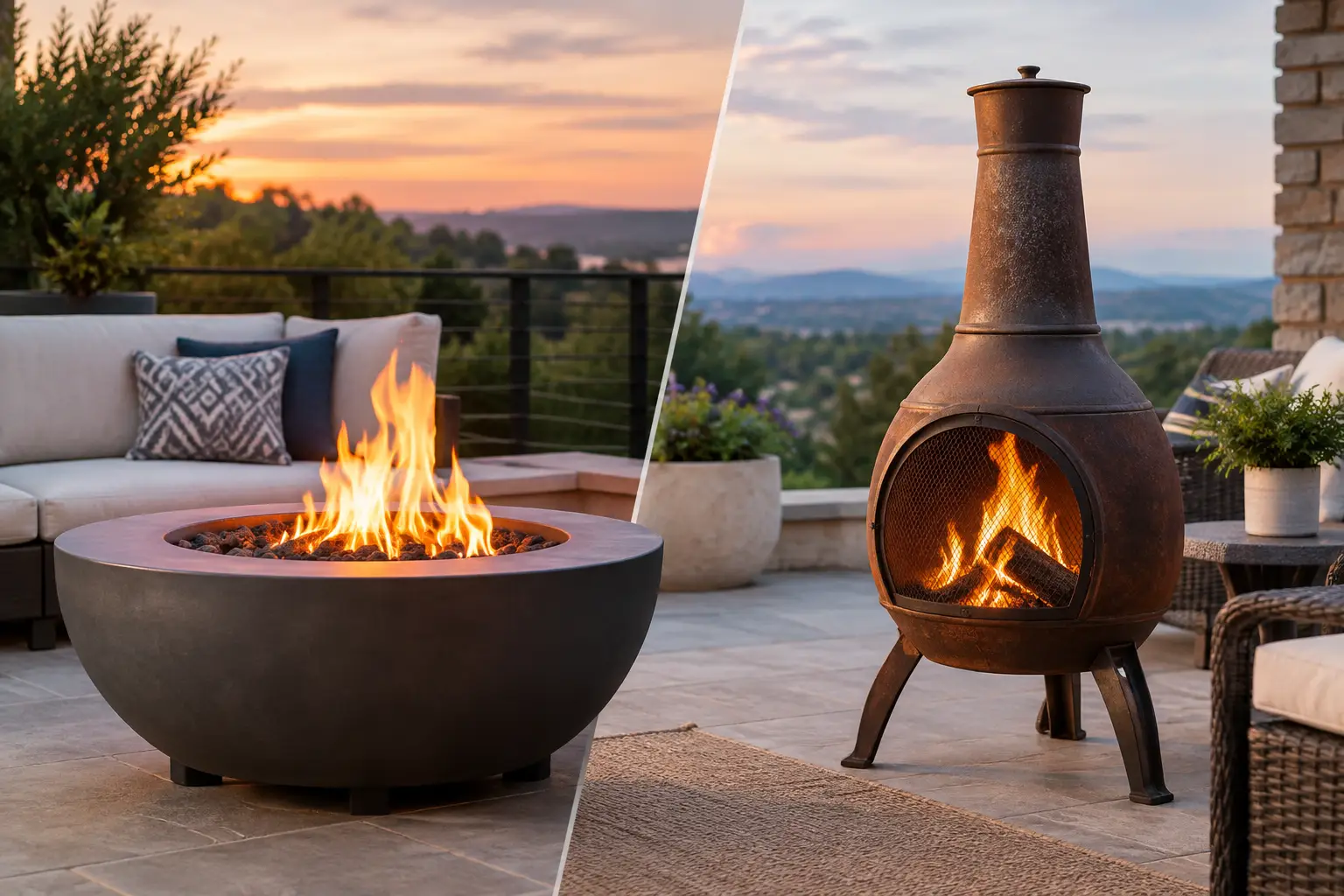
A crisp evening can make even the most polished patio feel unfinished if there is nowhere to gather once the sun drops. The choice between a fire pit vs chiminea shapes more than your heat source. It influences the view from your lounge seating, how comfortably guests can sit, how much smoke follows the conversation, and whether your outdoor space feels open and social or tucked into a private retreat.
Both can become a striking focal point in a design-forward backyard. The better choice comes down to how you entertain, how much space you have, and what you want your fire feature to do beyond looking exquisite.
Fire Pit vs Chiminea: The Essential Difference
A fire pit is designed around an open flame. It is typically low and broad, with seating arranged in a circle so everyone can see, feel, and participate in the fire. Traditional wood-burning models offer the familiar crackle and glow, while propane and natural gas fire pits add instant ignition and a cleaner, more controlled experience.
A chiminea is a freestanding, front-loading fireplace with a rounded fire chamber and a tall chimney. Originally made from clay, modern versions are also crafted from cast aluminum, cast iron, or steel. Its enclosed shape directs heat forward through the opening and sends much of the smoke upward through the chimney.
That structural difference matters. A fire pit creates a shared centerpiece with heat radiating outward in all directions. A chiminea creates a more contained flame and a concentrated pocket of warmth in front of it. One invites a group to gather around. The other rewards a smaller, more intimate arrangement.
Choose a Fire Pit for Social Evenings and Flexible Style
For homeowners who picture long dinners turning into late-night conversation, a fire pit is usually the natural fit. Its 360-degree design lets several guests gather comfortably, and it pairs beautifully with sectional seating, Adirondack chairs, deep-cushion loungers, or a refined outdoor dining setup.
The visual range is also expansive. A matte black steel bowl can give a contemporary terrace an architectural edge. A stone-clad gas fire table can anchor a resort-inspired lounge area. A sculptural concrete fire pit works particularly well beside clean-lined furniture and neutral outdoor textiles, offering the warmth of a flame without interrupting a minimalist aesthetic.
Heat distribution is the fire pit’s great advantage for entertaining. Everyone around the perimeter receives some warmth, especially with a wide-bowl design. A wood-burning model often produces more heat than a chiminea, though it also requires room for firewood, ash cleanup, and a little more attention throughout the evening.
Gas fire pits offer a different kind of luxury: convenience. There is no kindling, no smoke-stained jackets, and no waiting for logs to catch. With the turn of a dial or push of an igniter, the patio is ready for guests. They are particularly appealing for urban homes, polished deck spaces, and anyone who wants ambiance on a weeknight without a full fire-building ritual.
The trade-off is exposure. An open fire pit is more affected by wind, and smoke can shift unexpectedly with a breeze. It also needs a larger safety zone, particularly around children, pets, drapery, umbrellas, and landscaped edges. A spark screen helps with wood-burning pits, but the fire remains open by design.
Choose a Chiminea for Focused Warmth and Lower Smoke
A chiminea is an elegant answer for a compact patio, quiet side yard, or private corner where two to four people tend to gather. Because its fire chamber is enclosed on the sides and back, it often feels more contained than a traditional fire pit. The chimney pulls smoke upward, which can make the experience noticeably more comfortable when the unit is positioned well.
This does not mean a chiminea is smoke-free. Wet wood, poor airflow, or a gusty location can still create smoke. Yet compared with an open wood fire, its design does a better job of directing the smoke away from seated guests. For buyers who love the authenticity of burning wood but dislike constantly changing seats to escape the smoke, that is a meaningful advantage.
Chimineas also bring distinctive character. A handcrafted clay piece complements Mediterranean-inspired gardens, terracotta planters, and organic outdoor materials. Cast aluminum and steel versions can feel more tailored and contemporary, especially in charcoal, bronze, or black finishes. In a smaller outdoor setting, their upright silhouette gives the space a focal point without occupying the broad footprint of a fire pit.
Their limitation is heat reach. The strongest warmth comes from the front opening, so guests need to sit in that zone rather than around all sides. A chiminea is less suited to a large gathering, and its chimney can make it visually taller than expected. It should never be placed under a low roof, pergola, awning, or tree canopy.
How Space, Surface, and Layout Change the Decision
A fire feature should look intentional, not squeezed between furniture. Before choosing either option, map the seating area and leave generous clearance from the home, fences, outdoor cushions, and anything combustible. Always follow the specific manufacturer instructions and local fire regulations, which can be more restrictive than general guidance.
Fire pits need enough open area for people to circulate safely around them. A broad patio or lawn-adjacent lounge is ideal. If your outdoor room has a central conversational layout, a low fire pit or fire table can become the piece that pulls everything together.
A chiminea takes up less horizontal room, but it needs clear vertical space for the chimney and a stable, noncombustible surface. It works well at the edge of a patio, angled toward a pair of chairs, or set just beyond a dining area where it can add atmosphere without becoming the center of traffic flow.
For decks, material matters. Many wood-burning fire pits and chimineas require a heat-resistant pad or other protective base, and some may not be appropriate for a wood deck at all. Gas fire tables can be a more practical option for elevated outdoor spaces, but the installation and fuel arrangement still need careful review.
Materials and Maintenance: What Premium Ownership Looks Like
A high-end outdoor feature should age with poise, but no fire feature is entirely maintenance-free. The material you choose determines how much care it needs and how it performs through changing seasons.
Clay chimineas have artisanal appeal, but they are vulnerable to freezing temperatures, sudden temperature changes, and moisture. They often need curing before their first serious fire, should be warmed gradually, and are best stored indoors or fully protected during harsh weather. They suit buyers who appreciate natural variation and are willing to treat the piece with care.
Cast iron delivers exceptional heat retention but needs protection from rust. Steel is often lighter and more contemporary, though its finish should be maintained if it lives outdoors year-round. Cast aluminum is easier to move and resists corrosion well, making it a thoughtful choice for humid climates or patios near the coast.
For fire pits, stainless steel and powder-coated steel offer a clean, modern look, while stone, concrete, and tile surrounds create a more permanent luxury statement. Wood-burning models need ash removed once fully cool. Gas models require periodic inspection of burners, hoses, ignition systems, and fuel connections. A fitted cover is a small investment that preserves appearance and reduces seasonal cleanup.
Safety and Fuel: Details That Should Guide Every Purchase
Wood brings aroma, sound, and the unmistakable theater of a live flame. It also creates embers, ash, smoke, and more active supervision. Use dry, seasoned hardwood rather than treated lumber, construction scraps, or soft, resinous wood that can spark heavily.
Propane and natural gas offer cleaner operation and much easier control. They are ideal when convenience matters most, but they do not produce the same intense radiant heat or wood-fired character. Propane tanks must be stored and handled correctly, while natural gas installations may require a qualified professional.
Whatever you select, keep a fire extinguisher or appropriate means of extinguishing a fire nearby, never leave flames unattended, and let the unit cool completely before covering or moving it. Check local burn rules before lighting wood, especially during dry seasons or air-quality alerts.
The Best Choice for Your Outdoor Ritual
Choose a fire pit if your patio is built around hosting, expansive seating, and a shared view of the flame. It is the more versatile choice for entertaining, and a refined gas fire table can make an outdoor room feel as considered as the interior.
Choose a chiminea if you want wood-fire atmosphere with a more contained footprint, directed smoke, and warmth focused on a smaller seating zone. It brings a sense of old-world craftsmanship to gardens and intimate patios, particularly when the rest of the space favors texture, natural materials, and quiet evenings outdoors.
The most rewarding choice is the one that makes you use your patio more often. Picture the first cool night of the season, set out the chairs, and choose the fire feature that makes staying outside feel like the obvious plan.










Leave a comment