
A Guide to Choosing a Soundbar
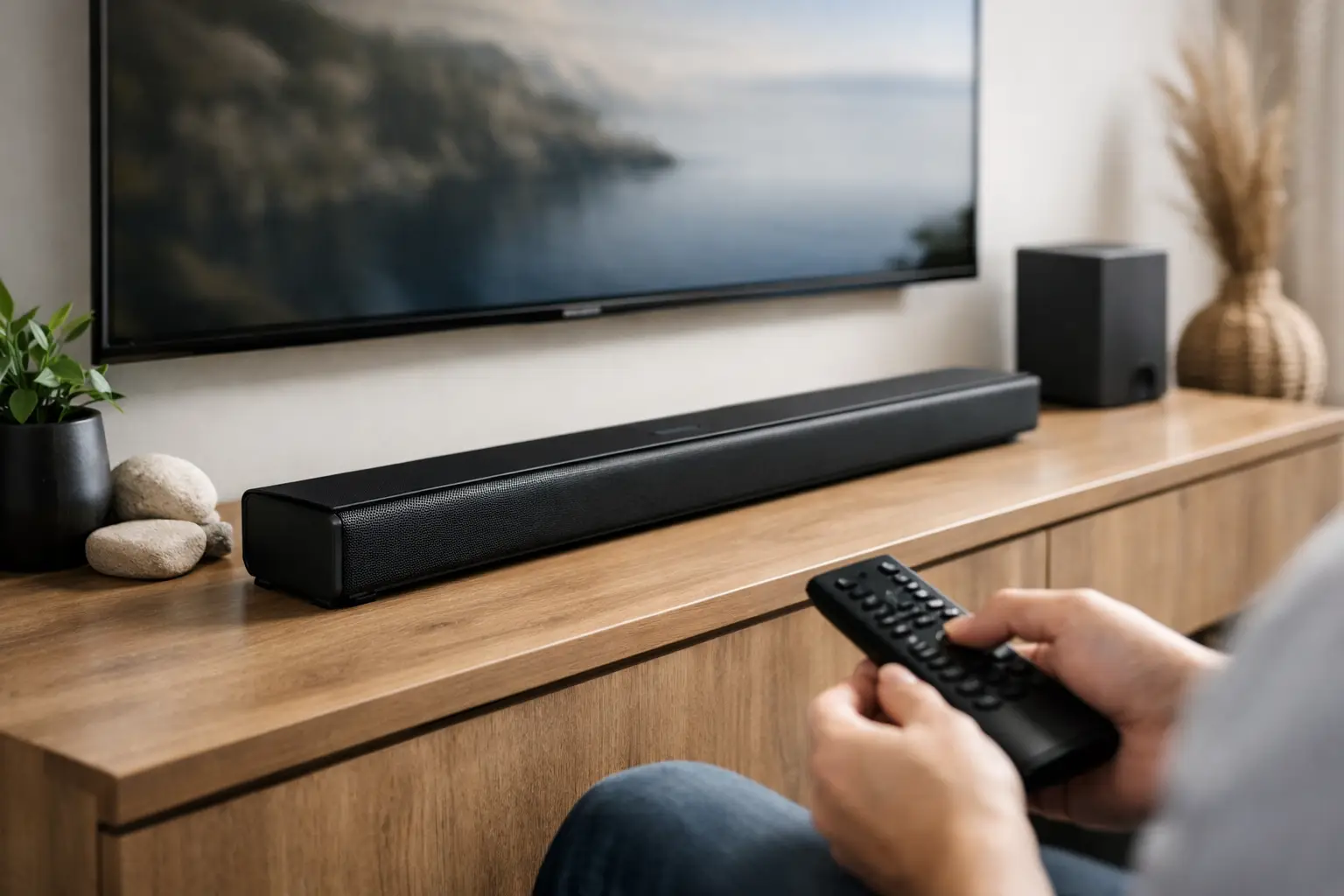
Flat-screen TVs look refined on the wall, but their audio rarely keeps pace with their design. If you want cinematic depth without filling your living room with bulky speakers and visible wires, this guide to choosing a soundbar will help you find a system that sounds elevated, fits your space, and complements the way you actually watch.
A soundbar is one of the few home upgrades that feels immediate. Dialogue becomes clearer, music gains texture, and action scenes finally carry weight. The best choice, though, is not always the biggest model or the one with the longest feature list. It depends on your room, your screen size, your aesthetic standards, and whether you want a subtle enhancement or a true home theater statement.
Why a soundbar makes sense in modern spaces
For many homes, a soundbar hits the sweet spot between performance and polish. Traditional surround setups can sound exceptional, but they ask more from the room. You need floor space, patience for setup, and a higher tolerance for cables, speaker stands, and visual clutter. A soundbar offers a more curated approach.
That matters if your TV sits in a carefully designed living room, a compact apartment lounge, or a bedroom where clean lines matter as much as sound quality. A well-chosen soundbar can disappear into the architecture of the room while delivering a noticeably fuller, more immersive experience. It is a practical upgrade, but it also feels like a design decision.
A guide to choosing a soundbar by room and use
The fastest way to narrow the field is to start with your room, not the spec sheet. A smaller den or bedroom usually does not need a large multi-piece system with aggressive bass. In a compact space, a slim all-in-one soundbar often gives you cleaner dialogue and better balance without overwhelming the room.
A medium or large living room changes the equation. Open layouts absorb sound, and larger seating areas benefit from more power and wider sound dispersion. In those spaces, a soundbar with a wireless subwoofer can add the low-end presence that makes movies feel substantial. If you host watch parties or care about a more enveloping soundstage, rear speakers may also be worth considering.
Then think about what you listen to most. If your priority is movies and prestige TV, immersive formats and strong center-channel performance matter. If you mainly stream music, tonal balance and wireless streaming options may deserve more attention. If sports dominate your weekends, crisp vocal clarity is often more valuable than thunderous bass.
Soundbar sizes and why proportion matters
A soundbar should look intentional beneath your TV. One that is too small can seem visually lost and may sound narrower than the screen suggests. One that is too large can overpower a compact media console or create an awkward fit.
As a rule, choose a bar that feels proportionate to the width of your TV and furniture. A 55-inch or 65-inch television typically pairs well with a medium to large soundbar, while smaller bedroom TVs often look better with a streamlined model. This is not just about appearance. Larger soundbars usually have more room for speaker drivers, which can improve separation and scale.
There is a trade-off, though. Bigger models may deliver more authority, but they can be excessive in intimate rooms. If your space is modest and your listening distance is short, restraint often sounds more refined.
Channels, Dolby Atmos, and what those numbers mean
Soundbar descriptions often mention channel counts such as 2.1, 3.1, or 5.1.2. These numbers can seem technical, but the basics are straightforward. The first number refers to the main channels, the second to the subwoofer, and the third, when present, to height channels used for immersive formats like Dolby Atmos.
For everyday improvement, a 2.0 or 2.1 soundbar can be enough. If clear speech is a top priority, step up to a 3.1 model. That dedicated center channel can make dialogue sound more focused and easier to follow, especially during dense action scenes or quiet dramas.
If you want a more cinematic effect, Atmos support becomes attractive. It can create a greater sense of height and space, making sound feel less confined to the screen. The result depends on the room and the soundbar design. In some rooms, Atmos is impressive. In others, it is a subtle enhancement. It is worth paying for if movies are a centerpiece of your entertainment routine, but it is not mandatory for every buyer.
Should you choose a soundbar with a subwoofer?
This is often the turning point in a buying decision. A built-in all-in-one soundbar is cleaner, simpler, and easier to place. It suits bedrooms, apartments, and minimalist interiors where every visible object matters. It also tends to be easier to live with on day one.
A separate subwoofer adds depth and impact that a slim bar usually cannot match. Bass lines feel richer, explosions carry more realism, and the whole presentation becomes more expansive. In a larger room, that added low end can make the difference between acceptable sound and genuinely satisfying sound.
The trade-off is space. Even a wireless subwoofer still needs a home, and placement affects performance. If you want the room to remain visually pristine, be honest about whether you want another box on the floor. For many buyers, the answer is yes. For others, elegance and simplicity win.
Connectivity is where convenience lives or dies
A premium setup should feel easy to use. That starts with the connection between your TV and the soundbar. HDMI eARC or ARC is usually the best option because it simplifies control and can support better audio formats than older connections. In many homes, it means your TV remote can handle volume without extra steps.
Optical connections still work, but they are less flexible. Bluetooth is useful for casual music streaming, while Wi-Fi support can offer better sound quality, multi-room features, and more stable integration with your home system. Voice assistant compatibility may matter if you already use smart home controls.
Before you buy, check your TV’s ports and your own habits. A feature-rich soundbar is less impressive if it complicates your routine. The best technology feels almost invisible once installed.
Design, placement, and the premium look
In a curated interior, performance is only half the story. Finish, silhouette, and placement all affect whether a soundbar feels like a thoughtful addition or an afterthought. Low-profile models are ideal if the bar will sit on a console and you do not want to block the lower edge of the TV. Wall-mounted setups call for careful alignment so the system feels integrated rather than tacked on.
Material quality also matters more than shoppers sometimes expect. A soundbar with clean metal detailing, refined fabric, or a minimalist matte finish will sit more comfortably in a design-forward room than a model that looks aggressively tech-heavy. This is one category where aesthetics and function truly share the stage.
Price, value, and where to spend more
You can hear the difference between entry-level and premium soundbars, but value is not about buying the most expensive model available. It is about spending where it will count in your home.
If your TV is in a secondary room and you mainly want clearer dialogue, a modest soundbar may be the smart choice. If your main living area is where you entertain, stream concerts, and settle in for movie nights, investing in stronger drivers, better processing, and a subwoofer becomes easier to justify.
It also helps to think beyond raw power. Better tuning, cleaner design, easier connectivity, and a more refined build often create a more satisfying ownership experience than loudness alone. For shoppers who want technology to feel elevated, not merely functional, those details matter.
The mistakes buyers regret most
Most soundbar disappointment comes from mismatch, not poor products. People buy too small for a large room, overbuy for a tiny space, or chase every feature without considering how they live. A complex system can disappoint if you wanted simplicity. A slim designer model can disappoint if you expected theater-level bass.
Another common mistake is ignoring dialogue performance. Shoppers often focus on bass and surround effects, then realize they still need subtitles. If everyday viewing matters as much as blockbuster nights, prioritize speech clarity.
The smartest approach is to choose for your room, your habits, and your standards for design. That is what turns a soundbar from a gadget into a meaningful upgrade.
A well-chosen soundbar does more than improve audio. It sharpens the entire experience of being at home, making movie nights richer, music more inviting, and your space feel that much more considered. Choose the one that fits your life beautifully, and you will notice the difference every time you press play.











Leave a comment