
Minimalist Luxury Interiors: 9 Inspiring Examples
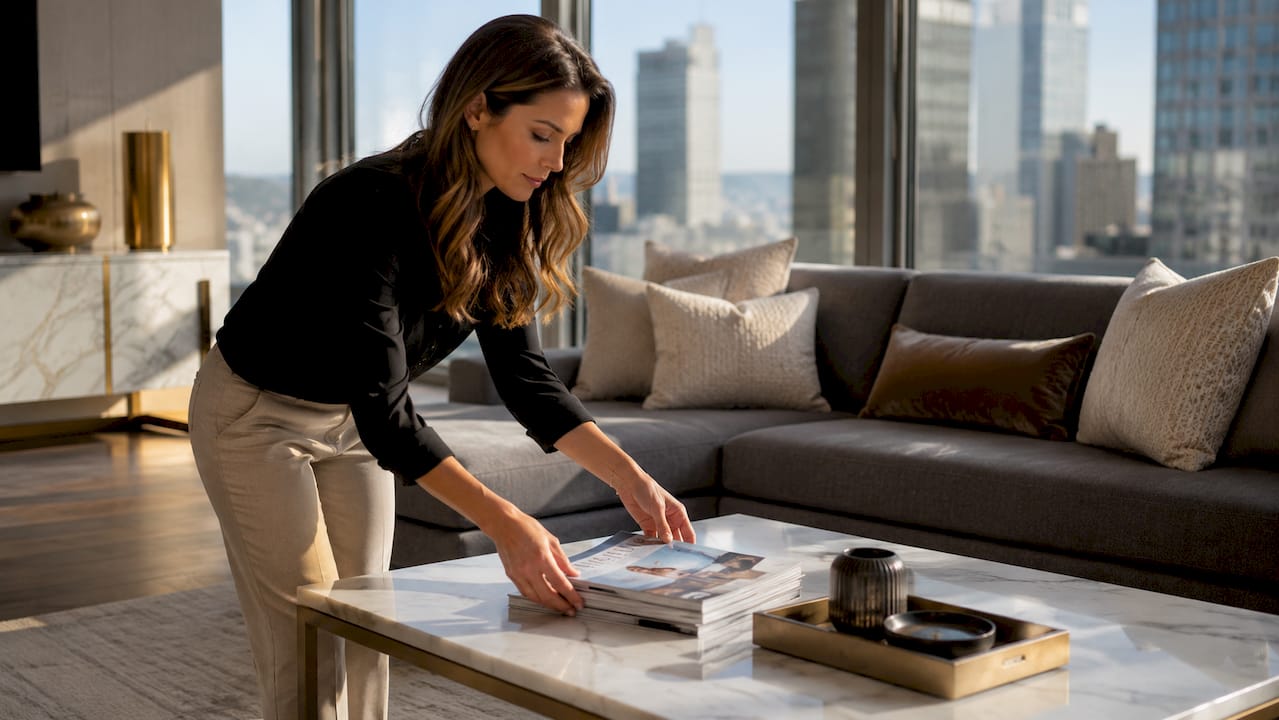
Minimalist luxury interior design is defined by the intentional use of space, quality materials, and restrained detail to create environments that feel both serene and deeply refined. Known in design circles as “quiet luxury,” this approach is favored by affluent consumers for its emphasis on authenticity and discretion over obvious brand signaling. The best examples of minimalist luxury interiors share three core pillars: architectural generosity, material authenticity, and deliberate curation. Each pillar works together to produce spaces that feel calm without feeling empty, and rich without feeling excessive. This article walks through nine real-world examples that show exactly how that balance is achieved.
1. Examples of minimalist luxury interiors with open, uninterrupted sightlines
The defining feature of a minimalist luxury interior is what you do not see. Open layouts and clean sightlines signal higher value than any decorative layer ever could. Walls are kept free of ornament. Furniture is placed to guide the eye across the room rather than interrupt it. The result is a space that reads as expansive, even when the square footage is modest.
Architectural decisions drive this effect. Doorways are widened. Thresholds between rooms are minimized or removed entirely. Built-in cabinetry sits flush with walls so storage disappears into the architecture itself.
- Eliminate visible door frames where possible by using pocket or barn-style doors
- Choose furniture with low profiles to preserve visual flow at eye level
- Keep floor finishes continuous across rooms to unify the space
Pro Tip: Run the same flooring material from the living area into the kitchen without a transition strip. That single decision makes both rooms feel larger and more cohesive.
2. Architectural generosity through light and proportion
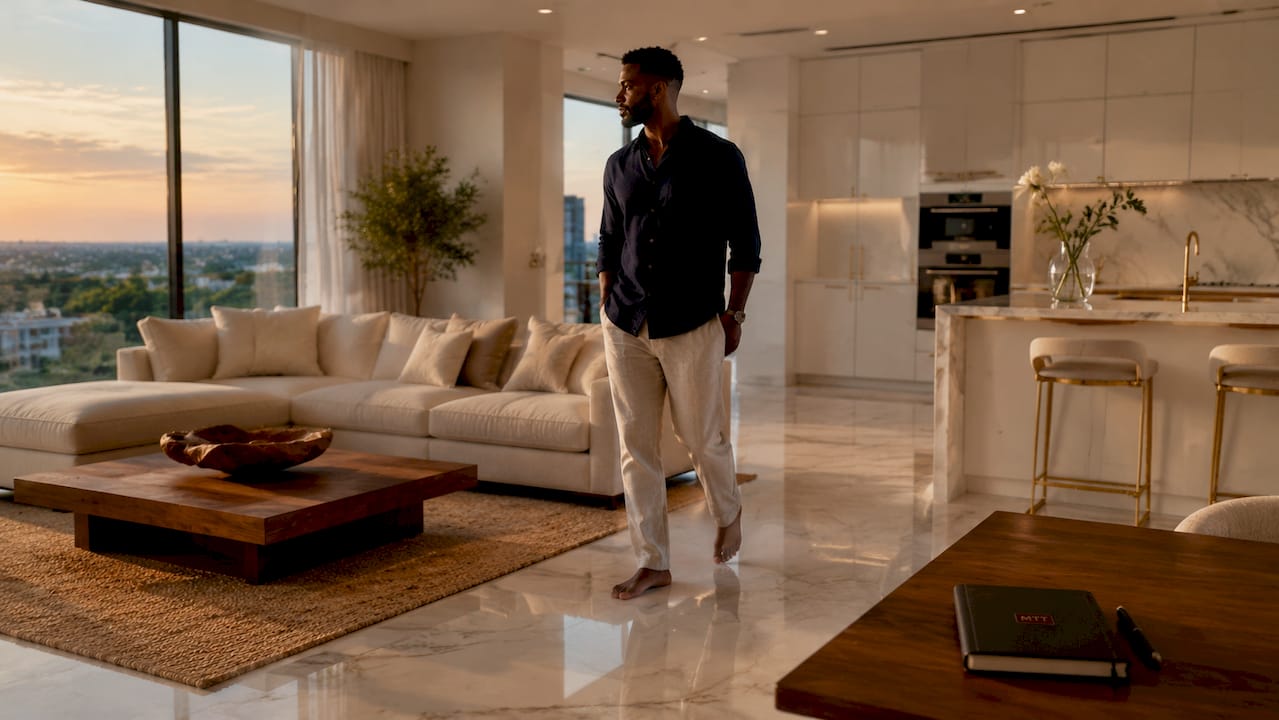
Spatial proportions and controlled light are the true measures of luxury in minimalist interiors, not square footage. A room with a nine-foot ceiling and well-placed windows will feel more luxurious than a large room with poor proportions and flat overhead lighting. This is the core principle behind what designers call “architectural generosity.”
High ceilings create a sense of breathing room. Tall windows pull natural light deep into the space. Recessed lighting replaces surface-mounted fixtures to keep ceilings clean. The goal is always to make the room feel resolved, not decorated.
Indoor-outdoor integration amplifies this effect. Glass walls or wide sliding doors that open onto a terrace extend the visual boundary of a room. The interior and exterior read as one continuous space, which multiplies the perceived scale without adding a single square foot.
3. Warm neutral palettes that add depth without clutter
Warm neutral palettes combined with layered textures provide sophistication and calm without relying on strong colors or visual noise. Beige, ivory, and soft gray are the foundation. They recede from the eye and let the architecture and materials carry the room.
A well-executed example is the “Neutral Continuum” apartment approach, where a single warm beige runs from wall plaster to upholstery fabric to stone flooring. The palette is monochromatic, but the textures shift at every surface. That contrast between color unity and material variety is what creates depth.
Texture is the secret tool in any minimalist luxury palette. Fluted wall panels catch light differently than flat plaster. A linen sofa reads differently against a wool rug. These differences create visual interest without introducing pattern or color.
- Fluted or ribbed plaster walls for soft shadow play
- Honed limestone or travertine flooring for warmth underfoot
- Linen, bouclé, or cashmere upholstery for tactile contrast
- Raw oak or walnut millwork for natural grain variation
Pro Tip: Limit your palette to three materials per room and vary only the finish, not the color family. Matte, satin, and polished versions of the same stone create a room that feels curated, not busy.
4. How craftsmanship and invisible construction define the standard
Invisible construction and perfect detailing in joinery and surfaces are the foundation of the minimalist luxury aesthetic. Flaws that would hide behind moldings or decorative layers in a traditional interior are fully exposed in a minimalist one. Every junction where floor meets wall, or wall meets ceiling, must be executed without a visible gap or seam.
This level of precision requires skilled craftspeople and longer build timelines. Bespoke carpentry is standard, not optional. Shadow gaps replace baseboards. Ceiling coffers conceal lighting tracks. The finished room looks effortless because every technical challenge was solved before the walls were painted.
“Minimalist luxury reallocates budget from decoration to investing in raw materials and precision workmanship.” — The appeal of minimalist luxury
The budget shift is significant. Cost moves away from ornamental layering and toward superior marble, wood, and glass quality. A homeowner who would have spent on wallpaper, crown molding, and decorative hardware instead invests in book-matched stone slabs and hand-finished plaster. The result is a room that ages beautifully because the quality is structural, not surface-level.
- Specify shadow gaps at all wall-to-floor and wall-to-ceiling junctions
- Use flush-mount hardware on all cabinetry and doors
- Select materials with natural variation, such as book-matched marble or quarter-sawn oak
- Commission bespoke millwork rather than off-the-shelf cabinetry
5. Concealed storage and integrated technology
Concealed storage, integrated smart technologies, and hidden appliances maintain clean lines and uncluttered surfaces in minimalist luxury interiors. The K18 Apartment is a well-documented example: every utility, from electrical panels to HVAC controls, was planned into the architecture before walls were closed. Nothing was added as an afterthought.
Smart home technology fits naturally into this approach. Lighting scenes, climate control, and audio systems operate through hidden sensors and in-wall panels rather than visible devices. The role of technology in luxury homes has shifted from gadgetry to infrastructure. The best systems are the ones you never notice.
Storage planning follows the same logic. Walk-in wardrobes sit behind flush-paneled doors that match the surrounding wall. Kitchen appliances recess into cabinetry. Even the refrigerator disappears behind a panel. The discipline required to plan this level of concealment is exactly what separates a minimalist luxury interior from a simply tidy one.
6. Statement furniture as the room’s single focal point
Minimalist luxury interiors use furniture as sculpture. One well-chosen piece carries more visual authority than a room full of coordinated sets. A single travertine coffee table, a hand-stitched leather lounge chair, or a sculptural floor lamp becomes the room’s focal point precisely because nothing competes with it.
This approach demands confidence. Most homeowners default to filling space. Minimalist luxury requires the opposite: selecting one piece that earns its place and leaving the surrounding space intentionally open. The luxury furniture that earns its place is always chosen for both form and function, never for one alone.
Proportion matters as much as quality. A sofa that is too small for a room reads as an afterthought. A sofa scaled to the room’s width anchors the space and makes everything around it feel considered. Scale your statement pieces to the architecture, not to a catalog standard.
7. Artisanal and handcrafted decor for subtle luxury
High-quality, artisanal objects stand out without competing with clutter, creating harmony between richness and simplicity. A hand-thrown ceramic vase, a woven wall piece, or a cast-bronze door handle communicates craft in a way that mass-produced objects never can. The imperfections in handmade work are not flaws. They are evidence of human skill, and they add warmth to spaces that might otherwise feel cold.
Selecting artisanal decor for your home is a discipline of restraint. One handcrafted object on a shelf reads as intentional. Five objects read as a collection. Ten read as clutter. The rule in minimalist luxury is simple: if you cannot say exactly why a piece is in the room, it should not be there.
Handcrafted textiles deserve particular attention. A hand-knotted wool rug grounds a seating area and adds acoustic softness to hard-surfaced rooms. Linen curtains with a raw hem add texture without pattern. These choices are quiet, but they are felt.
8. Indoor-outdoor continuity as a luxury marker
Extending the interior palette and material language to outdoor spaces is a hallmark of luxury minimalist design. When the same stone used on an interior floor continues onto a terrace, the boundary between inside and outside dissolves. That continuity signals a level of design intention that elevates both spaces.
Outdoor furniture selection follows the same principles as indoor curation. Pieces should be chosen for quality, proportion, and material honesty. Teak, powder-coated aluminum, and natural stone resist weather while maintaining the refined look of the interior. You can find detailed guidance on selecting outdoor furniture that holds its quality over time.
The transition zone, whether a covered loggia, a deep overhang, or a frameless glass wall, is where the design either succeeds or fails. Get this junction right and the home feels twice its size. Get it wrong and the interior and exterior feel like separate projects.
9. Curated decor as a practice of “living with meaning”
Minimalist luxury is less about minimalism as absence, more about meaningful curation to create an emotional refuge. This distinction matters for homeowners who fear that minimalism means living without comfort or personality. The goal is not an empty room. The goal is a room where every object has been chosen with care.
Practical curation starts with subtraction. Remove everything from a surface and add back only what you would genuinely miss. Apply the same test to furniture. If a piece is there because it fills a gap rather than because it adds something specific, replace it or remove it. This process is uncomfortable, but the result is a room that feels settled and intentional.
- Choose art for emotional resonance, not for size or price
- Limit decorative objects to three per surface
- Rotate seasonal textiles rather than accumulating them
- Invest in one quality lighting fixture per room rather than multiple lesser ones
For homeowners building a minimalist luxury space from scratch, modern home decor ideas that prioritize quality over quantity are the most reliable starting point.
Key takeaways
Minimalist luxury interiors succeed because every decision, from architecture to the last decorative object, is made with deliberate intention and executed with technical precision.
| Point | Details |
|---|---|
| Architecture first | Open sightlines, high ceilings, and light management create luxury before any furnishing is added. |
| Material over decoration | Budget shifts from ornament to superior stone, wood, and bespoke carpentry for lasting quality. |
| Concealment is craft | Hidden storage and integrated technology require early planning but define the finished result. |
| One statement piece | A single well-scaled furniture piece carries more authority than a room full of matched sets. |
| Curation over accumulation | Every object must earn its place; removing the unnecessary reveals the quality of what remains. |
Why minimalist luxury is the most demanding design discipline
Minimalist luxury is not the easy path. I have seen homeowners assume that fewer objects means less effort, and they are always surprised by the opposite. When you strip a room down to its essentials, every surface, every junction, and every material choice is fully exposed. There is nowhere to hide a bad decision.
What I find most compelling about this approach is that it forces honesty. You cannot buy your way to a minimalist luxury interior by accumulating expensive things. You have to edit. You have to trust that the right stone, the right proportion, and the right light are enough. That trust is harder to develop than any decorating skill.
The spaces that move me most are not the largest or the most expensive. They are the ones where you can feel the designer’s restraint. A room where a single linen curtain, a slab of honed marble, and a well-placed lamp create something that feels genuinely alive. That is not minimalism as absence. It is minimalism as the most controlled expression of luxury there is.
If you are starting this process, resist the urge to fill space before you have understood it. Live with an empty room for a week. Notice where the light falls, where you naturally stand, and what the proportions ask for. The room will tell you what it needs. Your job is to listen and then choose with care.
— Lysander
Curated pieces for your minimalist luxury interior
Building a minimalist luxury interior means investing in pieces that hold their quality and character over time. The furniture and decor you choose should earn their place in the room, not just fill it.

Mytotaltake curates luxury furniture that earns its place in exactly this spirit. Every piece in the collection is selected for material quality, proportion, and lasting design. For homeowners who want guidance on where to begin, the premium home decor tips at Mytotaltake cover everything from material selection to curation principles. Quality chosen once outlasts trends chosen often.
FAQ
What is minimalist luxury in interior design?
Minimalist luxury, also called quiet luxury, is an interior design approach that prioritizes quality materials, clean architecture, and deliberate curation over decoration and ornamentation. The goal is a space that feels calm, refined, and emotionally resonant.
What materials are most common in minimalist luxury interiors?
Honed marble, travertine, raw oak, walnut, hand-finished plaster, and natural textiles like linen and wool are the most common materials. These choices add warmth and tactile depth without introducing pattern or visual noise.
How is minimalist luxury different from plain minimalism?
Plain minimalism focuses on reduction as an end in itself. Minimalist luxury uses reduction as a method to highlight exceptional quality, where every remaining element is chosen for its material integrity and emotional contribution to the space.
Does minimalist luxury interior design cost more?
The budget in minimalist luxury shifts from decorative layers to superior raw materials and precision craftsmanship. The total cost is often comparable to traditional luxury interiors, but the investment concentrates on structure and material quality rather than ornament.
How do I start creating a minimalist luxury interior at home?
Start by removing everything non-essential from one room and evaluating what genuinely belongs. Then invest in one high-quality material upgrade, such as a stone surface or bespoke cabinetry, before adding any decor. Building a high-end living room this way produces results that last.
Recommended
Step by Step Home Enhancement: Your Practical Guide
How to Choose a Bathroom Mirror with Lights
Comments
[…] own. Anyone building out that philosophy at home might also find it useful to look at how the same minimalist luxury principle plays out in interior design, since the underlying logic, fewer objects, higher material quality, is identical whether you’re […]







Leave a comment