
1.5–1.8 lb/ft³ and ILD 32–35: Foam Specs for Luxury Outdoor Cushions
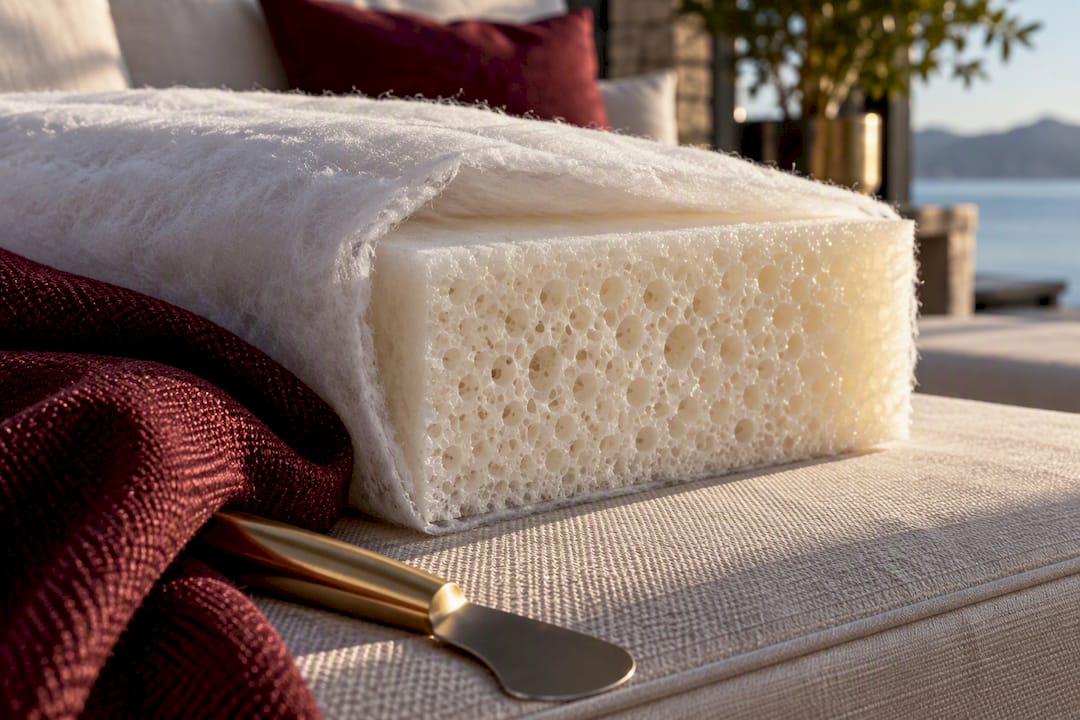
For exposed outdoor seating, reticulated (dry-fast) foam is the strongest choice, since it drains and dries within hours. Covered patios and seasonal furniture can use a high-density outdoor-grade polyurethane core wrapped in Dacron for comfort. Back cushions can lean on softer fill like fiberfill, but seats need firmer, denser cores. Check density (lb/ft³) and ILD before you buy.
TL;DR:
- Reticulated foam remains the top choice for exposed outdoor seating because it drains and dries within hours, while closed-cell foam is better suited for flotation and marine use.
- CertiPUR-US certification ensures polyurethane foam has been tested for quality and safety, making it a reliable indicator for outdoor-grade cores.
- For seat cushions, a density of 1.5 to 1.8 lb/ft³ with an ILD around 32 to 35 provides the optimal support and support longevity.
- Covered patio or seasonal furniture benefits from outdoor-grade polyurethane cores wrapped in Dacron, but standard indoor foam should be avoided outside.
- Backs of cushions can use softer, lower-density fills like polyester fiberfill or Dacron wrapped foam, due to lower weight and support requirements.
Table of Contents
- Why Outdoor-Grade Foam Matters: Drainage, UV, and Mildew
- Reticulated Foam, Closed-Cell Foam, Outdoor PU, and Fiberfill Compared
- What Density and ILD Numbers Actually Mean for Your Cushions
- Choosing the Right Foam for Seats Versus Backs
- How to Clean, Dry, and Store Outdoor Cushion Foam
- My Total Take on Choosing Premium Outdoor Cushion Cores
- Where to Find Curated Outdoor Cushions and Replacement Foam
- Sources
- FAQ
Why Outdoor-Grade Foam Matters: Drainage, UV, and Mildew
Standard indoor foam and outdoor foam are built for entirely different lives. Indoor polyurethane has a closed, tight cell structure that holds onto moisture, and once it does, it breaks down under sun exposure and starts hosting mildew. Outdoor-grade materials solve this with structure, not just chemistry.
- Reticulated foam has an open, netlike cell structure that lets water pass straight through instead of pooling inside.
- Closed-cell foam rejects water absorption entirely, which is why it shows up in marine flotation seating.
- Outdoor PU blends use UV-stabilized formulas that resist the yellowing and crumbling standard indoor foam suffers outside.
Look for CertiPUR-US certification when shopping polyurethane cores. It confirms the foam has been tested for physical performance and chemical content, a useful trust signal when you can’t inspect the cell structure yourself.
Reticulated Foam, Closed-Cell Foam, Outdoor PU, and Fiberfill Compared
Choosing the right outdoor cushion filling comes down to matching the material’s strengths to how exposed the cushion actually is. Here’s how the four main contenders stack up.
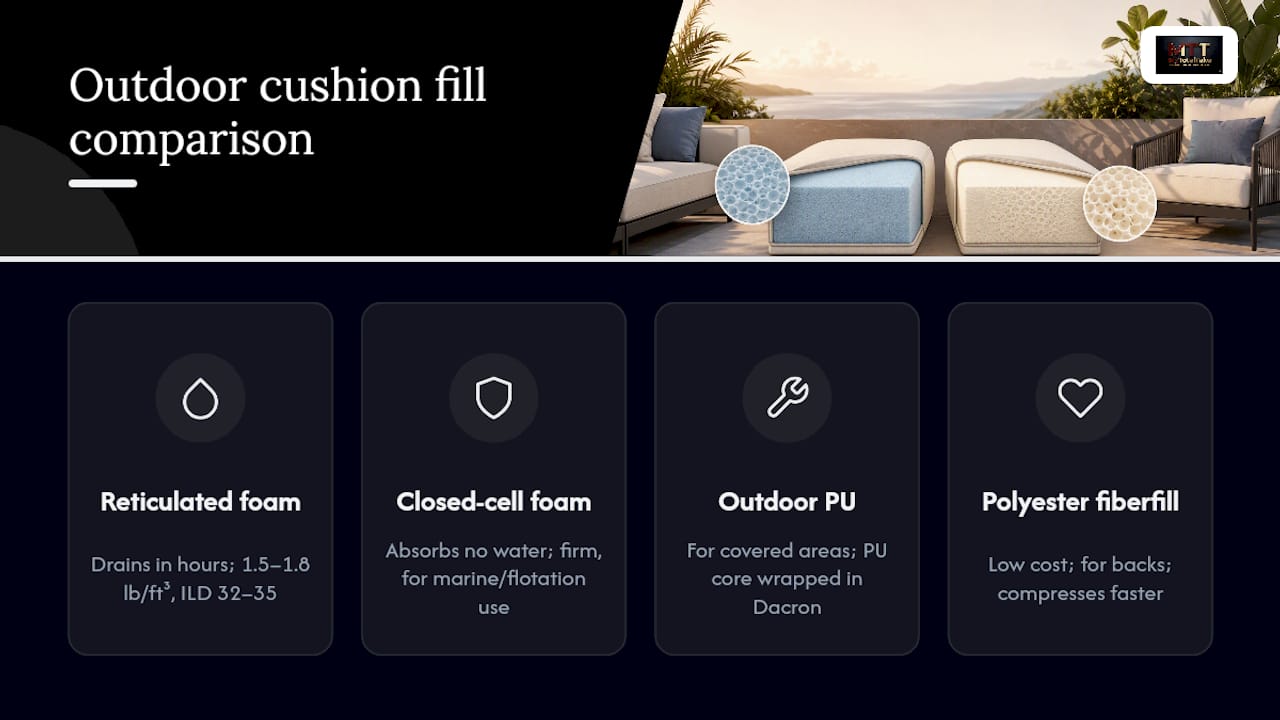
1. Reticulated (dry-fast) foam. This is the gold standard for exposed seating because its porous structure moves air and water through the foam in a matter of hours rather than days. Poolside loungers, boat seating, and any cushion left uncovered through storms benefit most. For seat cores, target a density around 1.5 to 1.8 lb/ft³ with an ILD in the 32 to 35 range, which keeps the cushion from bottoming out under regular use. The trade-off is price: dry-fast foam costs more than standard outdoor foam, so it earns its place where exposure actually justifies the premium.
2. Closed-cell flotation foam. This foam type absorbs essentially no water, which makes it the material of choice for marine cushions and anything that doubles as a flotation device. It won’t compress the way open-cell foams do, but it also runs firmer and less plush, so it’s a specialty pick rather than an everyday lounge cushion filling.
3. Outdoor-grade polyurethane and high-resilience blends. These work well for covered patios, three-season porches, or furniture that gets stored during harsh weather. The key is specifying density correctly: an outdoor-grade PU core wrapped in a soft Dacron layer gives you the plush hand-feel buyers expect without sacrificing shape retention. Skip standard indoor PU here entirely; it wasn’t engineered to survive humidity swings.
4. Polyester fiberfill and compressed polyester. These are the practical choice for back cushions and covered seating where cost matters more than drainage speed. Fiberfill and compressed polyester fill out a cushion’s shape at a lower price point than foam, though they compress faster under regular sitting pressure, which is exactly why they belong on backs rather than seats.
Pro Tip: Layer a firm foam core with a thin fiberfill or Dacron wrap on any cushion where you want both structure and a soft outer hand. The core does the work; the wrap does the comfort.
What Density and ILD Numbers Actually Mean for Your Cushions
Density and firmness measure two completely different things, and mixing them up is the single most common mistake buyers make. Density (lb/ft³) tells you how much material is packed into the foam. It predicts longevity and resistance to permanent compression. ILD, or Indentation Load Deflection (sometimes labeled IFD), measures how much force it takes to compress the foam 25%. It predicts how firm the cushion feels the moment you sit down.
- Outdoor seat cores generally perform best around 1.5 to 1.8 lb/ft³ density.
- Many manufacturers target an ILD of 32 to 35 for seat cores, which balances support against comfort.
- Lounge and sofa seats typically use 4 to 5 inches of foam thickness to maintain that support over time.
A cushion can carry the right density and still feel wrong if the ILD is mismatched to the furniture’s use. Fabricators often require reticulated foam to recover its full thickness within 48 hours after shipping compression, a useful benchmark if you’re ordering custom cushions and want proof the foam will bounce back.
Choosing the Right Foam for Seats Versus Backs
Seats and backs carry entirely different loads, so treating them identically is where most cushion sets fail early.
- Seats need the firmest, densest core you can afford. Dining chairs can run thinner, around 2 to 3 inches, while lounge chairs and sofas benefit from 4 to 5 inches for lasting support.
- Backs can go softer. Fiberfill or a lower-density foam wrapped in Dacron gives backs the loft and pillowy look buyers want without wasting money on structural density they don’t need.
- Mix materials deliberately. A firm foam core wrapped in a soft fill layer gives you the best of both: shape retention where weight is concentrated, and comfort everywhere the fabric meets skin. This layered approach is the construction method fabricators recommend for cushions expected to hold their look season after season.
How to Clean, Dry, and Store Outdoor Cushion Foam
Foam longevity depends more on how it’s maintained than on which type you bought. Remove covers and wash them according to the fabric’s own care label, then rinse the foam itself if it’s been directly exposed to spills or rain. Let it air-dry completely before recovering it. Reticulated foam dries fastest, but even it needs full airflow, not a sealed bag, to finish the job.
- Store cushions in a vented space, never a sealed plastic bin, if there’s any residual dampness.
- Space cushions apart rather than stacking them tightly for the off-season.
- Watch for persistent dampness, a musty smell, visible mold inside the foam, permanent compression, or crumbling. Any of those means it’s time to replace the core, not just the cover.
Pro Tip: If a cushion still feels damp 24 hours after a rainstorm, the foam inside is likely standard indoor-grade material, not a dry-fast type. That’s your signal to plan a foam swap before mildew sets in. Our guide on caring for outdoor cushions walks through the full seasonal routine.
My Total Take on Choosing Premium Outdoor Cushion Cores
Mytotaltake curates outdoor pieces around craftsmanship, not just looks, and foam is where that shows fastest. We favor reticulated foam for anything left uncovered, and outdoor-grade PU wrapped in Dacron for covered, well-maintained setups. The real luxury move isn’t the fabric pattern. It’s paying for correct density and letting a professional fabricator handle the build.
— Lysander
Where to Find Curated Outdoor Cushions and Replacement Foam
Once you know the density and ILD numbers that fit your furniture, finding cushions built to those specs shouldn’t feel like a scavenger hunt. Mytotaltake’s curated approach means every piece in our collection is chosen for craftsmanship first, so you’re not sorting through mass-market listings to find something that will actually survive a season outside.

Browse our Patio, Lawn & Garden selection for cushions and seating built with weather-resistant materials in mind, or check the Furniture category for pieces where foam specs and fabrication quality matter most. If you’re weighing custom foam replacement for cushions you already own, our team can walk you through the density and ILD questions this guide raised. If you’re shopping dry-fast foam components directly for a fabrication project, suppliers like Afrokoptiki’s DRYFOAM line show what reticulated construction looks like at the product level. Fast delivery and free returns mean you can order with confidence and adjust if a piece doesn’t fit your space the way you expected.
Sources
- How To Specify Outdoor Cushions: Foam, Fabric, Drainage & Construction Guide
- Outdoor Cushion Manufacturing Guide: 6 Steps to Excellence | OGPSGroup
- The foam inside your outdoor cushion is probably wrong. This is the grade it should be
- Best Filling for Outdoor Cushions – Aerobu custom cushion
FAQ
What type of foam is best for outdoor cushions?
Reticulated (dry-fast) foam is the strongest overall pick because its open cell structure lets water drain through rather than pool inside the cushion. Covered patio furniture can use outdoor-grade polyurethane instead, provided it’s paired with the right density and a comfort wrap.
What are the different types of cushion foam?
The main outdoor options are reticulated (dry-fast) foam, closed-cell flotation foam, outdoor-grade polyurethane or high-resilience blends, and polyester fiberfill or compressed polyester. Each fits a different exposure level, from fully open poolside seating to covered, seasonal furniture.
What is the best filling for outdoor seat cushions?
Seats hold the most weight and benefit most from a firm, high-density foam core, ideally reticulated foam if the cushion sees regular sun or rain exposure. Many manufacturers target a density of 1.5 to 1.8 lb/ft³ with an ILD around 32 to 35 for seat cores.
What are some good high-density foam options for outdoor furniture?
Look for reticulated foam rated near 1.5 to 1.8 lb/ft³ for seats, or CertiPUR-US certified outdoor-grade polyurethane if the furniture stays covered. Browse the Furniture category for pieces where foam specs and fabrication quality matter most.
Do back cushions need the same foam as seat cushions?
No. Backs carry far less weight, so a softer fill like polyester fiberfill or a lower-density foam wrapped in Dacron gives better loft and appearance without the added cost of a dense structural core.









Leave a comment