
Portable Air Conditioner vs Window Unit
A beautiful room loses some of its appeal fast when it feels sticky by midafternoon. If you are choosing between a portable AC and a window unit, the right pick is not just about cooling. It is about how you live, how your space looks, and how much compromise you are willing to accept.
For some homes, a window unit is the clear winner. For others, a portable model offers the flexibility that makes daily life easier. The better option depends on your layout, your lease, your tolerance for noise, and whether design matters as much to you as raw performance.
Portable air conditioner vs window unit: the real difference
At a glance, both appliances cool a room by removing heat and sending it outside. The difference is where the machine sits and how efficiently it does that job.
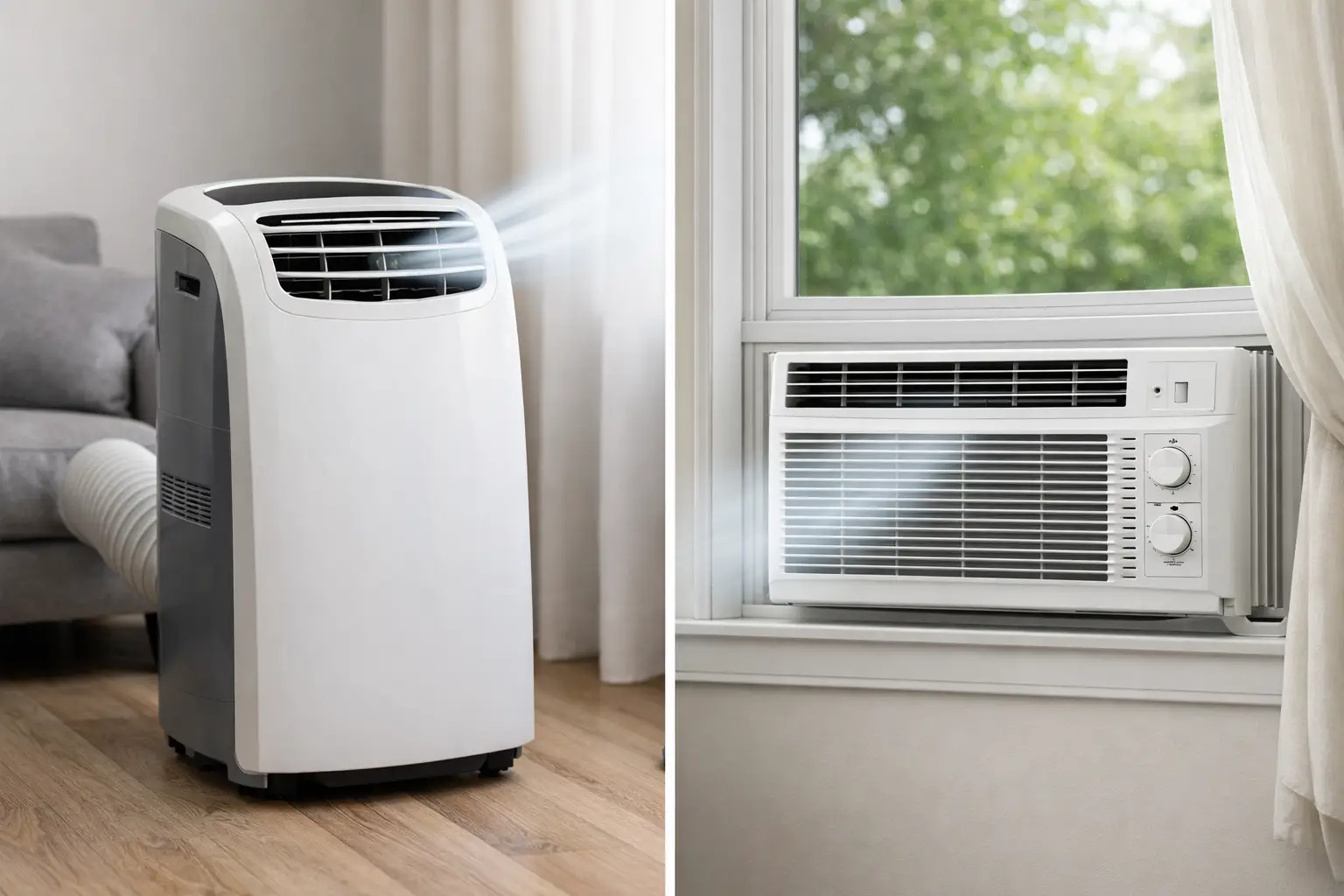
A window unit is installed partly inside and partly outside the window. Because the hot side of the system stays outdoors, it usually cools more effectively and wastes less energy. That is why window units often deliver stronger performance for the price.
A portable air conditioner sits inside the room and vents hot air through a hose connected to a window kit. It is easier to position and easier to remove, but it keeps more of the appliance indoors. That tends to make it less efficient and noticeably louder.
If you want the shortest answer to the portable air conditioner vs window unit debate, it is this: window units usually cool better, while portable units are easier to live with in spaces where installation is limited.
Which one cools better?
In most side-by-side comparisons, window units cool faster and hold temperature more consistently. They are better at pulling heat out of the room because the machinery that creates that heat is not sitting next to you indoors.
Portable units can still work well, especially in small bedrooms, offices, and apartments, but they often struggle more in larger spaces or rooms with strong afternoon sun. Some single-hose models also create slight negative pressure, which can pull warm air back into the room from gaps and adjoining areas. That reduces overall efficiency.
If your priority is reliable cooling in a primary living area, a window unit usually has the edge. If your goal is spot cooling where central air is weak or absent, a portable unit can still be a smart upgrade.
Noise changes the experience more than most buyers expect
This is where lifestyle matters.
Portable air conditioners are often louder because the compressor and fan are inside the room with you. In a home office, media room, or bedroom, that can become a daily irritation. The sound is not always harsh, but it is usually more present.
Window units make noise too, but a meaningful share of the mechanical operation sits outside the window. That often translates to a quieter indoor feel, even when the unit itself is powerful.
If you are designing a more refined, restful home environment, noise deserves a higher place in your decision than the spec sheet alone suggests. A unit that cools well but constantly hums through calls, movies, or sleep can make a polished space feel less comfortable.
Installation and flexibility
This is the strongest case for portable ACs.
A portable unit is simpler to set up. In most cases, you roll it into place, attach the hose, secure the window panel, and plug it in. That makes it attractive for renters, frequent movers, and anyone who does not want to lift a heavy appliance into a window frame.
It is also easier to move from room to room. If you work in the guest room during the day and sleep in the primary bedroom at night, portability has real value. You are cooling where you are, not paying to cool spaces you are not using.
Window units are less flexible. Installation can be awkward, heavy, and occasionally a two-person job. Some buildings restrict them entirely for safety or aesthetic reasons. Certain window types also make installation difficult or impossible.
So while window units win on pure cooling, portable models win on convenience. For many renters, that settles the question before performance even enters the conversation.
Design impact matters in a well-finished room
Not every buyer wants to treat climate control as an afterthought. In a carefully styled apartment, home office, or bedroom, the visual presence of an appliance matters.
Window units interrupt the clean line of a window, affect natural light, and are visible from both inside and outside. They can look utilitarian, even when compact. In some spaces, that is a fair trade for stronger cooling. In others, it works against the elevated look you have built.
Portable units keep the window more intact visually, though they still require a hose and vent insert. The appliance itself takes up floor space, which can be a drawback in smaller rooms, but many newer designs feel more discreet and modern than the bulky portable models people remember.
If you care deeply about maintaining a curated interior, the better-looking option depends on the room. In a studio apartment with one prized window, a portable unit may preserve the space better. In a larger room where floor area matters more than the window view, a slim window unit may feel less intrusive.
Energy use and operating cost
Window units usually come out ahead here as well.
Because they generally cool more efficiently, they often use less electricity to achieve the same result. Over a hot summer, that difference can show up on your utility bill. If you run the unit daily, efficiency stops being a technical detail and becomes part of the ownership cost.
Portable ACs are often more expensive to operate for the amount of cooling they deliver. Dual-hose portable units perform better than single-hose models, so if you are leaning portable, that is worth attention. They tend to be the more refined choice within the category.
That said, real cost depends on how you use the appliance. A portable unit used only in the evenings in one room may cost less overall than a window unit running all day in a larger space. Efficiency matters, but so does your routine.
Price and long-term value
Portable air conditioners and window units can overlap in sticker price, especially in the midrange. But value is not just about what you spend upfront.
A window unit often delivers more cooling per dollar. If you are buying for performance first, it is usually the stronger value. You get better output, often better efficiency, and frequently a quieter indoor experience.
A portable unit justifies its cost differently. You are paying for mobility, easier setup, and compatibility with living situations where a window unit may not be practical. For renters or anyone avoiding a semi-permanent install, that convenience can be worth the premium.
The more elegant buying mindset is to match the product to the room rather than chase the cheapest number. A lower-priced unit that undercools the space is rarely the better deal.
Best fit by living situation
For homeowners cooling a dedicated bedroom, den, or office, a window unit is often the superior choice. It is stronger, more efficient, and better suited to consistent seasonal use.
For renters, apartment dwellers, or anyone in a building with installation restrictions, a portable air conditioner may be the more realistic option. It offers cooling without the same level of commitment and usually leaves with you when you move.
For design-conscious shoppers, the answer depends on what disruption bothers you more: a blocked window or a floor-standing appliance. Neither disappears completely, so this comes down to the visual priorities of the room.
For occasional cooling in guest spaces, portable models are compelling. For everyday comfort in a room you use constantly, window units tend to feel more capable and less compromised.
How to choose without second-guessing
Start with your room, not the marketing.
If you need the best cooling performance and your window type and building rules allow it, choose a window unit. If you need flexibility, simple setup, or a solution you can move between rooms, choose a portable air conditioner.
Then consider the details that shape daily satisfaction: noise, floor space, sunlight exposure, and how often the room is occupied. Those factors will influence your happiness more than a small difference in listed BTUs.
A premium home feels better when every functional piece supports comfort without constant compromise. That is the smarter lens for this purchase. At mytotaltake.com, that same idea shapes how elevated living comes together – not through excess, but through better choices that fit the way you actually live.
The right AC should feel like relief, not a workaround. Choose the one that makes your space cooler, quieter, and easier to enjoy all season long.








Leave a comment