Tankless vs Tank Water Heaters: Which Wins?
The difference usually shows up on a normal Tuesday: someone’s in the shower, the dishwasher is running, and you just want hot water that feels effortless. That’s the real decision behind the tankless water heater vs tank heater conversation. One is built around a stored supply that can run out, the other is built around on-demand heat that can hit limits in different ways.
If you’re upgrading a home, finishing a basement, remodeling a bath, or simply tired of temperature roulette, the right choice is less about hype and more about matching the heater’s personality to your household.
Tankless water heater vs tank heater: the real-world difference
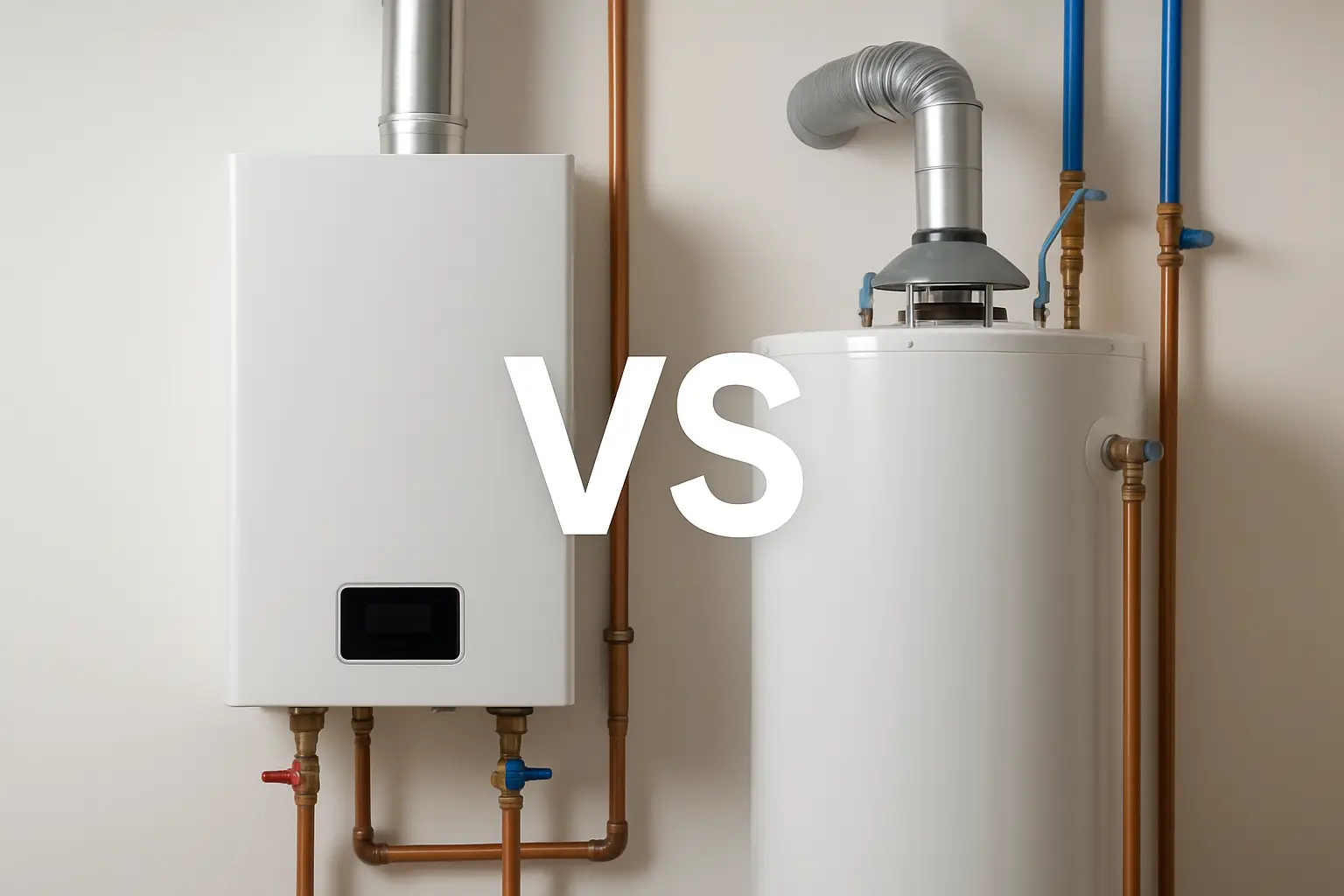
A traditional tank water heater stores a set amount of hot water (often 40-80 gallons) and keeps it warm around the clock. When you use hot water, the tank refills with cold water and reheats it. This design is simple, familiar, and forgiving, but it can run out during back-to-back showers or high-demand moments.
A tankless water heater heats water only when you call for it. You open a tap, the unit fires up, and hot water flows as long as the heater can keep up with the requested gallons per minute. It’s sleek and space-saving, and it avoids standby energy loss, but it can feel “finite” if multiple fixtures demand hot water at the same time.
Neither is automatically better. The best choice depends on how you use hot water, how your home is laid out, and how much you value space, consistency, and long-term operating costs.
Comfort and performance: what you feel day to day
Most shoppers start here, because comfort is the whole point.
A tank heater delivers strong flow immediately because hot water is already sitting in the tank. The catch is the “recovery” window. Once you’ve used most of the stored hot water, you’re on a countdown until the tank reheats. In households with clustered routines (morning showers stacked, laundry plus dishes at night), this is where frustration appears.
Tankless systems promise endless hot water, but only within the unit’s flow capacity. If you run one shower, it can feel luxurious. If you run two showers, a washing machine, and a kitchen tap at once, the system may reduce temperature or flow to stay within its heating range. This is why sizing matters more with tankless than with tanks.
One more nuance: tankless units can have a slight delay while the burner or elements ramp up and hot water travels through the pipes. In many homes it’s a small difference, but if your bathroom is far from the heater, it can be noticeable either way. Some homeowners add a recirculation solution for faster delivery, which improves convenience but can add cost and complexity.
Energy use and operating costs: efficiency with context
Tankless water heaters are often more energy efficient because they don’t keep a large volume of water hot 24/7. That “standby loss” is the hidden tax of tank heaters. For homes with lighter hot water use or long gaps between use, tankless can shine.
That said, efficiency isn’t just a percentage on a label. A tankless unit may use high bursts of gas or electricity when it runs. For gas models, that’s usually manageable. For electric models, it can require substantial amperage and panel capacity. If an electrical upgrade is needed, the cost equation changes.
Tank heaters are generally less efficient, but they’re predictable and inexpensive to install. If your priority is lowest upfront cost and you’re not chasing every last efficiency gain, a modern high-quality tank can still be a smart, comfortable choice.
The most honest way to think about it is lifestyle-led: if you value an elegant, space-conscious setup and want to reduce wasted energy between uses, tankless tends to align with that. If you prefer straightforward infrastructure that any plumber can service quickly, a tank is hard to beat.
Installation and space: where tankless often feels premium
If you’re designing a refined laundry room, creating a cleaner mechanical area, or reclaiming storage, tankless can feel like a design upgrade. Wall-mounted units free up floor space and can be placed more flexibly than a big tank, depending on venting and utility access.
A tank heater, by contrast, needs a dedicated footprint. In many homes it sits in a garage, basement, or closet and simply takes the space it takes. For some shoppers that’s fine. For others, especially in smaller homes, condos, and finished basements, it can feel like wasted real estate.
But tankless is not always a simple swap. Gas tankless units often need specific venting and may require a larger gas line than the old tank used. Electric tankless units may require multiple breakers and heavier wiring. If you’re already renovating, those upgrades can be integrated elegantly. If you’re trying to replace a failed heater fast, a tank replacement is usually the path of least resistance.
Upfront cost vs long-term value: what you’re really buying
Tank heaters typically cost less to purchase and install. They also tend to be faster to replace when something fails unexpectedly. For many households, that practicality matters.
Tankless units generally cost more upfront, and the installation can be meaningfully more expensive if venting, gas line sizing, condensate drains (on some high-efficiency units), or electrical capacity need work. The payoff is long-term value: lower standby losses, potential longevity benefits, and a space-saving footprint.
There’s also a “quality of ownership” component. A well-sized tankless system can feel like a luxury because it supports longer showers and consistent temperature when demand is reasonable. A well-sized tank system can also feel luxurious if your household’s usage fits the tank’s capacity and recovery rate. The mismatch is what feels cheap, not the technology itself.
Maintenance and lifespan: how much attention each one wants
Tank heaters are relatively low-maintenance, but they do benefit from periodic flushing to reduce sediment buildup, especially in areas with hard water. An anode rod replacement can extend life, but many homeowners never touch it. Typical lifespans vary, and water quality plays a big role.
Tankless heaters are more sensitive to scale. Many manufacturers recommend regular descaling, particularly in hard-water regions. This is not complicated, but it is a routine. Think of it like maintaining an espresso machine: the better you treat it, the better it performs over time.
If you’re the type who appreciates a high-end home and keeps it running beautifully, tankless maintenance often feels like a fair trade for the benefits. If you want a “set it and forget it” experience with minimal attention, a tank may align better.
Sizing the system: where most regret comes from
With a tank heater, sizing is mainly about capacity and recovery. A larger tank or faster recovery rate supports higher demand bursts.
With tankless, sizing is about flow rate and temperature rise. Cold incoming water in winter means the heater has to work harder to reach your set temperature. That affects how many gallons per minute you can comfortably run at once. This is why a tankless unit that works beautifully in one region or household can feel underpowered in another.
If you’re considering tankless, the most important step is matching the unit to your peak simultaneous use. One shower and a faucet is different from two showers plus laundry. If you regularly run multiple hot-water activities at once, you may need a higher-capacity unit or a multi-unit approach, which changes the budget.
Gas vs electric: the choice inside the choice
Many homeowners comparing tankless water heater vs tank heater also need to decide gas vs electric.
Gas tankless models tend to handle higher flow rates more comfortably, which is appealing for larger homes and families. They require proper venting and sufficient gas supply, so the installation must be done with care.
Electric tankless models can be compact and clean, but they can demand significant electrical capacity. They can be an excellent fit for point-of-use applications or smaller households, yet they’re not always the simplest whole-home solution without electrical upgrades.
Tank heaters are available in both gas and electric as well. Gas tanks often recover faster, while electric tanks can be simpler to vent. Your home’s existing utilities and your appetite for upgrades typically drive this decision.
Which one fits your home and routine?
Choose a tank heater when you want a familiar, cost-effective replacement, especially if your hot water use comes in predictable bursts and you prefer straightforward serviceability. It’s a practical upgrade that can still feel high-end when you choose a quality model and right-size it to your household.
Choose tankless when space matters, when you value a cleaner mechanical footprint, and when your hot water habits lean toward longer, steadier usage rather than many simultaneous demands. It’s a lifestyle-forward choice: compact, modern, and designed for efficiency, with the trade-off of higher upfront cost and more attention to water quality.
If you’re already investing in a bathroom refresh, a kitchen upgrade, or a more elevated home experience overall, tankless often complements that intention. If you’re optimizing for speed, simplicity, and budget certainty, a tank heater can be the smarter, calmer decision.
For shoppers who like to curate home upgrades with confidence, browsing premium home fixtures and practical comfort upgrades in one place can simplify the process. If you’re already planning other home improvements, mytotaltake.com is built for that kind of design-forward, quality-led shopping.
A closing thought
Pick the heater that matches your peak mornings, not your best-case scenario. When hot water feels reliable in the messiest, busiest moments of your week, the upgrade stops being a product choice and starts feeling like a better way to live at home.










Leave a comment