
What Is Artisanal Craftsmanship and Why It Matters
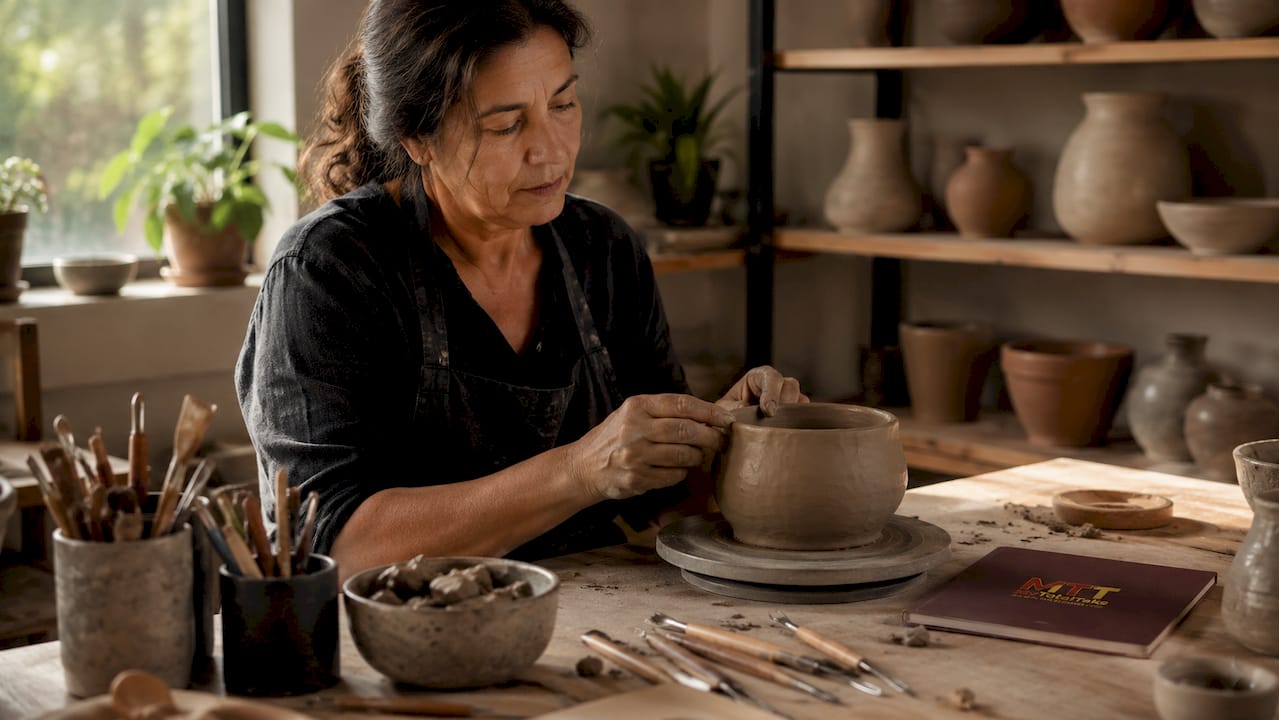
Artisanal craftsmanship is defined as the production of goods through skilled manual techniques where the artisan’s direct work and judgment remain the dominant influence on the finished product. This practice stands apart from industrial manufacturing not merely in scale, but in its fundamental relationship between maker, material, and outcome. For craft enthusiasts and luxury consumers alike, understanding this distinction unlocks a sharper eye for quality, a deeper appreciation for heirloom-worthy objects, and a more informed approach to purchasing goods that carry genuine cultural and aesthetic value. From hand-thrown ceramics to bespoke furniture, artisanal craftsmanship represents a living tradition of mastery, originality, and material intelligence.
What is artisanal craftsmanship vs. industrial manufacturing?
Artisanal production, as defined by UNESCO, is rooted in manual skill and judgment, which distinguishes it structurally from mechanized production where machines perform the dominant work. This is not a marketing label. It describes a mode of production where the artisan’s hands, decisions, and sensory responses shape the object at every stage, from raw material selection through finishing.
Industrial manufacturing prioritizes consistency, speed, and volume. A factory producing ceramic tiles calibrates machines to deliver identical dimensions, glaze depth, and color across thousands of units. An artisan potter, by contrast, adapts to material variation in the clay itself, adjusting pressure, timing, and technique in real time. The result is not a defect. It is a signature.

The table below captures the core structural differences between these two production modes.
| Characteristic | Artisanal production | Industrial manufacturing |
|---|---|---|
| Primary driver | Skilled human judgment | Automated machine processes |
| Material handling | Adapts to natural variation | Standardizes materials to fit process |
| Output volume | Low to moderate, often bespoke | High volume, mass scale |
| Quality markers | Mastery, originality, maker’s touch | Consistency, tolerance, repeatability |
| Environmental footprint | Lower energy use, less waste | Higher energy and material throughput |
True artisanal quality appears when skilled judgment influences multiple steps, not just final assembly. A piece where a craftsperson only attaches a pre-made component at the end does not qualify as artisanal in any meaningful sense. The artisan’s involvement must be the most substantial mode of production throughout.
Pro Tip: When evaluating a product’s artisanal credentials, ask the seller to describe at least three decision points in the making process where the craftsperson’s judgment shaped the outcome. If they cannot answer specifically, the “handmade” label may be more marketing than reality.
How do mastery and originality define true artisanal work?
A 2025 study on artistic craftsmanship identifies mastery and originality as the two highest-weighted indicators for assessing whether a craft qualifies as genuinely artistic. This finding matters because it moves evaluation away from vague tradition-based claims and toward measurable, observable criteria. You can assess mastery. You can recognize originality. Both are visible in the finished object if you know what to look for.
Mastery in craft is not simply years of practice. It is the capacity to make precise, responsive decisions under the pressure of material reality. A master woodworker at a studio like George Nakashima Woodworkers does not just cut along a grain. They read the wood’s history, its tension, its character, and make choices that honor those qualities while serving the design. That level of engagement produces objects that feel alive in a way that machined furniture never does.
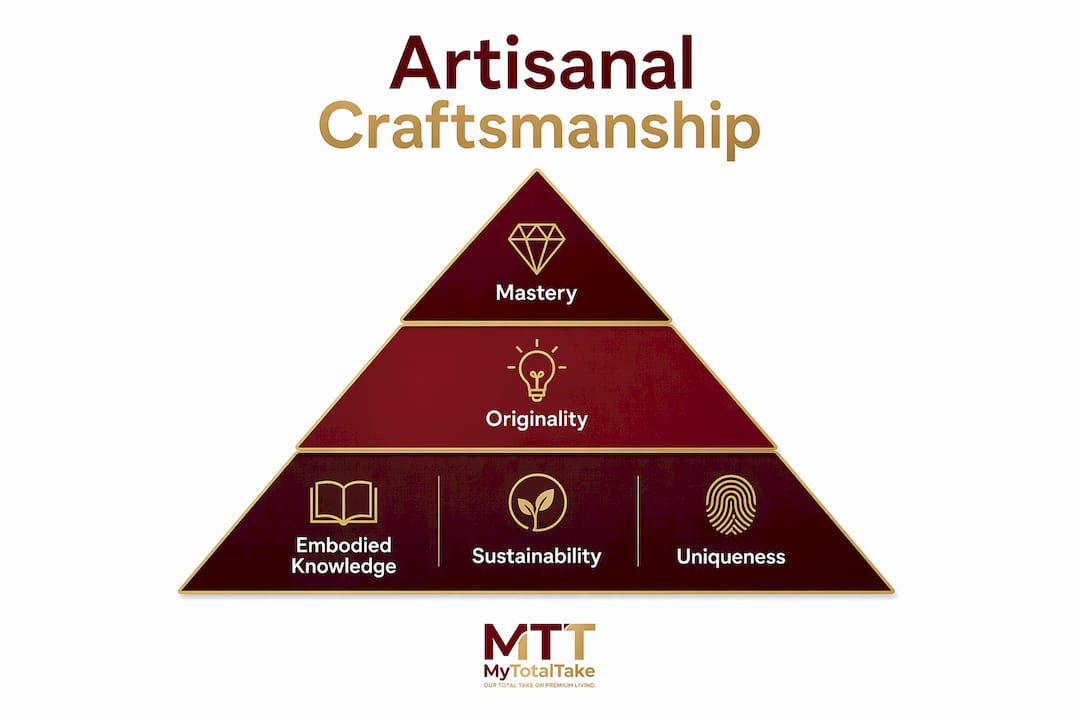
Originality in artisanal work does not mean novelty for its own sake. It means the maker’s perspective is present in the object. Two potters trained in the same tradition will produce recognizably different work because their hands, sensibilities, and material dialogues differ. This is why skill transmission through apprenticeship is so critical. The knowledge passed from master to apprentice is not a formula. It is a cultivated way of seeing and responding.
When you examine an artisanal piece, look for these qualities:
- Visible decision-making: Tool marks, surface variations, or joinery choices that reflect the maker’s active judgment rather than a template
- Material responsiveness: Evidence that the craftsperson worked with the material’s natural character rather than against it
- Proportional coherence: Details that feel resolved and intentional, not arbitrarily placed
- Finishing depth: Layers of surface treatment that reveal time and care, not a single sprayed coat
- Signature variation: Subtle differences between similar pieces from the same maker, reflecting the living nature of the craft
These criteria apply whether you are evaluating a hand-knotted rug from Oaxaca, a blown-glass vessel from Murano, or a handmade furniture piece from a local studio.
What is embodied knowledge and how does it shape artisan work?
Embodied knowledge is the sensory and intuitive understanding an artisan develops through sustained hands-on practice. It cannot be fully written down or taught through diagrams. A weaver sensing thread tension through their fingertips, or a potter reading clay plasticity through palm pressure, operates from a dialogue with natural materials that no machine replicates. This is the deepest differentiator between artisanal and mechanized production.
Consider a glassblower at a studio like Pilchuck Glass School. The molten glass changes viscosity by the second. The craftsperson reads color shifts, weight distribution, and airflow response simultaneously, making micro-corrections that no sensor array can fully anticipate. That accumulated physical intelligence, built over years of practice, is what produces objects of extraordinary quality and presence.
Embodied knowledge also explains why two similar handcrafted pieces may legitimately vary in subtle features. These differences are not errors. They are the artisan’s sensory calibrations of timing, tension, and material behavior made visible. Recognizing this reframes how you evaluate artisanal goods. Variation is evidence of authenticity, not inconsistency.
Pro Tip: Hold two pieces from the same artisan side by side. If they are identical in every dimension and surface detail, the work is likely machine-assisted. Genuine artisanal objects carry micro-variations that reflect the maker’s living engagement with the material.
To recognize embodied knowledge in a finished piece, look for:
- Surfaces that respond to light differently across their area, suggesting hand-applied texture
- Joinery or seams that show slight organic variation rather than mechanical precision
- Color or glaze depth that shifts subtly across the object’s surface
- Weight distribution that feels considered rather than uniform
Why artisanal craftsmanship matters for luxury goods and personalized design
Artisanal craftsmanship delivers three qualities that industrial production structurally cannot: uniqueness, sustainability, and cultural depth. For luxury consumers, these are not abstract virtues. They are the foundation of lasting value.
Uniqueness in artisanal luxury goods comes directly from the maker’s judgment in material selection and finishing. A hand-stitched leather bag from a Florentine atelier carries the specific decisions of one craftsperson about hide selection, stitch tension, and edge finishing. No two bags are identical. That singularity is precisely what commands premium pricing and collector attention in markets from Paris to Tokyo.
Sustainability is a structural advantage of artisanal methods. Artisanal production uses lower energy and produces less waste through careful, responsive material handling. An artisan furniture maker working with reclaimed walnut wastes almost nothing because each board is read individually and cut to honor its grain. A factory cutting standardized blanks from the same wood generates far more offcut waste. For consumers who prioritize environmental responsibility alongside aesthetic quality, artisanal goods represent a coherent choice.
Cultural heritage is the third dimension. Artisanal traditions from Japanese urushi lacquerwork to Moroccan zellige tilework encode centuries of material knowledge, aesthetic philosophy, and community identity. When you purchase an authentic artisanal piece, you participate in the continuation of that knowledge system. This is why organizations like UNESCO treat artisanal production as a cultural heritage category, not merely an economic one.
For luxury home decor specifically, artisanal craftsmanship transforms a room from a furnished space into a curated environment. A hand-carved stone basin, a bespoke woven textile, or a studio-cast bronze fixture each carries a presence that mass-produced equivalents cannot match. Mytotaltake’s editorial on craftsmanship in decor explores how these elements create lasting elegance in residential settings.
Key takeaways
Artisanal craftsmanship is defined by the artisan’s sustained manual judgment across the full production process, and mastery, originality, and embodied knowledge are its three non-negotiable markers.
| Point | Details |
|---|---|
| UNESCO definition | Artisanal production requires the artisan’s manual skill to be the dominant mode, not just a finishing step. |
| Mastery and originality | A 2025 study confirms these are the highest-weighted indicators for evaluating genuine artistic craftsmanship. |
| Embodied knowledge | Sensory understanding built through practice produces micro-variations that are signatures of authenticity, not defects. |
| Sustainability advantage | Artisanal methods use lower energy and produce less waste than industrial manufacturing through responsive material handling. |
| Luxury value | Uniqueness, cultural depth, and maker’s judgment in finishing are what justify premium pricing in artisanal luxury goods. |
Why I think we underestimate what artisanal knowledge actually is
Most conversations about artisanal craftsmanship treat it as a charming relic, something to admire in a museum or pay a premium for at a craft fair. That framing misses the point entirely. Artisanal knowledge is a living, evolving system, not a frozen tradition. The best craftspeople I have encountered are not preservationists. They are active problem-solvers working at the intersection of material science, aesthetic judgment, and physical intelligence.
The real challenge is not consumer appreciation. Most people, when they hold a genuinely well-made object, feel the difference immediately. The challenge is transmission. Preserving artisanship depends on mentorship systems and apprenticeship structures that industrial economies consistently undervalue and underfund. When a master craftsperson retires without passing their embodied knowledge to an apprentice, that knowledge is gone. No manual captures it. No video tutorial replicates it.
As a consumer, you have more influence here than you realize. Choosing artisanal goods over industrial equivalents, even occasionally, sustains the economic conditions that make apprenticeship viable. Asking makers about their training lineage, visiting studios, and paying fair prices for genuine craft are not sentimental gestures. They are practical acts of cultural investment. The objects you choose to live with say something about what you believe deserves to continue.
— Lysander
Bring artisanal craftsmanship into your home

Artisanal craftsmanship translates directly into the objects that define a well-considered home. A hand-forged iron fixture, a studio-thrown ceramic vessel, or a bespoke upholstered chair each carries the maker’s judgment in every detail, producing pieces that age with character rather than simply wearing out. At Mytotaltake, we curate goods that meet this standard. Explore our selection of luxury furniture that earns its place through genuine craft, or browse our guide to artisanal decor choices for rooms that reward close attention. These are not just purchases. They are decisions about the quality of your daily environment.
FAQ
What is artisanal craftsmanship in simple terms?
Artisanal craftsmanship is the production of goods where a skilled maker’s hands and judgment shape the object at every stage, from material selection through finishing. UNESCO defines it as production where manual skill remains the dominant mode, distinguishing it from mechanized manufacturing.
What is the difference between an artisan and a craftsman?
Both terms describe skilled makers, but “artisan” typically emphasizes the maker’s individual creative judgment and cultural tradition, while “craftsman” often refers more broadly to technical skill in a trade. In practice, the terms overlap, though artisan implies a stronger connection to originality and embodied knowledge.
How do you recognize genuine artisanal craftsmanship?
Look for visible decision-making in the object: surface variation, material responsiveness, and subtle differences between similar pieces from the same maker. A 2025 craftsmanship study identifies mastery and originality as the primary measurable indicators of authentic artisanal work.
Why are artisanal products more expensive than mass-produced goods?
Artisanal goods command higher prices because they require sustained skilled labor, careful material selection, and longer production times. The uniqueness, lower environmental impact, and cultural value embedded in each piece also contribute to pricing that reflects true production cost rather than volume economics.
Are artisanal products more sustainable than industrial ones?
Artisanal production generally carries a lower environmental footprint. Artisanal methods use less energy and produce less waste through responsive, material-specific handling, making them a more sustainable choice compared to standardized industrial processes.
Recommended
How to Choose an Ergonomic Office Chair
Comments
[…] premium espresso machines so often arrive wrapped in brushed or polished steel. Stainless steel signals craftsmanship, but it also serves a practical role in a high-heat, high-moisture environment. Compared with […]
[…] What Is Artisanal Craftsmanship and Why It Matters […]











Leave a comment