
Why Choose Home Automation for Your Home in 2026
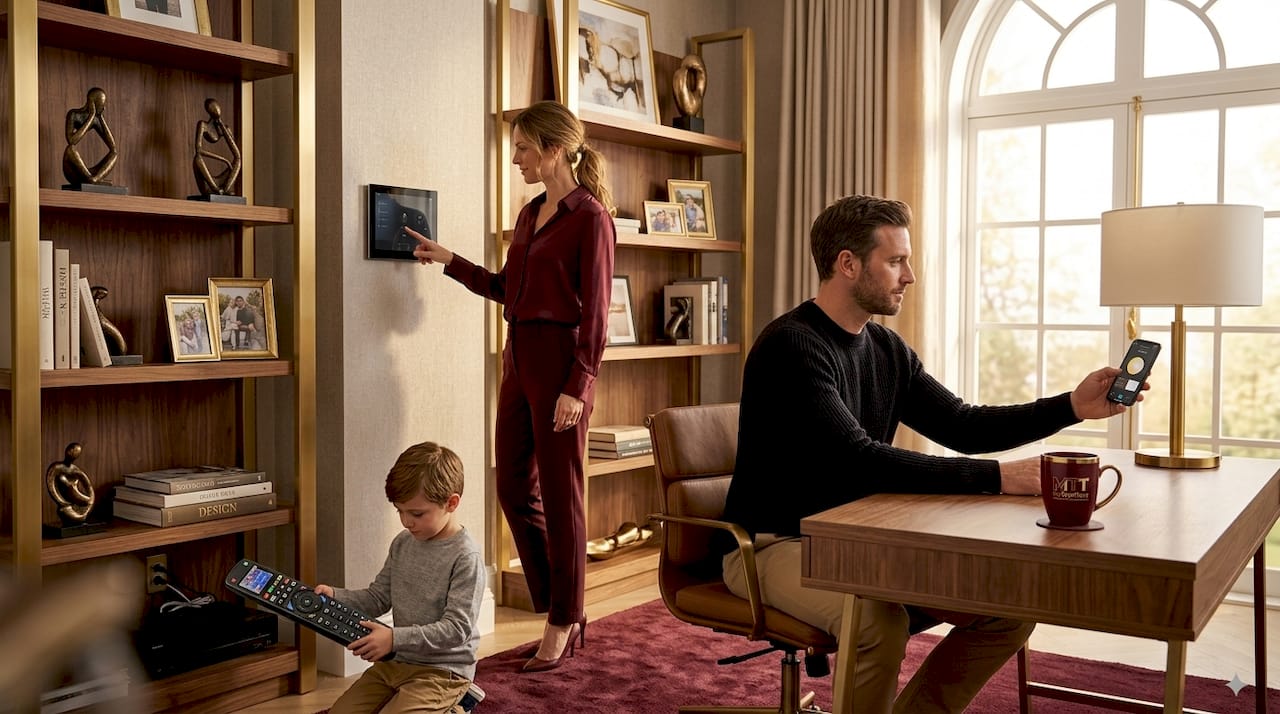
Most people assume home automation is a luxury reserved for tech enthusiasts or high-end new construction. That assumption is costing them real money, real security, and real convenience every single day. The truth is that choosing home automation today is less about gadgetry and more about making your home work harder for you. Whether you rent an apartment or own a four-bedroom house, the smart home benefits available in 2026 are practical, measurable, and more accessible than they have ever been.
Table of Contents
- Key Takeaways
- Why choose home automation for energy savings
- Home security that actually protects you
- Everyday convenience that changes how you live
- Choosing the right setup and avoiding pitfalls
- How automation raises your home’s market value
- My honest take on why this matters
- Upgrade your home with premium technology and design
- FAQ
Key Takeaways
| Point | Details |
|---|---|
| Real energy cost savings | Smart thermostats and lighting can cut utility bills by hundreds of dollars annually. |
| Security that works proactively | Integrated cameras, locks, and sensors create layered protection beyond a single alarm. |
| Convenience that compounds | Automating repetitive tasks reduces mental load and frees up meaningful time each day. |
| Property value increases | Homes with smart features attract more buyers and sell for up to 5% more. |
| Start small, expand wisely | Begin with high-impact devices and grow your system gradually to avoid costly mistakes. |
Why choose home automation for energy savings
Energy costs are the most immediately measurable reason to automate your home. Devices like Ecobee and Google Nest don’t just let you control your temperature remotely. They learn your schedule, adjust automatically, and reduce HVAC costs by 10 to 23% annually. For most households, that translates to hundreds of dollars back in your pocket every year without any daily effort.
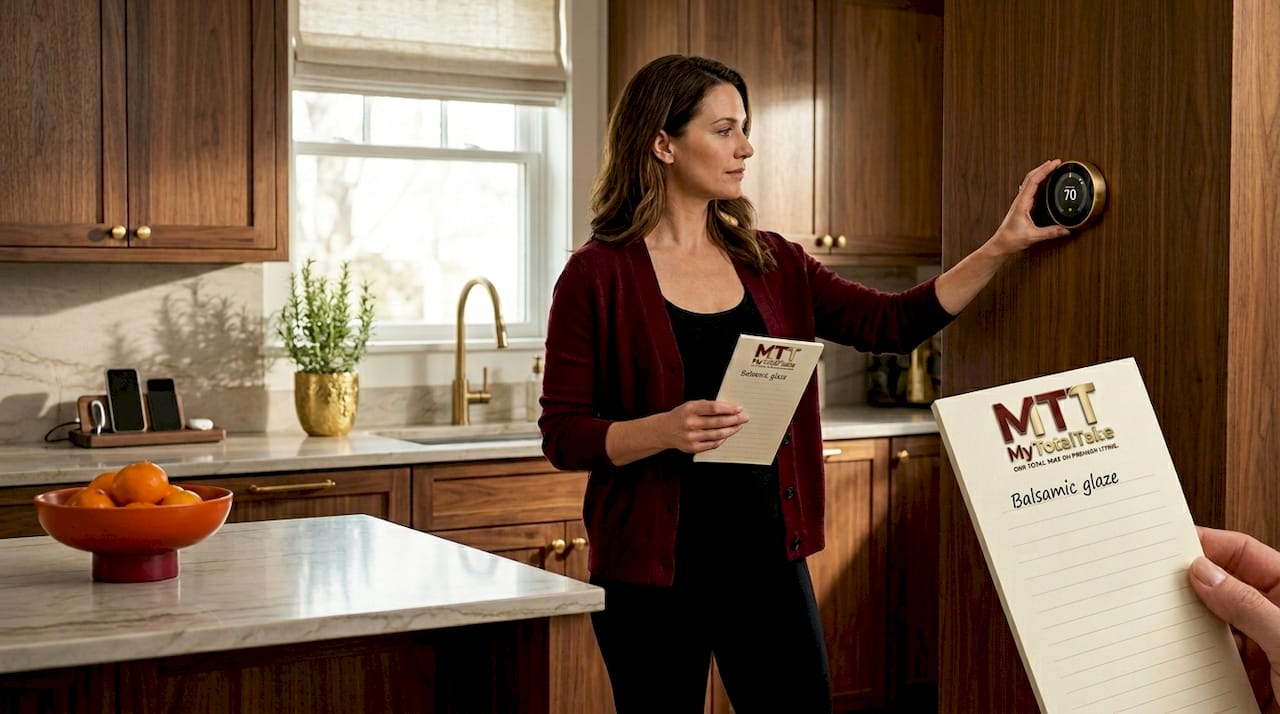
Lighting is where the savings get even more impressive. Smart bulbs and occupancy-based systems cut energy consumption by 40 to 60% compared to traditional lighting. The reason is simple: lights turn off when no one is in the room, dim automatically based on natural light, and never get left on overnight by accident. These are problems every household has. Smart lighting solves them silently.
Beyond heating and lighting, standby power drain is a hidden cost most homeowners overlook. Smart plugs identify and eliminate phantom loads from devices left in standby mode, like televisions, gaming consoles, and phone chargers. Pair those with a whole-home energy monitor and you get a real-time picture of exactly where your electricity is going. That level of visibility alone changes behavior.
The environmental upside matters too. Carbon emissions drop by up to 65% when automation replaces continuous operation of HVAC and lighting systems. For homeowners with solar panels or other renewable energy sources, smart systems can prioritize usage during peak generation hours, making your setup even more efficient.
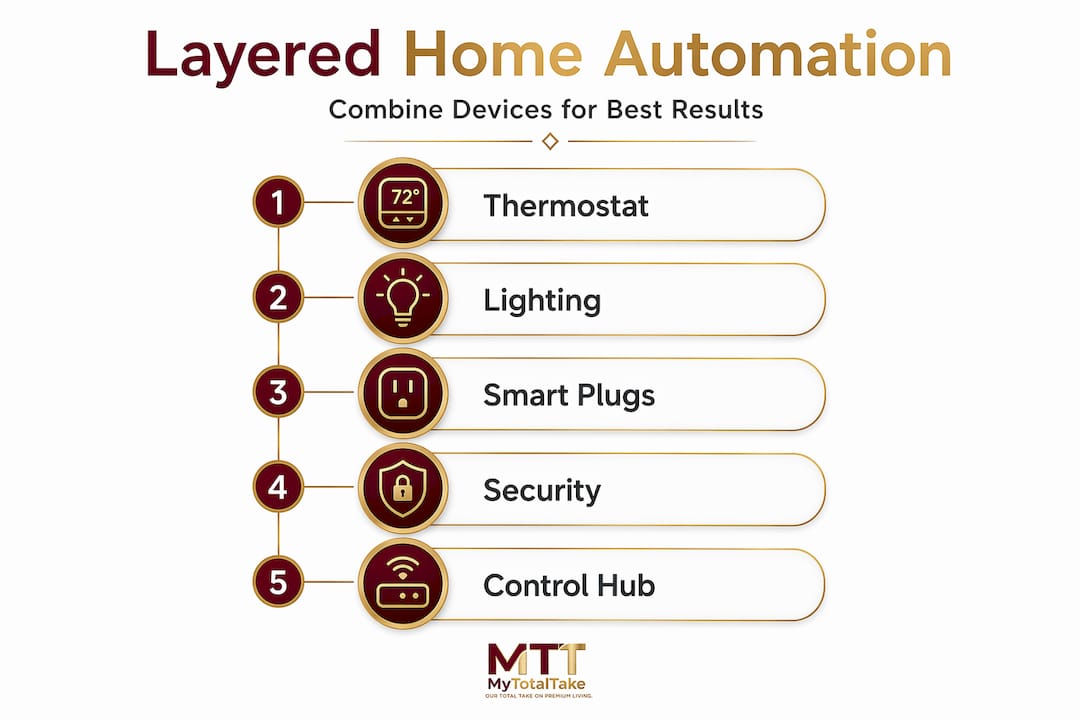
Pro Tip: Don’t automate one device in isolation. Layer your thermostat, lighting, and smart plugs together so they reinforce each other. A motion sensor that dims lights and lowers the thermostat when a room is empty multiplies savings far beyond what each device would achieve alone.
| Device type | Estimated annual savings | Key function |
|---|---|---|
| Smart thermostat | $100 to $200+ | Schedule and learn HVAC preferences |
| Smart lighting | $80 to $150+ | Occupancy sensing and auto-dimming |
| Smart plugs | $30 to $60 | Eliminate standby phantom loads |
| Energy monitor | Varies (enables targeting) | Identify highest-consumption devices |
Home security that actually protects you
Security is one of the most compelling reasons to automate your home, and the numbers reflect how widely people agree. Nearly 47% of US internet households now have smart security solutions in place, and homes with security systems connect significantly more smart devices overall than those without.
The home automation advantage in security comes from integration. A single smart lock is useful. A system where your smart lock, motion-detecting cameras, indoor sensors, and automated lighting all communicate together is a different category of protection entirely. When your front door is left unlocked after 11 PM, the system can alert you and lock it automatically. When a camera detects motion at 2 AM, lights can turn on and a notification can reach your phone before you’ve even processed what’s happening.
Here is what a well-designed smart security setup typically includes:
- Smart locks that allow keyless entry, temporary access codes for guests or service workers, and remote lock or unlock from anywhere
- Security cameras with motion detection, two-way audio, and push notifications sent directly to your phone
- Window and door sensors that trigger alerts the moment something opens unexpectedly
- Automated lighting on randomized schedules to simulate occupancy when you’re away for days at a time
- Smart alarms that integrate with the rest of the system for multi-layer responses rather than a single siren
One underrated benefit is the impact on home insurance. Many insurers offer premium discounts for homes with verified security systems, so the upfront investment pays back through more channels than you might expect.
Pro Tip: Rely on locally executed automations for your security routines. If your internet goes down, you still want your locks and motion-triggered lights to function. A smart hub running rules locally protects you even when the cloud does not.
Everyday convenience that changes how you live
This is the benefit that sounds minor until you actually experience it. The convenience of home automation is not about pressing fewer buttons. It is about removing the mental overhead of managing a home.
Consider a typical morning routine. Here is how automation changes it:
- Your bedroom lights gradually brighten 20 minutes before your alarm, making waking up feel natural instead of jarring.
- The thermostat shifts from sleep mode to your preferred daytime temperature while you are still in bed.
- The coffee maker starts on schedule, triggered by the same morning routine scene.
- As you leave, a single tap or voice command locks the door, turns off all lights, and adjusts the thermostat to away mode.
- You get a quiet confirmation on your phone that everything is secured.
None of those steps require willpower, memory, or rushing. They just happen. Across a year, that kind of friction removal adds up to meaningful time saved and a calmer, more organized household.
The accessibility dimension of home automation is one the industry underestimates. For elderly family members or anyone with limited mobility, voice-controlled environments allow full control over lights, locks, climate, and entertainment without physical strain. A parent who struggles with stairs can lock the front door from the bedroom. Someone with arthritis can adjust every light in the house without touching a switch. That is not a luxury. That is dignity.
Smart cleaning devices like a robot vacuum that runs on a schedule while you are at work, and a smart humidifier that maintains ideal indoor air quality automatically, are prime examples of automations that genuinely improve daily life without requiring any attention at all.
Choosing the right setup and avoiding pitfalls
The single biggest mistake new smart home owners make is buying devices impulsively from different brands with no plan for how they will work together. You end up with five apps, three voice assistants, and a system that technically works but exhausts everyone in the household.
The foundation of a reliable setup is the smart hub. A hub that supports multiple protocols including Matter, Thread, Zigbee, and Z-Wave, and runs automations locally, gives you stability and independence from cloud outages. When your internet goes down, your lights and locks still function exactly as programmed.
The second critical choice is your platform. Locking into a single brand ecosystem feels convenient at first. It becomes limiting quickly. Open platforms like Home Assistant let you mix devices from any brand, choose hardware based on function and quality rather than compatibility constraints, and upgrade pieces of your system without starting over.
Here is a practical comparison to help you think through your options:
| Approach | Flexibility | Reliability | Complexity | Best for |
|---|---|---|---|---|
| Single brand ecosystem | Low | Medium (cloud-dependent) | Low | Casual users wanting simplicity |
| Open platform (Home Assistant) | Very high | High (local execution) | Medium to high | Long-term builders |
| Mixed brands with smart hub | High | High | Medium | Most homeowners |
The automations that earn long-term family acceptance are the invisible ones. Complicated manual overrides and false alarms are the fastest way to get everyone in the house to stop trusting the system. Motion-activated lights that simply work, locks that secure themselves at night, and thermostats that never need to be touched: these win people over without requiring a tutorial.
Pro Tip: Start with three to five high-impact devices rather than automating everything at once. A smart thermostat, a couple of smart switches, and a smart lock will demonstrate real value within weeks. Expand from there once your household trusts the system.
How automation raises your home’s market value
Smart home features have crossed from novelty to expectation in the real estate market. A striking 65% of homebuyers say they are willing to pay more for a property with smart features already installed, and the data shows an average resale value boost of around 5%.
That number compounds when you consider what buyers are actually responding to. Security systems, smart thermostats, and integrated lighting are not just features. They signal to buyers that the home is well maintained, energy efficient, and move-in ready. You are not just selling square footage. You are selling a lifestyle upgrade.
“Smart homes don’t just sell faster — they sell better. Buyers shopping at the premium end of the market increasingly expect automation as a baseline, not a bonus.”
Documentation matters here too. When you list your home, being able to provide a clear record of your smart systems, the devices installed, the platforms used, and how to transfer ownership of accounts, turns an abstract selling point into a concrete one. Buyers gain confidence. You gain leverage.
The connection between security, energy efficiency, and buyer interest is direct. For anyone thinking about upgrading home technology, the return on investment case for home automation extends well beyond the years you spend living in the space.
My honest take on why this matters
I’ll be direct: my first smart home setup was a frustrating mess. Three apps, two hubs that barely communicated, and a household that lost patience within a month. I bought devices based on what was on sale, not on how they would work together. That is a very common and very fixable mistake.
What changed everything for me was committing to local execution and an open platform. Once automations ran reliably without needing the internet to cooperate, my family stopped noticing the technology. They just noticed the house felt easier to live in. Lights that turned on when you walked in. A door that locked itself. A temperature that adjusted without anyone touching anything.
That invisibility is the goal. The best smart home is one where nobody has to think about it. Not because the technology is hidden, but because it works so consistently that it blends into the rhythm of daily life.
I’ve also come to believe that the accessibility angle is deeply underappreciated. I’ve seen how much independence voice control and automated environments return to people who would otherwise depend on others for basic tasks. That has nothing to do with luxury. It has everything to do with quality of life.
Start with what solves a real problem in your home. Build gradually. Choose reliability over novelty every time. The system you will actually keep using is the one that earns trust quietly, one reliable automation at a time.
— Lysander
Upgrade your home with premium technology and design
A smart home functions best when the technology and the environment it lives in are designed with equal care. At Mytotaltake, we understand that automation is just one layer of a truly refined living space.

Explore our curated guides on premium home decor that complement the clean, purposeful aesthetic of a well-designed smart home. From sophisticated indoor furnishings to lasting outdoor furniture, Mytotaltake brings together the design intelligence and product quality that discerning homeowners expect. Because a home that runs beautifully should also look the part.
FAQ
What are the main benefits of home automation?
The core benefits of home automation are energy cost savings, improved security, and daily convenience. Smart thermostats, automated lighting, and integrated security systems work together to reduce utility bills, protect your home, and remove friction from everyday routines.
Is home automation worth it for renters?
Yes. Many smart devices like smart plugs, bulbs, and portable security cameras require no permanent installation. Renters can automate lighting, security monitoring, and energy management without modifying the property.
How much can smart home devices save on energy bills?
Smart thermostats reduce heating and cooling costs by 10 to 23% annually, while smart lighting cuts electricity consumption by 40 to 60%. Combined, most households see hundreds of dollars in annual savings.
Does home automation increase property value?
Research shows that 65% of homebuyers are willing to pay more for smart-enabled homes, with an average resale value increase of around 5%. Security and energy efficiency features are the most appealing to buyers.
What is the best way to start with home automation?
Begin with three to five high-impact devices such as a smart thermostat, smart lock, and a few smart light switches. Choose a hub that supports local execution and an open platform to avoid being locked into a single brand ecosystem as your needs grow.
Recommended
Shop Now, Pay Later for Home Goods—Done Right
Comments
[…] Android environments. Alexa has the widest device compatibility. Pick one and build around it. Defining your ecosystem early prevents the brand mix frustration that derails so many smart home […]











Leave a comment