
Step by Step Home Enhancement: Your Practical Guide

Step by step home enhancement is a methodical process that moves homeowners through clear, manageable stages to produce lasting improvements in their living spaces. The industry term for this approach is phased renovation management, and it applies equally to a weekend decor refresh and a full luxury home upgrade. Skipping stages is the single most common reason projects stall, go over budget, or require expensive rework. This guide covers every phase from initial preparation through finishing touches, drawing on real renovation timelines, contract standards, and design principles used in high-end projects that translate directly to any scale.
What essential tools and preparations do you need before starting?
Preparation separates successful home enhancement projects from costly ones. Before you pick up a single tool, you need a clear picture of what your home currently looks like structurally, mechanically, and legally. A thorough structural review before work begins prevents the most expensive surprises.
Tools and materials to gather first
Every project needs a baseline toolkit. For general room renovation steps, that means:
- Measuring and layout: Tape measure, laser level, chalk line, and a digital angle finder
- Demolition: Pry bar, oscillating multi-tool, and a shop vacuum rated for fine dust
- Framing and drywall: Stud finder, drywall saw, screw gun, and corner bead
- Finishing: Sanding blocks, painter’s tape, quality brushes, and a paint roller with extension pole
- Safety: N95 respirators, safety glasses, cut-resistant gloves, and GFCI-protected extension cords
Specialized upgrades require additional tools. A step by step luxury bathroom transformation, for example, demands a tile wet saw, a mortar mixer, and a tile leveling system to achieve professional results.
Structural and systems assessment
Check your electrical panel capacity before adding new circuits or fixtures. Inspect plumbing supply and drain lines for corrosion or undersized pipe. Confirm your HVAC system can handle any new square footage or load. These assessments cost little upfront and prevent mid-project shutdowns that cost far more.
Permit and legal considerations
Permit approval timelines vary significantly by location, ranging from 5–8 weeks in cities like Seattle to 30–90 days in Washington D.C. That variance directly affects your project start date. Apply for permits before you finalize your contractor schedule, not after.
Pro Tip: Order custom cabinetry, stone slabs, and specialty fixtures the moment your design is finalized. Long lead times for these items are the most common cause of project delays, and waiting until permits are approved adds weeks you cannot recover.
How to plan and execute a home enhancement from design to finishing
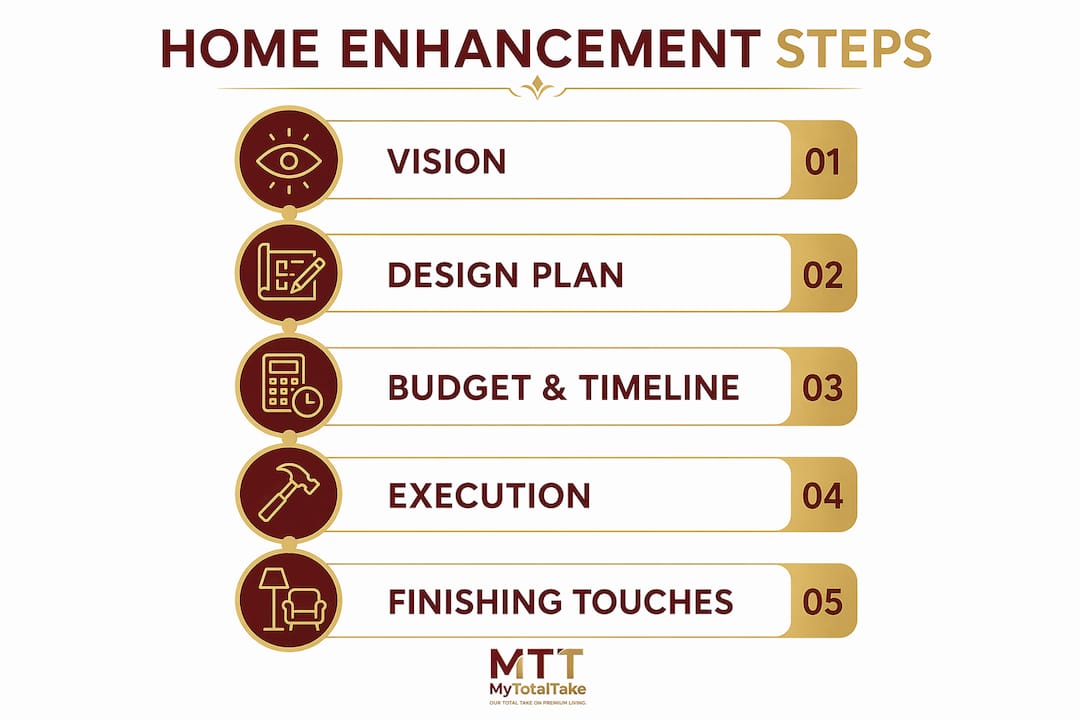
Design-driven project management from day one produces fewer budget surprises and smoother timelines. The sequence below applies whether you are refreshing a single room or completing a full home makeover.
Step 1: Set your vision and goals
Write down what you want the space to do, not just how you want it to look. A home office needs different lighting, acoustics, and storage than a guest bedroom. Clarity at this stage prevents expensive design changes later.

Step 2: Develop your design plan
Sketch a floor plan, even a rough one. Mark traffic flow, furniture placement, and utility locations. For complex projects, hire a designer for a single consultation. That fee is far less than correcting a layout mistake after walls are closed.
Step 3: Build a realistic budget and timeline
Full-home renovations typically require 4–12 months to complete, additions 4–10 months, and historic restorations 6–12 months. A single luxury bathroom renovation runs 12–24 weeks from design consultation to final handover, with the physical installation phase lasting only 2–4 weeks. Budget a 15–20 percent contingency on top of your base estimate for every project.
Step 4: Execute in strict sequence
Phases must not overlap. Design must conclude before ordering begins to prevent stalled sites and wasted material costs. Follow this order without exception:
- Demolition — Remove only what the plan specifies. Protect adjacent surfaces.
- Rough-in work — Complete all electrical, plumbing, and HVAC rough-ins before closing walls.
- Inspections — Pass all rough-in inspections before proceeding. Do not skip this step.
- Insulation and drywall — Install, tape, and finish in sequence.
- Priming and painting — Prime before cabinets and trim arrive to save masking time.
- Cabinetry and millwork — Install built-ins and custom pieces before flooring where possible.
- Flooring — Lay flooring after cabinets to protect finished surfaces.
- Fixtures and hardware — Install plumbing fixtures, lighting, and door hardware last.
- Final finishes and decor — Place furniture, art, and accessories after all trades are complete.
Pro Tip: Schedule material deliveries to arrive two days before each phase begins. Arriving too early creates storage and damage risk; arriving late stalls the crew and adds labor costs.
| Phase | Key action | Common mistake |
|---|---|---|
| Design | Finalize all selections before ordering | Changing specs mid-order |
| Procurement | Order long-lead items immediately | Waiting until permits are approved |
| Rough-in | Complete all systems before closing walls | Skipping inspections to save time |
| Finishes | Paint before fixtures are installed | Painting after hardware creates masking waste |
| Closeout | Collect manuals, warranties, and as-builts | Accepting handover without documentation |
What are common challenges and mistakes to avoid?
Skipping systematic planning leads directly to accelerated deterioration and costly emergency repairs down the line. The mistakes below are the most predictable and the most preventable.
“The most expensive renovation mistake is not the one you make during construction. It is the one you made during planning that you did not catch until the walls were closed.”
The most common pitfalls
- Overlapping phases. Starting flooring before rough-in inspections pass forces you to tear up finished work. Each phase must have a clear sign-off before the next begins.
- Late material procurement. Custom stone, specialty tile, and made-to-order cabinetry have lead times of 8–16 weeks. Ordering late is the single most controllable cause of project delays.
- Vague contracts. A contract without defined milestones, payment schedules, and scope descriptions creates disputes. The AIA A201-2017 contract standard includes a one-year correction period after substantial completion. Most homeowners do not know this clause exists, and many contractors do not volunteer it.
- Poor contractor communication. Use written Requests for Information, known as RFIs, to document every question and answer during construction. RFIs protect you from disputes about what was agreed.
- Releasing final payment too early. Withhold final payment until all punchlist items are complete and verified. That leverage is the most effective tool you have to get small outstanding tasks finished correctly.
- Ignoring safety. Confirm that all electrical work is performed by a licensed electrician. Test for lead paint and asbestos in homes built before 1980 before any demolition begins.
For a practical room-by-room planning checklist, working through each space methodically before committing to a contractor reduces scope gaps significantly.
How can you add luxury touches and tech upgrades to your home?
Premium upgrades do not require a complete renovation. Targeted additions to kitchens, bathrooms, and living areas produce a disproportionate improvement in both daily comfort and resale value. The key is selecting materials and technology that age well rather than trend pieces that date quickly.
High-impact upgrade ideas
- Bathroom: Heated floor mats, frameless glass enclosures, and wall-mounted faucets create a spa-quality feel without moving plumbing. Explore bathroom fixtures that deliver a daily upgrade without a full gut renovation.
- Kitchen: Quartz or quartzite countertops, under-cabinet LED lighting, and pull-out pantry organizers add function and visual weight simultaneously.
- Living room: Layered lighting with dimmable circuits, built-in shelving, and a statement area rug define a space more effectively than new furniture alone. A well-chosen piece of luxury furniture earns its place by improving both aesthetics and daily use.
- Smart home integration: Centralized lighting control, programmable thermostats, and whole-home audio are the three upgrades that deliver the highest daily return. Learn more about smart home upgrades that feel genuinely premium rather than gimmicky.
- Outdoor spaces: Weather-resistant furniture in teak, powder-coated aluminum, or all-weather wicker extends your usable living area through three seasons.
Pro Tip: When integrating smart home devices, confirm at handover that you hold all administrative rights to the system. Contractors who configure devices under their own accounts can inadvertently retain access to your home network.
Personalizing these upgrades within your budget is more satisfying than copying a showroom look. Choose materials and finishes that reflect how you actually live, not how a staged photo suggests you should.
Key takeaways
Phased renovation management is the most reliable method for completing home enhancement projects on time, within budget, and at lasting quality.
| Point | Details |
|---|---|
| Prepare before you build | Assess structure, systems, and permits before ordering a single material. |
| Sequence phases strictly | Design must close before ordering begins; rough-ins must pass inspection before walls close. |
| Order materials early | Custom items carry 8–16 week lead times; late orders are the top cause of project delays. |
| Use contract protections | The AIA A201-2017 standard includes a one-year correction period most homeowners overlook. |
| Document everything | Request as-built drawings at handover so future repairs and upgrades start with accurate information. |
What I have learned from managing complex home enhancements
The projects that finish well share one quality: the homeowner treated planning as real work, not a preliminary formality. I have seen beautifully designed spaces fail because the owner rushed into procurement before the design was locked. Changing a tile selection after stone is cut costs two to three times the original material price and adds weeks to the schedule.
Documentation is the other discipline most homeowners undervalue. As-built drawings show exactly what is behind your walls. Without them, the next plumber or electrician is guessing, and guessing costs money. Request them at handover as a non-negotiable deliverable.
Post-project inspections at 30 and 90 days catch settling issues, seasonal material movement, and minor defects while they are still covered under warranty. Schedule these dates before your contractor leaves the job. Most homeowners skip this step and then wonder why small problems become expensive ones six months later.
Viewing home enhancement as a lifestyle investment rather than a transaction changes how you make decisions. You choose materials that last 20 years instead of 5. You hire contractors who communicate clearly instead of those who simply bid low. The result is a home that holds its value and its quality through daily use.
— Lysander
Mytotaltake’s curated collections for your home upgrade
Mytotaltake brings together premium furniture, decor, and lifestyle pieces selected for craftsmanship and lasting elegance, not trend cycles.

Every piece in the Mytotaltake catalog is chosen because it earns its place in a well-considered home. From high-end home decor built around genuine craftsmanship to premium home decor guidance for discerning homeowners, the collections are curated to complement every phase of your enhancement project. Whether you are finishing a luxury bathroom, furnishing a living room, or adding the final layer of decor that makes a space feel complete, Mytotaltake offers pieces that hold their quality and their appeal for years.
FAQ
How long does a typical home enhancement project take?
Full-home renovations take 4–12 months, while a single luxury bathroom runs 12–24 weeks from design to handover. Timeline depends heavily on project complexity and permit approval speed in your region.
What is the most common reason home projects go over budget?
Late material procurement and overlapping project phases are the two leading causes. Ordering custom items before design is finalized and starting new phases before inspections are passed both create costly rework.
What is an RFI and why does it matter?
An RFI, or Request for Information, is a written document used during construction to record questions and answers between homeowners and contractors. Using RFIs protects both parties from disputes about what was agreed during the build.
What are as-built drawings and should I request them?
As-built drawings show exactly what was installed behind walls, including pipe runs, wire routes, and structural elements. Requesting them at project handover is one of the most valuable steps you can take for future maintenance and upgrades.
When should I schedule post-project inspections?
Schedule inspections at 30 and 90 days after project completion. These windows catch settling issues and seasonal material movement while your contractor’s correction period is still active.











Leave a comment