
Outdoor Furniture Fabrics: A Sun-Survival Ranking Guide
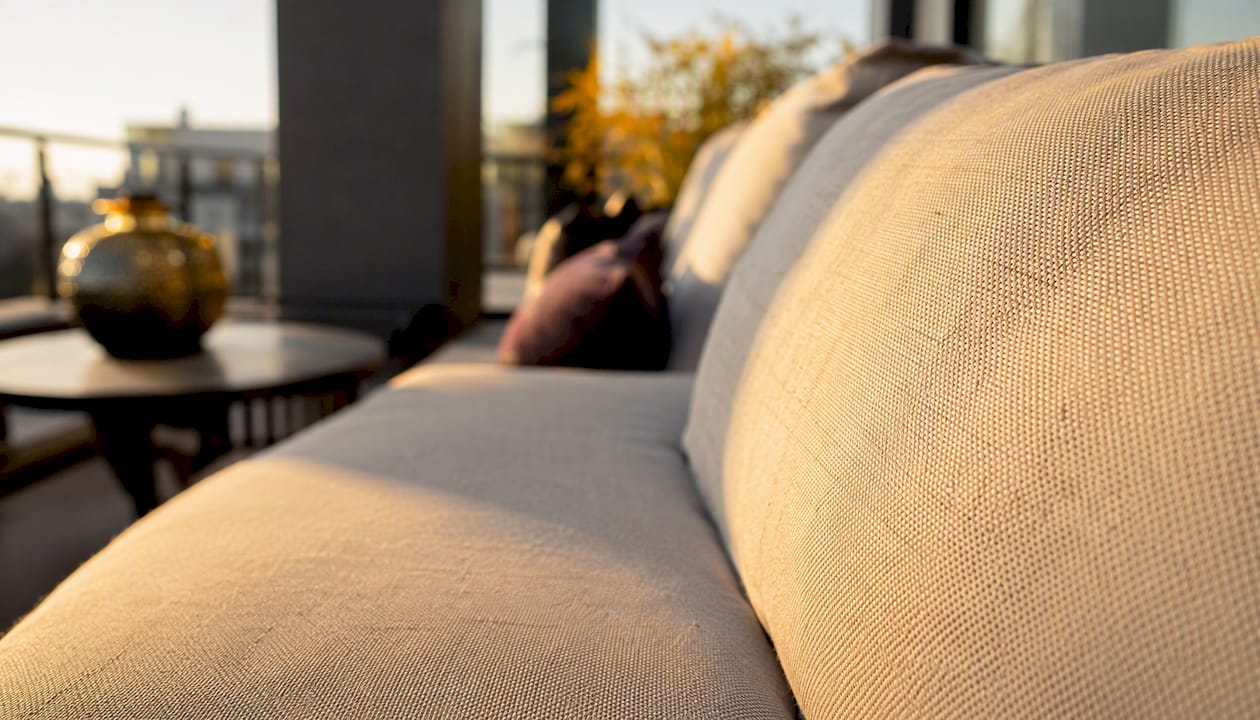
For furniture that lives in real sun, solution-dyed acrylic is the best overall pick, and olefin is the smartest value alternative when the piece sits in part shade. Both outdoor furniture fabrics resist fading far better than the printed cotton blends that fill most big-box showrooms, because the color runs through the fiber instead of sitting on the surface. That single distinction, solution-dyed versus everything else, determines whether cushions look sharp in year one or year five.
The evidence backs this up: solution-dyed acrylic typically carries a lightfastness rating of 7 to 8, the top tier for direct sun exposure, plus strong mildew resistance and bleach-cleanable finishes that survive a real Southern summer.
- Best overall: solution-dyed acrylic, several years in full sun
- Best value: olefin, 3 to 5 years, superior bleach tolerance
- Best for shaded porches: solution-dyed polyester
- Browse curated, performance-graded pieces through Mytotaltake’s outdoor furniture guide
Key Takeaways
Solution-dyed acrylic outperforms every other common outdoor furniture fabric in full sun because its color resists fading for five to ten years while remaining bleach-cleanable and mildew-resistant.
| Point | Details |
|---|---|
| Check for solution-dyed | This single tag phrase separates fabric that survives years of sun from fabric that fades in months. |
| Match fiber to exposure | Full sun calls for acrylic or olefin; shaded areas can use polyester, cotton, or canvas. |
| Prioritize lightfastness 7 to 8 | This rating band is the real benchmark for fully exposed outdoor upholstery. |
| Maintain drainage and airflow | Quick-dry foam and mesh panels prevent the trapped moisture that causes mildew. |
| Shop curated, spec-verified pieces | Mytotaltake selects outdoor upholstery against the same durability criteria covered here, from solution-dyed fiber to verified warranties. |
Table of Contents
- The Full-Sun Fabric Ladder: Match Fabric to Sun Exposure
- Rung 1: Solution-Dyed Acrylic Sets the Performance Standard
- Rung 2: Olefin Delivers Real Value Without the Premium Price
- Rung 3: Solution-Dyed Polyester Works Well in Part Sun
- Rung 4: Printed and Piece-Dyed Polyester Fade Fast in Open Sun
- Rung 5: Cotton, Canvas, and Duck Cloth Belong Indoors Mostly
- How to Read the Fabric Tag Before You Buy
- Care Habits That Extend the Life of Any Outdoor Fabric
- Matching Fabric to Sun Exposure and Running the Numbers
- Brands to Know and Where to Find Curated Options
- The Environmental Trade-Offs Behind Outdoor Fabric Choices
- Buying Luxury Outdoor Upholstery That Actually Lasts
- Where to Buy Curated, Long-Lasting Outdoor Upholstery
- Sources
The Full-Sun Fabric Ladder: Match Fabric to Sun Exposure
Not every cushion needs the same fabric. A chaise baking on an open deck has completely different needs than a dining chair under a covered pergola. The ladder below ranks common outdoor upholstery materials by real-world sun survival, from toughest to least durable.
| Rung | Fabric category | Sun survival (years) | Cost tier | Best use case |
|---|---|---|---|---|
| 1 | Solution-dyed acrylic | several years | High | Full sun, coastal |
| 2 | Olefin (solution-dyed polypropylene) | 3 to 5 | Low to mid | Part sun, high-traffic |
| 3 | Solution-dyed polyester | moderate duration | Mid | Part sun, covered patios |
| 4 | Printed or piece-dyed polyester | short term | Low | Shade, seasonal use |
| 5 | Cotton, canvas, duck cloth | short term | Low to mid | Deep shade, covered porches |
Pro Tip: Darker, saturated colors tend to hold up visually longer than pale pastels, since minor fading is less noticeable. Pairing rung 3 or 4 fabrics with a pergola or retractable shade can buy them another season or two of good looks.
Whatever rung you land on, check the tag for the words “solution-dyed” before anything else. That phrase, more than any marketing claim, tells you whether a fabric belongs outdoors at all.
Rung 1: Solution-Dyed Acrylic Sets the Performance Standard
Solution-dyed acrylic earns the top rung because of how it’s made, not just what it’s made of. Manufacturers add pigment to the acrylic solution before it’s extruded into fiber, so color runs all the way through rather than sitting on the surface. That’s why solution-dyed acrylic resists fading for five to seven years or more, even in punishing coastal sun.
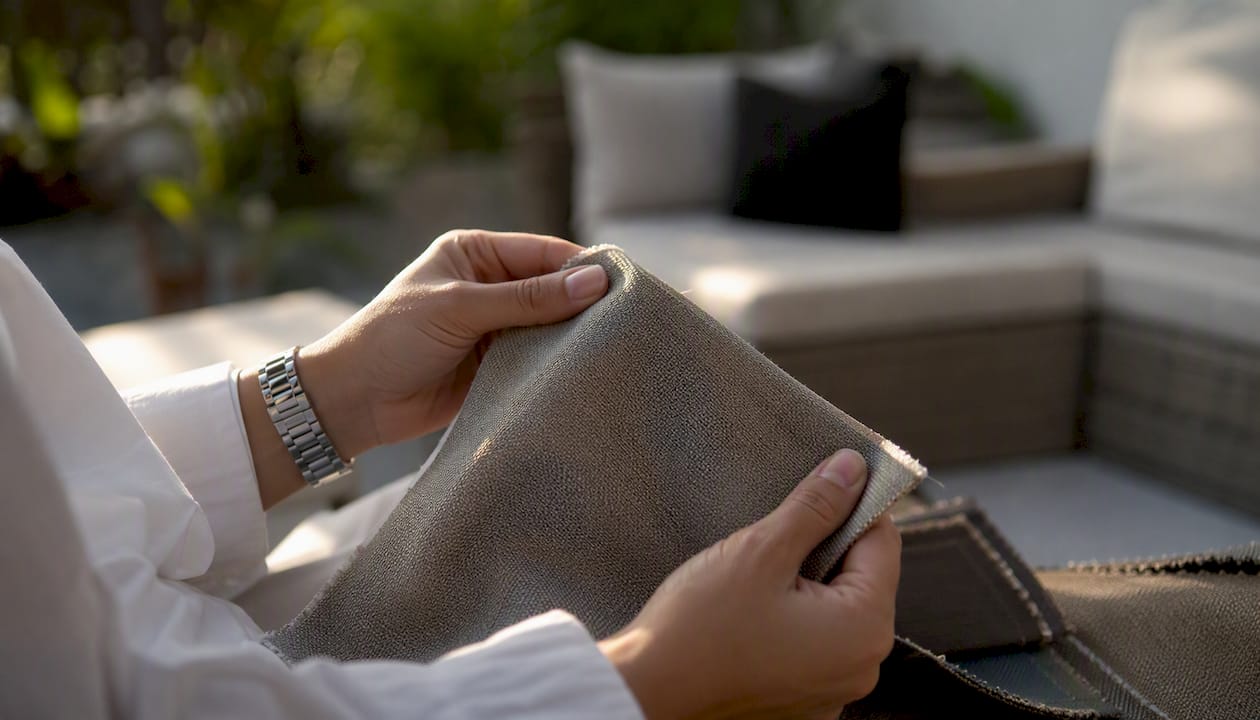
Most quality lines carry lightfastness ratings of 7 to 8, multi-year manufacturer warranties, and bleach-cleanable finishes that handle mold, sunscreen stains, and pollen without breaking down. Brands like Sunbrella and Perennials built their reputations on exactly this fiber category, and their tech sheets are worth reading before you buy anything labeled “outdoor.”
Solution-dyed acrylic fits best when:
- Furniture sits in unobstructed, all-day sun
- The home is coastal or humid, where mildew resistance matters
- You want a fabric that survives a decade, not a season
Rung 2: Olefin Delivers Real Value Without the Premium Price
Olefin, technically solution-dyed polypropylene, is the pragmatic choice for households that need toughness without acrylic’s price tag. It’s the most bleach-tolerant fiber commonly used outdoors, which makes it forgiving around pets, kids, and red wine.
In direct sun, expect a shorter run than acrylic, typically 3 to 5 years before noticeable fading, but in part-sun settings it can outlast that estimate considerably. Olefin also resists staining exceptionally well and cleans up fast with a hose and mild soap.
Reach for olefin when:
- The patio gets filtered or afternoon-only sun
- You’re furnishing rental property or a vacation home
- Aggressive, frequent cleaning matters more than a decade-long lifespan
Rung 3: Solution-Dyed Polyester Works Well in Part Sun
Solution-dyed polyester sits a notch below acrylic and olefin, but it’s a legitimate mid-range option for covered patios and porches that get filtered light rather than a full afternoon of direct sun. The key word again is “solution-dyed.” Ordinary polyester gets its color painted onto the surface after weaving, which is a completely different process with different durability characteristics.
Look for a lightfastness rating in the mid-range on the tag, and confirm the listing explicitly says solution-dyed rather than just “outdoor” or “weather-resistant,” terms that carry no enforced meaning.
Rung 4: Printed and Piece-Dyed Polyester Fade Fast in Open Sun
Piece-dyed and printed outdoor fabrics typically show noticeable fading within about 18 months in direct sun, long before the frame or foam shows any wear at all.
These fabrics dominate discount furniture racks because they’re cheap to produce and look vibrant on day one. They’re fine for a covered gazebo used three months a year or a seasonal setup you’ll replace anyway. In full sun, though, you’re often buying new cushions annually, which erases any upfront savings within two seasons.
Rung 5: Cotton, Canvas, and Duck Cloth Belong Indoors Mostly
Natural fibers look wonderful in catalog photos and perform poorly outside. Cotton and canvas absorb water, dry slowly, and develop mildew within days of a missed rainstorm. Direct sun fades them faster than most synthetic options.
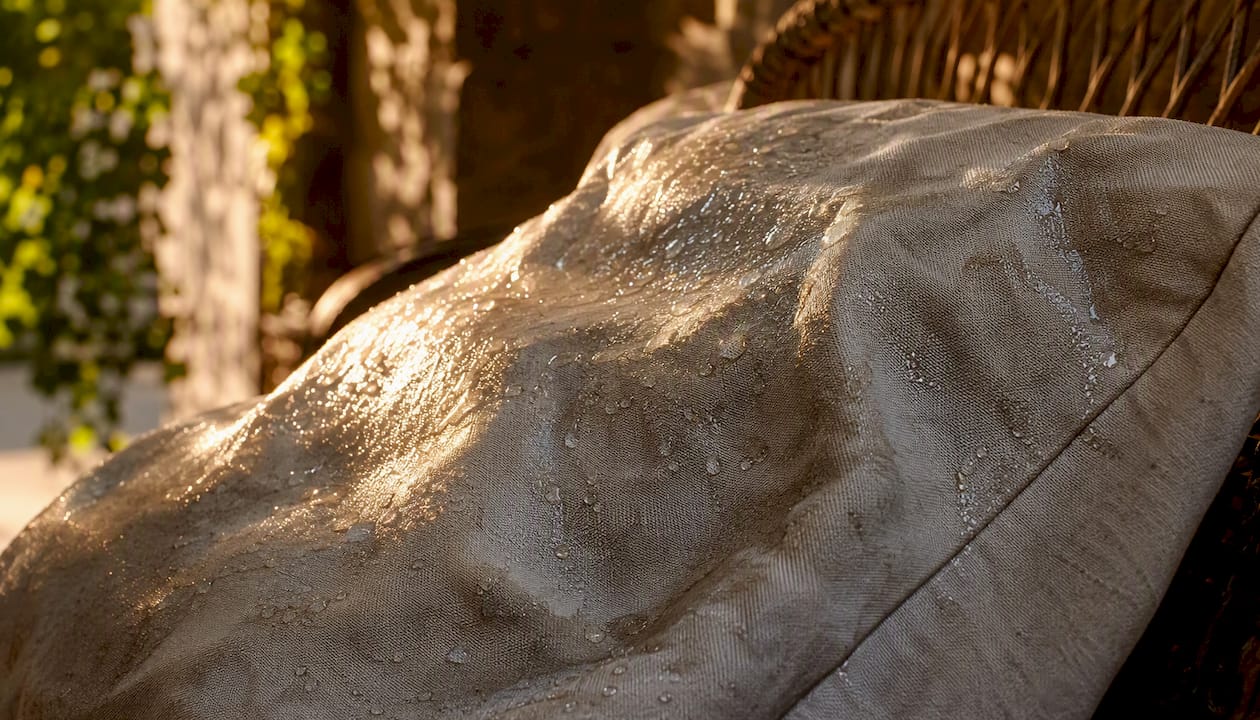
They still have a place: deep-shade porches, sunrooms, or transitional spaces between indoor and outdoor living.
Pro Tip: Only choose natural fiber upholstery outdoors if you’re committed to bringing cushions inside before every rain and storing them over winter. Otherwise, treat this rung as decorative accent fabric, not primary upholstery.
How to Read the Fabric Tag Before You Buy
The tag on a bolt of outdoor upholstery fabric tells you almost everything that matters, if you know what to look for. Run through this checklist before you commit:
- Confirm the words “solution-dyed” appear explicitly, not just “fade-resistant”
- Check the lightfastness rating (aim for 7 to 8 in full sun, 5 to 6 for covered areas)
- Look for a bleach-cleanable claim in the care instructions
- Verify a mildew-resistance certification or treatment
- Ask for the rub count (double rubs), which indicates abrasion resistance
- Confirm fabric width, since narrow bolts mean more seams on large cushions
- Request the manufacturer’s warranty length in writing
In a showroom, do a quick pinch-and-rub test. Thin, glossy, printed fabrics feel flat and slightly stiff; solution-dyed performance fabrics have more texture and a slightly matte hand-feel. When ordering online, buy a little extra yardage and ask the seller for a technical data sheet if you’re outfitting a large project or a rental property that needs a commercial-grade warranty.
Care Habits That Extend the Life of Any Outdoor Fabric
Even the best fiber underperforms without basic upkeep. A consistent routine matters more than any single expensive purchase.
- Hose off pollen, dust, and debris weekly during peak season
- Spot-clean spills immediately with mild soap and water before they set
- Unzip removable covers periodically to air out foam and prevent trapped moisture
- Reapply a fabric protector spray once a season, especially after deep cleaning
- For bleach-safe fabrics, follow the manufacturer’s dilution ratio exactly. Overdoing it degrades fibers over time
Construction details matter just as much as care habits. Quick-dry reticulated foam and mesh drainage panels let water pass through instead of pooling inside the cushion, which is the single biggest factor in preventing mildew. Standard upholstery foam holds water and rots from the inside out.
Pro Tip: Keep a small deck box near your seating area for storing throw pillows during storms. It takes thirty seconds and can add years to fabrics that would otherwise soak through repeatedly.
Matching Fabric to Sun Exposure and Running the Numbers
Start with exposure, not aesthetics. A chair in full, unbroken sun needs rung 1 or 2. Anything under a pergola, awning, or mature tree canopy can drop to rung 3. Deep shade opens the door to rungs 4 and 5, if you’re comfortable with a shorter lifespan.
The math favors quality more often than people expect. A printed polyester cushion set costing $150 that needs replacing every season runs $450 over three years. A solution-dyed acrylic set at $400 that lasts seven years works out to roughly $57 per season, less than a sixth of the printed option’s annual cost.
- Full sun, daily use: invest in rung 1 for every seat
- Part sun or occasional use: rung 2 or 3 is smart and economical
- Low-traffic accent chairs: save money with rung 4 or 5 if shaded
Spend where the sun and wear concentrate, and economize on pieces that rarely see direct light.
Brands to Know and Where to Find Curated Options
A handful of names dominate serious outdoor upholstery specification sheets. Sunbrella remains the benchmark for solution-dyed acrylic and publishes detailed technical data on lightfastness and warranty terms. Perennials is known for performance fabrics that mimic linen and velvet without sacrificing durability. Revolution Fabrics has built a strong reputation in solution-dyed polyester for budget-conscious, design-forward buyers.
When comparing product data sheets, ask specifically for lightfastness hours, warranty length, and the cleaning code (a letter rating that tells you which solvents are safe). Mytotaltake curates outdoor upholstery selected against exactly these criteria, pairing performance fabric with frames worth reupholstering in the first place.
The Environmental Trade-Offs Behind Outdoor Fabric Choices
Durability and sustainability tend to align more than people assume. A solution-dyed acrylic cushion that lasts eight years keeps that much material out of a landfill compared to a printed polyester set replaced three or four times over the same span. Longevity is, in a real sense, the most straightforward sustainability metric available in textiles.
That said, most performance fabrics, including acrylic, olefin, and polyester, are synthetic and petroleum-derived. None of them biodegrade quickly, and manufacturing them carries a real carbon footprint. Some manufacturers have started offering recycled-content lines, particularly in polyester, made from reclaimed plastic bottles, though performance can vary and buyers should confirm lightfastness ratings independently rather than assuming recycled content matches virgin fiber durability.
Natural fibers like cotton and canvas biodegrade more readily but come with their own environmental cost, since cotton cultivation is water-intensive and often chemically treated. Their shorter outdoor lifespan also means more frequent replacement, which can offset any end-of-life advantage.
The most sustainable outdoor fabric strategy for most homeowners is a combination approach: choose long-lasting solution-dyed fabric for pieces that see the most sun and use, minimize impulse purchases of short-lived printed textiles, and maintain what you already own through proper cleaning and storage rather than replacing at the first sign of wear. A cushion that lasts a decade, regardless of fiber origin, will almost always beat the environmental math of one replaced annually.
Buying Luxury Outdoor Upholstery That Actually Lasts
Design-conscious buyers often assume the softest, most tactile fabric in the showroom is the right choice for a sunroom or patio. It rarely is. The fabrics that photograph beautifully on day one are frequently the ones fading by the following summer.
A durability-first approach doesn’t mean sacrificing style. Solution-dyed acrylic and quality olefin now come in weaves and textures sophisticated enough to sit in any well-designed room, and mixing a durable rung 1 fabric on your most-used seating with softer, shaded accent pieces lets you preserve both aesthetics and budget. The trick is being deliberate about where performance matters most and where it doesn’t.
Reupholstering with the right fiber is one of the few home upgrades where the smart choice and the good-looking choice are usually the same choice.
Where to Buy Curated, Long-Lasting Outdoor Upholstery
Big-box retailers make it nearly impossible to verify lightfastness ratings or cleaning codes before checkout, which is exactly why so many homeowners end up replacing cushions after a single summer. Mytotaltake takes the guesswork out of that decision by curating outdoor furniture around the same durability-first criteria laid out in the Full-Sun Fabric Ladder, solution-dyed construction, verified warranty terms, and real cleanability, rather than showroom appeal alone.

Every piece in the collection is chosen with long-term performance and design coherence in mind, so you’re not choosing between style and survival. Shopping through Mytotaltake’s curated outdoor furniture selection also comes with fast delivery and free returns, so you can evaluate fabric and fit in your own space before committing. If you’re refurbishing an existing set, start with the outdoor furniture buying guide to see which frames and fabric pairings hold up longest, then browse current collections to find your next piece.
Sources
For technical specifications beyond what any retailer lists, go straight to manufacturer resources:
- Outdoor Furniture Cushions: Best Sun-Proof Fabrics
- Outdoor Fabric Buying Guide: What Actually Matters
- How to Choose Upholstery Fabric for Outdoor Cushions and Pillows That Survive Summer Rain, Sun, and Heavy Use
- Outdoor Upholstery Fabric: Complete Professional Guide | | StitchDesk
Always request a current tech sheet before a large purchase. Lightfastness ratings, mildew certifications, and cleaning codes change between fabric seasons, and the sheet in hand should match the bolt you’re buying.
Recommended
A Practical Guide to Selecting Bathroom Faucets
Comments
[…] you’re shopping for a set that won’t ask this much of you, our guide to outdoor furniture fabrics walks through exactly which specs hold up under real sun and real weather, and our broader piece on […]







Leave a comment