
Homeowners Curate a Premium Outdoor Entertaining Kit in 20 Minutes
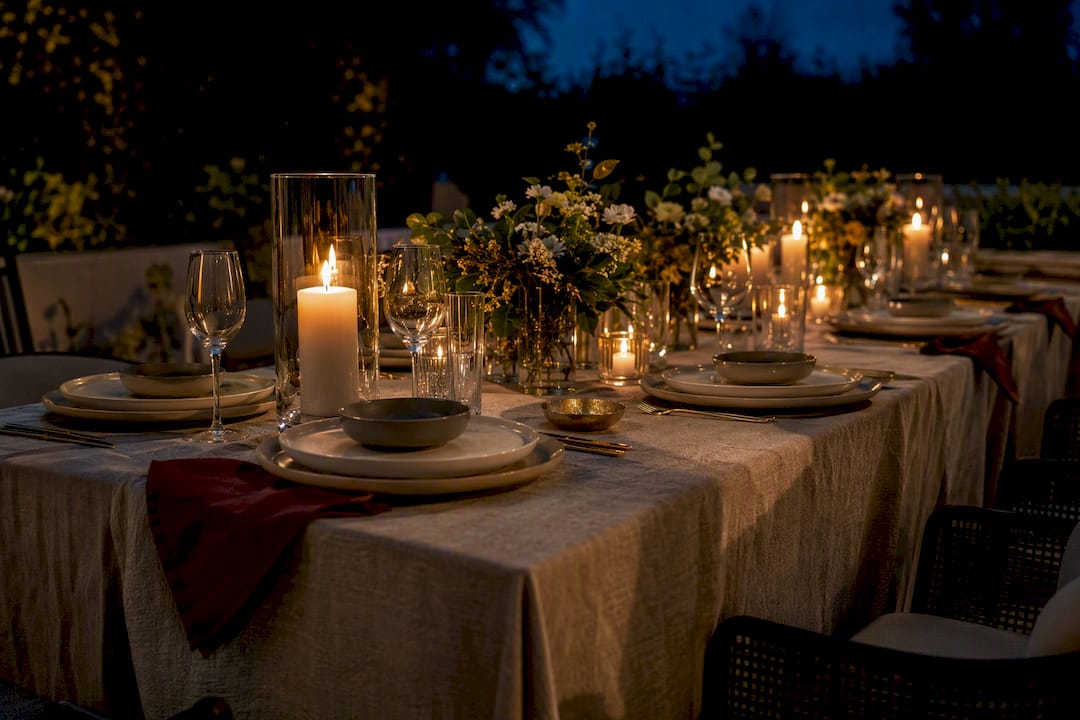
Premium outdoor entertaining comes down to intentional layers: quality materials, warm lighting stacked at different heights, real guest comfort, and a service flow that keeps the host at the table instead of running to the kitchen. The fastest way to start is small. Choose a three-color palette, then anchor your table with a linen cloth or a runner before you add anything else.
TL;DR:
- Choosing durable materials like linen, stoneware, and real flatware creates a visually substantial tablescape that withstands outdoor conditions and enhances the premium look.
- Layered warm lighting, including candles, portable lamps, and string lights hung at 9 to 10 feet, is essential for setting a cozy and inviting ambiance.
- Proper shading with umbrellas or pergolas and wind protection with weighted linens and enclosed candles are critical for guest comfort and safety during extended outdoor events.
- Planning a service flow with dedicated stations, trays, and pre-poured pitchers reduces host movement and maintains an uninterrupted, relaxed dining experience.
- Investing in a small, versatile kit of high-quality essentials and storing them properly ensures consistent elegance and quick setup for multiple gatherings.
Table of Contents
- Tablescape Essentials: Layering, Palette, and Centerpiece Rules
- How Do You Light an Outdoor Table for a Long Dinner?
- Keeping Guests Comfortable When the Weather Doesn’t Cooperate
- Building a Service Flow That Doesn’t Pull You Away From Guests
- Materials, Durability, and What Actually Reads Premium
- Three Signature Looks You Can Assemble Fast
- Setting the Mood With Sound
- Where to Store Everything Between Gatherings
- Fire Safety and Insect Control for Evening Events
- Why Curation and a Small Kit Beats a Bigger Budget
- Shop the Kit: Where MyTotalTake Fits Into Your Setup
- Sources
- FAQ
Tablescape Essentials: Layering, Palette, and Centerpiece Rules
A premium tablescape is built in six layers, and skipping one is usually why an outdoor table looks flat instead of finished. Start with your palette, pulled from what’s already around you (garden greens, terra cotta, dusty blue), then build up: tablecloth or runner, placemats, dinnerware, flatware, and finally the centerpiece.
Material choice does the heavy lifting outdoors. Linen holds up to breeze better than cotton and drapes with more weight. Raffia or jute placemats add texture without competing with your dinnerware. Stoneware plates read as substantial rather than disposable, and cloth napkins signal you treated the patio table the same way you’d treat the one inside. Interior designers consistently point out that avoiding disposable materials is what separates a backyard picnic from an actual dinner party.
Centerpieces have one job: not blocking conversation. Designers follow the elbow-height rule, meaning a centerpiece sits below elbow level or rises well above eye line, never in between where it interrupts sightlines across the table, a principle laid out clearly by Maison Perrin’s styling guidance.
- Pick one dominant color and two supporting tones, then stop.
- Layer linen, placemats, stoneware, and flatware in that order.
- After the table looks “done,” remove three items. It will look more finished, not less.
Pro Tip: Set the full table exactly as planned, then walk away for five minutes. Come back and remove the three least necessary objects. This one edit fixes more cluttered tables than any product purchase.
How Do You Light an Outdoor Table for a Long Dinner?
Lighting is the single most important element to get right for an evening gathering, and layered warm sources beat one bright overhead fixture every time, according to designer Bobby Berk’s outdoor dining guidance. Think in three tiers rather than one flood of light.
Candle-level light sits closest to the table and does the most emotional work. Glass-enclosed pillar candles give you that flicker without the wind hazard. A layer above that, rechargeable dimmable table lamps handle task lighting for pouring wine or reading a menu card. The top layer is ambient: warm-white globe string lights hung around 9 to 10 feet high, casting a soft glow without competing with the candlelight below.
- Candles: glass hurricanes or lanterns, clustered in odd numbers down the table’s length.
- Mid-level: one or two portable lamps near serving areas, not directly over plates.
- Overhead: string lights at 9 to 10 feet, warm white only, never cool or blue-toned bulbs.
Pro Tip: If you can read a menu without squinting but can’t see the string lights’ individual bulbs, your balance is right. Overly bright displays are the fastest way to kill the mood you spent an hour building.
Keeping Guests Comfortable When the Weather Doesn’t Cooperate
Shade is not optional for a gathering that runs past an hour; choosing the right materials like umbrellas, canopies, or pergolas is essential, as explained in How to Choose Exterior Materials for Your Custom Home in Arizona. Umbrellas, canopies, or a pergola protect guests from sunburn and keep food from spoiling in direct heat, a basic but often overlooked piece of hosting logistics. A tablescape that looks flawless at 4 p.m. can wilt, literally, by 6.
Wind is the other silent threat to a luxury patio setup. Heavy linen resists lifting better than lightweight cotton, weighted napkin rings keep place settings intact, and glass hurricane lanterns protect open flames from gusts that would otherwise leave you relighting candles all night.
- Add shade early: umbrella, canopy, or pergola, positioned before guests arrive.
- Weight anything fabric: linens, napkins, even place cards.
- Keep candles in glass enclosures, never open flame in a breeze.
- Use a Thermacell or perimeter repellent instead of table-side sprays that smell up the food.
- Cover drink stations with lidded dispensers to keep insects and debris out.
Building a Service Flow That Doesn’t Pull You Away From Guests
The best outdoor dining experiences share one trait: the host barely leaves the table. That’s a staging problem, not a personality trait. Set up a dedicated prep-to-serve zone within arm’s reach of the dining area, and keep a separate bar station so drink requests don’t interrupt food service.
Handled serving trays and a lazy Susan cut down trips dramatically, especially for family-style spreads where guests can pass dishes themselves. Martha Stewart’s al fresco dining guidance recommends planning one water pitcher per four guests, plus a lidded dispenser for anything sweeter, so nobody’s chasing you down for a refill.
- Stage all serving dishes on one tray before guests sit down.
- Set the bar area separately, stocked before the first course.
- Place a lazy Susan or shared platters within reach of every seat.
- Pre-pour water pitchers, one per four guests, before the first course.
- Keep a second tray empty nearby for clearing plates between courses.
Pro Tip: Batch everything onto trays before dinner starts. One trip out, one trip back, and you’re seated for the entire main course instead of standing at the kitchen door.
Materials, Durability, and What Actually Reads Premium
Disposable tableware and plastic-feeling outdoor sets are the fastest way to undercut an otherwise beautiful setup. Homes & Gardens’ styling analysis points to this as the single most common mistake hosts make outdoors: reaching for paper plates and flimsy cutlery because it feels “practical” for the yard.
Weighted stoneware, real flatware, and linen carry visual weight that plastic simply can’t fake, and they hold up season after season with basic care. Shatterproof acrylic glassware is the one reasonable exception, useful around a pool or on uneven ground where breakage risk is real.
Build your starter kit in this order of priority:
- Linen tablecloth or runner, in a neutral tone that works with multiple palettes.
- Real flatware, stainless or silver plate, not disposable.
- Stoneware plates and bowls, weighted enough not to lift in a breeze.
- Two or three glass candle holders, hurricane style.
- One string of warm-white outdoor lights. Durable, weather-rated furniture and lighting fixtures built to last multiple seasons are available by browsing a dedicated patio and garden collection shortens the shopping process considerably.
Three Signature Looks You Can Assemble Fast
Each of these setups reuses the same core kit with a different palette and lighting mix, so you’re not buying new inventory every season.
- Modern coastal. White and sand linen, glass or acrylic glassware, a low bowl of citrus or a clear pitcher with fresh herbs as the centerpiece. Light with white string lights at 9 to 10 feet and one or two glass hurricanes down the table’s center. Assembly takes under twenty minutes once the linen and glassware are on hand.
- Rustic elegant. Terra cotta and olive palette, raffia placemats, stoneware plates, and a wood cutting board topped with small bowls as a functional, edible centerpiece. Add warm pillar candles in amber glass and skip the overhead lights entirely if the table sits under a pergola.
- Evening glam. Deep navy or charcoal linen, gold flatware, and a cluster of three low candle groupings instead of a floral centerpiece. String lights stay dim and warm, positioned to frame the table rather than flood it.
Setting the Mood With Sound
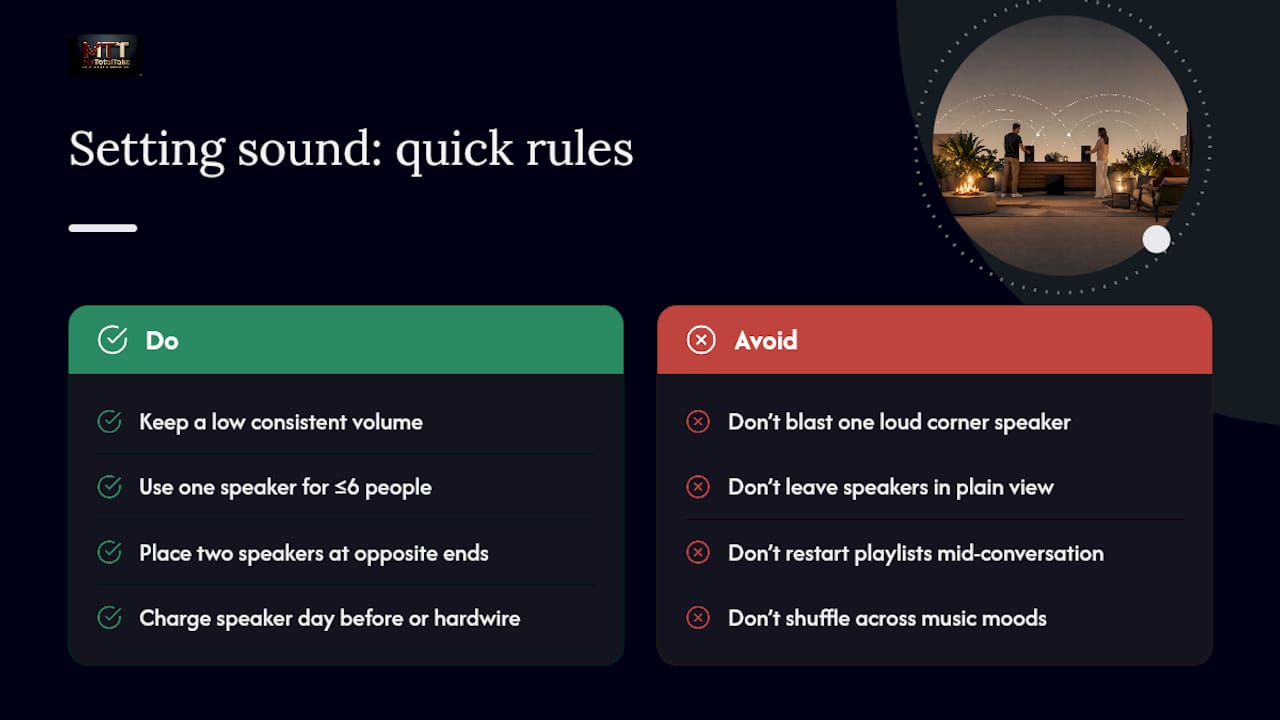
Background music finishes a premium setup the same way lighting does: it should be felt more than noticed. The goal is a consistent, low volume across the whole seating area, not one loud speaker blasting from a corner.
A single portable weatherproof speaker works for smaller tables of six or fewer. Once you’re hosting larger groups or spreading guests across a patio and lawn, two smaller speakers positioned at opposite ends of the space create even coverage without anyone sitting directly in the sound’s path. Placement matters more than volume. Tuck speakers behind planters or furniture rather than setting them out in the open, where they become a visual distraction on an otherwise curated table.
Playlist length matters too. Build something that runs at least two hours longer than you expect dinner to last, since restarting a playlist mid-conversation breaks the atmosphere faster than almost anything else. Keep the genre consistent (acoustic, jazz, soft bossa nova) rather than shuffling across moods, which tends to shift the room’s energy unpredictably. If your patio has built-in electrical access, a hardwired outdoor system removes the battery-life concern entirely, but for most home gatherings, a quality portable speaker charged the day before is plenty.
Where to Store Everything Between Gatherings
The gap between “looks premium” and “feels like a hassle” often comes down to storage. Linens need to stay dry and pressed, not crumpled in a junk drawer, and glassware needs a home where it won’t chip between uses.
A dedicated storage bench or weatherproof cabinet on the patio keeps cushions, linens, and lanterns within reach without cluttering the dining area itself. For candles, flatware, and smaller serveware, a lidded storage tote kept indoors or in a garage prevents sun fading and moisture damage that outdoor cabinets can’t always fully block. String lights last longer when wound loosely around a spool or hanger instead of balled into a bag, which is where most bulb breakage actually happens.
If you’re hosting often enough that setup and teardown feels repetitive, investing in furniture with built-in storage, a bench seat with a lift-top, for instance, solves two problems at once. Browsing options built specifically for durability and years of seasonal use, like the pieces covered in this guide to patio furniture that holds up over time, can save you from buying flimsy storage twice.
Fire Safety and Insect Control for Evening Events
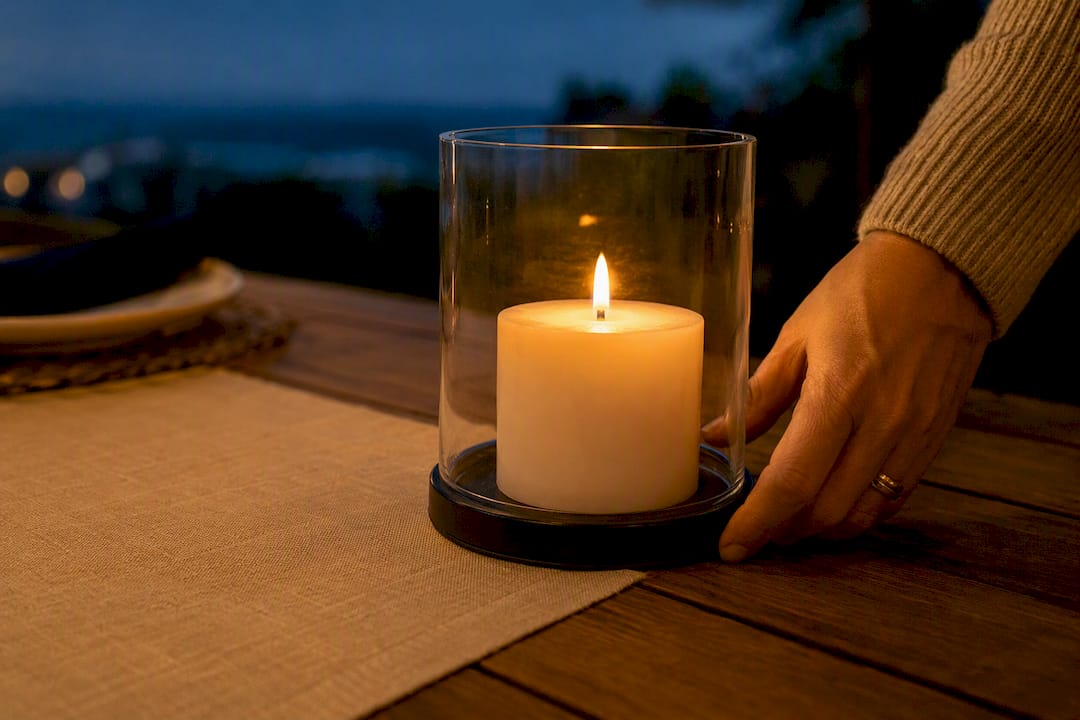
Open flame and a yard full of guests require a bit more attention than an indoor dinner party. Glass-enclosed pillar candles and hurricane lanterns aren’t just a style choice. They’re a safety measure, since enclosed flames resist wind gusts that would otherwise tip an open candle onto a linen tablecloth. Keep any candle at least six inches from fabric edges and never leave lit candles unattended once guests move to a different part of the yard.
Insect control deserves the same seriousness as fire safety, particularly at dusk when bites are most likely. A Thermacell or a perimeter repellent placed around the seating area works better than table-side sprays, which can drift onto food and drinks. Covering drink dispensers and food trays with lids or mesh domes keeps pests out without requiring constant swatting between courses. For guests with sensitivities, keep a citronella-free backup option on hand, since not everyone tolerates strong perimeter treatments equally well.
Why Curation and a Small Kit Beats a Bigger Budget
Investing in versatile, quality pieces (a few great linens, real flatware, stoneware that mixes and matches) pays off across many seasons, not just one party. A small curated kit reused with different palettes will always look more intentional than a larger collection assembled in a rush. Restraint, that habit of removing three items instead of adding three more, is what separates a genuinely premium outdoor table from one that just has more stuff on it.
— Lysander
Shop the Kit: Where MyTotalTake Fits Into Your Setup
Mytotaltake is the faster route to the exact kit this article just walked through, without the hours of comparing linen weights and stoneware finishes across a dozen separate stores. Every category above lines up with a dedicated collection built for browsing, not guesswork.

Here’s where each piece of your setup lives:
- Tablescape linens, stoneware, and candle holders: the Home & Garden collection.
- Real flatware, serving trays, and lazy Susans: the Kitchen collection.
- Weatherproof furniture, storage benches, and lounge sets: the Patio, Lawn & Garden collection and the Furniture collection for larger dining sets built to last multiple seasons.
Orders ship with delivery and have a returns process if a piece doesn’t match your palette once it’s on the table. Start with the patio collection, pick your three-color palette, and build outward from there.
Sources
- How to Set an Outdoor Table for Al Fresco Dining — Martha Stewart
- The 5 Mistakes That Make an Outdoor Table Setting Look Cheap — Homes & Gardens
- Outdoor Dining Tips: How To Elevate Your Table — Bobby Berk
FAQ
What Makes Outdoor Entertaining Feel Premium?
It comes down to layering: a proper tablescape with linen and real dinnerware, warm layered lighting instead of one bright overhead source, and a service flow that keeps the host seated. Quality materials over disposable ones make the biggest visible difference.
How High Should String Lights Be Hung Over a Dining Table?
Warm-white string lights should hang at a gentle overhead height to act as ambient light rather than the main source, per Bobby Berk’s lighting guidance. Pair them with candle-level light and portable lamps for a layered effect.
What Is the Elbow-Height Rule for Centerpieces?
Centerpieces should sit below elbow height or rise above eye level so they don’t block conversation across the table, a rule detailed in Maison Perrin’s styling guide. A low bowl of citrus or a clear pitcher with herbs both satisfy this rule easily.
How Many Water Pitchers Do I Need for a Dinner Party?
Plan for one water pitcher per four guests to keep the table stocked without constant refills, a guideline from Martha Stewart’s al fresco dining advice. A lidded dispenser works well for sweeter drinks that need protection from insects.







Leave a comment