
Sound, Recognition, and Style: Smart Speaker Placement for Homeowners
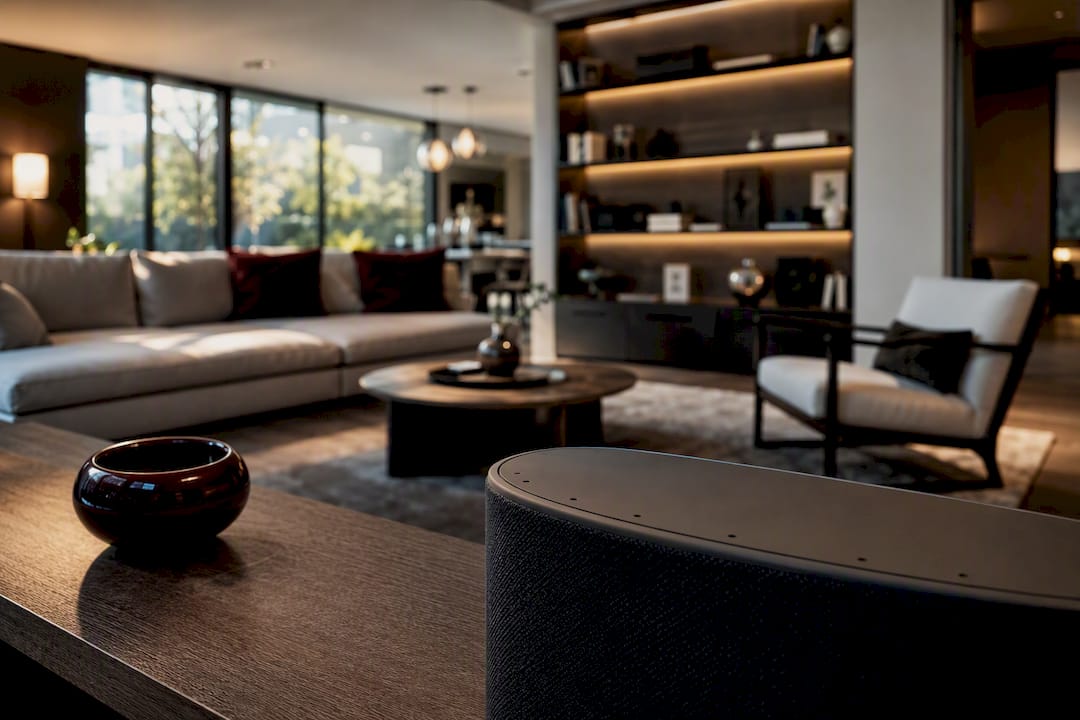
The best spot for a smart speaker is an open surface a few inches from the nearest wall, ideally near where you actually stand or sit to talk, at roughly mouth or ear height. That combination gives the microphone array clean, unobstructed air to listen through and keeps the sound from bouncing off nearby corners. Everything else, from kitchen counters to bedroom nightstands, is a variation on that same principle.
TL;DR:
- Placing a smart speaker on an open, flat surface near eye or mouth level, 6 to 12 inches from the wall, ensures optimal microphone performance.
- Avoid placing devices into corners, behind furniture, or inside cabinets, as reflections and muffling impair voice recognition.
- Position speakers in rooms based on typical conversation zones, keeping them away from noisy appliances, windows, and Wi-Fi interference sources.
- Mounting or decorating should never obstruct the microphone face or direct sound into enclosed surfaces to maintain recognition accuracy.
- For better privacy and performance, keep speakers away from windows, doors, and metal objects, and verify Wi-Fi strength in the chosen spot before permanent placement.
Table of Contents
- Why Smart Speaker Placement Affects Voice Recognition and Sound
- Best Placement by Room: Living Room, Kitchen, Bedroom, and More
- Smart Speaker Placement Mistakes That Quietly Hurt Performance
- Mounting and Decor Ideas That Don’t Block the Microphones
- Privacy, Wi-Fi, and a Quick Troubleshooting Checklist
- Balancing Beautiful Rooms With Devices That Actually Work
- Furnishing Your Home Around Better Placement
- Sources
- FAQ
Why Smart Speaker Placement Affects Voice Recognition and Sound
Every smart speaker relies on a small array of microphones working together, a process called beamforming, to isolate your voice from background noise. That array performs best with a clear line of sight and open air around it. Wedge it into a corner or behind a lamp, and the reflected sound waves confuse the array, which is why so many “it never hears me” complaints trace back to placement rather than the device itself.
The manufacturer guidance is fairly consistent across brands. Practical placement guides recommend keeping speakers roughly 6 to 12 inches from the nearest wall, with Amazon’s own historical recommendation landing near several inches. That gap matters because placing a speaker too close to a wall or into a corner causes bass buildup and acoustic reflections that muddy both playback and voice pickup.
A few more rules worth building into any room plan:
- Aim for a height roughly at mouth or ear level, adjusted for whether you mostly talk to it standing or seated.
- Choose solid, flat surfaces like wood or stone over upholstered furniture, since soft fabric surfaces absorb sound and muffle the microphones.
- Keep multiple units at least several feet apart so a single voice command doesn’t trigger two speakers at once.
- Skip enclosed shelving unless the front face stays completely open.
Pro Tip: If you’re torn between two spots, pick the one closer to where conversations naturally happen. Recognition accuracy tracks conversational distance more closely than geometric room center.
Best Placement by Room: Living Room, Kitchen, Bedroom, and More
Every room in the house has its own noise sources, foot traffic, and furniture layout, so the “ideal” spot shifts depending on what’s around it.
- Living room. A coffee table or side table near the main seating area works better than a shelf across the room. Avoid tucking the speaker directly behind the TV, where the screen and cabinet reflect sound and block the mic array; for further improvement, consider noise control strategies like those in noise-reducing interior door options that actually work. If you’re planning a broader setup, our guide to sound for large living rooms walks through balancing a soundbar with a voice assistant in the same space.
- Kitchen. Counters near the prep area make commands easy to shout mid-recipe, but keep the unit away from the sink, stove, and range hood fan. A little elevation, on a shelf or small stand, helps since kitchen conversations happen standing.
- Bedroom. Nightstand or dresser height works well for bedside voice commands, but think about sightlines to windows before settling on a spot; more on that below.
- Home office. Place it off to the side of your desk rather than directly behind a monitor, which can create sound reflections and block pickup. A bookshelf or small rug nearby softens hard-surface echo without hiding the device.
- Bathroom. Unless the model is explicitly rated water-resistant, this room is the one exception to convenient placement. A high shelf away from the shower spray is the safer compromise.
Smart Speaker Placement Mistakes That Quietly Hurt Performance
Some placements look convenient but consistently create problems, whether that’s missed commands, false wake-ups, or actual security exposure.
- Inside a cabinet or bookshelf with doors, where the enclosed space muffles both the mic and the speaker driver.
- Behind a TV or tucked into a tight corner, both of which distort the reflected sound the array picks up.
- On thick rugs, cushions, or upholstered furniture that absorb sound instead of letting it travel.
- Right next to a running appliance, HVAC vent, or dishwasher, where steady noise competes with your voice.
- Directly in front of, or clearly visible through, a window. Security guidance recommends avoiding placement near windows to reduce outside noise interference and limit certain privacy risks.
- Wedged behind a metal appliance or crammed next to the router, both of which can interfere with Wi-Fi signal strength.
Mounting and Decor Ideas That Don’t Block the Microphones
A speaker doesn’t have to look like a gadget sitting on a table to work well. The rule for any mount or cover is simple: never obstruct the microphone face or point the driver into an enclosed surface.
- Wall or ceiling mounts work best when they keep the mic array facing open space, not angled up into a shelf or down into a cabinet.
- Open-backed enclosures and perforated covers let designers hide the device visually while keeping sound and voice pickup intact, an approach covered in more depth in our piece on integrating tech gadgets into home decor.
- A raised stand accomplishes the same goal as a shelf, minus the enclosure, and pairs naturally with existing furniture like the arrangements in our coffee table styling guide.
- Route power cords along baseboards or behind furniture legs rather than looping them near the wall clearance zone you’re trying to preserve.
- Ceiling mounts can deliver strong central coverage in open-plan rooms, but only if the microphone array still faces downward into open air rather than up toward the ceiling.
Pro Tip: A speaker inside a fully enclosed box will always sound worse than one sitting exposed on a shelf, even an ugly one. Function first, then dress it up.
Privacy, Wi-Fi, and a Quick Troubleshooting Checklist
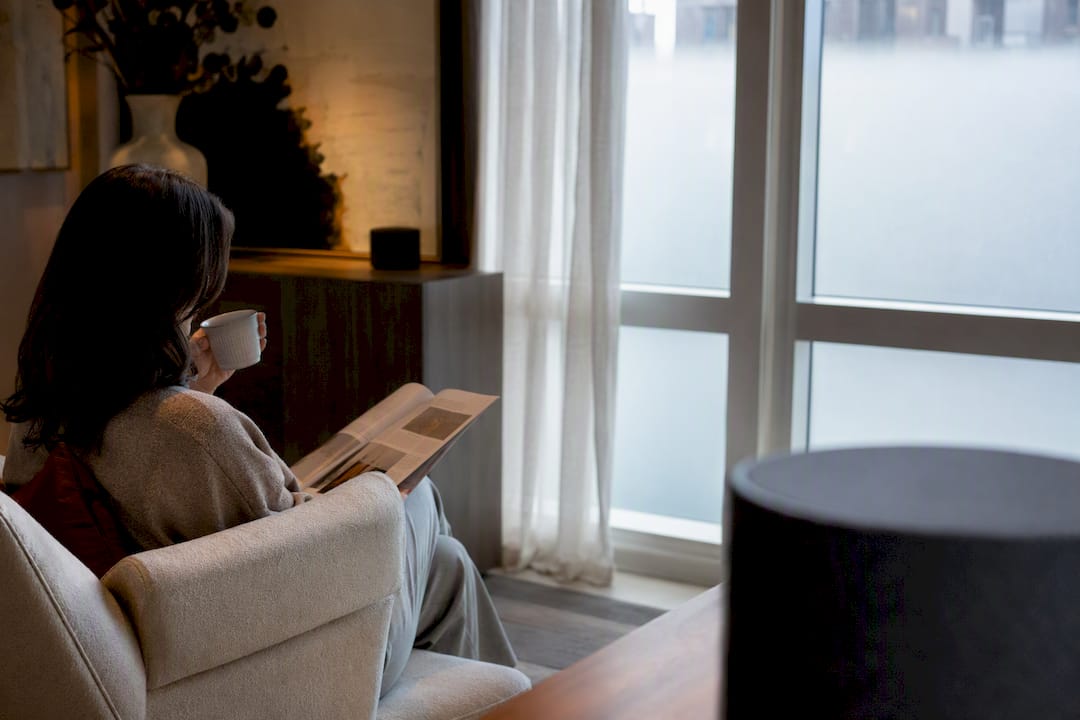
Placement affects more than sound. Keeping a speaker out of direct view from outside, particularly near windows, limits both ambient noise pickup and the kind of line-of-sight exposure security researchers warn about with laser-based eavesdropping attacks. Pair that with a habit of checking firmware updates and putting third-party smart home devices on a guest network.
Wi-Fi performance matters just as much as microphone clearance. Manufacturers and practical guides note keeping smart speakers several feet from routers and large metal appliances to avoid signal interference, and it’s worth testing network strength at your chosen spot before committing to it permanently.
If something feels off, run through this short checklist:
- Missed commands. Move the speaker a few inches away from the nearest wall and retest from your usual talking distance.
- Muddy audio. Swap a soft surface for a solid one, or add a small rug nearby to soften hard-surface echo instead of enclosing the device.
- Frequent false activations. Check for a TV or radio in direct line of sight; shifting the speaker to the side of the screen often solves it.
Balancing Beautiful Rooms With Devices That Actually Work
The best-looking rooms and the best-performing speakers aren’t mutually exclusive, but they do require a little compromise. An open-backed enclosure or a well-placed stand keeps a device visible without dominating a shelf, and most homeowners accept a small amount of visibility in exchange for consistent voice pickup. Good furniture choices do more of that work than people expect.
— Lysander
Furnishing Your Home Around Better Placement
Getting the acoustics right often comes down to having the right piece of furniture in the right spot, not just the right speaker. Mytotaltake’s curated approach means you’re not hunting through generic marketplace listings to find a stand, credenza, or open-backed shelf that actually keeps a microphone array exposed while still looking intentional in the room.

Browse the Gadgets collection for stands, mounts, and accessories built to support proper clearance, or explore Home & Garden for decor-forward furniture pieces that raise a speaker to the right height without boxing it in. If you’re furnishing a room from scratch, our handmade furniture guide is a good starting point for pieces built to last. Start with the room giving you the most trouble and shop that category first.
Sources
- Where Is the Best Place for a Smart Speaker in a Room?
- How to improve your smart speaker privacy
- Microphone array / acoustic behavior findings (Ubicomp lab)
- Smart Speaker Placement Tips for Best Performance – Bright Smart Home
FAQ
What Is the 83% Rule for Speaker Placement?
The consistent, verifiable rule instead is distance-based: keep the speaker roughly 6 to 12 inches from walls and corners to avoid reflections and bass buildup.
How Do I Set Up My Smart Speaker for the Best Performance?
Place it on a solid, flat surface a few inches from the nearest wall, roughly mouth or ear height, in the room where you’ll actually talk to it most. Avoid corners, cabinets, and spots directly next to noisy appliances or the router, then connect it through the manufacturer’s app to confirm Wi-Fi strength at that exact spot.
What Are the Limitations of Smart Speakers?
Smart speakers struggle in enclosed spaces, near steady background noise, and within direct line of sight of a TV, all of which increase missed commands or false wake-ups. They can also pick up ambient sound through windows and are vulnerable to certain line-of-sight security risks, which is why keeping them away from window sightlines is standard security guidance.
What Is the Golden Rule for Speaker Placement?
Give the microphone array open air and a clear line of sight, since unobstructed microphone faces improve beamforming performance and recognition accuracy. If a spot muffles the sound or blocks the mic in any way, it’s the wrong spot regardless of how convenient it looks.
Does Mytotaltake Sell Furniture Designed for Smart Speaker Placement?
Mytotaltake’s Furniture and Home & Garden collections include stands, credenzas, and open shelving suited to keeping a speaker elevated and unobstructed. Current pricing and availability for individual pieces are listed on the site.







Leave a comment