
Review Smart Door Lock With Fingerprint Sensor
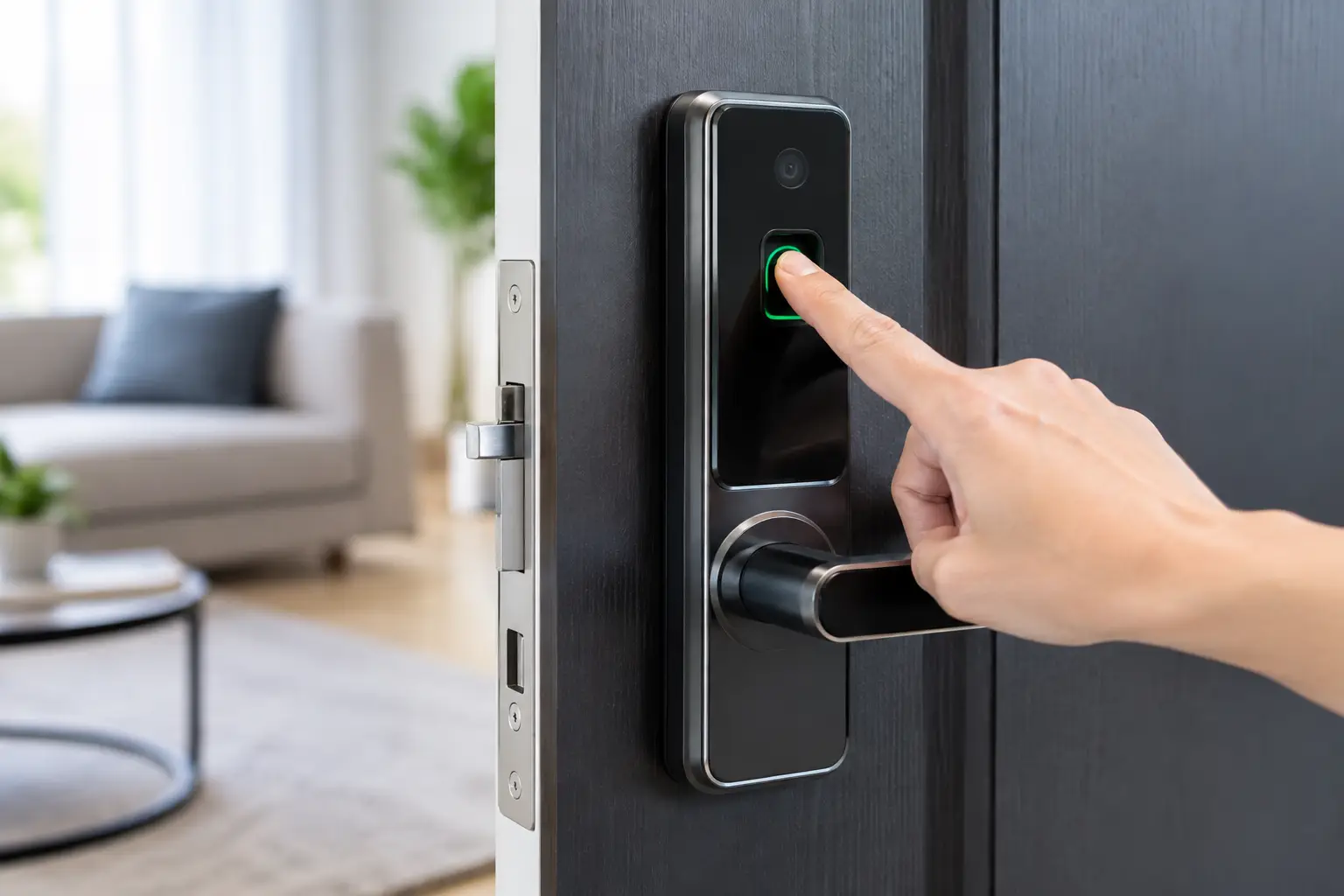
The front door is no longer just a boundary between home and street. It is part of the welcome: a place where keys get misplaced, guests arrive early, packages appear midday, and a busy household needs access without added friction. This review of a smart door lock with fingerprint sensor looks at whether this polished home upgrade delivers the convenience, security, and elevated design it promises.
For the right home, a fingerprint smart lock replaces the familiar key scramble with a simple touch. That sounds modest until you come home carrying groceries, return from a run without a key, or need to let in a dog walker while you are away. The appeal is immediate. The better question is whether the lock performs consistently enough to earn a place on your primary entry door.
Review: Smart Door Lock With Fingerprint Sensor
A premium fingerprint lock is at its best when it feels almost invisible in daily use. Place a registered finger on the reader, wait for a quick confirmation, and enter. No phone needs to be found, no code needs to be remembered, and no physical key needs to be passed between family members.
That direct interaction is the category’s strongest advantage. Keypad locks are practical, but codes can be shared, forgotten, or observed from too close a distance. App-only locks offer detailed control, yet they introduce an extra step when all you want is to get inside. A fingerprint reader makes entry personal and fast while retaining other access methods for flexibility.
Most well-designed models combine biometrics with a keypad, mobile app, mechanical key override, and sometimes key fobs or digital passes. This layered approach matters. A fingerprint sensor should be your preferred daily method, not the only method available when wet hands, a dead battery, or a visiting relative changes the routine.
The category also brings a visual upgrade. The finest designs avoid looking like a gadget bolted onto the door. Slim profiles, restrained keypads, matte black, satin nickel, and brushed finishes can complement a contemporary entryway rather than dominate it. For a carefully furnished apartment, a renovated townhome, or a design-led family home, that detail is more meaningful than it first appears.
Biometric performance is the real test
Not all fingerprint sensors feel equally refined. A good capacitive sensor reads a finger quickly with light contact and remains dependable across repeated use. It should recognize the print before the door handle becomes a point of frustration. When shopping, look beyond the claim that a lock has fingerprint access and consider how many prints it stores, whether multiple fingers can be saved per person, and how easily profiles can be removed.
Registering two or three fingers per regular user is a wise precaution. Hands change throughout the day. Skin can be dry after travel, damp after rain, or marked by gardening and cooking. Saving a thumb and index finger gives the system more chances to work naturally without lowering the standard for entry.
Expect occasional failed reads. Biometric convenience is highly effective, not magical. Small children may have more difficulty because their fingerprints are still developing, and outdoor conditions can affect any sensor. If a home routinely sees muddy shoes, wet umbrellas, and active kids, choose a model with a responsive keypad and straightforward backup options rather than relying on biometrics alone.
Access that fits a real household
Fingerprint access makes the most sense in homes where several people come and go on different schedules. Each household member can have an individual print, while temporary users receive a time-limited code instead of a permanent key. This is especially appealing for cleaners, contractors, house sitters, or guests staying for a weekend.
The quality of the companion app varies widely. At a minimum, it should let you add and delete codes, check battery status, and view an activity record. Some locks provide remote status and control through built-in Wi-Fi; others use Bluetooth and require a separate bridge for full remote access. Built-in Wi-Fi is convenient, but it can use more battery power. Bluetooth-first designs often preserve battery life and feel simpler, though their remote features may require another device.
Auto-locking is another feature that earns its place quickly. Set it for a brief delay after the door closes, and the lock removes the nagging question of whether anyone remembered to secure the house. Still, it is worth choosing a lock that lets you adjust or disable the setting. A family frequently moving between the house and patio may find an aggressive auto-lock timer more irritating than helpful.
For rental properties and second homes, digital access management can be particularly valuable. Changing a code between guests is easier than rekeying a cylinder, and an activity history can provide helpful reassurance. But remote features should never become a substitute for attentive property care. A smart lock can record an entry event; it cannot tell you whether the door was fully closed before it secured.
Security Beyond the Fingerprint Reader
The fingerprint sensor gets attention, but the mechanical foundation deserves just as much scrutiny. A beautiful smart lock is only as capable as its deadbolt, strike plate, door frame, and installation. Look for a solid metal bolt, durable housing, a secure interior thumb turn, and a model sized correctly for your door’s thickness and backset.
For an exterior door, an ANSI/BHMA grade is a useful quality signal. Grade 1 is typically the strongest residential option, while Grade 2 can be suitable for many homes. The rating is not the whole story, but it indicates that the lock has been tested for operational and physical performance. Pairing the lock with reinforced strike plate screws that reach the framing can also make a material difference.
Smart security requires thoughtful digital habits as well. Use a distinctive app password, enable two-factor authentication if offered, and keep firmware current. Review who has active codes or app permissions a few times each year, especially after a move, renovation, or staffing change. These small actions preserve the controlled, high-end experience that makes smart access worthwhile.
Privacy is a fair consideration. Fingerprint data should be stored securely by the lock or its ecosystem, and the brand should clearly explain how biometric information is handled. Before purchasing, read the privacy policy and understand whether templates remain local to the device or are connected to cloud services. A premium lock should inspire confidence not just in its finish, but in the care taken behind the interface.
Installation and design considerations
Many retrofit smart deadbolts are designed for standard US doors and can be installed with a screwdriver in under an hour. That said, an older door or a misaligned frame can complicate the process. Before ordering, measure the backset, door thickness, borehole, and clearance around the trim. If the deadbolt already sticks or requires force to turn, correct that alignment issue first. No electronic motor should be expected to compensate for a poorly fitted door.
Decide whether you want a complete handleset or a smart deadbolt that works with existing hardware. A matching handleset creates a more intentional entrance, especially on a prominent front door. A standalone deadbolt is often the more economical, lower-commitment choice for renters or homeowners who already have exceptional door hardware.
Battery maintenance is uncomplicated but should not be ignored. Most locks warn you well before batteries are depleted. Keep fresh batteries on hand, review the emergency power option, and retain the mechanical key somewhere sensible outside the locked home. Avoid hiding it directly beside the front door. The goal is convenience with composure, not a dramatic late-night workaround.
Who Should Choose a Fingerprint Smart Lock?
This upgrade suits homeowners who value everyday ease, frequent entertainers who want a more graceful guest experience, and busy households tired of managing spare keys. It is also an elegant fit for a thoughtfully designed rental, provided the owner approves the installation and the original hardware can be restored when needed.
It may be less appealing for someone who prefers a purely mechanical system, has an unreliable Wi-Fi environment, or lives in an exposed location where extreme weather is a constant concern. In those cases, a high-quality keypad deadbolt or a traditional premium lock can be the more sensible investment. Smart features are only luxurious when they match the way a home is actually used.
For shoppers curating a more considered entryway, My Total Take’s premium home and technology perspective is a useful standard: prioritize thoughtful design, lasting materials, and features that make daily living feel easier rather than more complicated. A fingerprint smart lock should feel like a natural extension of the home, not another device demanding attention.
The most satisfying choice is the one that lets the household move with confidence: a beautifully finished lock, dependable access for the people who belong there, and a quiet sense that the front door is working as thoughtfully as the rest of the home.










Leave a comment