Bathroom Remodel Trends for 2026 to Know
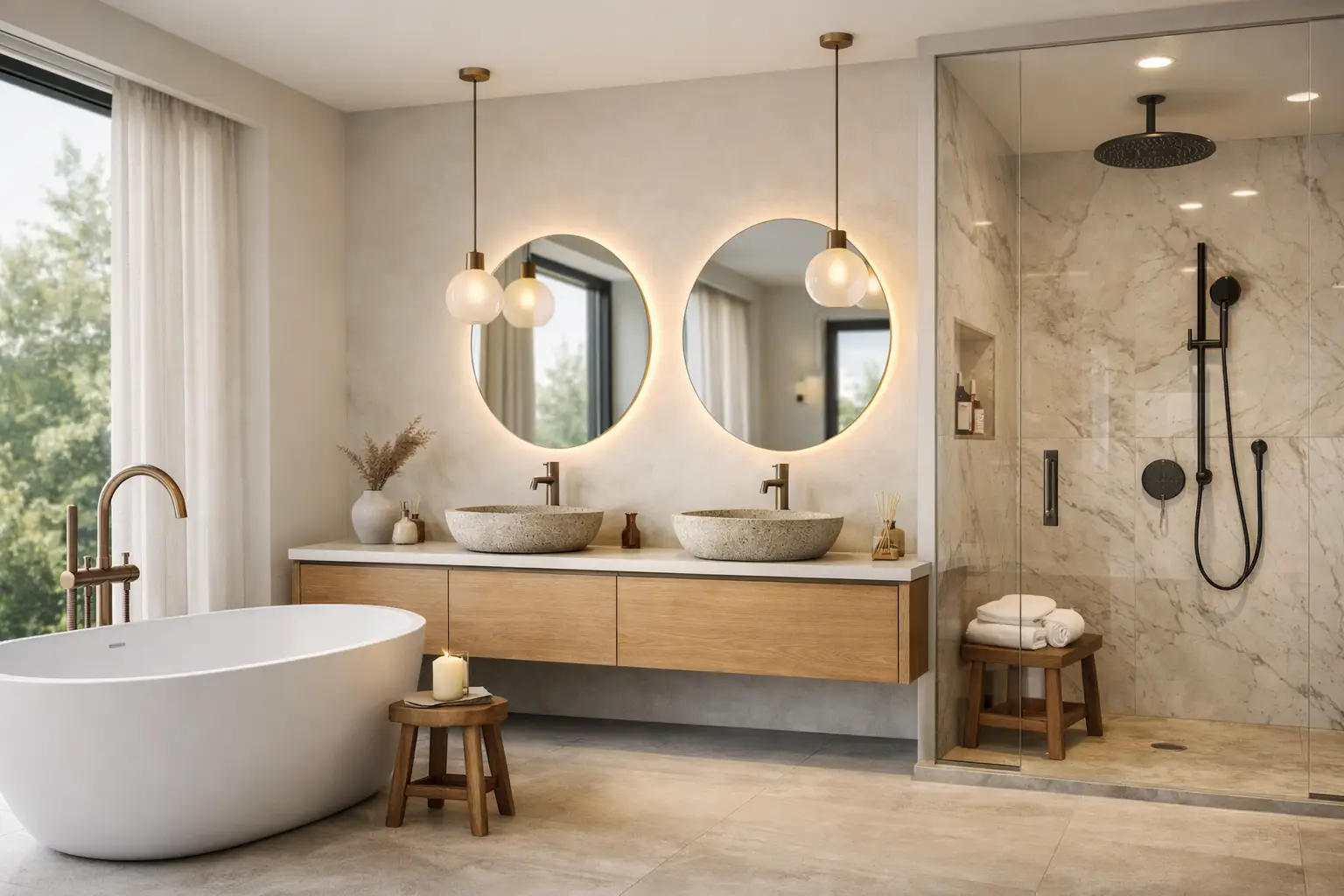
The all-white spa bathroom is losing ground. In its place, bathroom remodel trends for 2026 are moving toward something more personal – warmer finishes, stronger silhouettes, better lighting, and smart upgrades that feel genuinely useful instead of flashy. The shift is less about chasing novelty and more about creating a high-end haven that works beautifully every day.
For homeowners and style-driven renters planning a refresh, that distinction matters. Bathrooms are no longer treated as purely functional rooms. They are private reset spaces, and the design choices people are making now reflect comfort, craftsmanship, and long-term value.
Bathroom remodel trends for 2026 favor warmth over stark minimalism
Minimalism is still here, but it looks different than it did a few years ago. The colder version – bright white walls, sharp contrast, clinical finishes – is giving way to a softer palette. Think creamy neutrals, warm taupe, muted clay, mushroom gray, and natural wood tones that bring depth without visual clutter.
This is one of the clearest bathroom remodel trends for 2026 because it answers a common frustration. Many bathrooms renovated in the late 2010s looked crisp in photos but felt impersonal in real life. Warmer design creates a more refined experience. It flatters skin tones, softens hard surfaces, and makes even compact bathrooms feel more inviting.
There is a trade-off, though. Warm palettes can drift into flatness if every surface stays too close in tone. The most elevated rooms balance softness with contrast through stone veining, mixed metals, textured tile, or sculptural lighting.
Natural wood vanities take the lead
Wood-look cabinetry and true wood vanities are showing up in richer, more furniture-like forms. Walnut, oak, and medium-toned finishes feel especially current. Floating vanities still have a place, but 2026 leans slightly more substantial, with pieces that look crafted rather than ultra-thin.
That change speaks to a broader preference for interiors with character. A vanity now reads less like built-in utility and more like a statement piece with storage.
Statement stone becomes the luxury signal
If there is one material story defining premium bathrooms right now, it is stone with movement. Homeowners are choosing slabs and surfaces that bring visible veining, organic variation, and richer color. Marble-inspired quartz, travertine looks, and natural stone finishes all fit this direction.
Instead of using stone as a background neutral, 2026 bathrooms are letting it lead. A dramatic vanity top, a full-height backsplash, or a shower wall with bold patterning can do more for the room than layering several smaller decorative details.
The practical appeal is clear. A well-chosen stone surface feels timeless, expensive, and architectural. It can elevate the entire remodel without requiring excess ornament.
Fluted textures and tactile surfaces add depth
Smooth surfaces are being paired with texture in more intentional ways. Fluted vanity fronts, ribbed glass, handmade tile, and plaster-inspired walls all contribute to a more custom look. These details catch light beautifully and help a bathroom feel designed, not assembled.
Texture is especially useful in neutral spaces. When color is restrained, material variation does the heavy lifting.
Wellness moves from trend to standard
A bathroom remodel used to focus on resale first. Now, personal comfort is moving much higher on the list. That is why wellness-centered features are no longer reserved for luxury new builds. They are becoming mainstream aspirations, especially in primary baths.
The difference in 2026 is that wellness is less performative. It is not about packing in every gadget. It is about choosing upgrades that improve the daily routine.
Steam showers, deeper soaking tubs, towel warmers, and better ventilation all fit this category. So do quieter exhaust fans and thoughtful layouts that reduce visual noise. The most sophisticated bathrooms support a slower rhythm without feeling overdesigned.
For smaller spaces, this might mean prioritizing one standout comfort feature instead of trying to include everything. A beautifully lit shower with premium fixtures can deliver more day-to-day satisfaction than a cramped tub added for trend value.
Smart bathroom tech gets more selective
Tech is still relevant, but buyers are becoming more discerning. The novelty phase is fading. Heated floors, touchless faucets, integrated bidet toilets, backlit mirrors, and app-controlled lighting make sense when they improve comfort or efficiency.
Features that require constant maintenance or feel overly complicated are less appealing. The premium shopper wants innovation that disappears into the experience.
That is an important filter for 2026. The best smart bathroom is not the one with the most features. It is the one that feels intuitive from the first use.
Lighting becomes a design decision, not an afterthought
Bad bathroom lighting can flatten every expensive finish in the room. One reason newer remodels feel more polished is that lighting is finally being treated as a core part of the design plan.
Layered lighting is the direction to watch. Overhead fixtures alone are not enough. Sconces at mirror height, integrated mirror lighting, toe-kick vanity lighting, and dimmable ambient fixtures create a more flattering and flexible environment.
This matters for both atmosphere and function. Morning grooming needs clarity. Evening routines benefit from a softer glow. A bathroom that can shift between those modes feels instantly more luxurious.
Decorative lighting is also getting bolder. Sculptural sconces, mixed materials, and jewelry-like finishes bring personality into a room that used to rely almost entirely on tile for visual interest.
Wet rooms and open shower layouts keep gaining ground
The open, airy shower remains highly desirable, and 2026 continues that momentum. Wet rooms and low-threshold walk-in showers appeal for aesthetic reasons, but also for accessibility and ease of cleaning. They make the bathroom feel larger, especially when materials run continuously across the floor and walls.
That said, this trend is not universal. Wet rooms need careful waterproofing, excellent drainage, and enough square footage to feel intentional. In a small bathroom, a partially enclosed shower may perform better and still deliver a clean modern look.
Frameless glass is still strong, but there is growing interest in shower designs that reduce maintenance. Fewer metal edges, simpler hardware, and more strategic splash control all make daily upkeep easier.
Tile choices get bolder, but more edited
Tile is moving in two directions at once. Some remodels are embracing large-format slabs or oversized porcelain for a clean, expansive feel. Others are leaning into expressive tile with color, pattern, or artisanal texture.
What is changing is the restraint. Rather than combining multiple statement surfaces, the most elevated bathrooms tend to choose one hero moment. That could be a checkerboard floor, a moody shower tile, or a handcrafted accent wall. Everything else supports it.
This edited approach feels more expensive because it leaves room for the materials to speak.
Mixed metals replace strict matching
Perfectly matched finishes can make a bathroom feel a little too predictable. In 2026, mixed metals continue to gain favor, especially combinations that feel collected and intentional. Brushed nickel with matte black, warm brass with polished chrome, or bronze paired with natural wood all bring depth.
The key is balance. Too many finishes can read as indecisive. Usually, two metals are enough, with one taking the lead and the other used as an accent.
This is a smart way to modernize a bathroom without making it feel tied to a single trend cycle. It also works well for shoppers curating a room piece by piece rather than buying every fixture from one matching set.
Storage gets quieter and more integrated
A beautiful bathroom loses its edge fast when every surface is covered in products. That is why storage is becoming less visible and more considered. Recessed medicine cabinets, drawer organizers, tall linen cabinetry, and vanities designed around real routines are all part of the 2026 conversation.
The best storage choices are highly personal. A household that relies on electric grooming tools needs different solutions than one centered on skincare and bath rituals. Remodel planning now starts with those habits, not just with floor plans.
For premium shoppers, this is where design meets function in the most satisfying way. Hidden power outlets, integrated hamper storage, and modular drawers may not be the flashiest details, but they are often the upgrades that make a bathroom feel truly finished.
What to prioritize if you want longevity
Not every trend deserves equal weight. If the goal is a bathroom that still feels current five to ten years from now, prioritize architecture over novelty. Invest in excellent lighting, quality materials, durable fixtures, and a palette with warmth and range. Then add personality through mirrors, hardware, textiles, and a few expressive finishes.
That approach gives you flexibility. Tastes change, but craftsmanship holds. A well-made vanity, a beautiful sink, and thoughtfully selected fixtures will outlast trend-driven decor every time.
For shoppers building a more elevated home, this is where a curated retailer like My Total Take fits naturally into the process. The right bathroom pieces should feel considered, high-performing, and worthy of the space they occupy.
The strongest bathrooms of 2026 will not be the ones that look the most expensive at first glance. They will be the ones that feel composed, personal, and quietly indulgent each time the door closes behind you.







Leave a comment