
How to Create Modern Home Ambiance That Truly Feels Warm
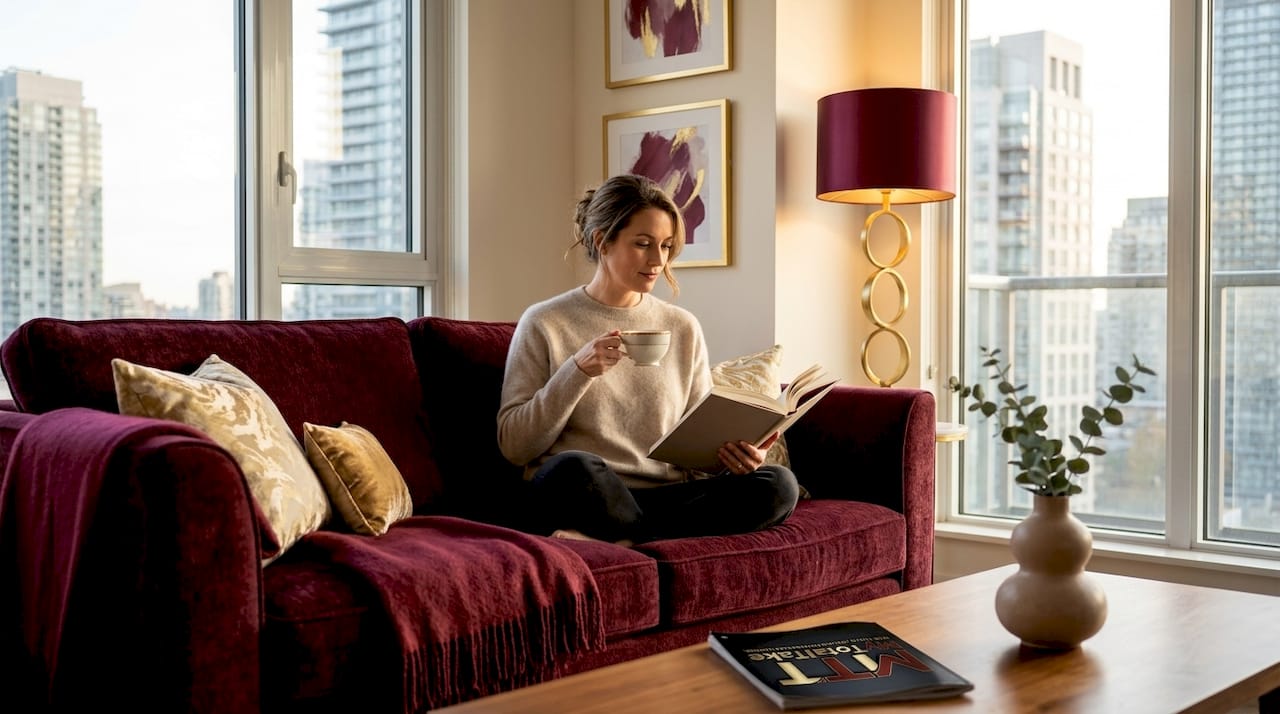
A modern home can look like it belongs on a design magazine cover yet feel oddly uninviting the moment you walk in. That gap between looking good and feeling good is exactly what knowing how to create modern home ambiance is meant to close. The solution is not a single purchase or a fresh coat of paint. It is a layered approach that draws on lighting strategy, thoughtful texture, color warmth, biophilic elements, and sensory design working together. This guide gives you a practical, room-ready framework for doing exactly that.
Table of Contents
- Key takeaways
- How to create modern home ambiance: what you need first
- A layered lighting strategy that sets the tone
- Color palettes and textures that warm without cluttering
- Biophilic design and sensory layers for a complete ambiance
- Common mistakes that undermine your ambiance
- My honest take on what actually changes a home
- Take your modern ambiance further with Mytotaltake
- FAQ
Key takeaways
| Point | Details |
|---|---|
| Layer your lighting | Combine ambient, task, and accent lighting with dimmers to control mood at any hour. |
| Warm up with texture | Use at least three tactile materials per room to avoid the cold, sterile feel. |
| Add biophilic elements | Plants and natural light measurably reduce stress and improve comfort at home. |
| Coordinate sensory layers | Scent, sound, and light work best when planned together as a consistent scene. |
| Do seasonal check-ins | Revisit lighting, textiles, and plant health regularly to keep the ambiance fresh. |
How to create modern home ambiance: what you need first
Before you move a single piece of furniture or order a new fixture, take stock of your space. Understanding the tools at your disposal makes every subsequent decision faster and more confident.
Modern ambiance rests on four building blocks: light, material, color, and sensory experience. Here is a practical overview of what each category requires:
| Category | Tools and materials needed |
|---|---|
| Lighting | Ambient, task, and accent fixtures; dimmable LED bulbs (2700K to 3000K) |
| Texture and materials | Hardwood, stone, ceramic, woven textiles, natural fiber rugs |
| Color palette | Warm neutrals (taupe, greige, cream); deeper accents (terracotta, olive, warm charcoal) |
| Sensory elements | Essential oil diffusers, candles, Bluetooth speaker or soundbar |
| Biophilic design | Indoor plants, sheer window treatments, natural ventilation pathways |
A few things worth noting before you start buying. First, natural materials are not optional decoration. Warmth in modern spaces comes specifically from combining organic materials and layered texture without disrupting clean modern lines. Second, scent and sound are underused by most homeowners. Most people treat ambiance as purely visual, which is why so many spaces look beautiful in photos but feel flat in person.
Biophilic design deserves its own mention. It is more than a style choice. A 2025 study on residential comfort found that biophilic environments produced significantly lower physiological stress responses compared to non-biophilic spaces, with skin conductance decreasing nearly twice as much. That is measurable evidence that plants and natural light belong in your ambiance plan, not just on your Pinterest board.
A layered lighting strategy that sets the tone
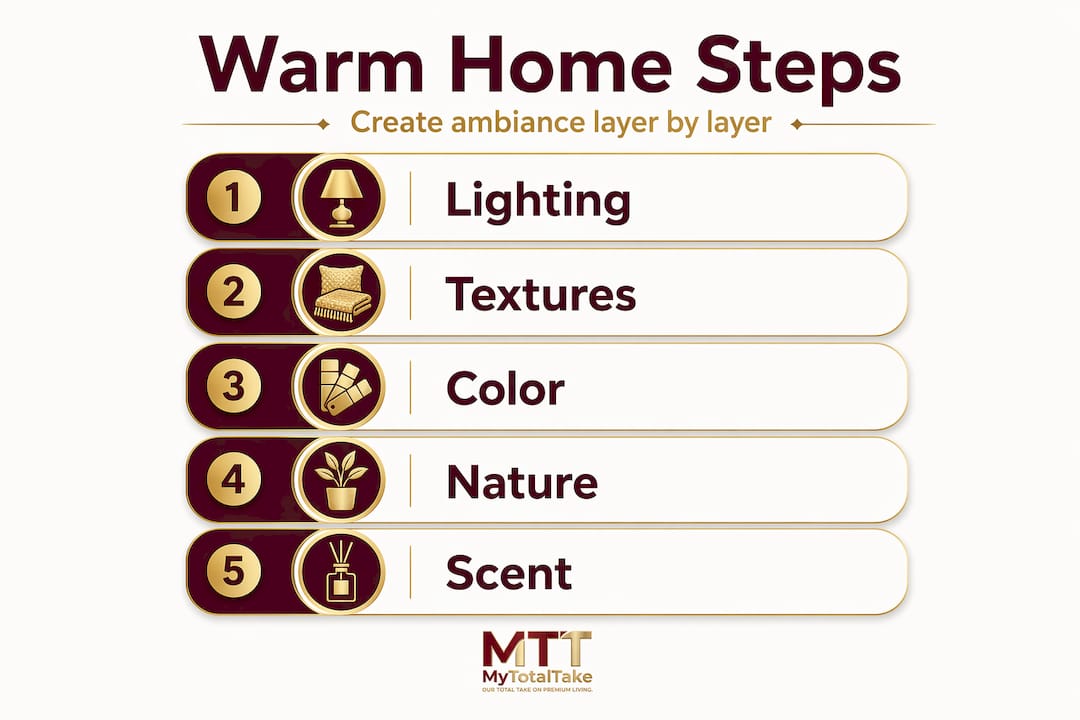
Lighting is the single most powerful lever you have for shaping how a room feels. Most homes rely on one overhead source, which creates a flat, institutional quality. The fix is a three-layer lighting approach that uses ambient, task, and accent sources together.
Here is how to build that system step by step:
- Set your ambient base. Recessed ceiling lights or a central pendant provide general illumination. These should be on a dimmer so you can lower them in the evening without killing all the light.
- Add task lighting where you work. Reading nooks, kitchen prep areas, and desks need focused light that does not strain your eyes. Table lamps and under-cabinet strips work well here.
- Place accent lights to create depth. Picture lights, shelf-mounted spotlights, and wall sconces draw attention to textures and architectural features, making the room feel three-dimensional.
- Install dimmers on every circuit you can. Dimmers are not a luxury upgrade. They are the control system that lets you shift the same room from productive daytime mode to relaxed evening mode without touching a fixture.
- Standardize your bulb temperature. Treat light temperature like a color palette across every visible fixture. Mixing a 4000K cool-white bulb in the kitchen with 2700K warm bulbs in the adjacent living space creates a visual clash that registers as “something feels off” even when people cannot name the cause. Stick to 2700K to 3000K throughout.
One placement principle that separates good lighting from genuinely great ambiance: push light to the edges. Perimeter lighting via sconces, cove fixtures, or backlit walls creates depth and envelopes the room in warmth instead of creating a bright center with dark, dead corners. This approach reads as sophisticated because it mirrors how we experience pleasant natural light, from the sides and above, not from a single point directly overhead.
Pro Tip: If you only make one upgrade today, add a dimmable wall sconce to your living room or bedroom. The shift in ambiance is immediate and requires no renovation.
Color palettes and textures that warm without cluttering
The misconception that modern design has to be cold or stark is genuinely outdated. Modern home decor ideas built around warm neutrals and tactile layering prove that clean lines and comfort are not opposites.
Start with your wall color. Warm neutrals like taupe, greige, and linen white absorb and reflect light in a way that pure cool whites simply do not. Then introduce one deeper accent tone. Terracotta, olive green, and warm charcoal all anchor a room without competing with the overall palette.
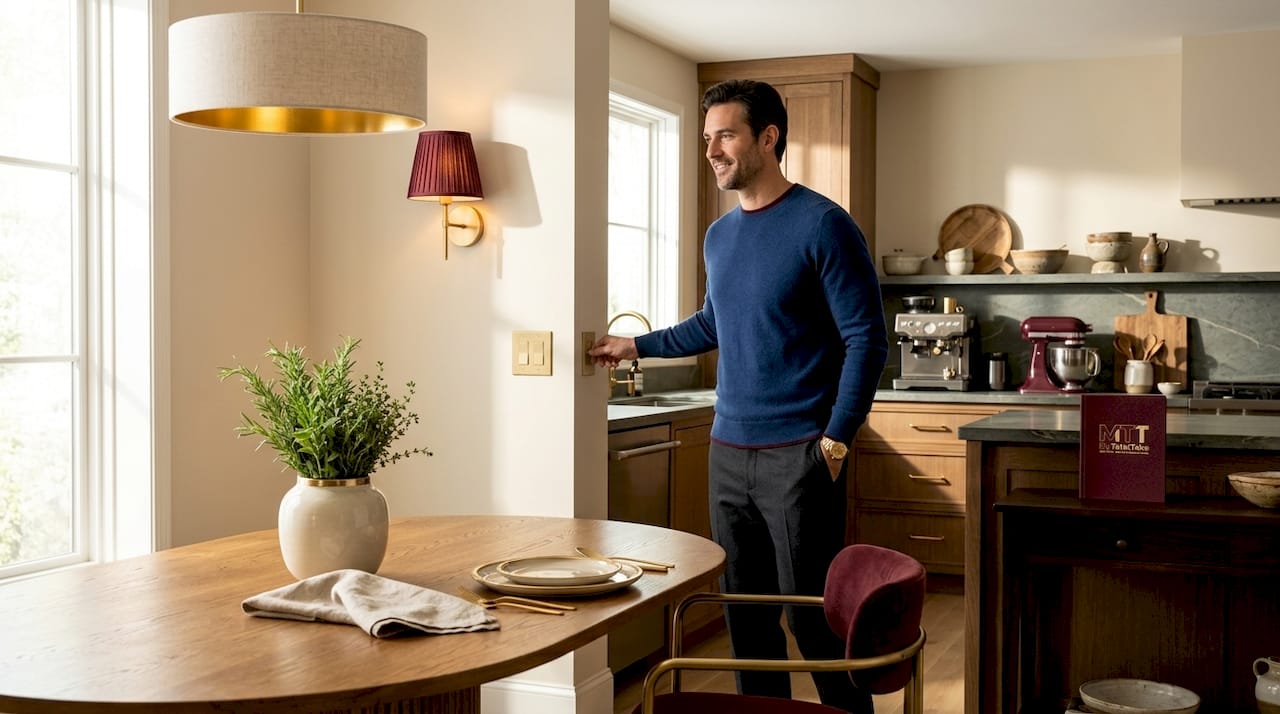
Texture is where most modern rooms fall short. To avoid a harsh clinical feel, aim for at least three different tactile surfaces per room. A concrete floor needs a woven jute rug. A leather sofa benefits from a chunky knit throw. A marble coffee table pairs well with warm wood accents nearby.
Key texture layers to work into any room:
- Natural fiber rugs ground the space and soften acoustics simultaneously
- Woven or linen upholstery adds visual warmth without adding visual weight
- Stone or ceramic accessories (vases, trays, bowls) bring earthiness at small scale
- Hardwood or rattan furniture accents connect the room to organic forms
- Wall finishes with low sheen such as matte or eggshell paint read warmer than gloss
Organic shapes matter here too. Furniture with rounded edges and soft curves soften the geometry of a modern room without abandoning its sophistication. A curved sofa or an oval dining table introduces movement and approachability. For more on pairing these elements with high-end pieces, contemporary home decor guidance from Mytotaltake covers the balance of warmth and luxury in detail.
Pro Tip: Limit your accent color to roughly 10 to 15 percent of the room’s total visual surface. Enough to read clearly, not enough to compete with your neutral base.
Biophilic design and sensory layers for a complete ambiance
Visual design takes you most of the way. But the rooms people describe as genuinely relaxing or “alive” almost always have something else going on. They engage more than just sight.
Biophilic decor uses natural elements to trigger biological responses associated with comfort and calm. The stress-reduction data is clear. But the practical application is simpler than the science sounds. Start with these:
- Place a large-leafed plant (a fiddle-leaf fig, bird of paradise, or monstera) in the corner of your living room where it catches indirect light. Scale matters. A small succulent on a windowsill will not create the same visual or environmental effect.
- Use sheer curtains instead of blackout panels in rooms where you want daytime warmth. Natural light filtered through linen or sheer cotton reads as warm and living, not stark.
- Improve natural airflow where you can. Even cracking a window near a plant creates subtle movement that makes a room feel inhabited and fresh.
Scent is the most underutilized ambiance tool in residential design. Calming scents like lavender and vanilla, delivered through a quality diffuser or a well-chosen candle, shift the emotional register of a room in minutes. Choose one primary scent per space and rotate seasonally to prevent olfactory fatigue.
Sound completes the picture. A low-volume ambient playlist, nature soundscape, or even a small indoor water feature creates the acoustic texture that silence cannot provide. Most well-designed spaces have a subtle sonic layer that people feel rather than notice.
The most powerful approach is to plan lighting, scent, and sound together as a single repeatable scene rather than treating each as a separate add-on. When these elements are coordinated, they produce an environment you can reliably return to, evening after evening.
Common mistakes that undermine your ambiance
Even thoughtful design decisions can work against you if a few key pitfalls are left unaddressed.
- Mismatched light temperatures create visual tension throughout a space. One cool-white bulb visible from a warm-lit room reads as jarring, not neutral.
- Over-cluttering surfaces in the name of “layering” destroys the clean sightlines that give modern spaces their sense of calm. Curate instead of accumulate.
- Neglecting plant maintenance turns a biophilic asset into a visual liability. A wilting or yellowing plant reads as neglect, not design.
- Set-and-forget sensory elements lose their effect over time. Diffuser blends should rotate. Candles should be replaced before they burn uneven. Playlists should refresh with the seasons.
- Ignoring furniture flow is surprisingly common. A beautiful room that forces awkward movement or blocks sightlines feels uncomfortable regardless of how good it looks on paper.
Schedule a monthly ambiance check-in. Walk through each room as if you are a guest. Notice the smell, the light level, the temperature, and whether anything looks tired or out of proportion. Ambiance is not a renovation. It is an ongoing practice.
My honest take on what actually changes a home
I have spent years studying how spaces feel and why, and the clearest lesson I have absorbed is this: most homeowners are solving the wrong problem. They think ambiance is a decor problem when it is actually a sensory orchestration problem.
I used to approach rooms the same way. New furniture, new accessories, new art. The space would look refreshed but not necessarily feel different. The change happened when I started treating lighting as infrastructure and scent and sound as intentional design choices rather than afterthoughts. When those three systems align, the room stops being a collection of objects and starts being an experience.
What I have also learned from years of working with clients is that the spaces they return to and cherish are never the most styled ones. They are the ones that feel like a physical exhale. Warm, sensory-rich, and genuinely comfortable. That combination is not expensive. It requires precision, restraint, and an honest answer to the question: does this room make me feel good when I am in it, not just when I am looking at it?
Embrace your own sensory preferences here. If you find cedar more relaxing than lavender, use cedar. If you prefer low jazz over ambient soundscapes, play low jazz. The framework is universal. The execution is yours.
— Lysander
Take your modern ambiance further with Mytotaltake
The principles in this guide give you the foundation. Now the quality of what you fill that foundation with determines the lasting impact.

At Mytotaltake, we curate premium home decor and design resources specifically for homeowners who refuse to settle for spaces that look the part but do not live up to it. Whether you are searching for luxury decor guidance that goes beyond the obvious, or you want to explore high-end craftsmanship ideas that hold their value season after season, we have curated collections and editorial depth that match the discernment you bring to your home. For homeowners ready to invest in smart upgrades that reinforce ambiance from every angle, our premium technology solutions cover the intersection of design and modern living with the same precision this guide has delivered.
FAQ
What is the fastest way to improve home ambiance?
Upgrading to dimmable warm-white LED bulbs (2700K to 3000K) and adding a wall sconce or floor lamp delivers an immediate shift in how any room feels, with no renovation required.
How do I create a cozy atmosphere in a modern home?
Layer at least three tactile materials per room, use warm neutral colors, and coordinate a scent diffuser and soft background sound with your dimmable lighting to create a repeatable, relaxing environment.
What color temperature is best for home ambiance?
Bulbs in the 2700K to 3000K range produce warm white light that flatters both skin tones and surfaces. Keeping this temperature consistent across all visible fixtures is what makes the lighting feel cohesive.
How does biophilic design improve home comfort?
Biophilic environments show measurably lower physiological stress responses than non-biophilic ones. Adding larger indoor plants, sheer natural-light window treatments, and improved airflow are the most accessible entry points.
Can you create a modern ambiance on a limited budget?
Yes. Dimmer switches, warm-toned bulbs, a quality candle or diffuser, and a natural-fiber rug cover the most impactful changes for a fraction of the cost of new furniture or lighting fixtures.
Recommended
Air Fryer vs Convection Oven: Which Wins?
Comments
[…] of it as ambient wellness, the kind that pairs naturally with a well-designed modern home ambiance rather than a substitute for medical […]







Leave a comment