
How to Style Floating Wall Shelves Well
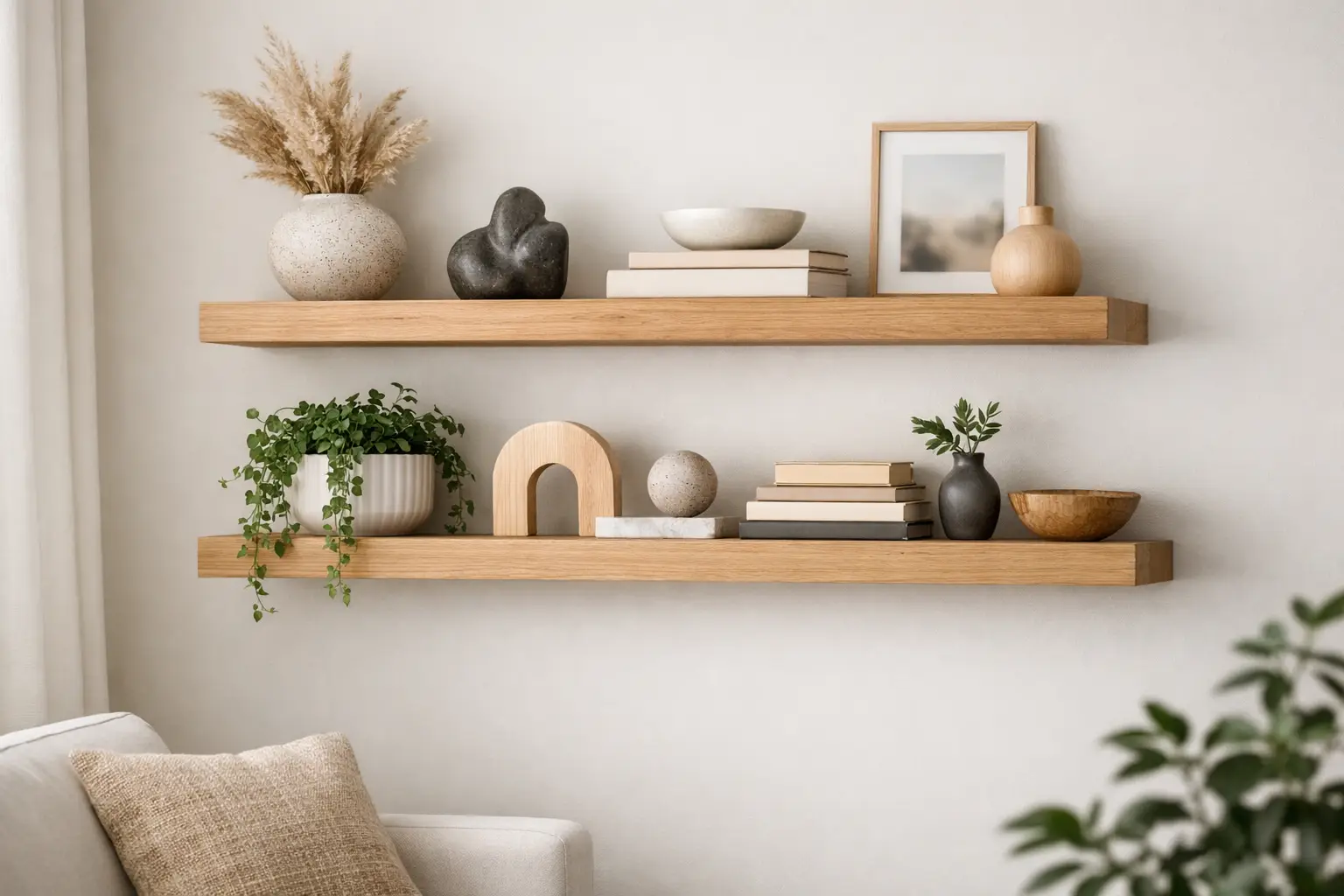
A floating shelf can make a wall look intentional in seconds – or strangely unfinished. The difference usually is not the shelf itself. It is how you style floating wall shelves, what you place on them, how much breathing room you leave, and whether the arrangement suits the room instead of fighting it.
Floating shelves are popular because they do two jobs at once. They add storage, but they also shape the mood of a space. In a kitchen, they can make everyday essentials feel refined. In a living room, they create a display that feels curated rather than crowded. In a bathroom, they turn practical storage into part of the design.
How to style floating wall shelves with a designer eye
The most polished shelves rarely hold more items than necessary. A high-end look comes from editing, contrast, and a sense of rhythm. That means mixing useful pieces with decorative ones and resisting the urge to fill every inch.
Start by thinking about the role of the shelf. Is it there to display collected objects, store daily essentials, or soften a blank wall? A shelf above a desk should not be styled the same way as shelves in a powder room. When the purpose is clear, the styling choices become easier and the finished result feels more natural.
Scale matters just as much as style. A long shelf with only tiny objects can look scattered, while a short shelf with oversized decor can feel heavy. Aim for visual balance rather than perfect symmetry. Two stacked books, a medium vase, and a framed object often feel better together than six unrelated accessories lined up in a row.
Color is where many shelf displays either shine or fall apart. You do not need everything to match, but the palette should feel connected to the room. If your space leans warm, choose ceramics, woods, and textiles with warm undertones. If the room is crisp and modern, cleaner silhouettes and restrained color usually work better. A shelf can absolutely hold one bold accent, but if every piece is trying to be the star, the whole arrangement loses its point of view.
Start with the larger anchor pieces
Before you add the smaller details, place one or two larger objects on each shelf. These anchor pieces create structure and prevent the display from looking fussy. A sculptural vase, a stack of large coffee table books, a framed print, or a beautiful storage box can all do this job.
Think of these pieces as the architecture of the shelf. They establish height, weight, and direction. Once they are in place, the smaller objects become accents rather than clutter. This is especially useful if you are styling open shelving in a living room or bedroom where the display is visible from multiple angles.
There is a trade-off here. Larger pieces create instant polish, but too many can make the shelf feel static and overdesigned. If your shelves are narrow, one larger piece paired with negative space often looks more elevated than trying to squeeze in several medium-sized items.
Layer objects instead of lining them up
One of the simplest ways to make shelves look expensive is to create depth. When everything sits in a single straight line, the shelf can feel flat. Layering adds dimension and makes the arrangement feel collected.
You can lean a small framed print behind a ceramic vessel. You can place a decorative object on top of two books. You can set a smaller item beside a taller one so the eye moves naturally across the shelf. These choices create variation without making the display busy.
This is where materials matter. Glass, stone, metal, wood, and paper all reflect light differently. A shelf styled with only one texture can feel one-note, even if the colors are beautiful. Mixing finishes gives the arrangement richness. For a more refined look, stay within a controlled palette and vary the materials instead.
What to put on floating wall shelves
If you are wondering what actually belongs on a shelf, think in categories rather than random objects. Books add structure and height. Vases bring shape. Framed art or photos make the display personal. Boxes and baskets add hidden storage. Candles and sculptural decor bring softness and character.
Natural elements are often what make a shelf feel alive. A trailing plant, a small branch in a vase, or a bowl made from natural stone can keep the arrangement from feeling too showroom-perfect. That said, not every shelf needs greenery. In a sleek, minimal room, one organic element may be enough.
Practical items can look beautiful too, especially in kitchens and bathrooms. A stack of folded hand towels, a set of matching canisters, or a few favorite dishes can feel just as luxurious as decorative objects when the materials are well chosen. This is often the smartest route because the shelf stays both useful and polished.
How to style floating wall shelves in different rooms
The room should guide the styling. In a living room, shelves usually work best when they reflect the overall design story of the space. Art books, sculptural objects, and a few personal pieces can create a relaxed but elevated display. If the room already has strong statement furniture, keep the shelves a little quieter so the space does not feel overworked.
In a kitchen, open shelves need more discipline. Everyday pieces should be attractive enough to stay visible. Think matching mugs, artisanal bowls, clear glassware, and a cutting board or two for warmth. Too many novelty items tend to cheapen the look, even in a beautifully designed kitchen.
Bathrooms benefit from a clean, restrained approach. Rolled towels, apothecary-style containers, a candle, and a small tray can look spa-like without trying too hard. Because bathrooms often have less square footage, even one cluttered shelf can make the room feel cramped.
Bedrooms allow for softer styling. A framed photo, a small lamp, a stack of books, and one decorative object can create a calm, composed effect. If the shelf is near the bed, be careful with anything visually heavy. The goal is comfort, not visual noise.
Leave room for negative space
The quickest way to make a shelf feel high-end is to leave part of it empty. Negative space gives each piece room to breathe and lets the eye appreciate the arrangement. It also makes your home feel more edited, which is often what people mean when they say a room looks expensive.
This can feel counterintuitive if you bought shelves for storage. But styling and storage are not exactly the same thing. If you need a shelf to carry a lot, focus on repetition and order rather than decorative variety. Matching containers, evenly spaced stacks, and a limited palette can still look sophisticated.
If the shelf is mostly decorative, less is usually more. You do not need to fill every corner to make it feel finished. Often, taking one item away improves the entire display.
The details that make shelves feel intentional
Small adjustments create the difference between casual and curated. Vary heights so the arrangement has movement. Repeat one material or color across the shelf so it feels cohesive. Step back often and look at the shelf from across the room, not just up close.
Lighting changes everything too. A shelf near natural light may benefit from glass or reflective objects that brighten the space. A darker corner may need lighter ceramics, pale wood, or metallic accents to keep it from feeling flat. If your shelf sits under warm lighting, cream, brass, and walnut often look especially rich.
It also helps to style in odd numbers when grouping small objects, though this is not a hard rule. Three items together often feel more relaxed than two. Still, if the shelf already has strong lines and clean architecture, a simpler pair can look sharper. It depends on the room and the mood you want.
At MyTotalTake, this is the difference between merely adding decor and creating a home that feels distinctly considered. The shelf should support the room, not compete with it.
Common shelf styling mistakes to avoid
Most shelf styling problems come down to excess. Too many small objects make the arrangement feel busy. Too many colors make it look disconnected. Decor with no practical or personal relevance can read as staged.
Another common mistake is ignoring proportion. If every item is similar in size, the shelf lacks energy. If everything is tall, it feels rigid. If everything is low, it can disappear visually. Contrast is what keeps a display interesting.
Finally, avoid styling shelves once and never revisiting them. Shelves look best when they evolve with the season, the room, or the way you actually live. Swap one object, remove another, or rotate in pieces you genuinely use and enjoy. That kind of refinement always looks more convincing than a display copied item for item.
The best floating shelves do not just hold things. They frame your taste, support your routine, and give everyday walls a more composed point of view. If you keep the styling edited, purposeful, and true to the room, even a simple shelf can change the entire feel of your space.







Leave a comment